Is Crypto Haram in Pakistan? Here's the Position of the Ulema Council and Regulators
2026-07-13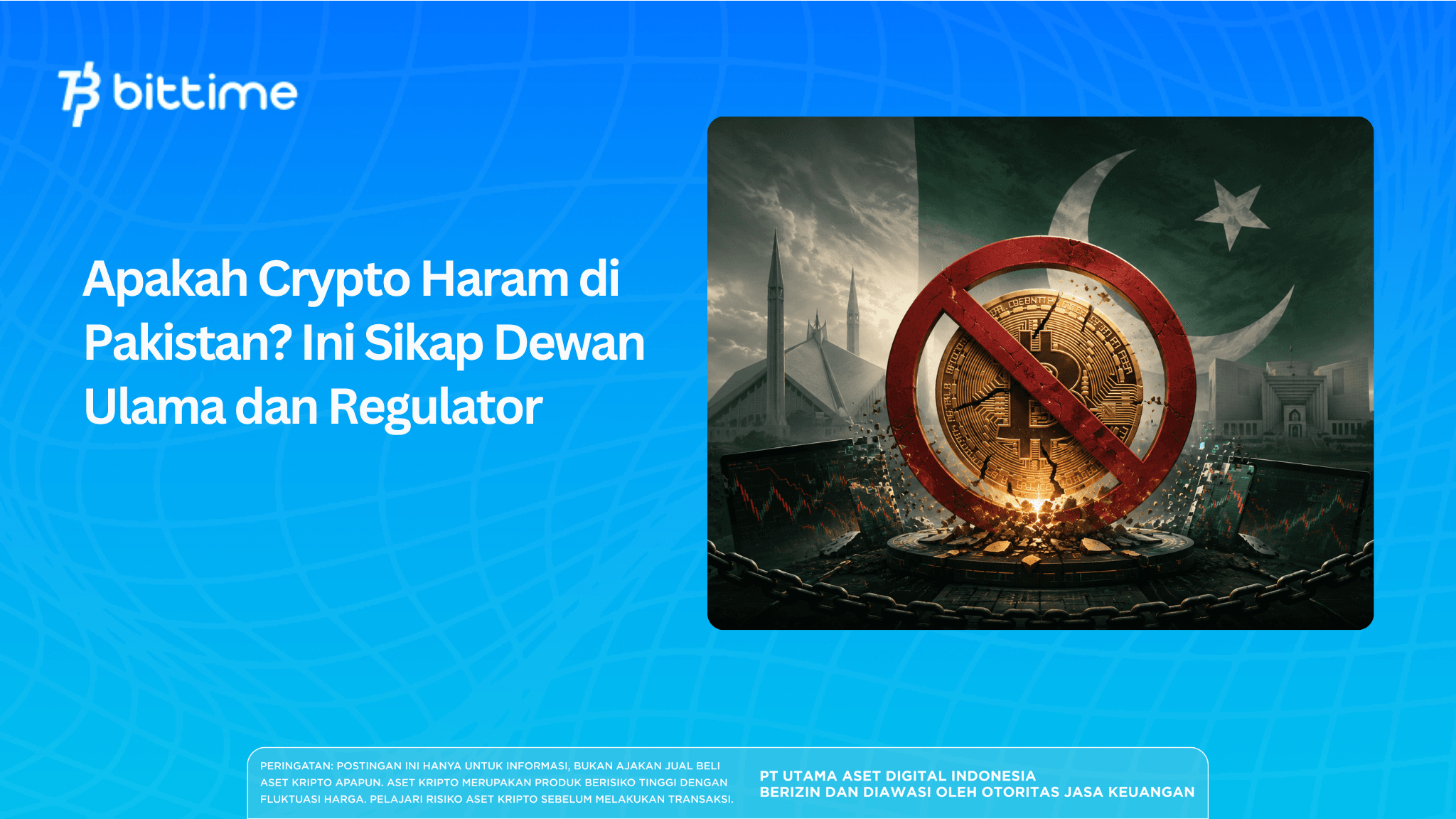
Issue crypto haram Pakistan has again drawn attention after an influential cleric declared that digital asset transactions are inconsistent with Islamic law.
However, this religious statement does not automatically make all crypto activities illegal under state law.
Key Takeaways
- Mufti Muhammad Taqi Usmani assesses that crypto assets do not meet the definition of painting or property that is legal according to the jurisprudence he uses.
- Fatwas are religious legal opinions and do not automatically become laws or criminal prohibitions in Pakistan.
- The Pakistani government continues to build a virtual asset licensing system through the Pakistan Virtual Assets Regulatory Authority or PVARA.
Why is the Crypto Haram Issue Emerging in Pakistan?
The latest debate stems from a fatwa issued by Mufti Muhammad Taqi Usmani, a prominent figure in Islamic finance. He heads Darul Uloom Karachi and Wifaq-ul-Madaris Al-Arabia Pakistan and was a judge on the Shariah Appellate Bench of the Supreme Court of Pakistan.
The fatwa was issued after questions arose regarding the purchase of goods using crypto tokens and stablecoin, including USDT. In his view, digital assets do not meet the definition of painting, namely wealth or property recognized within the Islamic legal framework used to assess the transaction.
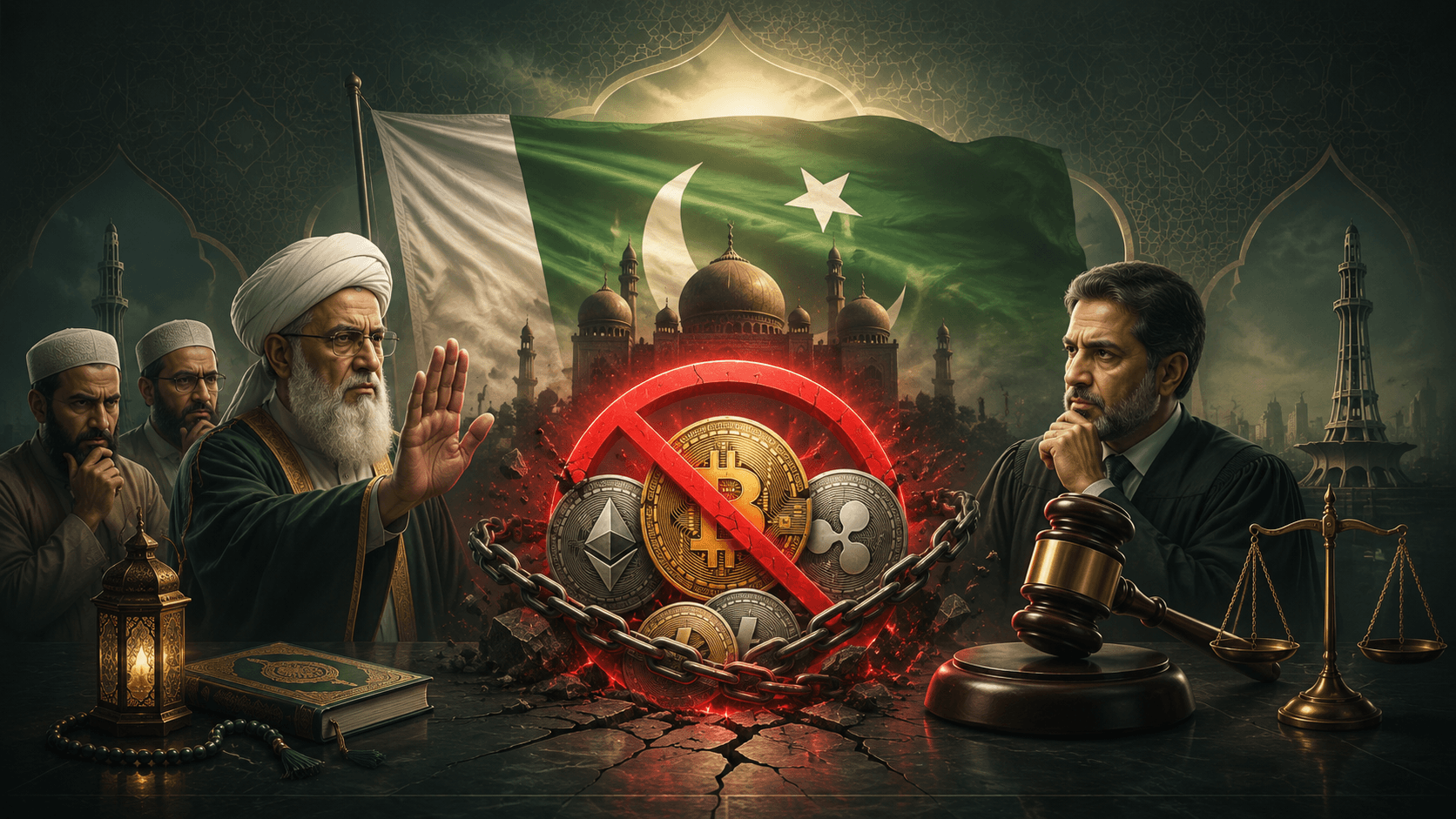
Sumber: AI Generated Image
Because it is not considered as painting, crypto is deemed not to be a legal tender under Sharia law. This conclusion extends not only to Bitcoin but also to digital tokens and stablecoins whose value is tied to fiat currencies.
A number of other clerics have reportedly supported this view. However, the reference to the "Pakistan Ulema Council" should be interpreted with caution. This fatwa is neither a legislative government decree nor a national ban that automatically binds all Pakistanis.
Read also: MUI Fatwa on Crypto: Halal or Haram? Here's an Explanation from an Islamic Perspective
Why Do Pakistani Clerics Forbid Crypto?
The main reason for the latest fatwa concerns the status of crypto as property under Islamic law. Mufti Taqi Usmani believes that digital assets are merely numerical records in an electronic system and do not yet meet the criteria for property that can be used as a legitimate transaction object.
This view starts from several fundamental questions:
- Does crypto have any Sharia-recognized value?
- Can ownership be considered as legal ownership of property?
- Can digital tokens be used as a means of payment?
- Do crypto transactions contain excessive uncertainty?
- Is crypto trading more like investing or speculation?
In broader Islamic jurisprudence discussions, scholars who reject crypto often associate it with the following elements.
1. Crypto Status as a Currency
On the ground, Cryptocurrency can be understood as something that has value and can be legally owned, stored, and used. Differences of opinion arise because crypto has no physical form and is not issued by a government or central bank.
Those opposed to crypto argue that digital existence alone isn't enough to constitute property. More open-minded groups argue that assets don't need to be physical as long as society recognizes their value and ownership can be proven.
2. Gharar or Uncertainty
Cryptocurrency prices can fluctuate dramatically in a short period of time. Some scholars view volatility, underlying value ambiguity, and technological complexity as forms of excessive uncertainty or gharar.
However, volatility does not necessarily automatically render an asset haram. Sharia assessments typically also consider the transaction structure, intended use, transparency, and level of understanding between the parties.
3. Maysir or Speculation Resembling Gambling
Activities such as highly leveraged trading, tokens with no clear utility, pump-and-dump schemes, and high-risk contracts can resemble gambling.
The problem doesn't always lie with blockchain technology. The way the assets are traded also determines whether the transactions contain prohibited elements.
4. Usury Potential
Some crypto products offer returns through loans, leverage, or interest mechanisms. These products can raise issues of usury, even though the underlying asset isn't necessarily prohibited.
Since the crypto ecosystem encompasses many business models, the sharia assessment of Bitcoin, stablecoins, staking, lending, and asset tokenization should not always be equated.
Is Crypto Legal in Pakistan?
The answer is not simply “legal” or “illegal”.
Crypto is not recognized as an official means of payment or legal tender issued and guaranteed by the Pakistani government.
Since 2018, the Central Bank of Pakistan has declared virtual currencies not legal tender, and at that time, no entity had been licensed to issue, trade, or provide crypto investment services.
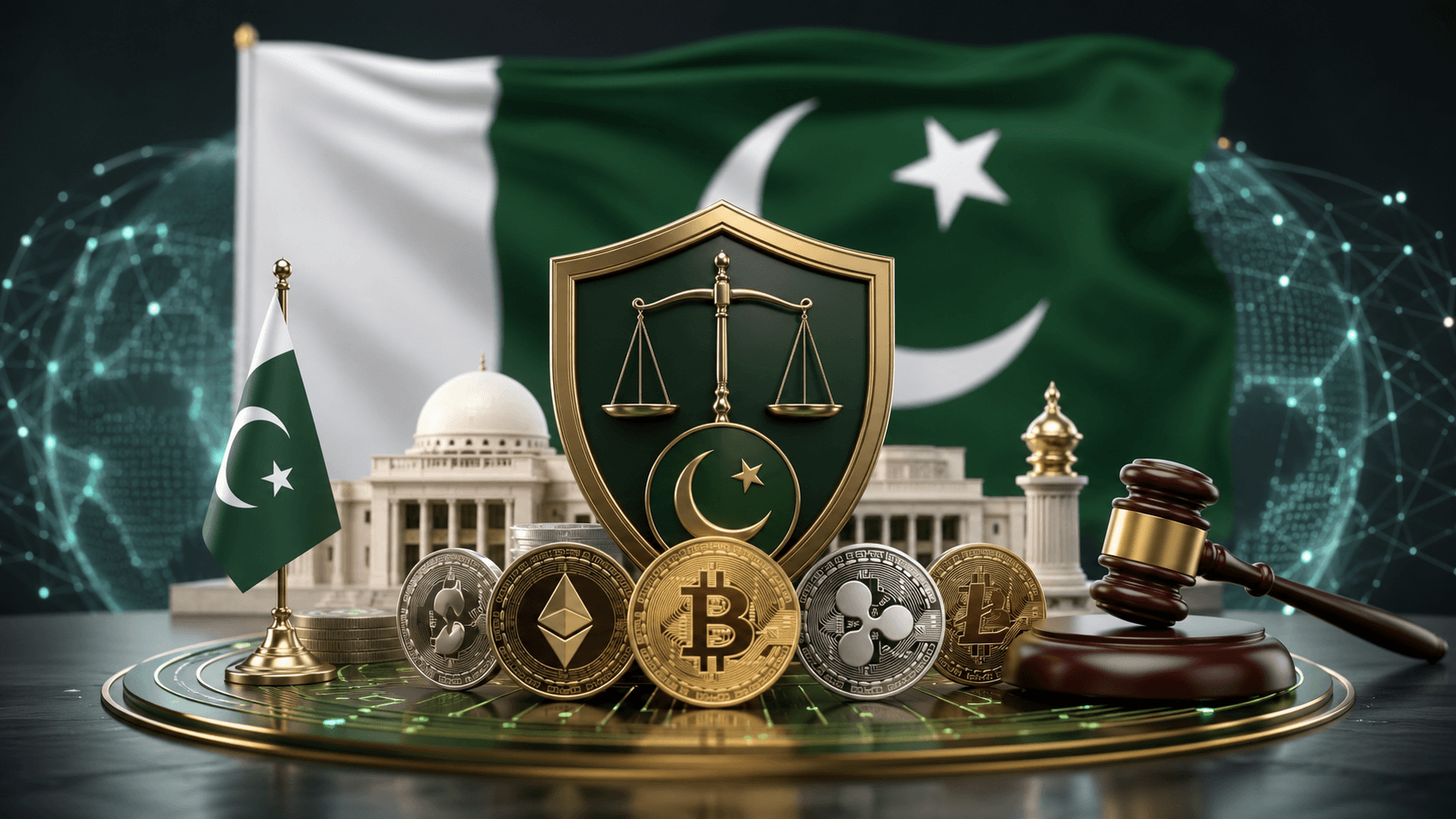
Sumber AI Generated Image
This policy then evolved. The government began shifting from a restrictive approach to establishing license-based regulations.
Pakistan established the PVARA to oversee virtual asset service providers. This agency is tasked with developing a licensing system, consumer protection, cybersecurity, and compliance with anti-money laundering and counter-terrorism financing regulations.
The framework evolved from the Virtual Assets Ordinance 2025. In March 2026, Pakistan's parliament approved legislation formally establishing PVARA as the virtual assets regulator. The government is also preparing to implement regulations to align the system with international standards.
This means that as of July 2026:
- Crypto is not the official currency of Pakistan.
- Cryptocurrencies do not receive a guarantee of value from central banks.
- Virtual asset activities are not automatically considered a criminal offense.
- Crypto service providers must follow the PVARA licensing framework.
- Activities without a license or in violation of financial regulations may still result in legal action.
- The legal status of a service does not automatically mean that the service complies with sharia principles.
Read also: Bitcoin Halal or Haram Explained: MUI's Statement and Investment and Trading Laws!
Differences Between Pakistani Crypto Fatwa and Regulations
Fatwas and regulations operate in different spheres.
A fatwa is an Islamic legal opinion issued by Islamic scholars based on their understanding of the sources of sharia and the circumstances of a transaction.
Fatwas can have strong social and religious influence, but they are not state laws unless adopted through established legal mechanisms.
State regulations govern aspects such as:
- Crypto exchange licensing.
- Verify user identity.
- Money laundering prevention.
- Consumer fund protection.
- Digital asset storage.
- Technology security.
- Transaction reporting.
- Supervision of service providers.
Therefore, a product may be legal under state law but still be controversial from a Sharia perspective. Conversely, a product that could theoretically be structured according to Sharia principles may still not be offered if the provider lacks regulatory approval.
The latest fatwa also doesn't automatically disband PVARA or halt the crypto regulation process. Instead, the government is calling for a more comprehensive discussion between religious scholars, regulators, and technology experts.
Pakistan's Minister of State for Crypto and Digital Assets, Bilal Bin Saqib, stated that blockchain, stablecoins, asset tokenization, and digital assets have distinct characteristics. He stated that each category requires a more detailed technical and sharia-compliant evaluation, rather than a one-size-fits-all approach.
Read also: Islamic Law on Crypto Trading: Halal or Haram?
Do All Scholars Agree That Crypto Is Haram?
No. Scholars' opinions regarding cryptocurrency are still divided.
Some scholars consider crypto illegitimate because it does not meet the definition of property, has no issuing authority, is highly speculative, and is vulnerable to being used for illegal activities.
Others believe that certain digital assets can be categorized as assets if they have benefits, are accepted by society, can be legally owned, and are not used in transactions involving usury, fraud, or gambling.
Differences can also arise based on the type of asset. Bitcoin doesn't have the same structure as stablecoins. Reserve-based stablecoins differ from algorithmic stablecoins. Tokens representing real assets are also not identical to meme coins with no clear utility.
Several authorities in other countries have opened trading in digital assets that pass Sharia screening. This situation demonstrates that there is no universal agreement that all forms of cryptocurrency are subject to the same legal framework.
Read also: MUI Fatwa on Cryptocurrency: Haram, Halal, or Depends?
What Impact Will It Have on Pakistan's Crypto Market?
Fatwas from influential clerics can influence the decisions of Pakistani society, especially investors who only want to use financial products that comply with Sharia principles.
Possible impacts include:
- Declining interest among some retail investors.
- Increasing demand for sharia-certified crypto products.
- The push to establish a dedicated sharia supervisory board for digital assets.
- Stricter scrutiny of stablecoins and tokens.
- Adjustment of PVARA rules to take into account Islamic financial principles.
- Increased education regarding the differences between blockchain and token speculation.
On the other hand, this debate could lead to more mature regulations. The government could establish digital asset classifications based on function, reserves, degree of decentralization, risk, and revenue structure.
This approach is more proportionate than lumping Bitcoin, stablecoins, security tokens, sukuk tokenization, and speculative digital assets into one category.
Read also: BI Stablecoin: A Safe Investment in the Crypto Future
What Should Investors Pay Attention to?
Investors should not simply rely on the terms “legal” or “haram” without understanding the context.
Before using a crypto platform in Pakistan, check:
- Does the service provider have a permit or is currently undergoing the PVARA permit process.
- Whether the asset is considered an investment tool, utility token, stablecoin, or lending product.
- Does the transaction use leverage or interest.
- Are stablecoin reserves verifiable?
- Is there a risk of fraud and market manipulation?
- Has the product been assessed by a competent sharia expert?
- Does the use of crypto violate foreign exchange or domestic payment regulations?
Muslim investors seeking Sharia compliance should consult with a muamalah (Islamic jurisprudence) expert. Assessment should be based on the asset and its transaction structure, not simply the name "crypto."
To stay up to date on digital asset regulations, Bitcoin, and global crypto policy, you can register at Bittime and read related news updates. This information still needs to be supplemented with independent research and consideration of applicable laws in each region.
Conclusion
The issue of whether crypto is haram in Pakistan arose after Mufti Muhammad Taqi Usmani stated that digital assets do not meet the criteria for “maal” and cannot be used as a valid means of payment according to his Sharia interpretation.
While this fatwa carries significant weight, it does not automatically constitute a national legal ban. Pakistan continues to develop its virtual asset industry through the PVARA, a licensing system, as well as consumer protection and anti-money laundering regulations.
So, is crypto legal in Pakistan? Cryptocurrency is not an official means of payment, but virtual asset activities are being incorporated into the regulatory framework.
National legality and Sharia compliance are two distinct considerations. The debate remains open because religious scholars hold diverse views.
Important to assess the type of asset, transaction mechanisms, platform licensing, and the potential for elements of gharar, maysir, or riba before making a decision.
Bittime is a licensed and regulated Digital Financial Asset Trader (PAKD) supervised by Indonesia’s Financial Services Authority (OJK) — where you can buy Bitcoin in Indonesia and hundreds of other crypto assets starting from just Rp10,000. The registration process is fast, secure, and you can get started today.
Track USDT to IDR conversions and monitor your favorite crypto assets in real time. Everything is available in one crypto investment app that you can download for free on the Play Store
Ready to start? Register now on Bittime and execute your investment strategy with a platform trusted by millions of users in Indonesia.
FAQ
Is crypto haram in Pakistan?
Mufti Muhammad Taqi Usmani declared crypto transactions unlawful based on his view that digital assets are considered property. However, this view does not necessarily represent all Islamic scholars or constitute a legal prohibition.
Is crypto legal in Pakistan?
Cryptocurrencies are not legal tender, but Pakistan has established the PVARA (Private Virtual Asset Management Agency) to regulate and license virtual asset service providers. The legality of specific activities depends on the applicable permits and implementing regulations.
Why do Pakistani clerics forbid crypto?
The main reason is that crypto is judged not to meet the definition of painting or legitimate wealth. Other concerns in the fiqh debate include speculation, gharar, maysir, and the potential for usury.
Is USDT also considered haram?
The latest fatwa covers stablecoins like USDT, as they are still considered digital assets that do not meet the criteria for wealth according to that view. Other scholars may have different opinions based on the stablecoin's reserves and utility.
Can a fatwa stop Pakistan's crypto regulation?
Not automatically. The Pakistani government continues to develop regulations through PVARA and encourages dialogue between regulators, technology experts, industry, and religious scholars.
Disclaimer: The views expressed belong exclusively to the author and do not reflect the views of this platform. This platform and its affiliates disclaim any responsibility for the accuracy or suitability of the information provided. It is for informational purposes only and not intended as financial or investment advice.

.png)