What Is USPR? Supply, Liquidity, and Risk on Solana
2026-07-15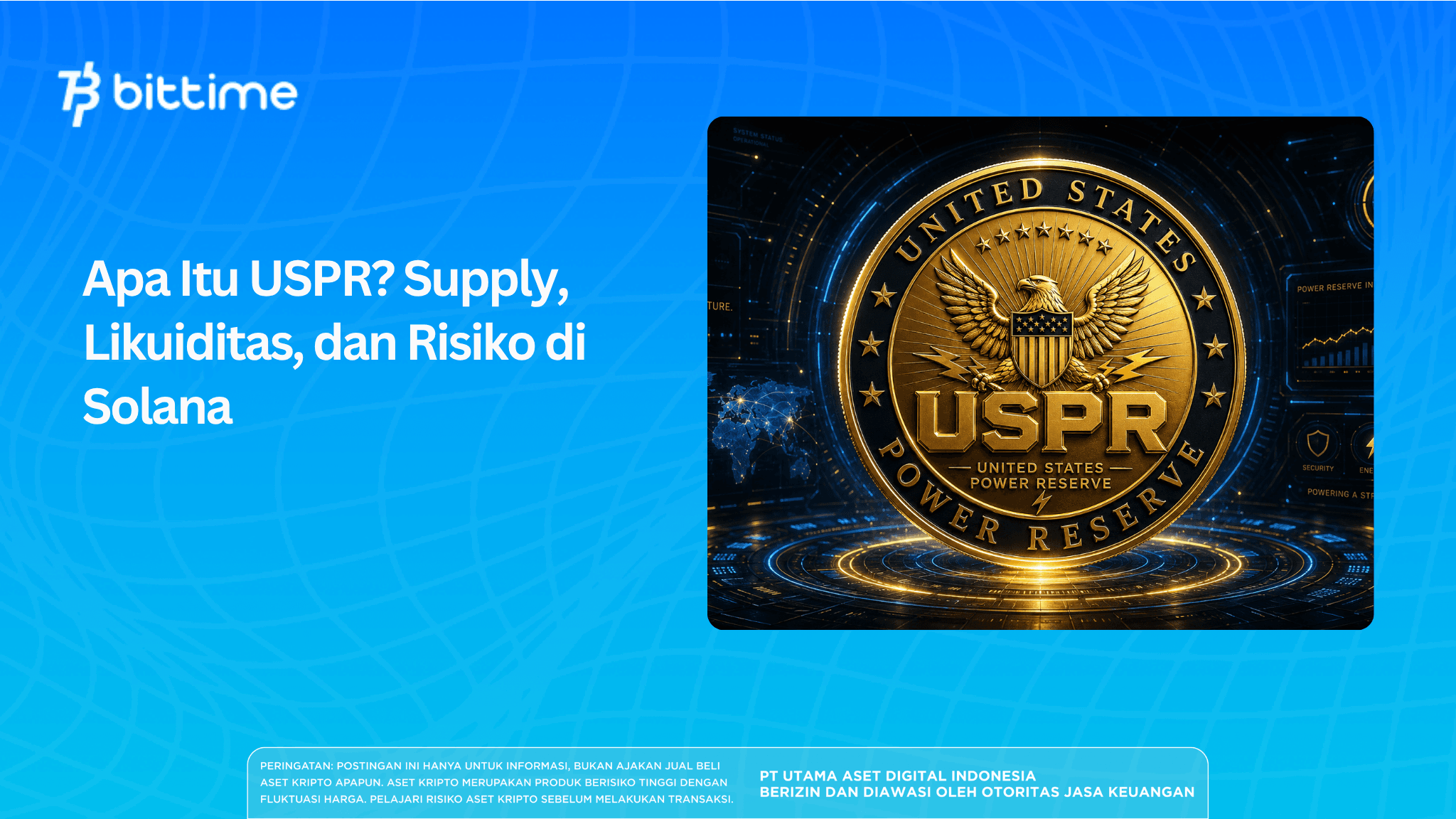
What is USPR? United States Power Reserve is a token Solana-based memes which raises the narrative of the increasing need for electricity for AI and data centers.
The project doesn't claim to have complex technical utility, but positions its token as a speculative way to follow the theme of energy and computing growth.
Key Takeaways
- USPR is an energy-themed meme coin, not an official United States government electricity reserve or proof of ownership of an energy asset.
- The official website states a total supply of 1 billion USPR, but market trackers for the same contract show a supply of around 10 billion tokens.
- The 0% transaction tax claim does not mean USPR trading is free as users still face DEX fees, network fees, slippage, and price impact.
What is USPR or United States Power Reserve?
United States Power Reserve is an SPL token on the Solana network with the symbol USPR. The contract address displayed on the official website is:
USPRLJFukm4xcTYEagMEZjT9ppPoMJCtRFsTxa3W5Ue
On Solana the mint address is a token's unique identifier. The name, symbol, and logo can be copied by other tokens, so the address should be verified before purchasing or swapping.
USPR uses the narrative that the development of artificial intelligence requires a large supply of electricity. The project's website describes AI as an energy-hungry machine and describes increasing electricity demand as the token's primary macro thesis.
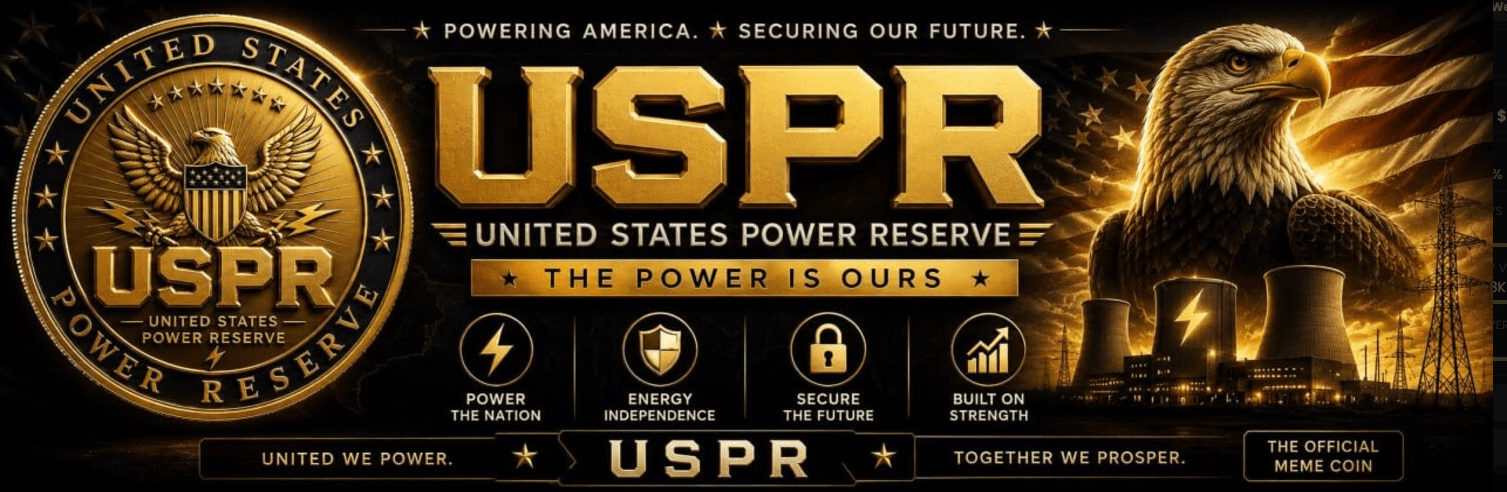
Source Dexscreener |United States Power Reserve
However, the same site also states that USPR does not offer utilities, staking, or other complex mechanisms.
USPR's description on Dexscreener explicitly calls it "a meme, on Solana." This means it's more accurately categorized as an energy-themed meme coin than a token representing power plants, transmission grids, energy commodities, or utility revenue.
No detailed whitepaper, financial audit reports, issuing legal entity, energy asset ownership, custodial agreement, or redemption mechanism were found in the sources reviewed. There was also no evidence that the project was affiliated with the United States government.
Thus, the name “United States Power Reserve” should not be interpreted as evidence that the token is part of the official energy program of the United States.
Read also: What Is VEIL? The Private DePIN Network on Robinhood Chain
How Does the USPR Token Work on Solana?
USPR functions as a digital token that can be stored in a Solana wallet and traded on a decentralized exchange. Based on the given pair, USPR is traded against USDC through the Meteora DYN2 pool.
The mechanism can be explained as follows.
1. USPR Issued as a Solana Token
Each Solana token has a mint account that stores information such as the total supply, number of decimal places, mint authority, and freeze authority. Mint authority can create new token units while its authority remains active, while freeze authority can freeze tokens for a specific account.
The USPR website claims that the contract has been "renounced" and has no dev mint. However, the term "renounced" is more commonly used for EVM tokens. On Solana, users should specifically check whether the mint authority and freeze authority have been changed.None. Revocation of authority is permanent for the authority that is revoked.
2. Price is determined by the Liquidity Pool
USPR doesn't have a fixed price determined by the issuer. The price changes based on the composition of USPR and USDC in the liquidity pool, the number of purchases and sales, and market conditions.
When a user buys USPR, the amount of USDC in the pool increases and the amount of USPR decreases. Conversely, when a user sells, USPR goes into the pool and USDC goes out. Large transactions relative to the pool size can significantly affect the price.
3. Trading Takes Place through Meteora
The USPR/USDC pair was examined using the Meteora DYN2 pool. Meteora DAMM v2 is an automated market maker that supports NFT-based liquidity positions, a liquidity locking mechanism, and a configurable fee structure.
Because it's traded through a DEX, users interact using their own wallets. There's no centralized exchange that acts as custodian for transactions in the pool.
Now that you understand GORP’s potential, don’t miss out on this trending token. Sign up on Bittime and start trading crypto now.
USPR Tokenomics: What is the Total Supply?
The official USPR website lists the following tokenomics:
- Total supply 1.000.000.000 USPR.
- Buy tax 0%.
- Sell tax 0%.
- Liquidity is burned or locked at launch.
- Contract renounced.
- Team allocation 0%.
- The launch is claimed to have been carried out in a fair launch.
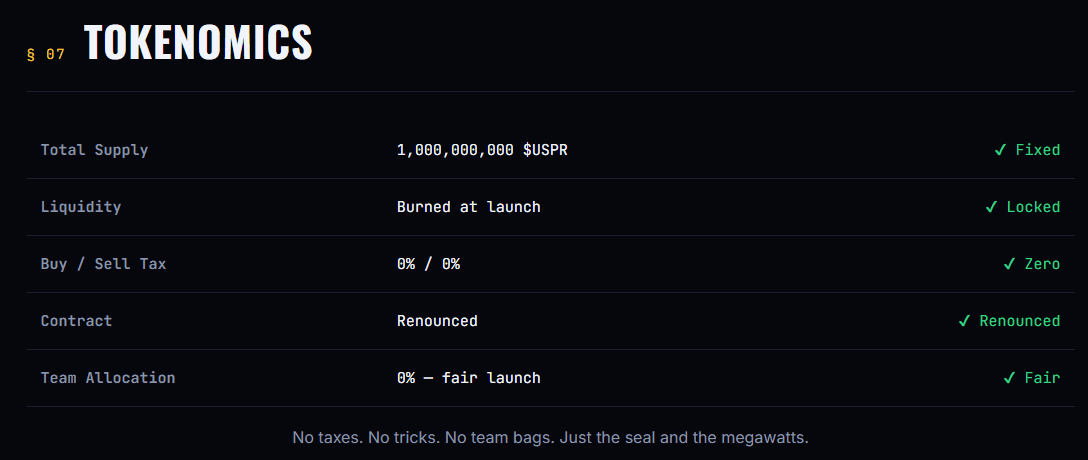
Source www.uspr.live
However, there is a significant inconsistency. Coinbase displays both circulating supply and total supply at10 million USPRfor the same contract address.
Dexscreener also shows a price of around US$0.001127 and a market cap of around US$11.2 million, consistent with a supply of around 10 billion tokens, not 1 billion.
The difference is tenfold:
- Official site: 1 billion USPR.
- Pelacak pasar: sekitar 10 miliar USPR.
These inconsistencies need to be addressed by the project team before tokenomics data can be considered reliable. A single-digit error in the total supply can impact valuation analysis, token distribution, and investor expectations.
Investors should not rely solely on website appearance. The total supply must be verified directly through a mint account and blockchain explorer. On Solana, the supply value is stored in the mint state and will increase when the active mint authority issues additional tokens.
Read also: What Is America Oil Reserve Agility? Learn About the Functions and Potential of This Token Base
USPR Token Price and Liquidity
In a Dexscreener snapshot on July 15, 2026, USPR/USDC pair data shows:
- Harga USPR sekitar US$0,001127.
- Liquidity is around US$74,000.
- Market capitalization is around US$11.2 million.
- Fully diluted valuation is approximately US$11.2 million.
- Approximately 32.96 million USPRs are in the pool.
- Around 37,165 USDC is on the other side of the pool.
- The new pair is about three days and seven hours old.
- The number of holders displayed is around 531 wallets.
- 24-hour volume was around US$2,100 from 88 trades.
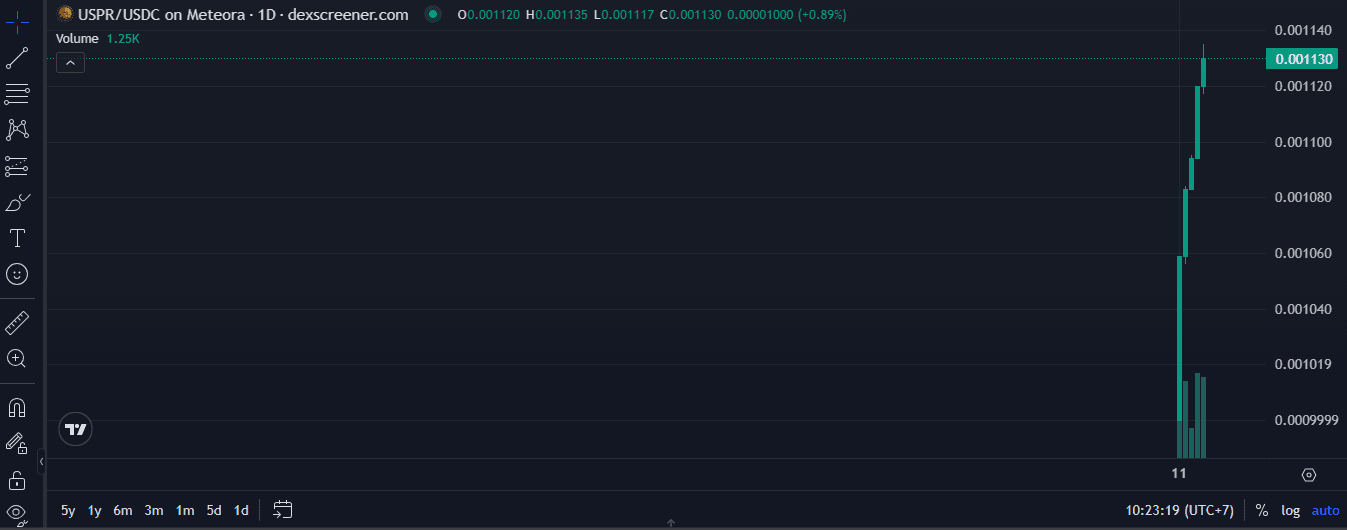
Source Dexscreener |United States Power Reserve
These figures are snapshots and can change within minutes. The USPR price at the time of reading this article could be significantly higher or lower.
It's important to note the significant difference between market capitalization and liquidity. A capitalization of around US$11.2 million doesn't necessarily mean there's US$11.2 million available for all holders to exit at the current price. The pool only showed liquidity of around US$74,000 at the time of the review.
If many holders sell simultaneously, the price can drop significantly before all transactions are completed. This is one of the main risks of meme coins with limited liquidity.
The relatively small trading volume also indicates that the current price may not be suitable for executing large transactions. Users should check the price impact before agreeing to a swap.
Read also: What Is Certified Hoodrat ($HOODRAT)? The New Memecoin on Robinhood Chain
USPR Transaction Tax is 0%, but Trading Still Costs
The official website claims a 0% buy and sell tax. This means the project doesn't take a special token cut every time USPR is bought or sold.
However, token taxes are different from trading fees. Users may still incur the following fees.
Liquidity Pool Fees
Meteora DAMM v2 has a fee structure that can consist of a base fee, a dynamic fee, a protocol fee, and a referral fee. The dynamic fee can increase when market volatility increases.
Thus, the figure “0% tax” does not mean that the liquidity pool charges a 0% fee.
Solana Network Fees
Each transaction requires a network fee in SOL. While Solana fees are generally relatively low, transactions still require a sufficient SOL balance.
Slippage
Slippage is the difference between the estimated price and the actual price at the time a transaction is executed. Tokens with low liquidity are more susceptible to significant slippage.
Price Impact
Price impact occurs when the transaction size changes the asset ratio in the liquidity pool. The larger the transaction compared to the liquidity, the worse the execution price is likely to be.
Therefore, an evaluation of USPR trading costs must take into account all of these components, not just the 0% transaction tax claim.
Read also: What is GigaBull ($GIGABULL)? Price Prediction, Opportunities, Risks, and How to Monitor It
Is USPR Liquidity Really Burned?
The USPR website states "100% LP burned" and claims liquidity was burned at launch. In the tokenomics section, the term "burned" is also displayed alongside the label "locked."
These two terms do not always have the same technical meaning.
In Meteora DAMM v2, liquidity position ownership is represented by an NFT. These positions can contain unlocked, vested, or permanently locked liquidity. The NFT position holder essentially controls the liquidity of the position, unless a portion of their liquidity has been permanently locked.
Therefore, the claim “LP burned” needs to be supported by:
- NFT position address.
- Pool formation transaction.
- Initial liquidity amount.
- Status permanent lock.
- Destination wallet when NFT is transferred.
- Proof that liquidity cannot be withdrawn.
- Explanation of who still receives trading fees.
Without proof of such transactions, the claim of liquidity being burned remains a statement from the project website, not the conclusion of an independent audit.
Locked liquidity also doesn't guarantee stable prices. Prices can still fall if large holders sell, demand disappears, or market activity decreases.
Read also: What Is OpenUSD (OUSD)? A New Stablecoin Supported by Visa, Mastercard, and Circle
Apa Potensi USPR?
The USPR's main narrative concerns the increasing energy demand due to the development of AI, data centers, and computing. This theme is compelling because it combines two highly discussed sectors: artificial intelligence and energy infrastructure.
USPR also uses a visual identity that resembles a national strategic asset. This branding approach can help the token stand out among the many Solana meme coins.
However, the current value of the USPR does not appear to come from:
- Electricity sales revenue.
- Ownership of energy generation.
- The right to the electricity network.
- Utility company dividends.
- Commodity reserves.
- Data center revenue.
- Cash flow based buyback mechanism.
The website actually states that USPR only expresses a macro thesis and does not offer any false utility or staking mechanism.
This means that USPR's price potential depends more on the narrative, community attention, speculative demand, liquidity, and meme coin market conditions. The theme's connection to AI energy needs doesn't create a direct economic link between the token and the electricity industry.
Read also: What Is NTFS? National Trust Fund System, Memecoin Trust Fund on Solana
Risiko Investasi Token USPR
1. Total Supply Inconsistency
The difference between 1 billion and 10 billion tokens represents a material information risk. Investors need accurate supply figures to calculate market cap and assess valuation.
2. Relatively Thin Liquidity
The US$74,000 liquidity is significantly lower than the market capitalization shown. Large sales could potentially lead to slippage and a sharp price drop.
3. The pair is still very young
The USPR/USDC pair was only about three days old at the time of the snapshot. This history is insufficient to assess long-term liquidity stability, community resilience, and developer behavior.
4. Lack of Verified Energy Fundamentals
There's no evidence that USPR owns any electricity assets or generates revenue from the energy industry. Its value depends primarily on narrative and trading activity.
5. Renounced Claims and LP Burned Must Be Verified
Statements on project websites do not replace on-chain audits. Users should independently verify token authority and liquidity status.
6. The “Buy on Coinbase” button can be misunderstood.
The USPR website displays a “BUY ON COINBASE” button. However, the link leads to a pricing information page, and Coinbase explicitly states that the United States Power Reserve cannot be traded on Coinbase.
The existence of a price page on Coinbase is not proof that a token has passed the listing process on that centralized exchange.
7. Holder Concentration Risk
The number of holders does not indicate a healthy distribution. A few wallets can control a significant portion of the supply even though the number of holders reaches hundreds. Analysis of the largest holders, creator wallets, and initial transactions is still necessary.
8. Solana Coin Meme Risk
Research on the Solana token shows that low barriers to token issuance contribute to the increase in risky launches and on-chain manipulation patterns. Since USPR is explicitly positioned as a meme coin, its risks must be assessed within that context.
Read also: What is Stairway to Gold ($GOLD)
Apakah USPR Aman?
There's not yet sufficient evidence to declare USPR a scam. The token has a website, contract address, liquidity pool, and trading activity that can be viewed on-chain. Dexscreener also didn't report any issues with its automated audits, but the platform warns that automated audit results may not be 100% accurate.
However, USPR cannot yet be considered a safe investment. Risk factors include:
- Token is still very new.
- Limited liquidity.
- Supply information is inconsistent.
- There are no utilities or cash flow yet.
- The LP burned claim has not been accompanied by easily verifiable audit evidence.
- The identity of the team and legal entity is not clearly visible.
- The price depends heavily on the sentiment of the meme coin.
USPR is more suitable for experienced traders who understand the risks of DEXs and can accept the possibility of losing their entire capital. This token is not suitable for emergency funds, essential needs, or investors seeking direct exposure to the energy industry.
Also read: What is AATF? American Account Trust Fund, Memecoin Trust Fund on Solana
Checklist Before Purchasing USPR
Before making a transaction, check the following things:
- Match the mint address with the address on the official website.
- Verify total supply directly from blockchain explorer.
- Check mint authority and freeze authority.
- Look for evidence of permanent lock transactions on liquidity positions.
- Analysis of the distribution of the largest holders.
- Check the wallet activity of the creator and initial buyer.
- Compare transaction size to pool liquidity.
- Simulate price impact before swap.
- Make a test purchase with a small nominal amount.
- Make sure the token can be resold.
- Leave SOL to pay network fees.
- Don't take the Coinbase page as proof of listing.
- Don't buy just because the branding resembles a government asset.
- Avoid using funds you can't afford to lose.
Conclusion
What is USPR? The United States Power Reserve is a Solana meme coin that focuses on the electricity needs of AI and data centers. The project publicly states that its token offers no complex utility and primarily serves as a speculative representation of the energy narrative.
The most significant aspect of USPR's analysis is the inconsistency in the total supply. The official website states 1 billion tokens, while market data for the same contract indicates approximately 10 billion tokens. Furthermore, the 0% tax claim fails to account for pool fees, network fees, slippage, and price impact.
Limited liquidity, the pair's young age, and the lack of verified energy assets or cash flow make USPR a very high-risk investment. Verify the contract address, authority, holder distribution, and liquidity lock status before trading.
Check out other popular Solana meme coins such as BONK, TRUMP, WIF, and PENGU, available on the Bittime market
Bittime is a licensed and regulated Digital Financial Asset Trader (PAKD) supervised by Indonesia’s Financial Services Authority (OJK) — where you can buy Bitcoin in Indonesia and hundreds of other crypto assets starting from just Rp10,000. The registration process is fast, secure, and you can get started today.
Track USDT to IDR conversions and monitor your favorite crypto assets in real time. Everything is available in one crypto investment app that you can download for free on the Play Store
Ready to start? Register now on Bittime and execute your investment strategy with a platform trusted by millions of users in Indonesia.
FAQ
What is USPR?
USPR is a Solana meme coin called the United States Power Reserve. This token promotes the growing need for electricity for AI and data centers, but it doesn't provably represent ownership of energy assets.
Berapa total supply token USPR?
The official website lists a supply of 1 billion USPR, while Coinbase lists a total supply of approximately 10 billion for the same contract. These discrepancies should be verified through a mint account before making a decision.
How much is the USPR transaction tax?
The project claims 0% buy and sell tax. However, users still pay DEX fees, Solana network fees, slippage, and potential price impact.
Is USPR available on Coinbase?
No. Coinbase has a USPR pricing information page, but states the token is not tradable on Coinbase.
Is USPR safe for investment?
USPR carries high risks due to its new nature, limited liquidity, inconsistent supply, and lack of verified energy fundamentals. Use only funds you can afford to lose and conduct on-chain checks first.
Disclaimer: The views expressed belong exclusively to the author and do not reflect the views of this platform. This platform and its affiliates disclaim any responsibility for the accuracy or suitability of the information provided. It is for informational purposes only and not intended as financial or investment advice.

.png)