What is Planck Network (PLANCK)? Get to know the Layer 0 of the AI world
2025-11-13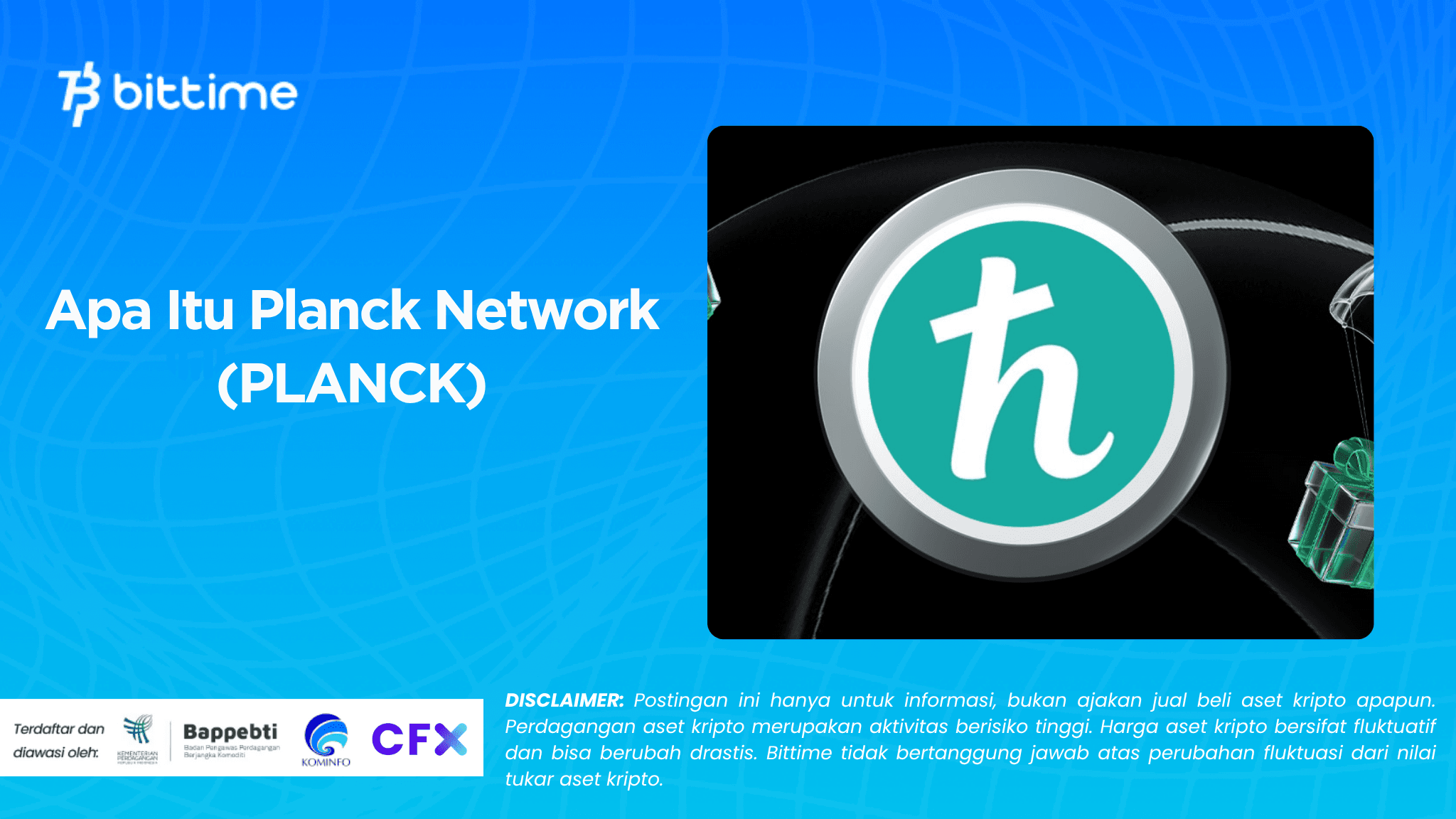
Planck Network (PLANCK) is a crypto project that focuses on AI infrastructure and DePIN (decentralized physical infrastructure).
Simply put, Planck aims to be the “behind-the-scenes engine” that supplies GPU computing power for various AI applications and decentralized networks. The project refers to itself as a Layer 0 specifically for AI and a GPU-friendly Layer 1.
On top of this, developers can build their own AI chains, run autonomous agents, and manage physical device networks in a decentralized manner. The token used in its ecosystem is called PLANCK.
Interestingly, Planck is not just selling “future story tokens,” but has also prepared a business model in the form of GPU rentals and AI cloud services that are claimed to be cheaper than traditional cloud providers.
Read also: What is Acurast (ACU)? Here's a Complete Explanation
Overview of the Planck Network and PLANCK Token
Planck as AI and DePIN Infrastructure
Conceptually, Planck is a modular infrastructure stack for launching AI chains and DePIN protocols. It consists of two main components:
Planck₀ (Layer 0 AI)
The foundational layer that coordinates computation, security, and cross-network messaging. This layer facilitates the launch of new chains focused on AI and DePIN without having to build infrastructure from scratch.
Planck₁ (Layer 1 GPU-native)
A blockchain optimized for running smart contracts and AI workloads on-chain. Here, GPUs are “first-class citizens,” not just add-ons. Planck₁ targets inference execution, lightweight training, and orchestration of AI agents in decentralized networks.
On top of these two layers, Planck offers products such as AI Cloud, AI Studio, GPU Dashboard, and staking pools.
The goal is to enable developers and companies to train, test, and deploy AI models on decentralized GPUs, not just on traditional clouds.
Read also: What is Omni Network (OMNI)?
The role of PLANCK tokens in the ecosystem
PLANCK tokens serve as the “fuel” in this ecosystem. Some of the main functions mentioned in the official materials include:
- Paying for computing access (GPU, orchestration, and other AI services)
- Staking to support network security and computing infrastructure
- Early access to the AI chain and certain services
- Governance roles in the ecosystem, such as voting on policies or network parameters
From a tokenomics perspective, the current data is not entirely consistent. CryptoRank lists the total and maximum supply of PLANCK tokens as 1 billion tokens.
Meanwhile, CoinMarketCap's preview shows a total and maximum supply of 500 million PLANCK with a circulating supply of around 76.55 million tokens.
This difference is normal in the early stages of listing, when documents and listings are still being updated. This means that anyone interested needs to double-check the latest figures directly on the official website and price aggregators before making a decision.
Quick summary: 3 key points about Planck Network
For your convenience, here is a summary in list format:
Main focus
Planck aims to become an AI and DePIN infrastructure by utilizing GPUs in a decentralized manner.
Two core layers
Planck₀ as Layer 0 AI, Planck₁ as GPU-friendly Layer 1 execution.
PLANCK Token
Used for computing access, staking, governance, and various utilities in the ecosystem.
Read also: What is Lisk Crypto? A Complete Explanation!
How the Planck Network Works: Layer 0, Layer 1, and AI Services
Technical architecture in simple terms
To simplify, the way Planck works can be described as follows:
Planck₀ coordinates the network
This layer manages security, communication, and orchestration of AI workloads across various chains. Its function is similar to a “traffic controller” that regulates the flow of computing between ecosystems.
Planck₁ executes AI workloads
Here, smart contracts and AI workloads are executed directly on GPUs. Planck₁ manages GPU scheduling, payments, and inference processes in an on-chain environment.
Planck Tunnel connects to multiple ecosystems
Planck provides a bridge connecting their Layer 0 to various other chains, including large ecosystems such as Ethereum, via a bridge that supports stablecoins such as USDC.
AI Cloud and AI Studio
The product layer on top of this infrastructure allows teams to rent GPUs, train models, and deploy AI without having to manage their own servers.
Key features of Planck Network
Some of the key features that this project often highlights include:
AI-native Layer 0
Specially designed for chains and protocols that have high AI computing needs.
GPU-native Layer 1
Focuses on executing smart contracts and AI workloads directly on GPUs.
Tokenized compute
GPU access can be “tokenized.” Users and GPU providers can interact through staking and payment mechanisms based on PLANCK tokens.
Staking tokens and GPUs
Not only can tokens be staked, but GPUs can also be staked to support the network and earn rewards.
DePIN Integration
Suitable for protocols that want to connect real physical assets (such as data centers or edge devices) to the Web3 ecosystem.
Read also: What is Official ZUNO? Understanding the Concept and Value Behind ZUNO Crypto
Bittime: an example of a secure crypto trading platform in Indonesia
When learning about projects like Planck Network, many people immediately ask, “Where can I buy it?” In Indonesia, one example of a licensed and regulated crypto exchange is Bittime.
This platform is registered with Bappebti and Kominfo, and holds security certifications such as ISO 27001 and ISO 27017.
Bittime also provides a beginner-friendly interface, low rupiah withdrawal fees, and support for hundreds of crypto assets.
If you want to start learning crypto trading more safely, you can download the Bittime app from the Play Store or App Store, then try a verified account and start with a small amount according to your risk profile.
Keep in mind that crypto trading is high risk, so always use funds that you can afford to lose.
Whether PLANCK is available on licensed Indonesian exchanges or not, you need to check directly on the respective apps or websites.
Read also: What is ANYONE Crypto
Risks, Potential, and How to Evaluate Planck Network
Development and regulatory status
Planck Network is a young project, but it has already taken several important steps:
- Conducted a private sale with hundreds of thousands of US dollars raised according to CryptoRank data.
- Reporting revenue from GPU rental and AI cloud services exceeding one million US dollars, with managed GPU value in the tens of millions of dollars.
- Announcing full compliance with MiCA regulations in the European Union, including approved whitepapers and token structures.
Compliance with MiCA allows them to enter the more regulated European market. However, this does not automatically eliminate risks. Token prices can still fluctuate sharply, especially in the early days of listing on various exchanges.
Read also: What is Arcarrierpoint Net? Can it be used in crypto?
Key risks to consider (listical)
Before getting interested in AI-themed tokens like PLANCK, there are several risks you need to be aware of:
- Market risk
Token prices can be highly volatile. Rapid increases can be followed by sharp declines.
- Liquidity risk
Some data sources still show limited volume and capitalization. Liquidity can change quickly, especially in the early days of listing.
- Technical risk
Projects in the AI and GPU fields have high technical complexity. Bugs, security vulnerabilities, or infrastructure failures can have a major impact.
- Business execution risk
Despite its strong concept, Planck still has to compete with cloud providers and other AI projects. Revenue and adoption targets may not be achieved.
- Local regulatory risk
Although Europe already follows MiCA, regulations in each country may not be the same. In Indonesia, the status of a token still refers to the list of assets permitted by regulators.
A simple checklist before you get interested in PLANCK
Here is a practical checklist that you can use, not only for PLANCK, but also for other AI tokens:
- Read the whitepaper and official website
Understand the business model, technology, and token flow.
- Check the team and investors
Planck mentions big names in the crypto and technology world as investors and partners. Make sure you check for yourself at official sources.
- Compare tokenomics data across multiple aggregators
If there are discrepancies in supply or other figures, raise an alert and investigate the cause.
- Monitor liquidity and volume
Check the exchange where the token is traded: what is the daily volume, how wide is the price spread.
- Use funds you can afford to lose
Cryptocurrency is a high-risk asset. Do not use essential funds, emergency funds, or borrowed money.
Read also: What is AI Rig Complex (ARC)? Get to know ARC before it lists on Bittime
Conclusion
Planck Network (PLANCK) is a crypto project that attempts to solve one major problem: the high cost and complexity of GPU access for AI. By combining a dedicated AI Layer 0 and a GPU-friendly Layer 1, they want to make AI computing more open, decentralized, and efficient.
The PLANCK token serves as the ecosystem's fuel: for computing access, staking, and governance. At the same time, the project has also ventured into the regulatory realm by achieving MiCA compliance in the European Union and preparing for listing on various global exchanges.
However, like other crypto projects, Planck remains risky. The ever-changing tokenomics, developing liquidity, and fierce competition in the AI sector make independent research very important.
So, if you are interested in the question “What is Planck Network (PLANCK)?”, the answer is: it is one of the AI infrastructure candidates in the crypto world that is worth monitoring, but it must still be approached with a critical attitude, risk calculation, and thorough research.
How to Buy Crypto on Bittime
Want to trade sell buy Bitcoins and crypto investment easily? Bittime is here to help! As an Indonesian crypto exchange officially registered with Bappebti, Bittime ensures every transaction is safe and fast.
Start with registration and identity verification, then make a minimum deposit of IDR 10,000. After that, you can immediately buy your favorite digital assets!
Check the exchange rate BTC to IDR, ETH to IDR, SOL to IDR and other crypto assets to find out today's crypto market trends in real-time on Bittime.
Also, visit the Bittime Blog for interesting updates and educational information about the crypto world. Find reliable articles about Web3, blockchain technology, and digital asset investment tips designed to enrich your crypto knowledge.
FAQ
What is Planck Network (PLANCK)?
Planck Network is a blockchain infrastructure for AI and DePIN consisting of a dedicated AI Layer 0 and a GPU-optimized Layer 1. Its main token is called PLANCK.
What is the PLANCK token used for?
PLANCK is used to pay for GPU computing access, staking, governance, and various other utilities in the Planck ecosystem, such as AI Cloud and AI Studio services.
What is the total supply of PLANCK tokens?
Current data varies across sources. CryptoRank shows a total supply of 1 billion PLANCK, while CoinMarketCap shows 500 million PLANCK. Double-check the latest information before making a decision.
Is Planck Network compliant with regulations?
Planck Network announced that it meets MiCA regulatory standards in the European Union, including an approved whitepaper and token structure. However, regulatory status may vary from country to country.
Does this article recommend buying PLANCK?
No. This article aims to provide general information about what Planck Network (PLANCK) is. The decision to buy or not is entirely up to you and should be based on your own research and understanding of the high risks of crypto.
Disclaimer: The views expressed belong exclusively to the author and do not reflect the views of this platform. This platform and its affiliates disclaim any responsibility for the accuracy or suitability of the information provided. It is for informational purposes only and not intended as financial or investment advice.

.png)