What Is Custody in Crypto? A Complete Explanation
2026-05-19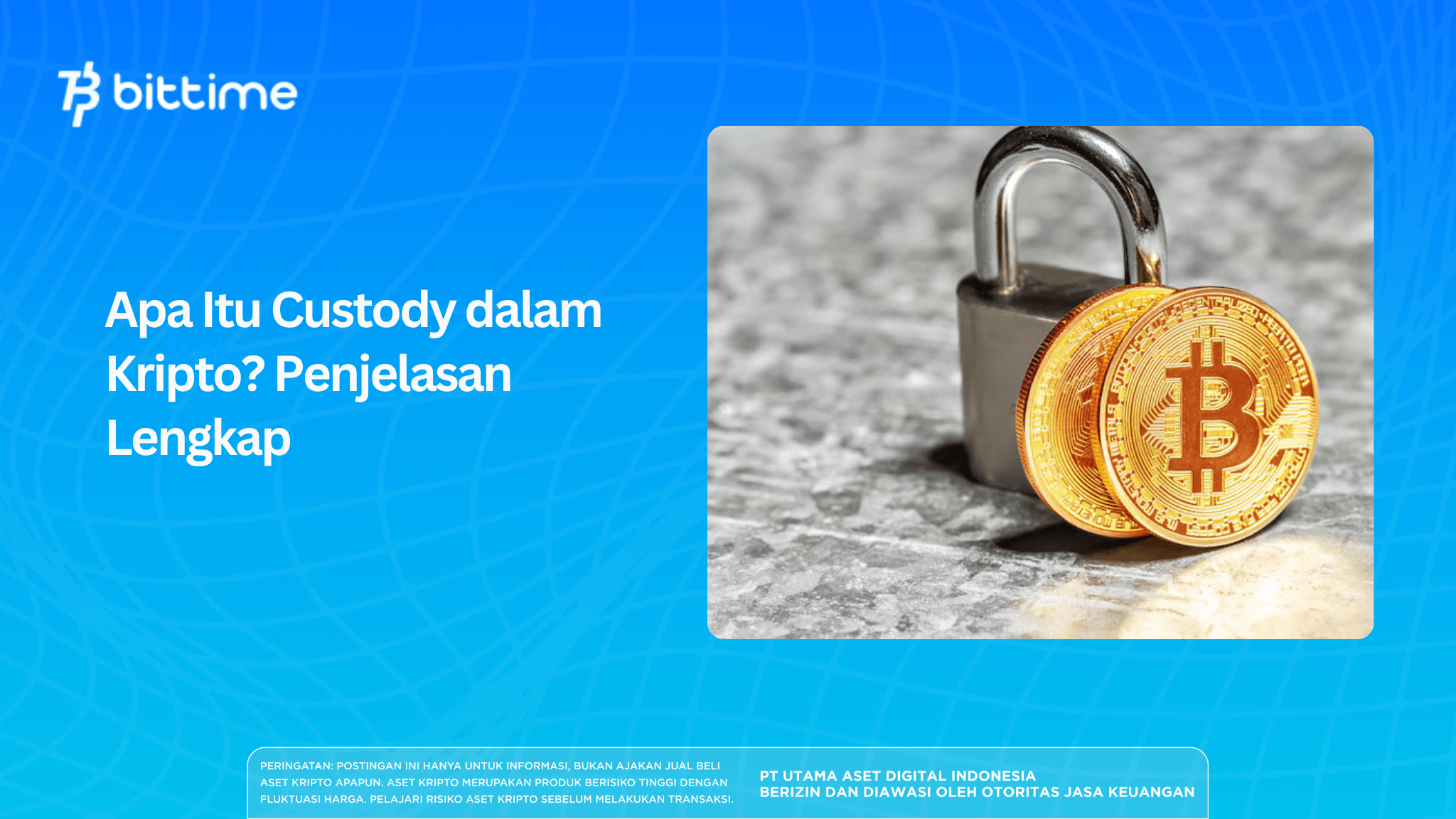
When discussing crypto assets, many people focus on Bitcoin’s price or investment opportunities. Yet there is one thing that is just as important but often overlooked, namely crypto custody or a digital asset storage system.
Simply put, custody is a method of keeping crypto assets safe by protecting the private key, the main access that proves ownership of assets on the blockchain. If this access is lost or falls into someone else’s hands, digital assets can be difficult to recover.
Key Takeaways
- Crypto custody protects private keys so digital assets stay safe from loss or theft.
- There are several custody models, ranging from self-custody to third-party storage.
- The choice of custody depends on needs, security level, and how users manage their assets.
Understanding What Custody Means in Crypto

Custody is a service or method of storing assets designed to reduce the risk of loss or theft. In traditional finance, custody is usually used by financial institutions to store securities or clients’ investment assets.
In the blockchain world, the custody concept has evolved into protection of the private key. This private key functions as proof of ownership of digital assets such as Bitcoin or Ethereum.
Unlike a regular bank account, blockchain has no central administrator to restore account access. That means if the private key is lost, the crypto assets can also be lost permanently.
That is why custody is an important part of the digital asset ecosystem.
In general, there are two custody models most commonly used.
Self-custody is a method in which users store their private keys themselves through a digital wallet or hardware wallet. This model gives full control over assets, but the security responsibility also lies entirely with the user.
Meanwhile, custodial service is a storage service provided by a third party, usually a crypto exchange platform or a digital asset security provider. In this model, the service provider helps manage user security and access.
For some people, custodial systems feel more practical because there is no need to manage the seed phrase themselves. However, users still need to understand how the provider secures their assets.
Read Also: OJK Supervision of Crypto in Indonesia: The Impact of the Regulatory Transition and Its Implications
How Does Crypto Custody Work?
Basically, crypto custody works by securing access to digital assets, especially the private key. Its main focus is not storing the asset physically, but protecting the access rights to the asset on the blockchain.
In the self custody model, users independently store private keys through hardware wallets, wallet applications, or encrypted offline devices. This method gives users full control without interference from other parties.
However, there are risks that users need to understand. Losing a seed phrase or device damage without backup may make assets difficult to access again.
On the other hand, third party custody or third-party custody stores private keys within the service provider’s system. This model is commonly used by crypto exchanges because it is more practical for active traders.
To maintain asset security, custody providers usually implement several of the following technologies:
Cold Storage
An offline storage method that makes assets safer from online hacking risks.
Hot Wallet
A wallet that remains connected to the internet to support fast transactions, but usually stores only a small portion of assets.
Multisignature Wallet
A security system that requires more than one approval before a transaction is executed.
Multiparty Computation (MPC)
A technology that distributes access control among multiple parties so that no single entity has complete control.
The purpose of using these technologies is to reduce the risk of theft, human error, or unauthorized access to digital assets.
In a self custody model, users store their private keys independently through hardware wallets, wallet applications, or encrypted offline devices. This method provides full control without third-party involvement.
However, there are risks to understand. Losing a seed phrase or device damage without a backup may make assets difficult to access again.
On the other hand, third-party custody stores private keys within the service provider’s system. This model is commonly used by crypto exchanges because it is more practical for users who actively trade.
To maintain asset security, custody providers typically use the following technologies:
Cold Storage
An offline storage method that makes assets more secure from online hacking risks.
Hot Wallet
A wallet that remains connected to the internet to support fast transactions, but usually stores only a small portion of assets.
Multisignature Wallet
A security system that requires more than one approval before a transaction can be executed.
Multiparty Computation (MPC)
A technology that distributes access control across multiple parties so that no single entity has complete control.
The purpose of using these technologies is to reduce the risk of theft, human error, or unauthorized access to digital assets.
Read Also: Learn Crypto Trading: Understanding Trading Pairs, Market Orders, Order Books, and Limit Orders
Benefits, Risks, and How to Choose the Right Custody
Crypto custody helps reduce various risks commonly associated with storing digital assets. However, each storage method still comes with its own advantages and challenges.
Below is a comparison between self custody and third-party custody:
Besides understanding the differences, there are several things you should check before choosing a custody service:
If you are still new to digital assets, understanding the basics of asset storage can be an important first step. You can also explore crypto educational resources and begin learning about the digital asset ecosystem through Bittime.
For users who want to start buying or learning about crypto assets more easily, Bittime.com provides access to explore various information and features related to digital assets.
Read Also: What Is a Privacy Coin? Here Are the 3 Most Popular Assets!
How to Buy Crypto on Bittime?

Want to trade and buy Bitcoin and invest in crypto easily? Bittime is here to help! As an Indonesian crypto exchange supervised by OJK, Bittime ensures every transaction is safe and fast.
Start by registering and verifying your identity, then make a minimum deposit of Rp10,000. After that, you can immediately buy your favorite digital assets!
Check BTC to IDR , ETH to IDR , SOL to IDR and other crypto assets to monitor real-time crypto market trends on Bittime.
Conclusion
Crypto custody is a system for storing and protecting digital assets, especially private keys that serve as proof of ownership on the blockchain. Without the right custody system, the risk of losing assets due to user error or security threats can increase.
Understanding the difference between self custody and third-party custody can help users determine the storage method that best suits their needs. Ultimately, the best choice depends on individual needs, transaction habits, and comfort level in managing digital asset security.
FAQ
What is custody in crypto?
Crypto custody is a system for storing and managing private keys to secure digital assets.
What is the difference between self custody and a custodial wallet?
Self custody gives users full control, while a custodial wallet is managed by a third party such as a crypto platform.
Is crypto custody safe?
Its security depends on the technology, protection systems, and how users manage access to their assets.
What is the biggest risk in crypto custody?
The biggest risks are losing private keys, asset theft, or unauthorized access.
Who needs custody services?
Both individual users and institutions that want to store digital assets with a certain level of security.
Disclaimer: The views expressed belong exclusively to the author and do not reflect the views of this platform. This platform and its affiliates disclaim any responsibility for the accuracy or suitability of the information provided. It is for informational purposes only and not intended as financial or investment advice.

.png)