What is Cryptography? Definition, How it Works, and Types
2026-05-30
Bittime - What is Cryptography? Cryptography is the science and practice of protecting information by converting it into secret code. The goal is to ensure that only authorized parties can read and access the information.
The word cryptography comes from the Greek "kryptos" which means hidden.
In the modern digital world, cryptography has become a very important cybersecurity tool.
Every time you shop online, send a message on WhatsApp, or access your bank account, cryptography is working behind the scenes to protect your data.
Key Points
Cryptography is the science of securing information – Converting original data (plaintext) into secret code (ciphertext).
There are three main types of cryptography – Symmetric key (one key), asymmetric key (two keys), and hash function (no key).
Cryptography guarantees four things – Confidentiality, integrity, authentication, and non-repudiation.
Register at Bittime now and start trading crypto with a fast, secure, and easy process in the app.
What is Cryptography?
Cryptography is a technique of securing information by converting it into a format that cannot be read by unauthorized parties.
This process is called encryption.
The original data that is easy to read is called plaintext, while the data that has been scrambled is called ciphertext.
To return ciphertext to plaintext, a decryption process using a secret key is required.
Cryptography has been used for thousands of years.
Julius Caesar used the Caesar cipher by shifting letters of the alphabet to hide his military messages.
Today, cryptography has become much more sophisticated with algorithms such as AES and RSA.
How Cryptography Works
The way cryptography works involves several main components:
1. Plaintext
is the original message or data that you want to protect.
2. Cryptographic algorithms
It is a mathematical formula used to encrypt and decrypt data. Third, a cryptographic key is a secret string of characters that controls the encryption and decryption process.
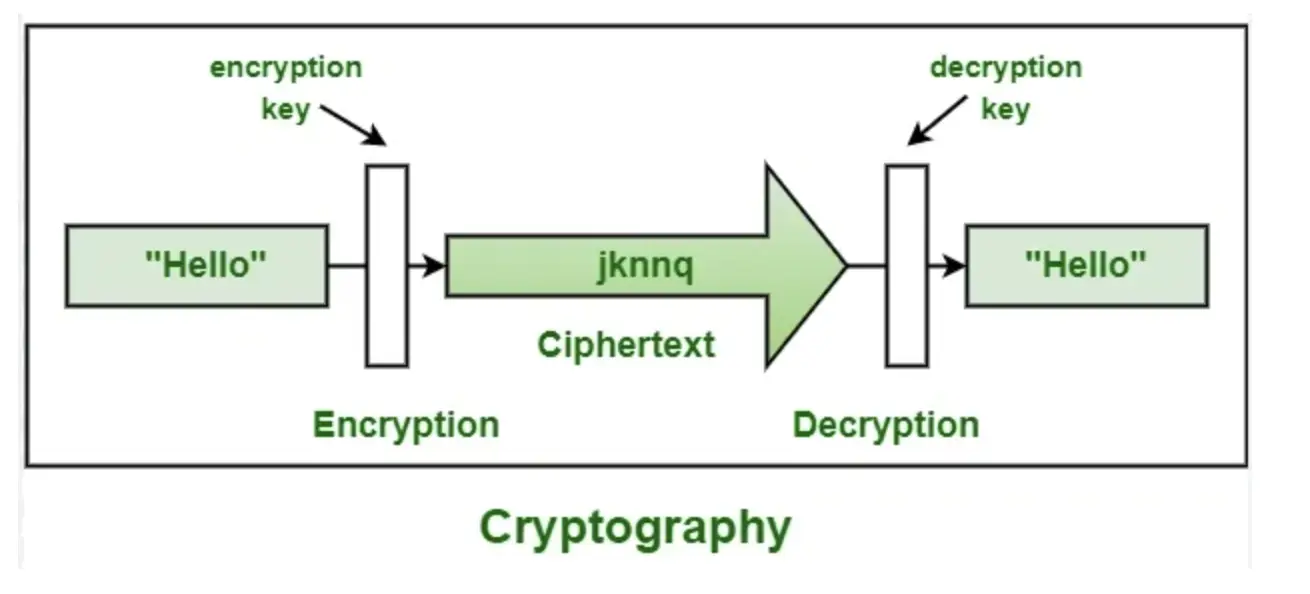
The process is simple cryptography
Source: geeksforgeeks.org
plaintext + algorithm + key = ciphertext.
This ciphertext is safe to send over public networks.
The recipient who has the correct key can decrypt it back into plaintext.
The longer the key, the harder it is to crack.
A 128-bit key would take 1.872 x 10^37 years to brute-force. For comparison, the universe is only 13.7 billion years old.
Read also:What Is Crypto Ransomware? Everything You Need to Be Aware of
3 Jenis Cryptography
Source: geeksforgeeks.org
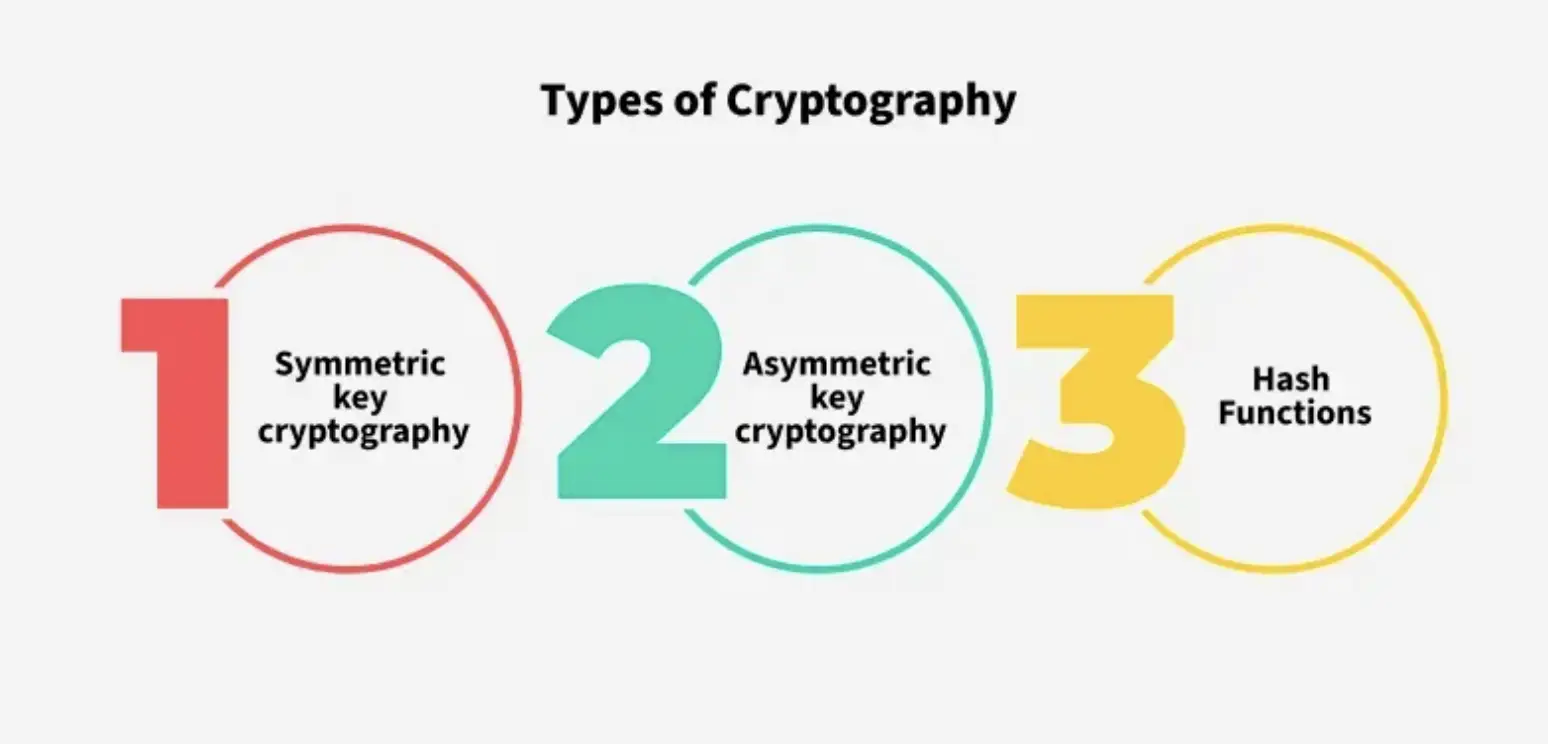
There are three main types of cryptography that need to be understood.
1. Symmetric Key Cryptography
Symmetric cryptography is a system in which the same key is used for encryption and decryption. It is fast and suitable for large amounts of data.
However, the problem is that the sender and recipient must exchange keys securely.
Contoh algoritma: AES (Advanced Encryption Standard) dan DES (Data Encryption Standard).
2. Asymmetric Key Cryptography
Asymmetric cryptography or public key cryptography uses two different keys: a public key (which can be shared with anyone) and a private key (which must be kept secret).
Data encrypted with a public key can only be decrypted with the corresponding private key.
Contoh algoritma: RSA dan ECC (Elliptic Curve Cryptography).
This system is more secure but slower and requires more resources.
3. Hash Functions
A hash function converts a message of any length into a fixed-length output called a hash value.
This process is one-way — it cannot be reversed to get the original data.
Hash functions do not require a key.Examples of algorithms: SHA-256 (used in Bitcoin) and MD5.
Read also:What Is SAFU? Understanding Secure Asset Funds for Users in the Crypto World
Empat Pilar Cryptography
Modern cryptography guarantees four things:
1. Confidentiality
Information can only be accessed by authorized parties. This is achieved through encryption.
2. Integrity
Information cannot be altered without detection. Hash functions ensure data integrity.
3. Authentication
The identities of the sender and recipient can be verified. A digital signature is an example.
4. Non-repudiation (Cannot be denied)
The sender cannot deny that they sent the message.
Read also:Willow Quantum Chip: Definition and Impact on Crypto
Examples of Cryptography Usage
Cryptography is used in everyday life:
HTTPS (Secure Web Browsing): Secures communication between the browser and the website server. A padlock icon in the browser indicates a secure connection.
WhatsApp and Signal:Using end-to-end encryption so that only the sender and recipient can read the message.
Bitcoin dan Cryptocurrency:Using SHA-256 and ECC hash function to secure transactions and wallet.
Password Storage: Passwords are stored in hashed form, not plaintext. If the database is breached, passwords are not immediately exposed.
Digital Signature: Digitally sign documents with legal validity.
Read also:Solana vs Ethereum: Who's Superior in DeFi & Decentralized Applications?
Conclusion
Cryptography is the science of protecting information by converting it into secret code.
The definition of cryptography includes three main types: symmetric key (one key), asymmetric key (two keys), and hash function (no key).
The way cryptography works involves plaintext, algorithms, and keys to produce ciphertext.
A complete explanation of cryptography shows that this technology guarantees confidentiality, integrity, authentication, and non-repudiation of data.
Cryptography is the foundation of modern digital security. Without it, online transactions, digital banking, and private communications would be unsafe.

Bittime is a licensed and regulated Digital Financial Asset Trader (PAKD) supervised by Indonesia’s Financial Services Authority (OJK) — where you can buy Bitcoin in Indonesia and hundreds of other crypto assets starting from just Rp10,000. The registration process is fast, secure, and you can get started today.
Track USDT to IDR conversions and monitor your favorite crypto assets in real time. Everything is available in one crypto investment app that you can download for free on the Play Store
Ready to start? Register now on Bittime and execute your investment strategy with a platform trusted by millions of users in Indonesia.
FAQ
What is cryptography?
Cryptography is the science of protecting information by converting it into secret code so that only authorized parties can read it.
What are the types of cryptography?
Three main types: symmetric key cryptography (one key), asymmetric key cryptography (two keys), and hash functions (no keys).
What is the difference between symmetric and asymmetric cryptography?
Symmetric uses one key for encryption and decryption. Asymmetric uses two keys: a public key and a private key.
What is a hash function?
A mathematical function that converts data of any length into a fixed-length output (hash value). The process is one-way and cannot be reversed.
Apa contoh algoritma symmetric cryptography?
AES (Advanced Encryption Standard) dan DES (Data Encryption Standard).
Disclaimer: The views expressed belong exclusively to the author and do not reflect the views of this platform. This platform and its affiliates disclaim any responsibility for the accuracy or suitability of the information provided. It is for informational purposes only and not intended as financial or investment advice.

.png)