USOR vs. USDF: Which Is More Attractive to Buy? Check These 5 Factors
2026-10-30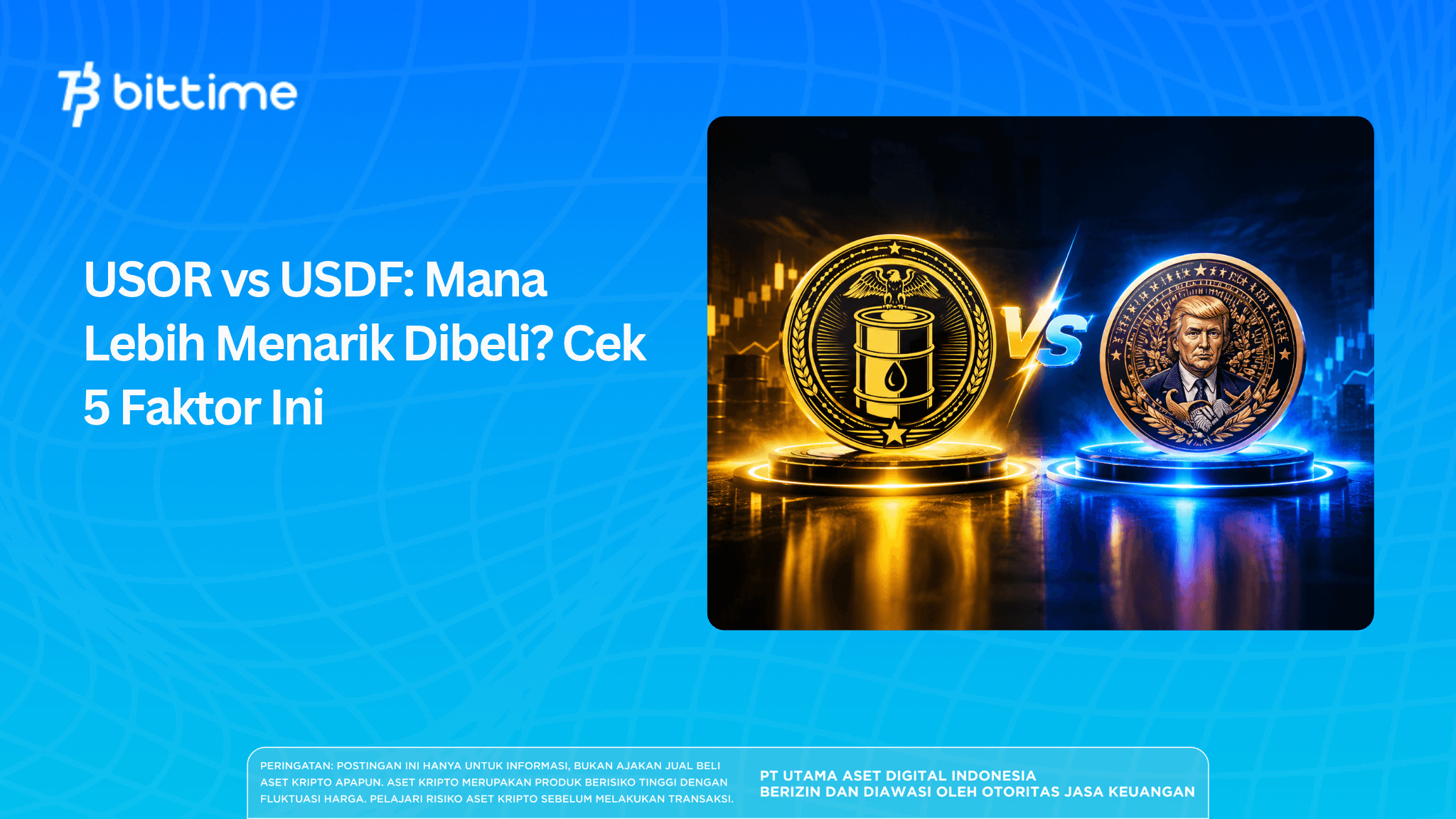
Comparing USOR vs USDF requires more than just looking at their prices or daily gains. Across the two markets examined, USDF has greater liquidity and trading activity, but the token address on the linked website differs from the address on the trading page.
Meanwhile, the USOR address matches across the pages examined, but the selected pool has significantly lower liquidity. Before deciding to buy, there are five factors you should weigh: token identity, valuation, liquidity, market activity, and token controls.
Key Takeaways
- USDF is more actively traded in the pool being compared, but its token address information is not yet consistent.
- USOR has a lower unit price, but that does not automatically make it more attractive.
- Your buying decision should consider the ability to resell the token and evidence of the project's utility.
What Are USOR and USDF?
USOR in this article refers to U.S Oil, a token on the Solana network traded through the USOR/SOL pair on Orca. A name associated with oil does not, by itself, prove that the token is backed by oil reserves.
USDF is the United States Dividend Fund traded through the USDF/SOL pair on PumpSwap. Although its name contains the words “Dividend Fund,” the sources examined do not provide sufficient evidence to confirm that token holders receive dividends.
Both tokens should be identified by their mint addresses, which serve as unique token identifiers on Solana. Other tokens can use the same name and symbol, while the mint address determines the actual asset you are buying.
Read also: USOR Coin Facts: Claims, Trump Controversy, and Other Things to Know
1. Token Identity: Make Sure You Are Comparing the Same Assets
The USOR address listed on the market page matches the address on the linked explorer:
USoRyaQjch6E18nCdDvWoRgTo6osQs9MUd8JXEsspWR
For USDF, the token in the pool you provided uses the following address:
DRMnFyekQiCTMrajtgsTycqp4ie6r1tZnh6qpAGjpump
However, the website linked from the USDF trading profile lists a different address:
3PGHr2nVLKv9C9B17TqRsTcV8dwMvaTsRSDJCHKYpump
This discrepancy matters because the claims made on a website do not necessarily apply to the token listed on the trading page. The materials examined contain no verified explanation connecting these two addresses.
The website also states that the project is independent and is not affiliated with any United States government institution. Therefore, the use of a country's name should not be taken as a reason to assume that the token has government backing.
For prospective buyers, the next step is to seek address confirmation through verifiable project channels. Do not transfer assumptions about dividends or products from one token to another simply because they share the same name.
Read also: USDF Price Prediction: Can It Reach $1? Here's the Analysis
2. USOR vs USDF: Compare Valuation, Not Just Price
The following data uses snapshots of the pages accessed on October 30, 2026, at approximately 07:24 WIB. The figures have been retained from the previous review and were not updated as part of this language revision.
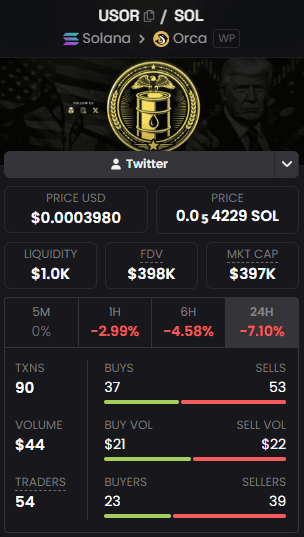
USOR:
- Price of approximately US$0.0003959.
- 24-hour change: down 8.89%.
- Displayed market cap and FDV: approximately US$395,000.
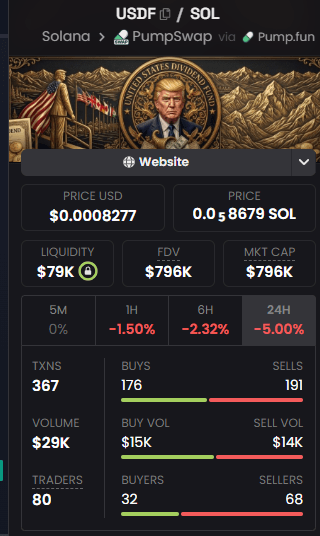
USDF:
- Price of approximately US$0.0008390.
- 24-hour change: up 3.14%.
- Displayed market cap and FDV: approximately US$807,000.
USOR Price per token is indeed lower. However, the unit price does not explain the overall value of the token or how easily that price can be sustained.
Market cap connects price with circulating supply, while FDV represents the valuation based on the supply figure used by the data provider in its calculation. Even when the figures displayed in a panel appear identical, their underlying supply assumptions still need to be checked.
A lower valuation is also not proof that a token is undervalued. The market may assign a lower valuation because of weak demand, limited project information, or difficulties executing trades.
Read also: Is USDF Coin Legit? Check Out United States Dividend Fund
3. Liquidity: How Easy Is It to Buy and Sell?
Liquidity refers to the assets available in a pool to facilitate trades. In the same snapshot, the USOR pool shows approximately US$1,000, while the USDF pool has around US$80,000.
This difference makes the USDF pool more interesting to examine in terms of available trading assets. However, this finding applies only to the two pools being compared, not to the entire markets for both tokens.
Trade size also determines the outcome you receive. An order that is large relative to active liquidity can move the price, making the final selling price different from your initial estimate.
On Orca, liquidity can be concentrated within a specific price range. This means the pool's total value does not always indicate how much liquidity is available around the current trading price.
Before buying, check the estimated outcome for the exact amount you intend to use. Pay attention to the number of tokens received, fees, and the price impact or effect of the transaction on the price.
Carry out the same check when selling. A price that looks attractive on the chart is of little help if the market cannot easily absorb the amount you want to sell.
4. Market Activity: Is the Hype Temporary or Sustainable?
The 24-hour volume on the USOR pool was approximately US$44, with 94 transactions. On the USDF pool, the figures were around US$40,000, with 480 transactions.
USDF appeared more active during that observation period. Nevertheless, a single period is not enough to establish whether market interest will last.
The number of transactions is not the same as the number of buyers. A single wallet can make multiple transactions, so seemingly high activity does not necessarily mean that many different participants are involved.
The same applies to the comparison between buying and selling activity. Ten small purchases may have a lower total value than a single large sale.
To understand market momentum, monitor several periods and check whether volume, liquidity, and the number of participants are moving in the same direction. Do not immediately assume that a surge in volume means the price will continue rising.
Conversely, low activity in a single pool does not prove that all trading in the token has stopped. Check other routes using the same mint address before drawing conclusions about its market conditions.
Read also: USDF and Trump: Is There Really a Connection to Trump Dividend?
5. Holders and Token Permissions: Who Has Control?
The number of holders does not reveal whether ownership is evenly distributed. What matters is the proportion of tokens held by the largest wallets and the function of each address.
Pool or exchange wallets may hold large amounts of tokens without representing a single investor. Counting them as ordinary holders can lead to incorrect conclusions about ownership concentration.
The largest holders' ownership shares for both tokens and whether their wallets are connected have not been verified. Therefore, this article does not conclude that either token has a healthier distribution.
In addition to ownership, check the token's authorities. Mint authority relates to the issuance of additional units, while freeze authority can restrict token transfers in certain accounts.
The USDF discussed here uses the Token-2022 program, which supports additional features. Using this program is not inherently a warning sign; the enabled features and the parties controlling them need to be examined.
What Are the Potential Upsides and Risks Ahead?
The trading outlook would be stronger if demand remains steady, active liquidity is sufficient, and project information can be verified. These are conditions to monitor, not predictions that prices will definitely rise.
For USOR, the key questions are whether better trading routes are available and whether there is evidence of utility beyond its oil-themed name. For USDF, the priority is resolving the address mismatch before evaluating its product claims.
Risks increase when buyers rely solely on social media attention while liquidity or demand weakens. Selling large amounts under these conditions may result in execution prices that are far from expectations.
Choosing not to buy until sufficient information is available is also an option. You do not need to pick a winner simply because two tokens are being compared.
Conclusion: Which Is More Attractive to Buy?
In this USOR vs USDF comparison, USDF stands out in terms of activity and liquidity across the two observed pools. However, the token address mismatch prevents us from concluding that its project is a more worthwhile purchase.
USOR is more consistent in terms of identity across the sources examined, but the selected pool has trading limitations. A matching address helps confirm that you have identified the correct token; it does not guarantee investment quality.
Before making a choice, complete your checks on the address, selling routes, ownership, and evidence of utility. If you want to use Bittime's services, you can register with Bittime and check the available asset listings and fees before making a transaction.
Bittime is a licensed Digital Financial Asset Trader (PAKD) platform authorized and supervised by the Financial Services Authority (OJK) — where you can buy Bitcoin in Indonesia and hundreds of other crypto assets starting from IDR 10,000. The registration process is fast and secure, and you can get started today.
Track the USDT to IDR conversion rate and the real-time price movements of your favorite crypto assets. Everything is available in one crypto investment app that you can download for free from the Play Store.
Ready to get started? Register with Bittime now and put your investment strategy into action with a platform trusted by millions of users in Indonesia.
FAQ
What Is the Difference Between USOR and USDF?
USOR is U.S Oil, while the USDF discussed here is United States Dividend Fund, using the mint address listed in this article. Both have different markets and project information, even though they are on the Solana network.
Is USOR Cheaper Than USDF?
USOR has a lower unit price in the data snapshot used. However, determining whether a token is cheap or expensive requires considering supply, demand, and trading conditions.
Is USDF Easier to Sell?
The USDF pool examined has a higher liquidity value. However, how easily it can be sold still depends on the transaction size, trading route, and market conditions at the time of the transaction.
Is USOR Backed by Oil and Does USDF Pay Dividends?
The sources examined do not provide sufficient evidence to confirm either claim. Do not assume that a token is backed by an asset or provides dividend rights based solely on its name.
What Should You Check Before Buying?
Start by checking the mint address, consistency of project information, liquidity, and estimated transaction outcomes. Then examine the largest holders and any authorities that remain active on the token.
Disclaimer: The views expressed belong exclusively to the author and do not reflect the views of this platform. This platform and its affiliates disclaim any responsibility for the accuracy or suitability of the information provided. It is for informational purposes only and not intended as financial or investment advice.

.png)