Energy Crisis Update: US Ends Purchases of Russian Oil from India & Global Implications
2026-03-10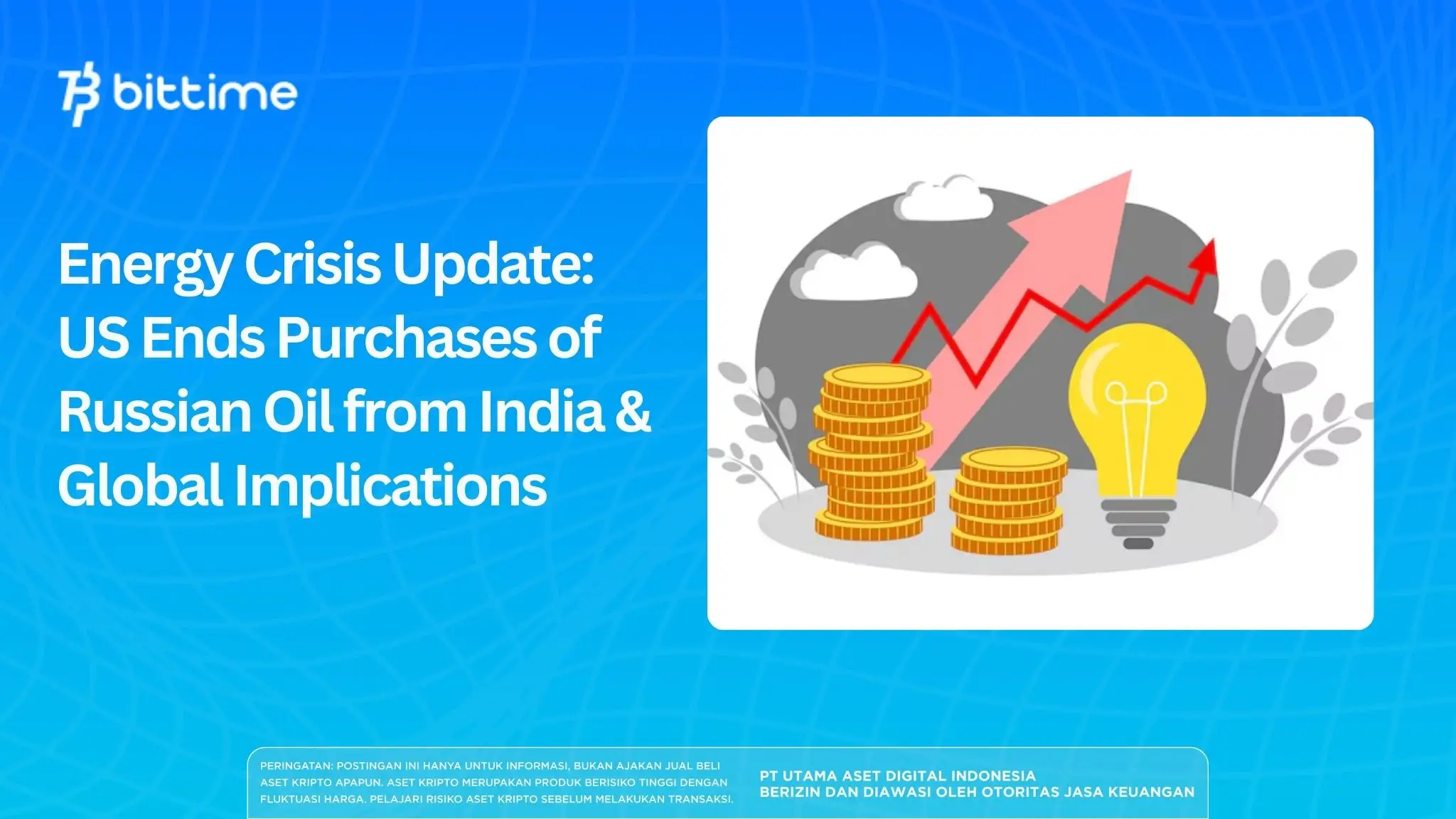
Washington has just reversed its months-long stance in one announcement: the US is allowing India to buy back Russian oil, at least temporarily.
Treasury Secretary Scott Bessent announced a 30-day waiver allowing India access to millions of barrels of Russian oil currently stuck at sea due to the closure of the Strait of Hormuz.
The decision comes less than a month after Trump claimed Modi “agreed to stop buying Russian oil,” and marks how dramatically global energy dynamics have changed since the Iran conflict began.
Key Takeaways
The US has granted India a 30-day waiver to buy Russian oil stuck at sea, a significant policy reversal amid the Hormuz crisis.
India only has about 25 days' worth of oil and gas reserves, making this decision critical both geopolitically and economically.
Around 145 million barrels of Russian oil could now potentially be directed to Indian ports if a commercial deal is reached.
Register at Bittime now and start trading crypto with a fast, safe, and easy process in the app.
Background: Why India is in a Difficult Position
To understand the significance of this waiver, it's important to understand how heavily India relies on the now-severed supply line. India imports 90% of its crude oil from abroad. About half, equivalent to 2.5 to 2.7 million barrels per day, passes through the Strait of Hormuz, primarily from Iraq, Saudi Arabia, the United Arab Emirates, and Kuwait.
Since Iran threatened to attack ships attempting to pass through following the US and Israeli attacks, the Strait of Hormuz has effectively become a danger zone.
Tanker traffic has dropped drastically from an average of 24 vessels per day in January to just 4 vessels per day.
Petronet LNG, India's largest gas importer, was forced to issue a force majeure notice to QatarEnergy because its LNG vessels were unable to reach the loading terminal at Ras Laffan, Doha. GAIL and Indian Oil Corp. have already begun cutting gas supplies to industrial customers.
With oil and gas reserves reportedly only enough for about 25 days, India faces real pressure, not speculation about a future energy crisis, but a concrete countdown.
Read also:3 Best Assets During a War Despite the Iran-Israel Ceasefire: Gold, Silver, or Bitcoin?
Dramatic Policy Reversal
The political context behind this waiver cannot be ignored. Not long before, Trump had imposed a 50% tariff on India, including a 25% levy specifically on Russian oil purchases, arguing that India was helping fund Russia's war in Ukraine.
In February 2026, Trump announced a trade deal with India that cut tariffs to 18%, and in his Truth Social wrote that Modi "agreed to stop buying Russian oil."
India has never officially confirmed this. New Delhi has consistently maintained its position: it has the right to do business with any trading partner to meet the energy needs of its large population.
But since late 2025, India has reportedly begun gradually reducing its Russian oil imports while increasing purchases from the US.
Now, in one decision, Washington has reversed that pressure, allowing what they previously punished with a 25% tariff.
Read also:Bitcoin Is Not Digital Gold: Criticism and Facts Why BTC Is Not a Safe Haven
What's Changed and What's Not
Bessent emphasized that the waiver is limited: it only authorizes transactions involving oil already held at sea, not an open-ended license for new Russian oil imports.
He called this a "deliberate short-term measure" to keep global supply flows flowing, and stressed that the decision would not provide significant financial benefits to Russia as it only concerns oil already produced and in transit.
Sumit Ritolia, principal analyst at Kpler, estimates that about 145 million barrels of Russian oil currently at sea could potentially be diverted to Indian ports, provided a commercial deal can be finalized within 30 days.
But he added an important note: this waiver does not change India's structural dependence on Middle Eastern supply flows.
Russian oil available at sea is only about 20% of India's total imports, the rest remains dependent on the still-dangerous Hormuz.
Read also:Bitcoin Price History from 2009–2026: From Zero to Hundreds of Thousands of Dollars
Implications for Global Oil Prices
The oil market responded to this overall situation with significant upward pressure.
Brent is already trading above $90, with Goldman Sachs warning of a potential rise to $115–$120 if the Hormuz disruption continues for more than five weeks.
WTI in the futures market Hyperliquid It touched $115 last weekend when the traditional markets closed.
The waiver for India somewhat eases concerns about pent-up demand, but if 145 million barrels of Russian oil make it to India, it reduces India's potential purchases from more expensive alternative sources.
But the impact is limited: as long as the Strait of Hormuz remains unsafe for normal navigation, about a fifth of global oil supplies remain at risk, and the geopolitical premium on oil prices isn't going anywhere anytime soon.
Trump himself warned that a war against Iran could last four to five weeks or more, a timeline that, if accurate, would be enough to push oil to levels that would seriously affect global inflation and the Federal Reserve's interest rate policy.
How to Buy Crypto on Bittime?

Want to trade sell buy Bitcoins and crypto investment easily? Bittime is here to help! As an Indonesian crypto exchange officially registered with Bappebti, Bittime ensures every transaction is safe and fast.
Start with registration and identity verification, then make a minimum deposit of IDR 10,000. After that, you can immediately buy your favorite digital assets!
Check the exchange rate BTC to IDR, ETH to IDR, SOL to IDR and other crypto assets to find out today's crypto market trends in real-time on Bittime.
Also, visit the Bittime Blog for interesting updates and educational information about the crypto world. Find reliable articles about Web3, blockchain technology, and digital asset investment tips designed to enrich your crypto knowledge.
FAQ
Why did the US allow India to buy Russian oil again?
As the closure of the Strait of Hormuz threatens India with an energy crisis, the US has granted a 30-day waiver as an emergency measure to keep global supplies flowing.
How long are India's current energy reserves?
India reportedly has only about 25 days' worth of oil and gas reserves, making this waiver decision extremely time-critical.
Does this waiver benefit Russia financially?
According to Bessent, not significantly, the waiver only covers oil already held at sea, not new purchase permits from Russia.
How many barrels of oil could potentially enter India?
Some 145 million barrels of Russian oil currently stuck at sea could be diverted to Indian ports if a commercial deal is reached within 30 days.
What impact will this have on global oil prices?
The waiver eases supply tensions somewhat, but as long as Hormuz remains unsecured, Brent remains at risk of rising to $115–$120, according to Goldman Sachs projections.
Disclaimer: The views expressed belong exclusively to the author and do not reflect the views of this platform. This platform and its affiliates disclaim any responsibility for the accuracy or suitability of the information provided. It is for informational purposes only and not intended as financial or investment advice.

.png)