Loan Declaration Letter: Definition, Function, and How to Write One
2026-04-14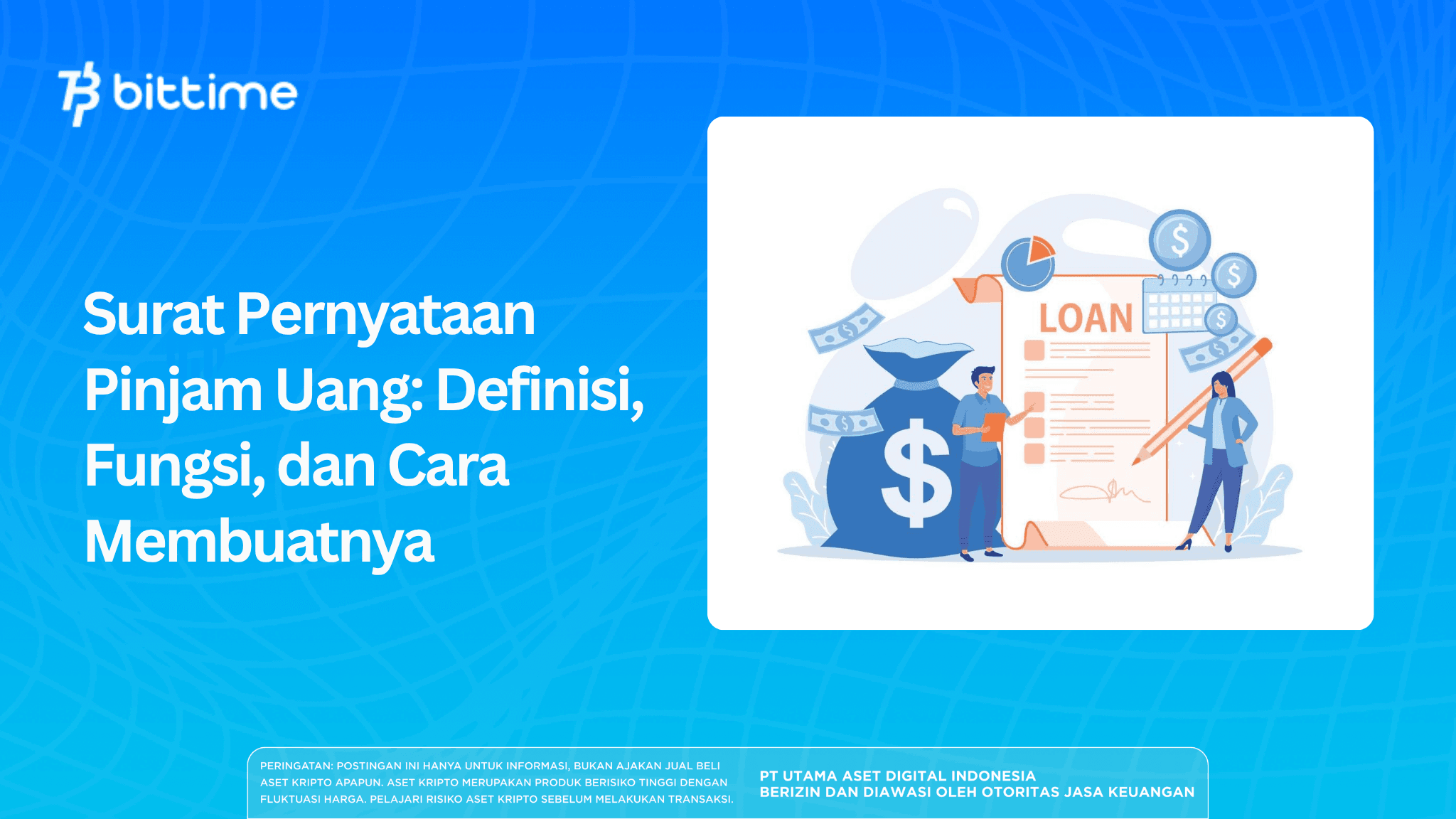
Borrowing money from someone close feels easy and informal. But without written proof, even the best relationships can sour over a forgotten repayment date or a disputed amount.
This is exactly why a loan declaration letter matters — it's not just formality, it's real legal protection for both parties. This article breaks down what a loan declaration letter is, why it's important, and how to write one correctly.
Key Takeaways:
- A loan declaration letter is a legally binding document that records the agreement between a borrower (debtor) and a lender (creditor), including the loan amount, repayment terms, and penalties for default.
- The document carries legal validity under Indonesian Civil Code Article 1320, and becomes even stronger when signed on a stamp duty or notarized.
- Key components include the identity of both parties, loan amount, repayment mechanism, collateral (if any), signatures, and a stamp duty.
What Is a Loan Declaration Letter?
A loan declaration letter is an official legal document that details the agreement between a lender (creditor) and a borrower (debtor) regarding a money lending transaction.
It outlines each party's rights and obligations — covering the loan amount, repayment period, applicable interest, and consequences in the event of default.
This document applies not only to formal transactions between financial institutions and customers but also to personal agreements between friends, family members, or business partners.
Under Indonesian law, it qualifies as an "under-hand agreement" but remains legally binding as long as it satisfies the requirements of Article 1320 of the Civil Code.
What Are the Functions of a Loan Declaration Letter?
A loan declaration letter serves several critical purposes beyond documentation. Its primary role is to ensure repayment follows the agreed terms, provide peace of mind to both lender and borrower, and create a legally enforceable basis for resolving disputes if they arise.
It also eliminates common sources of conflict — misremembered amounts, disputed deadlines, or disagreements about payment methods.
Because the agreement cannot be revoked without mutual consent (per Civil Code Article 1338), it provides certainty that no verbal promise can match. In short, it protects the lender from the risk of non-payment while protecting the borrower from unfounded claims.
Required Components of a Loan Declaration Letter
To be legally valid and effective, a loan declaration letter must include the following elements:
Identity of both parties — full name, occupation, address, and national ID number (NIK) of both lender and borrower. Loan amount and purpose — the exact sum borrowed and the reason for the loan, along with the date funds were received.
Repayment mechanism — the payment method, installment schedule, and final repayment deadline. Collateral — any asset pledged as security (vehicle, jewelry, property, etc.). Signatures — from the lender, borrower, and at least one witness.
Beyond these, the letter should also include penalty clauses for default, a compensation or late-fee provision, and a dispute resolution mechanism — whether through mediation or legal proceedings. A stamp duty (materai) is required to confirm the document's legal authenticity. For large loan amounts, notarization is strongly recommended for added legal weight.
How to Write a Loan Declaration Letter
Writing a loan declaration letter doesn't require legal expertise. Here's a step-by-step guide:
1. Choose a clear title. Use a direct title such as "Loan Agreement Letter" or "Debt and Credit Declaration" — something that immediately communicates the document's purpose.
2. Fill in the complete identities of both parties. Include full legal names, ID numbers, addresses, and occupations for both the lender and borrower.
3. Write the agreement terms in detail. The body is the heart of the letter — include rights and obligations of both parties, payment schedule, installment amounts, final due date, and any other relevant terms. Use unambiguous language to avoid future disputes.
4. Add penalty and dispute resolution clauses. Anticipate non-payment scenarios by specifying penalties and outlining how disputes will be resolved — from amicable settlement to legal action.
5. Sign on stamp duty and include witnesses. Produce a minimum of two copies — one for each party — and ensure both are signed on a stamp duty. Store originals safely and consider making digital backups. For high-value loans, consult a notary public.
Conclusion
A loan declaration letter is a simple document with significant impact — it transforms a potentially conflict-prone transaction into a clear, fair, and legally protected agreement. Anyone involved in a lending or borrowing arrangement, whether large or small, should treat this document as a non-negotiable step in the process.
FAQ
1. What is a loan declaration letter?
It is a written document recording the agreement between a lender and borrower, covering the loan amount, repayment terms, and obligations that are legally binding on both parties.
2. What is the main function of a loan declaration letter?
It serves as valid legal evidence, protects the rights of both parties, prevents misunderstandings, and provides a basis for resolving disputes if repayment issues arise.
3. Does a loan declaration letter need to be notarized?
Not mandatory, but highly recommended for large amounts. A letter signed on stamp duty already carries legal weight, though a notarial deed provides stronger legal protection.
4. What are the required components of a loan declaration letter?
Essential components include the identity of both parties, loan amount and purpose, repayment mechanism, collateral (if applicable), penalty clauses, dispute resolution terms, signatures, and stamp duty.
5. How many copies of the loan declaration letter should be made? At least two copies — one for the lender and one for the borrower. Both must be signed on stamp duty and carry equal legal standing.
How to Buy Crypto on Bittime?
Want to trade sell buy Bitcoins and crypto investment easily? Bittime is here to help! As an Indonesian crypto exchange officially registered with Bappebti, Bittime ensures every transaction is safe and fast.
Start with registration and identity verification, then make a minimum deposit of IDR 10,000. After that, you can immediately buy your favorite digital assets!
Check the exchange rate BTC to IDR, ETH to IDR, SOL to IDR and other crypto assets to find out today's crypto market trends in real-time on Bittime.
Also, visit the Bittime Blog for interesting updates and educational information about the crypto world. Find reliable articles about Web3, blockchain technology, and digital asset investment tips designed to enrich your crypto knowledge.
Disclaimer: The views expressed belong exclusively to the author and do not reflect the views of this platform. This platform and its affiliates disclaim any responsibility for the accuracy or suitability of the information provided. It is for informational purposes only and not intended as financial or investment advice.

.png)