Crypto staking is a way to earn passive income from your crypto assets. Learn how it works, the benefits, risks, and the best coins for staking in 2025.
2026-04-05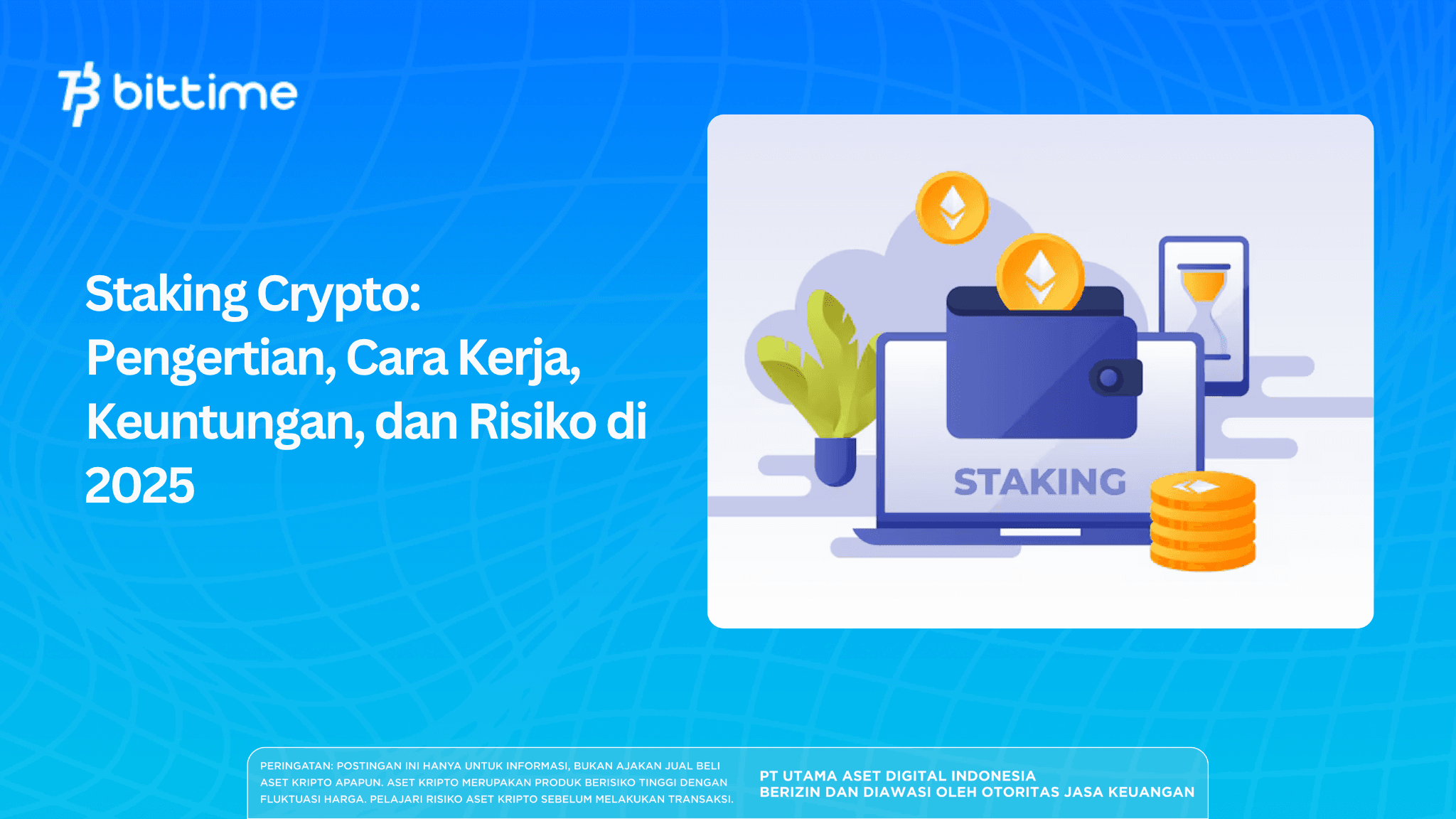
Crypto staking is a method of generating passive income by locking crypto assets on a blockchain network based on Proof of Stake (PoS). With potential returns of 5% to 20% APY, staking has become one of the popular crypto investment strategies in 2025. However, investors still need to understand the risks, such as price volatility and asset lock-up periods.
Key Takeaways
- Crypto staking is a way to generate passive income by locking crypto assets on a Proof of Stake (PoS) network.
- Staking returns range from 5%–20% APY, depending on the asset and platform.
- The main risks include price volatility, lock-up periods, and platform security.
What Is Crypto Staking?
Crypto staking is the process of locking a certain amount of crypto assets in a blockchain network to help validate transactions and maintain network security. In return, users receive rewards in the form of additional coins.
The staking concept is generally used on blockchains with the Proof of Stake (PoS) consensus mechanism. In this system, asset owners contribute to network operations without needing hardware like in mining.
The larger the amount of assets staked, the greater the potential returns that can be earned.
Read Also: How to Stake BTC on Bittime in 4 Easy Steps
How Much Profit Does Crypto Staking Generate?
Staking profits vary depending on the type of asset, platform, and market conditions. In general, staking returns range between:
- 5% to 20% per year (APY)
As an illustration:
If someone stakes 1 ETH worth Rp50 million with 10% APY, the potential profit is around Rp5 million per year, depending on price fluctuations and protocol policies.
Rewards are usually distributed periodically, such as daily or weekly, depending on the platform used.
Read Also: How to Stake USDT on Bittime in 4 Easy Steps
How Crypto Staking Works
Here is the basic mechanism of crypto staking:
- Choose a crypto asset that supports staking, such as ETH, ADA, SOL, or DOT
- Lock the asset in a wallet or staking platform
- Delegate the asset to a validator in the network
- The validator processes transactions and creates new blocks
- The user receives rewards as compensation for participation
- Rewards can be staked again to increase profit potential
How Long Does Staking Take?
The staking duration depends on the type of service used:
Some platforms offer flexible staking, while certain networks apply a lock-up period before assets can be withdrawn again.
Read Also: How to Stake TAO on Bittime in 4 Easy Steps
Benefits of Crypto Staking
Staking offers several advantages, including:
- Provides passive income without active trading
- Supports the security and stability of blockchain networks
- Potential to earn additional profits from asset price appreciation
- Simpler than daily trading activities
Risks of Crypto Staking
Although attractive, staking also has risks that need to be considered:
Understanding these risks is important before deciding to stake.
Popular Crypto Staking in 2025
Here are some crypto assets that are popular for staking:
Ethereum (ETH)
Ethereum has become one of the main choices since transitioning to Proof of Stake. Its large ecosystem in DeFi and NFT makes staking ETH relatively stable and suitable for the long term.
Cardano (ADA)
Cardano is known as an efficient and environmentally friendly blockchain. Its staking system is flexible and provides consistent rewards.
Solana (SOL)
Solana offers high transaction speed and low fees. Staking SOL is attractive for investors seeking high growth potential.
Polkadot (DOT)
Polkadot has an advantage in interoperability between blockchains through its parachain system, making it an attractive choice for diversification.
Read Also: How to Stake USDT on Bittime in 4 Easy Steps
Tips for Getting Started with Crypto Staking
For beginners, here are some tips that can be applied:
- Start with a small amount first
- Choose assets with strong fundamentals
- Use a trusted staking platform
- Pay attention to APY and lock-up period
- Diversify assets to reduce risk
Conclusion
Crypto staking is one effective way to generate passive income from digital assets without active trading. With attractive return potential and a relatively simple process, staking has become an increasingly popular investment choice in 2025.
However, it is important to continue considering the existing risks and to choose a staking strategy that matches each investment goal.
How to Buy Crypto on Bittime

Want to trade and sell buy Bitcoin and invest in crypto easily? Bittime is ready to help! As an Indonesian crypto exchange officially registered with Bappebti, Bittime ensures every transaction is safe and fast.
Start by registering and verifying your identity, then make a minimum deposit of Rp10,000. After that, you can directly buy your favorite digital assets!
Check rates BTC to IDR, ETH to IDR, SOL to IDR and other crypto assets to find out today’s crypto market trends in real-time on Bittime.
In addition, visit Bittime Blog to get various interesting updates and educational information about the crypto world. Discover trusted articles about Web3, blockchain technology, and digital asset investment tips designed to enrich your knowledge in the crypto space.
FAQ
What is crypto staking?
Crypto staking is the process of locking up crypto assets to help validate transactions on a blockchain and earn rewards in the form of additional coins.
Is crypto staking safe?
Staking is relatively safe when using a trusted platform, but it still carries risks such as price fluctuations and potential technical issues.
How much profit can you get from crypto staking?
Staking returns generally range from 5% to 20% APY per year, depending on the type of crypto and the service used.
Can all cryptocurrencies be staked?
Not all cryptocurrencies support staking. Only Proof of Stake-based assets such as ETH, ADA, SOL, and DOT can be staked.
Is staking suitable for beginners?
Staking is suitable for beginners because it is simpler than trading and can provide passive income regularly.
Disclaimer: The views expressed belong exclusively to the author and do not reflect the views of this platform. This platform and its affiliates disclaim any responsibility for the accuracy or suitability of the information provided. It is for informational purposes only and not intended as financial or investment advice.
.png)