RWA Stablecoin: Can It Shake Up the Conventional Banking System?
2026-02-03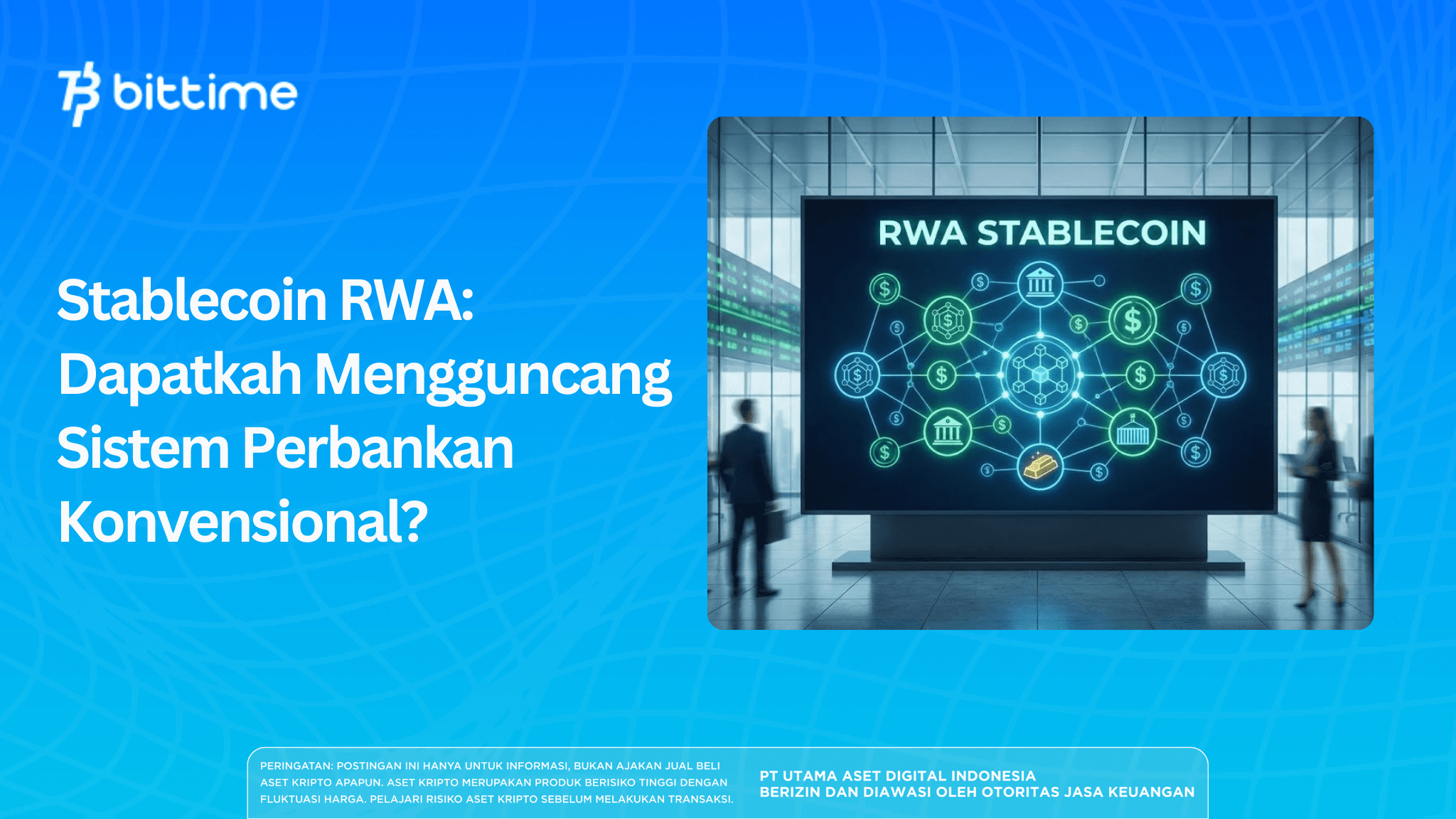
Stablecoin RWA (Real World Assets)is now a hot topic in global financial discourse, including in Indonesia.
Unlike conventional fiat stablecoins, which are backed solely by cash reserves or cash equivalents, RWA stablecoins are backed by real-world assets such as government bonds (SBN), debt securities, and even property.
This model offers greater stability, transparency, and efficiency that have been difficult to achieve in traditional banking systems.
Key Points
- RWA stablecoins connect blockchain to the real economy through the tokenization of real assets.
- This system challenges the conventional banking model which is slow and crisis-prone.
- Indonesia has a huge opportunity through Bank Indonesia's plan for a rupiah-based stablecoin based on government bonds (SBN).

Conventional Banking System Problems

The modern banking system still relies on fractional reserve banking. In this scheme, banks hold only a small portion of customer funds as reserves, while the remainder is repeatedly lent out.
This practice does encourage economic growth, but it also creates latent risks in the form of bank runs, inflation of the money supply, and high dependence on public trust.
When that trust collapses, the impact can be systemic. The collapse of Silicon Valley Bank (SVB) in 2023 is a stark example of how liquidity can dry up in a matter of days.
On the other hand, slow interbank clearing processes, high transfer fees, and limited operating hours make this system increasingly obsolete in the digital age.
Read Also:STBL (STBL) Token: RWA Stablecoin & Trading Opportunities in Indonesia
Stablecoins as a Transparent Alternative
This is where stablecoins come into play. Blockchain-based,stablecoins offer real-time transparency, instant settlement, and significantly lower transaction fees. There are no operating hours, no geographic restrictions, and every transaction is publicly verifiable.
Stablecoins are indirectly exposing banking inefficiencies. When users realize that cross-border transfers can be made in seconds with near-zero fees, the big question arises: why are legacy systems still so expensive and slow?
The Role of RWA Stablecoins in the Real Economy
RWA stablecoins go further. Backed by real-world assets, these stablecoins serve not only as a medium of exchange but also as a representation of real value.
Through tokenization, assets such as SBN can be broken down into small digital units that can be traded globally.
The benefits are significant:
- Asset liquidity increases because it can be traded 24/7
- Investment access is becoming more inclusive, even for retail investors
- Dependence on financial intermediaries is drastically reduced
In the DeFi context, RWA stablecoins are becoming an important foundation for lending, payments, and even real-asset-based derivatives trading.
Read Also:STABLE/IDR Coming Soon to Bittime: What is Stable?
Indonesian Context: SBN-Based Stablecoins
Bank Indonesia is reportedly exploring the launch of a rupiah-based stablecoin based on Government Securities (SBN) through a regulatory sandbox. This step is strategic because it combines the stability of state assets with the efficiency of blockchain.
If realized, this stablecoin could:
- Accelerating the digitalization of the rupiah
- Reducing national and international transaction costs
- Becoming a more robust alternative payment system
However, the challenges are significant. Integration with banking, risk oversight, and public literacy are critical factors for success.
Read Also:STBL Review: What Are the Risks of RWA Stablecoins for Indonesian Traders?
Stablecoins Expose Structural Banking Flaws
Massive adoption of stablecoinsThis has the potential to reduce bank deposits. As people prefer to store value in transparent and liquid stablecoins, banks' ability to disburse credit could be strained.
On the other hand, this also serves as a catalyst for reform. Adaptive banks can transform by becoming digital asset custodians, liquidity providers, or stablecoin infrastructure partners. Those that are slow to adapt risk being disrupted.
RWA Stablecoin Prospects Towards 2026
2026 is predicted to be a crucial year. Stablecoin regulations in the United States and the European Union are maturing, while Indonesia is beginning to open up space for innovation through the Bank Indonesia sandbox.
RWA stablecoins have the potential to dominate because:
- Stronger stability than regular fiat stablecoins
- Higher regulator confidence
- Real uses in the real economy
For banks, this is a double-edged sword: the opportunity for a new source of deposits if stablecoin reserves are placed in deposits, or the threat of disintermediation if adoption occurs without collaboration.
Read Also:SOON Token Listing in Indonesia
Register at Bittime

Before delving deeper into the world of stablecoins and digital assets, make sure you use a trusted platform.
One of the initial steps that can be taken is to doregistration on the Bittime platformto access the crypto ecosystem and digital assets safely and in accordance with Indonesian regulations.
Conclusion
RWA stablecoins are not just technological innovations, but rather an evolution of the financial system. By combining the stability of real-world assets with the efficiency of blockchain, these stablecoins challenge the foundations of conventional banking, which have long been considered irreplaceable.
Indonesia has a strategic opportunity to become an early player through SBN-based stablecoins, provided that regulation, education, and collaboration are implemented in a balanced manner.
FAQ
What is RWA Stablecoin?
RWA stablecoins are stablecoins backed by real-world assets such as government bonds, property, or debt securities.
How is it different from regular fiat stablecoins?
Fiat stablecoins are generally backed only by cash reserves, while RWAs are backed by real assets that generate real value.
Why are stablecoins considered a threat to banks?
Because it reduces dependence on banks as intermediaries and places to store value.
Will Indonesia have its own stablecoin?
Bank Indonesia plans to test a rupiah-based SBN stablecoin through a regulatory sandbox.
Are RWA stablecoins safe?
Relatively safer because it is backed by real assets, but still depends on transparent regulations and management.
Disclaimer: The views expressed belong exclusively to the author and do not reflect the views of this platform. This platform and its affiliates disclaim any responsibility for the accuracy or suitability of the information provided. It is for informational purposes only and not intended as financial or investment advice.

.png)