SIREN Token Crashes 96%: Key Lessons From a Whale-Driven Rug Pull on BNB Chain
2026-06-18
Few events expose the fragility of speculative crypto markets more clearly than a sudden collapse driven by concentrated ownership.
The recent SIREN token crash delivered exactly that lesson. Within roughly two days, the token lost around 96% of its value, wiping out hundreds of millions of dollars in market capitalization and triggering intense debate across the crypto community.
According to on-chain analysis, the collapse followed a large-scale distribution event in which wallets connected to a dominant holder group reportedly sold the vast majority of the token's circulating supply.
The incident has fueled allegations of a rug pull on BNB Chain, while also raising questions about transparency, tokenomics, and the growing trend of AI-themed crypto projects.
Key Takeaways
- Wallets linked to a dominant holder group reportedly sold more than 92% of SIREN's active circulating supply.
- The token fell approximately 96% from its peak after a rapid wave of selling pressure.
- The case highlights the importance of monitoring token distribution, liquidity depth, and on-chain activity before investing.
Register on Bittime now and start trading crypto with a fast, secure, and easy process on the app.
What Triggered the SIREN Token Crash?
The collapse of SIREN was not linked to a smart contract exploit, protocol hack, or broader crypto market crash. Instead, available on-chain evidence points toward a concentrated sell-off by wallets that controlled a substantial portion of the token supply.
Research referenced by KuCoin suggests that approximately 670 million SIREN tokens were sold into the market over a short period. That amount represented more than 92% of the token's active circulating supply.
The selling pressure overwhelmed available liquidity, causing a rapid downward spiral in price.
Before the crash, SIREN had achieved impressive growth:
The dramatic rise attracted retail investors searching for exposure to AI-related crypto assets. However, the underlying ownership structure appears to have been far less decentralized than many market participants assumed.
Read Also: Is SIREN Leverage a Scam? A Comprehensive Analysis for 2026 & the Dangers of Price Manipulation
Whale Sell 92% Supply SIREN: Why Concentration Matters
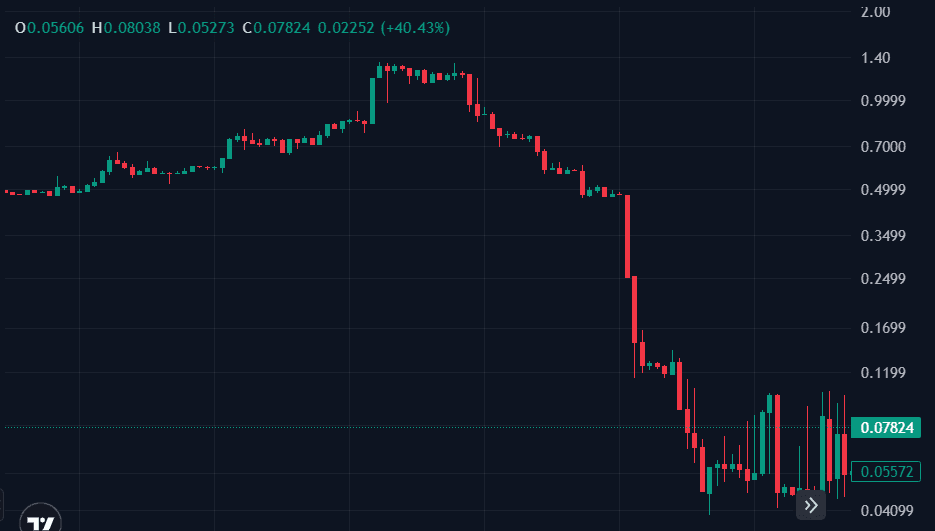
One of the most significant findings from the investigation involves the concentration of token ownership.
Blockchain analysts observed that a large percentage of the circulating supply was controlled by a cluster of interconnected wallets. Although the tokens were distributed across multiple addresses, transaction patterns suggested that the wallets may have been linked to the same entity or coordinated group.
This creates a critical vulnerability:
- Market prices become easier to manipulate.
- Liquidity can disappear quickly.
- Valuation metrics become misleading.
- Retail investors may unknowingly provide exit liquidity.
In healthy crypto ecosystems, token ownership is generally distributed among thousands of independent participants. When a small group controls most of the supply, market dynamics can change dramatically.
The SIREN case demonstrates how wallet fragmentation can create the appearance of decentralization while masking concentrated control.
Convert 1 SIREN to USD - SIREN to United States Dollar
The AI Narrative and the SIREN Fake AI DEX Debate
Part of SIREN's rapid rise can be attributed to one of the strongest themes in the current crypto cycle: artificial intelligence.
The project promoted itself through concepts such as:
- AI-powered trading agents
- Automated trading infrastructure
- AI-driven decentralized exchange technology
- Advanced DeFi automation tools
These narratives resonated with investors eager to find the next breakout AI token.
However, questions emerged after the crash regarding the project's actual development progress. According to findings referenced by KuCoin, several advertised features were difficult to verify independently.
Some concerns included:
These observations do not independently prove fraud. However, they highlight the gap that can sometimes exist between marketing narratives and verifiable product development.
For investors, the key lesson is straightforward: strong storytelling should never replace due diligence.
Read Also : SIREN Price Prediction: Price Analysis and How to Buy
SIREN Whale Dump $64 Million and the Pump-and-Dump Allegations
One of the most discussed aspects of the collapse is the allegation that SIREN followed a recurring pump-and-dump structure.
According to the on-chain analysis, the dominant wallet group may have followed a pattern resembling the following cycle:
- Accumulate tokens at low prices.
- Promote market interest through narratives and momentum.
- Allow price appreciation to attract retail capital.
- Distribute large amounts of tokens into market liquidity.
- Trigger a major price correction.
- Potentially re-enter at significantly lower prices.
The reported sell-off generated approximately $64.8 million in stablecoins.
This has led some analysts to describe the event as a soft rug pull rather than a traditional hard rug pull.
Unlike classic rug pulls involving liquidity removal or contract manipulation, soft rug pulls typically involve insiders or dominant holders selling heavily into retail demand.
The scale of the SIREN distribution event is one reason why terms such as SIREN whale dump $64 million and SIREN 4 pump and dump cycle have become widely discussed across crypto communities.
Read Also : Pump and Dump Crypto: Definition, How it Works, and History
Lessons From the SIREN Rug Pull: How Investors Can Protect Themselves
The SIREN collapse offers several practical lessons that extend far beyond a single token.
Check Holder Distribution Before Buying
The number of holders alone is not enough.
Investors should also review:
- Top wallet ownership percentages
- Token concentration ratios
- Wallet clustering patterns
- Distribution transparency
A token controlled by a handful of wallets carries significantly higher risk.
Verify Product Claims
Projects promoting AI, gaming, DeFi, or infrastructure narratives should be evaluated based on evidence rather than marketing.
Questions worth asking include:
- Is there a working product?
- Are users actively using it?
- Is development activity visible?
- Does the project generate value?
Compare Market Cap With Liquidity
Market capitalization can create a false sense of security.
A token may display a valuation of hundreds of millions of dollars while maintaining relatively shallow liquidity pools.
When large holders sell, the resulting slippage can trigger severe price declines.
Monitor Whale Activity
Modern blockchain analytics tools make it easier than ever to track large wallet movements.
Large transfers to exchanges often serve as an early warning sign that selling pressure could increase.
Be Careful With Trend-Driven Narratives
Whether the trend involves AI, memes, gaming, or real-world assets, hype cycles can attract capital much faster than fundamentals develop.
Investors should evaluate utility and tokenomics separately from social media excitement.
Start trading SIREN/IDR with Bittime here!
Conclusion
The SIREN token crash stands as a powerful reminder that market capitalization and viral narratives do not guarantee sustainability. According to the current data, wallets linked to dominant holders reportedly sold more than 92% of the active circulating supply, triggering a collapse of roughly 96% in a matter of days.
While debates over terminology will continue, the underlying lesson is clear: concentration risk matters. Investors who examine token distribution, liquidity depth, and on-chain activity are better positioned to identify warning signs before a crisis unfolds.
Now that you’ve learned about the latest developments in AI, it’s time to explore AI-based cryptocurrencies on Bittime, such as AI digital assets, AI, AGI, RENDER, TAO and many more AI coins.
Bittime is a licensed and regulated Digital Financial Asset Trader (PAKD) supervised by Indonesia’s Financial Services Authority (OJK) — where you can buy Bitcoin in Indonesia and hundreds of other crypto assets starting from just Rp10,000. The registration process is fast, secure, and you can get started today.
Track USDT to IDR conversions and monitor your favorite crypto assets in real time. Everything is available in one crypto investment app that you can download for free on the Play Store
Ready to start? Register now on Bittime and execute your investment strategy with a platform trusted by millions of users in Indonesia.
FAQ
What caused the SIREN token crash?
Available on-chain analysis suggests that the collapse was driven by a large-scale sell-off from wallets controlling most of the token's circulating supply.
Did SIREN lose 96% of its value?
Yes. Reports indicate that the token declined by approximately 96% from its peak valuation during the crash.
Was SIREN officially confirmed as a rug pull?
There has been no official regulatory determination. However, many analysts have described the event as having characteristics of a soft rug pull.
How many tokens were reportedly sold?
Investigations cited by KuCoin estimate that around 670 million SIREN tokens were sold.
How much money did the whales reportedly receive?
The reported proceeds from the distribution event totaled approximately $64.8 million in stablecoins.
How can investors avoid similar situations?
Review token distribution, verify product claims, monitor whale activity, evaluate liquidity, and avoid investing solely based on market hype.
Disclaimer: The views expressed belong exclusively to the author and do not reflect the views of this platform. This platform and its affiliates disclaim any responsibility for the accuracy or suitability of the information provided. It is for informational purposes only and not intended as financial or investment advice.
.png)