Samsung Solana, USDC Coming Soon to 82 Million Galaxy Devices
2026-10-08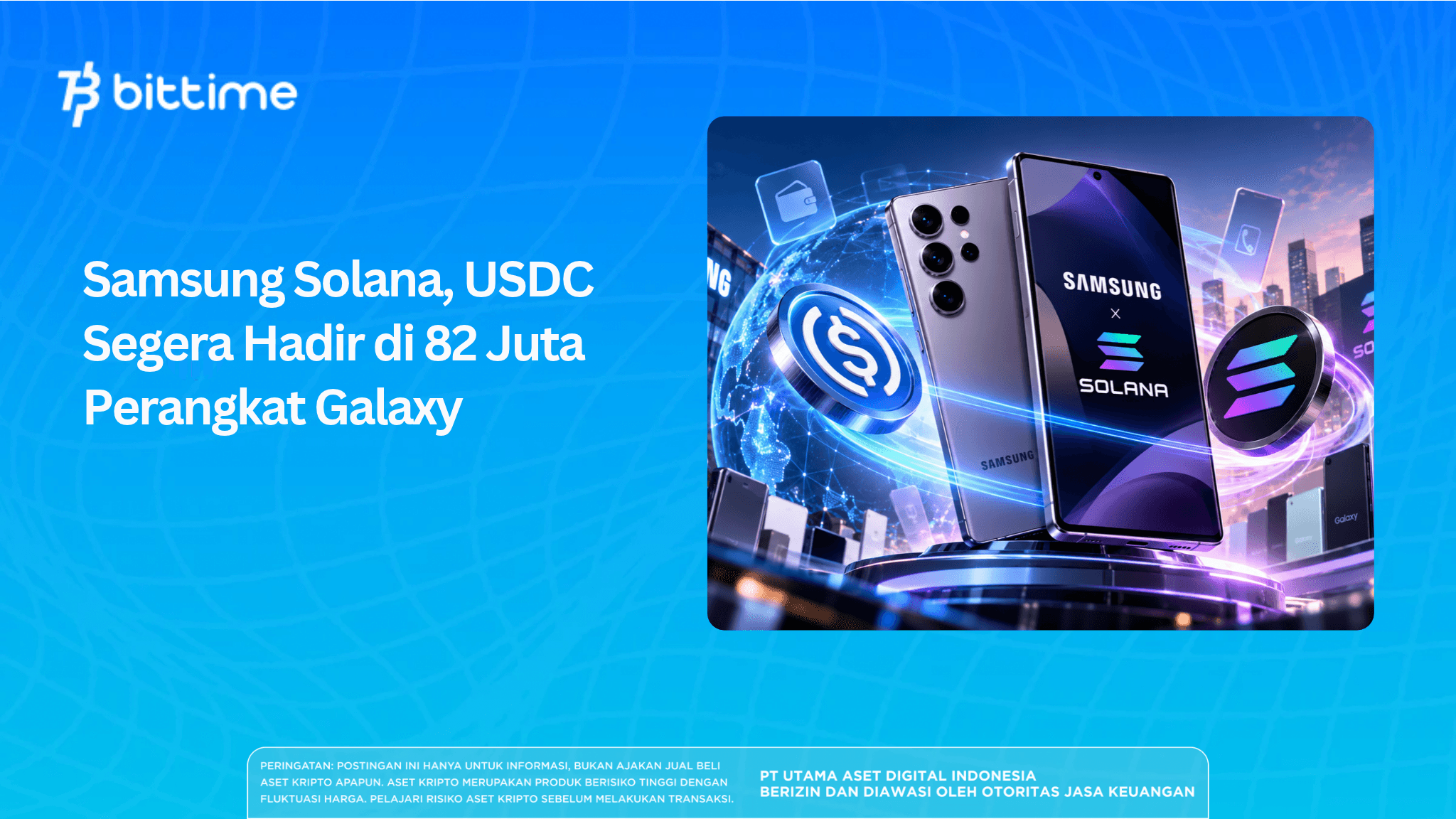
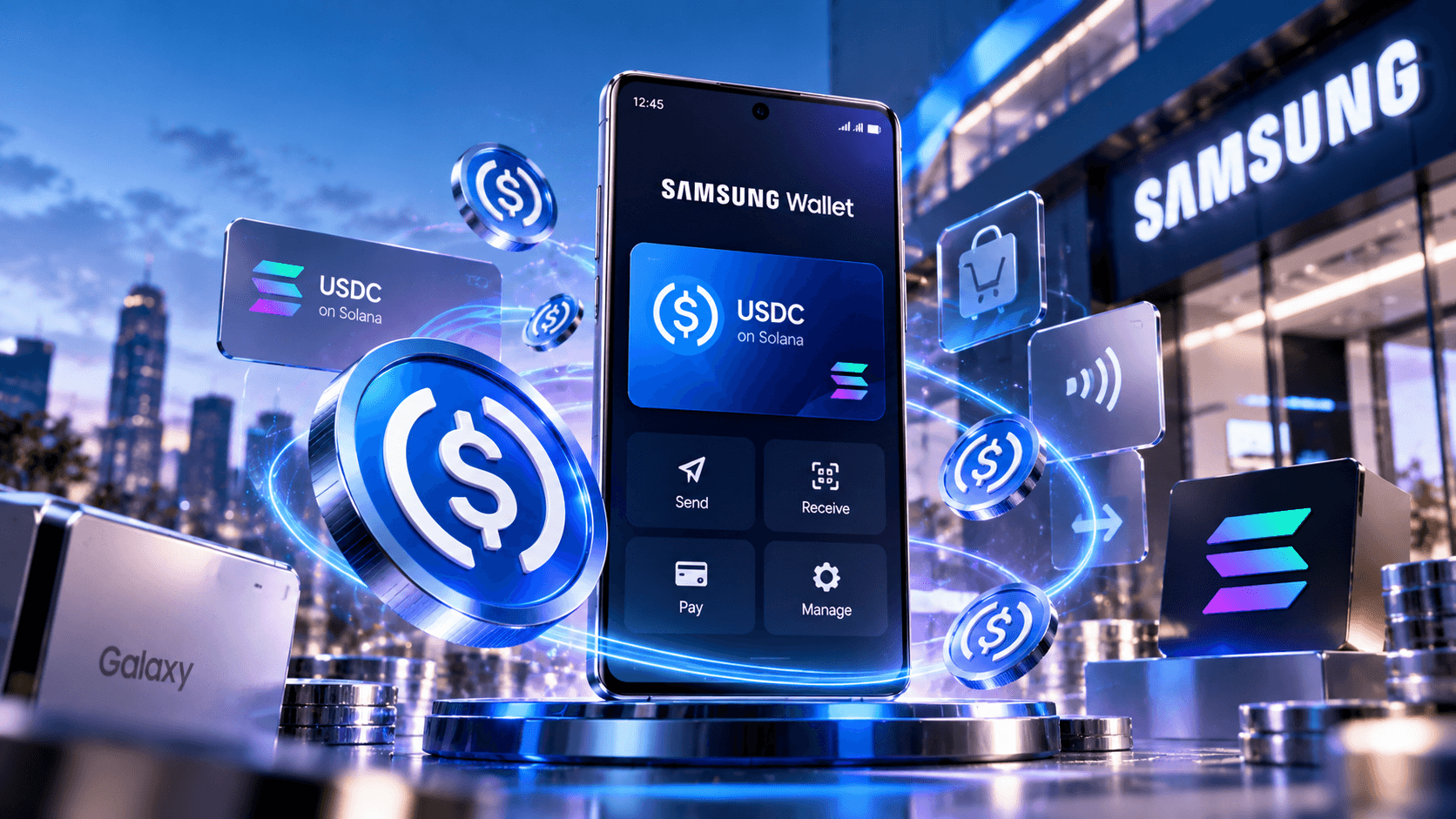
Samsung and Solana are bringing stablecoins closer to everyday use. Through a new integration, Samsung Solana will support the stablecoin experience in Samsung Wallet, with USDC being the first supported asset and the initial launch targeting 82 million eligible Galaxy devices in the United States.
However, there is one important thing to note. The feature is not yet generally available as of October 8, 2026, and is scheduled to begin rolling out in the last week of October 2026. Additionally, 82 million is the number of Galaxy devices covered in the initial launch, not meaning there are 82 million active stablecoin users.
Key Takeaways
- Samsung Wallet will bring USDC support to eligible Galaxy devices in the US starting late October 2026.
- Solana becomes one of the blockchain infrastructures supporting the Samsung Wallet stablecoin experience.
- The reach of 82 million devices could expand stablecoin access, but availability still depends on the device, region, and regulations.
What is the Relationship Between Samsung and Solana?
The Samsung Solana collaboration focuses on integrating stablecoins into the Samsung Wallet experience. According to Solana's announcement, Samsung Wallet and Samsung Pay will support stablecoins on the Solana network, with Samsung Wallet users in the US being able to send USDC across borders starting the last week of October 2026.
The difference from conventional crypto usage is that users do not have to open a dedicated crypto app to initiate the experience. Solana's infrastructure is designed to work behind the scenes within the Samsung Wallet experience.
Samsung itself explained that the stablecoin feature will be integrated directly into Samsung Wallet. Eligible users will later be able to make USDC transfers without having to install a separate crypto app or manage their own private keys.
This makes the Samsung Solana development more interesting than just the addition of a crypto asset. The main focus is bringing stablecoin functions into an app already used for payment cards, tickets, digital identities, and other daily needs.
Read also: TOKEN2049 Singapore 2026, Here Are the Highlighted Crypto Trends
How Does Samsung Wallet Use USDC?
USDC or USD Coin is a stablecoin whose value is designed to track the US dollar. In the Samsung Wallet integration, USDC becomes the first supported stablecoin.
Samsung stated that eligible users can send USDC to compatible crypto wallets internationally. Samsung also mentioned support for transfers to certain bank accounts in more than 60 countries, with recipients able to receive funds in local currency.
Thus, the use of Samsung Wallet USDC is not only about storing digital assets. Its initial focus is cross-border money transfers.
The simple flow can be described as follows:
- The user has an eligible Galaxy device.
- The user accesses the stablecoin function through Samsung Wallet.
- USDC becomes the first supported stablecoin asset.
- The user can send USDC to compatible wallets.
- Certain transfers can be forwarded to eligible bank accounts.
- The blockchain infrastructure and service partners handle the process behind the scenes.
Samsung also mentioned fiat on-ramp and off-ramp integration as part of the experience. This means the concept is designed to bridge digital dollar-based assets with traditional financial systems.
Why Are 82 Million Galaxy Devices in the Spotlight?
The figure of 82 million Galaxy devices is one of the most interesting parts of this announcement.
In the initial stage, the Samsung Wallet stablecoin feature will be available on 82 million eligible Galaxy devices in the United States. Both Samsung and Solana mentioned this figure as the device coverage at the time of launch.
But that figure needs to be read correctly.
82 million devices does not mean 82 million new crypto users. Not all device owners will use USDC, and not all devices automatically gain access without meeting service requirements.
Factors such as device model, software version, user location, service eligibility, and regulations can affect access.
Nevertheless, the distribution potential remains huge. Stablecoins were previously more often accessed through exchanges, crypto wallets, or specific payment apps, whereas Samsung Wallet brings this function closer to mobile apps that users are already familiar with.
Read also: CFTC Crypto Rules: 5 Key Points of the New US Proposal
Samsung Solana Does Not Mean Samsung is Creating a Stablecoin
One thing that needs to be clarified is the term Samsung stablecoin.
Samsung did not announce the creation of its own stablecoin. In its official announcement, Samsung cited USDC as the first stablecoin supported by Samsung Wallet. The operation of the USDC function involves Bastion and Coinbase, while blockchain infrastructure support is said to involve several partners, including Solana and Sui.
So, it is more accurate to say:
Samsung Wallet supports USDC with specific blockchain infrastructure and partners.
Not:
Samsung is launching its own stablecoin.
This distinction is important because USDC is issued by Circle, not Samsung.
What is Solana's Role in This Integration?
In Solana's announcement, the network is cited as the infrastructure executing stablecoin transactions behind the Samsung Wallet experience. Users do not have to interact directly with blockchain complexities to use the feature.
For Solana, this integration expands its use cases from merely trading crypto assets to payments and cross-border money transfers.
Solana also noted that stablecoin activity on its network is increasing. According to data published by Solana, the stablecoin supply on the network rose by almost 20% year-over-year, while the volume of stablecoins processed throughout 2026 has reached more than US$5.25 trillion.
This data comes from Solana and should be viewed as ecosystem context, not a guarantee that the Samsung integration will increase the price of SOL.
Read also: SEC Proposes New Crypto Custody Rules, Here Are the Key Points
Solana Is Not the Only Blockchain Mentioned
This is an important part to understand the Samsung Wallet news in its entirety.
Samsung's announcement mentions Solana and Sui as partners that can provide infrastructure and blockchain network support for stablecoin services. Meanwhile, Solana's announcement highlights the use of USDC on Solana for cross-border transfers.
Therefore, do not simplify the news to "Samsung Wallet only uses Solana".
It is more accurate to view it as a service ecosystem involving multiple parties:
- Samsung provides Samsung Wallet as the interface.
- USDC serves as the first supported stablecoin.
- Coinbase and Bastion are involved in service operations.
- Solana and Sui are mentioned as part of the blockchain infrastructure support.
- Local regulations determine the possibility of expansion to other regions.
This structure shows that large-scale stablecoin adoption requires more than just a blockchain.
5 Potential Impacts of Samsung Wallet and Solana
1. Stablecoins get closer to general users
Integration into Samsung Wallet can reduce barriers for users previously unfamiliar with crypto wallets.
Users do not have to start from DeFi apps or exchanges to understand stablecoin functions.
2. Cross-border transfers become the main use case
Samsung places cross-border transfers as one of the initial functions of USDC in the Wallet. This increasingly positions stablecoins as payment infrastructure, not just trading assets.
3. Solana gains exposure to non-crypto users
If USDC transactions run through Solana, users can indirectly use blockchain infrastructure without having to understand the network's technical details.
This differs from the traditional crypto model, which usually requires users to know wallet addresses, networks, gas fees, and private keys.
4. Payment infrastructure competition becomes more interesting
Samsung Wallet does not only face off against crypto apps. Digital payment ecosystems, stablecoins, fintech, banks, and blockchains all have the potential to interact in the same market.
Therefore, this development also needs to be seen as part of the digital payment infrastructure competition.
5. Regulation remains a major factor
Samsung stated that expansion to additional markets will follow local regulatory developments. This means that a successful launch in the US does not automatically mean the same feature will be immediately available in Indonesia or other countries.
Read also: DogeOS Testnet Officially Opens, What is its Function for Dogecoin?
Is Samsung Wallet USDC Available Yet?
Not generally available at the time this article was written.
Samsung stated that the stablecoin feature will launch in the last week of October 2026 for eligible Galaxy devices in the United States. The initial launch includes USDC, while expansion to other features and markets will follow service and regulatory developments.
Therefore, readers need to be cautious of information stating that the feature is already available to all users.
Will Samsung Wallet USDC Be Available in Indonesia?
There is not yet sufficient basis to state that the feature is immediately available in Indonesia.
The initial launch is focused on eligible Galaxy users in the United States. Samsung mentioned that additional markets could follow, taking into account local regulatory requirements.
This means that Indonesian users should not consider the feature's availability in the US as proof that Samsung Wallet crypto is already available in Indonesia.
For the Indonesian market, official status will need to wait for Samsung's announcements and local regulatory developments.
What Does This Mean for Crypto Adoption?
The Samsung Solana development signifies an important shift in how digital assets are introduced to users.
In its early phase, crypto was widely known through exchanges and specialized wallets. Now, certain functions are starting to enter apps that have non-crypto functions and are already used for daily activities.
Stablecoins are one of the most logical candidates for this transition because they are designed to maintain a relatively stable value against a reference currency.
However, adoption is not only determined by the number of devices.
Other factors such as ease of use, costs, transfer speeds, security, regulations, merchant support, and user trust will determine whether stablecoins truly become part of everyday payment activities.
Read also: Apple Releases Security Update, Zero-Day Linked to Crypto Theft Risks
What Should Users Pay Attention To?
Before using the stablecoin feature once it is available, there are several things to check:
- Device eligibility
Ensure the Galaxy model and software version support the feature. - Service region
Features may vary based on country and regulations. - USDC type and network
Ensure the network used matches the transfer destination. - Fees and exchange rates
Check service fees, conversion fees, and exchange rates before making a transaction. - Account security
Use the authentication and security features available on Samsung Wallet. - Digital asset risks
Stablecoins do not mean the entire transaction process is risk-free. Address errors, scams, service restrictions, and operational risks still need to be considered.
How Will It Impact SOL?
This news has the potential to increase market attention on Solana's use cases, particularly in the payment and stablecoin sectors.
However, Samsung Solana is not a sufficient reason to conclude that the price of SOL will definitely go up.
The price of SOL remains influenced by many factors, including overall crypto market conditions, capital flows, network activity, investor sentiment, regulations, and ecosystem developments.
Thus, the Samsung integration is better viewed as a fundamental development and infrastructure adoption, rather than an automatic trading signal.
Read also: AI Model Control by NVIDIA CEO: Unsafe Labs Must Be Closed?
This Development Shows a New Direction for Crypto
Samsung Wallet and Solana show how blockchain can move further away from specialized crypto apps.
If stablecoins can be used directly from familiar apps, users might no longer view blockchain as a product that must be studied first.
They will simply see it as infrastructure working behind the scenes.
This is one reason why the Samsung Solana development is important. Its value lies not only in the number of devices but in the possibility of making stablecoins part of a simpler digital payment experience.
If you want to follow the latest updates regarding crypto developments, stablecoins, Solana, and other digital assets, you can follow market information and regular analysis through Bittime.
Conclusion
Samsung Solana is one of the key developments in stablecoin adoption in 2026. Samsung Wallet is scheduled to introduce USDC support for eligible Galaxy devices in the US starting the last week of October, with an initial coverage of up to 82 million devices.
However, 82 million devices do not equate to 82 million crypto users. The feature is also not globally available yet, and Samsung stated that expansion to other markets will follow regulatory requirements.
The most important aspect is the change in the distribution model. Stablecoins are beginning to enter apps already used daily, while blockchains like Solana can work behind the scenes to support these activities.
To follow subsequent developments, especially as the feature begins to roll out and its availability information is updated, readers should refer to the latest official announcements.

Bittime is a licensed Digital Financial Asset Trader (PAKD) platform supervised by the Financial Services Authority (OJK) — where you can buy Bitcoin in Indonesia and hundreds of other crypto assets starting from IDR 10,000. The registration process is fast, safe, and can be started right away today.
Monitor USDT to IDR conversions and real-time price movements of your favorite crypto assets. Everything is available in one crypto investment app that can be downloaded for free on the Play Store.
Ready to start? Register now on Bittime and execute your investment strategy with a platform trusted by millions of users in Indonesia.
FAQ
What is the relationship between Samsung and Solana?
Samsung partnered with Solana to support the stablecoin experience in Samsung Wallet. In Solana's announcement, USDC on the Solana network will be used for cross-border transfers for eligible Samsung Wallet users in the US.
Does Samsung Wallet support USDC?
Samsung stated that USDC is the first stablecoin supported in the Samsung Wallet stablecoin feature. The initial launch is scheduled for the last week of October 2026 for eligible Galaxy users in the US.
What does 82 million Galaxy devices mean?
This figure refers to the coverage of Galaxy devices in the United States that are the target for the feature's initial launch. The figure of 82 million does not mean 82 million active USDC or crypto users.
Is Samsung creating its own stablecoin?
No. Samsung cited USDC as the first stablecoin supported by Samsung Wallet. USDC is a US dollar stablecoin, while Samsung provides the interface through Samsung Wallet.
Is Samsung Wallet USDC available in Indonesia yet?
There is not yet enough information to state that the feature is available in Indonesia. The initial launch is focused on the US, while expansion to other countries depends on service developments and local regulations.
Disclaimer: The views expressed belong exclusively to the author and do not reflect the views of this platform. This platform and its affiliates disclaim any responsibility for the accuracy or suitability of the information provided. It is for informational purposes only and not intended as financial or investment advice.

.png)