Can Hajj and Umrah be Paid for with Stablecoins? Here's How It Works
2026-11-20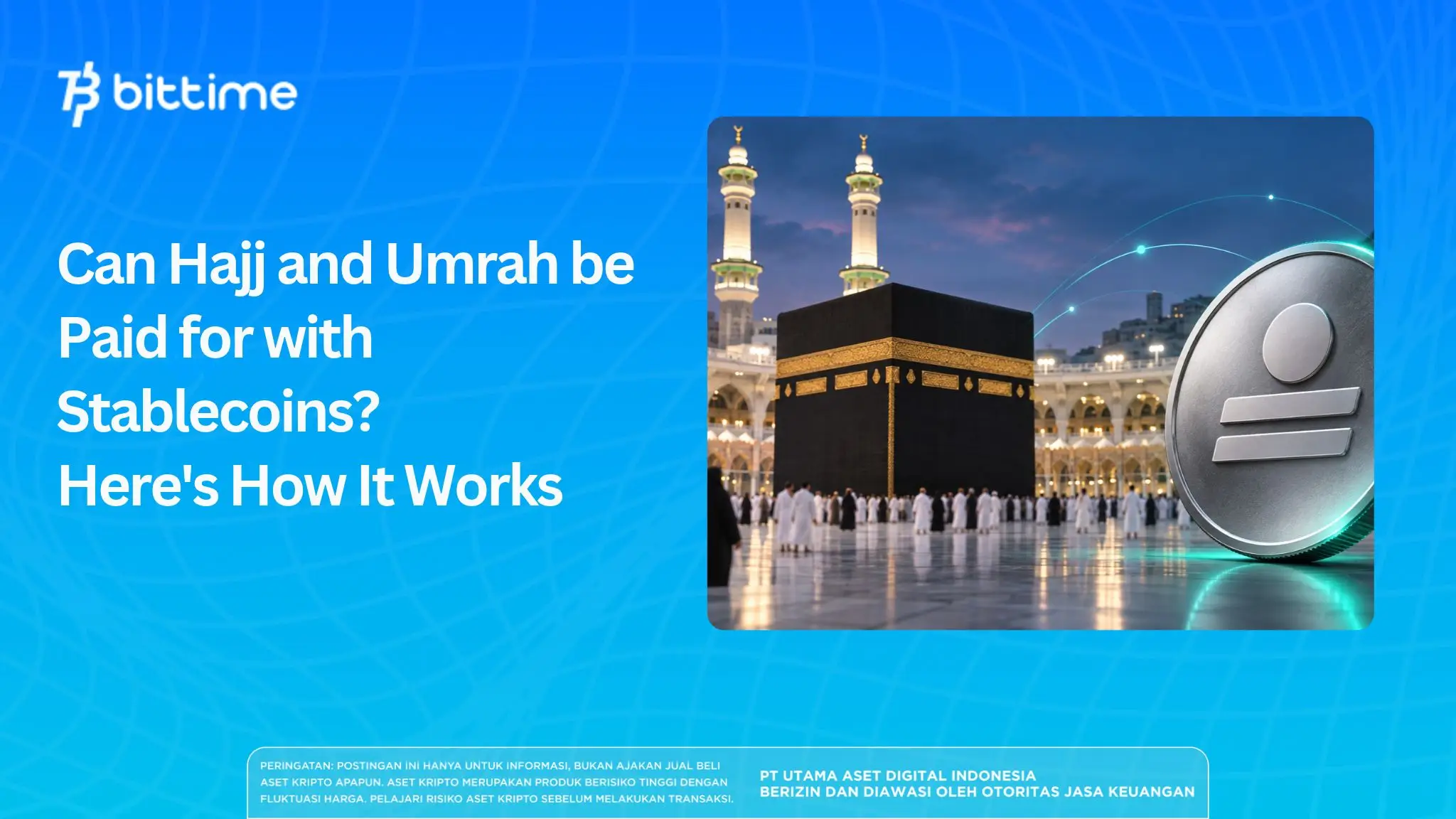
The discourse Hajj payment with stablecoin and Umrah payment with stablecoin is now starting to become a highlight in the Indonesian pilgrimage travel industry.
Amidst the high cost of cross-border transactions and fluctuations in the Rupiah exchange rate against the Saudi Arabian Riyal, a number of travel organizers are starting to look at Rupiah stablecoin to settle bills with business partners in Saudi Arabia.
This development marks a new chapter in the evolution of digital hajj payment and digital umrah payment which is mor eefficient.
Key Takeaways
Pilgrimage travel organizers in Indonesia are starting to take advantage of stablecoin for hajj and umrah to expedite payment settlement (settlement) across countries to hotel and service partners in Saudi Arabia.
Usagecrypto for hajj and umrahcurrently focusing on the mechanism business-to-business (B2B) behind the scenes, not as a direct retail payment tool from the congregation in the country.
The Financial Services Authority (OJK) is targeting special Indonesian regulations stablecoin completed in early 2027 to regulate asset reserves, redemptions and protection of consumers.
How Does Hajj and Umrah Payments Work Using Stablecoin?
Many people think that Hajj using stablecoins or Umrah using stablecoins means that the congregation must send crypto assets directly from their personal digital wallet to the committee's account.
In practice, the mechanisms that are developing in the field actually work at the level of inter-company payment infrastructure (business-to-business or B2B).
Pilgrims still pay their travel costs in Rupiah as usual through the official travel agency account.

Convert Funds to Rupiah Stablecoins and OTC Liquidity Channels
Once the funds are collected, the travel agency or pilgrimage organizer converts the funds into Rupiah it becomes stablecoin Rupiah with the value is pegged at 1:1 against the Rupiah currency.
At certain transaction scales, conversions can also pass through US dollar-based stable assets via liquidity channels.over-the-counter (OTC).
This step maintains the stability of the fund's value while protecting the organizer from the risk of crypto asset price fluctuations.
Read Also: Bittime Emphasizes the Importance of Understanding Stablecoin Functions and Asset Tokenization
Blockchain Delivery and Disbursement to Saudi Arabian Riyal (SAR)
The converted digital funds are then sent via the blockchain network directly to service provider partners in Saudi Arabia to cover accommodation, transportation, and catering costs.
Upon arrival at the recipient, the assets are immediately disbursed into Saudi Arabian Riyals (SAR) within minutes.
This process significantly reduces waiting times as it eliminates the need to go through a long chain of international correspondent banks.
Read Also: 21 Major Banks Prepare Stablecoins, What's Driving This Trend?
Cost Efficiency and Comparison of Cross-Border Payment Channels
The large scale of the circulation of worship funds makes exchange rate efficiency crucial.
For example, the Hajj Financial Management Agency (BPKH) is targeting managed funds of Rp195.29 trillion by 2027, assuming an exchange rate of Rp17,500 per US dollar and Rp4,667 per Saudi Arabian riyal.
Even small exchange rate differences and traditional bank transfer fees can have a significant impact on a travel agency's operating cost structure.
The following is a comparison of conventional cross-border transfer mechanisms with the schemedigital umrah paymentand Hajjbasis stablecoin:
Stay up to date with the latest developments around USDT and other crypto assets with register at Bittime and keep up with the latest market updates.
Indonesian Stablecoin Regulation and Sharia Aspects
Even though the efficiency is the technology is promising, the implementationIndonesian stablecoin remain subject to strict legal corridors.
In Indonesia, the Rupiah is the only legal tender (legal tender), so that crypto assets are not permitted to be used as a direct retail payment instrument domestically.
However, the latest legal framework allows for the use of digital assets as instruments for certain transactions, provided they are approved by the relevant authorities and connected to the official financial system.
Let's start investing and trading Bittime, Register at Bittime with a fast, safe and easy process.
The OJK is targeting the issuance of special stablecoin regulations in 2027.
To provide stronger legal certainty, the Financial Services Authority (OJK) is targeting the issuance of specific stablecoin regulations to be completed by January 2027.
The regulation will regulate in detail the reserve fund standards (reserves), redemption mechanism (redemption), publisher governance, and consumer protection.
Read Also: MUI Fatwa on Crypto: Halal or Haram? Here's an Explanation from an Islamic Perspective
Authority to Determine Sharia Aspects and Halal Status
In terms of Sharia compliance, the Ministry of Religious Affairs emphasized that determining the halal status of crypto assets and their transaction mechanisms remains the sole authority of the Indonesian Ulema Council (MUI).
This clarity is an important reference for travel organizers and the public before adopting innovation of digital hajj payment and digital umrah payment in a way wider.
Read Also:How to Transfer USD Abroad Easily and Quickly
Monitor Your Digital Assets' Growth with Bittime
For those of you who want to know about the ecosystem of Rupiah stablecoin as well as various others digital assets safely and in accordance with regulations in Indonesia, immediately register account on Bittime Now.
Through a platform registered and supervised in Indonesia, you can monitor the movement of crypto assets and learn about digital financial innovations in a more practical and transparent manner.
Frequently Asked Questions (FAQ)
Can pilgrims pay for Hajj and Umrah directly using stablecoins?
Currently, pilgrims in Indonesia still pay travel costs using Rupiah currency in accordance with legal provisions. The Hajj payment with stablecoin and Umrah payment with stablecoin takes place at the B2B level between travel organizers and operational partners in Saudi Arabia.
Why are travel agencies looking at stablecoins for Hajj and Umrah?
Utilization of stablecoin for hajj and umrah helps reduce waiting time, Cross-border fund transfers have been reduced from days to minutes. Besides operating 24/7, this method reduces intermediary bank fees that have traditionally burdened transactions from Rupiah to Saudi Arabian Riyal.
What is the role of Rupiah stablecoin in digital Hajj and Umrah payments?
Rupiah Stablecoin functions as a digital liquidity bridge whose value is equivalent to 1:1 with Rupiah currency. Its existence makes it easier for businesses to move value quickly on the blockchain network without facing the extreme price volatility of volatile cryptocurrencies.
When will the OJK issue official regulations for Indonesian stablecoins?
The Financial Services Authority (OJK) is targeting a special regulatory frameworkIndonesian stablecoincompleted in early 2027, specifically around January 2027. This regulation will ensure that each issuer has clear asset reserves and governance that protects users.
What is the halal aspect of using crypto for Hajj and Umrah?
Determination of sharia law related to the crypto utilization for hajj and umrah is under the authority of the Indonesian Ulema Council (MUI). As long as the scheme used avoids speculative elements (gharar) and only utilizes transparent value transfer technology supported by real assets, the discourse regarding its sharia compliance continues to evolve along with regulatory updates.
Disclaimer: The views expressed belong exclusively to the author and do not reflect the views of this platform. This platform and its affiliates disclaim any responsibility for the accuracy or suitability of the information provided. It is for informational purposes only and not intended as financial or investment advice.

.png)