RWA Crypto 2026: Asset Tokenization Becoming More Popular?
2026-08-20 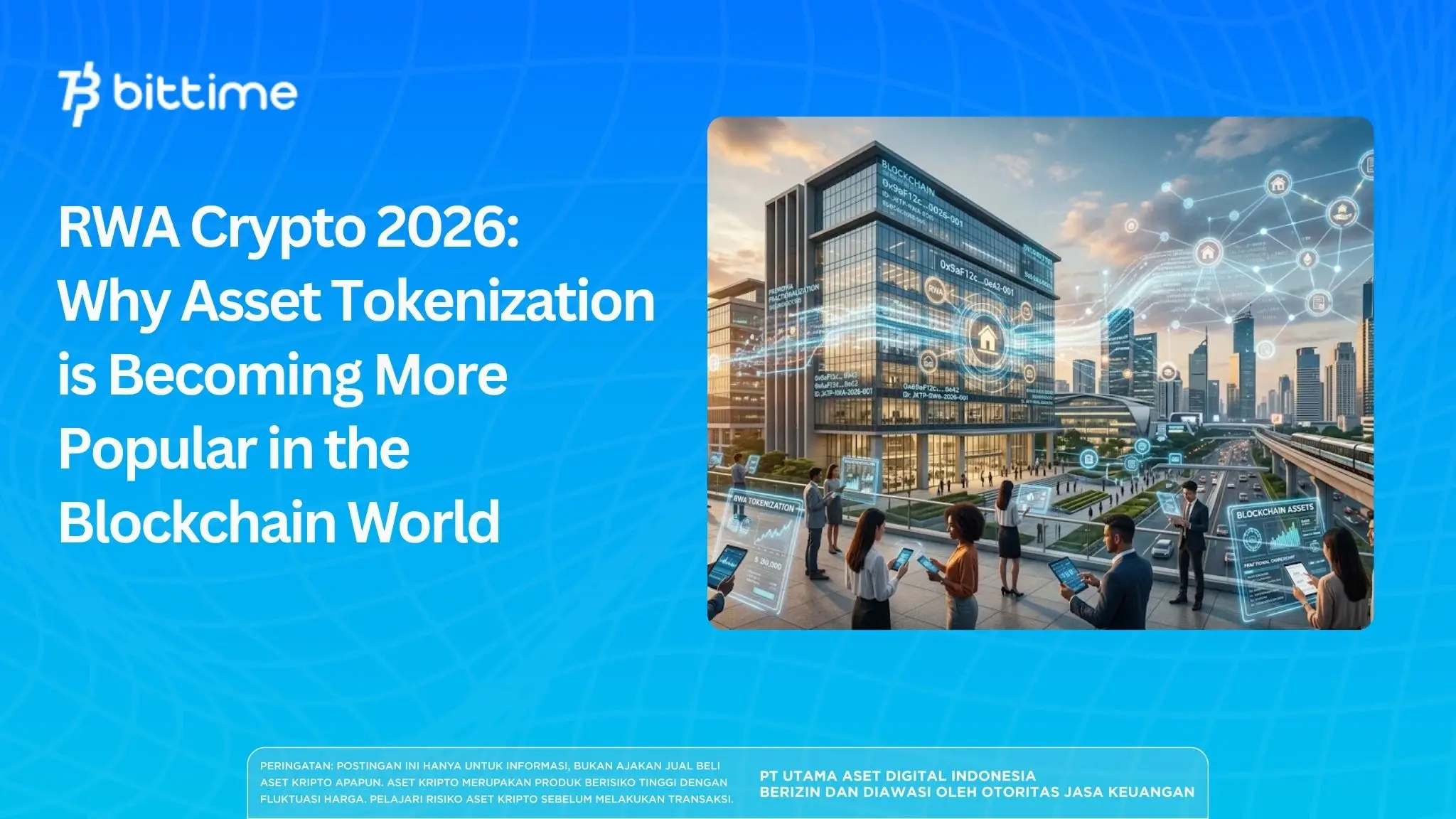
Tokenization of real-world assets or real world asset crypto is becoming one of the most powerful new crypto narratives in 2026.
Platforms like Securitize prove that large institutions are now serious about bringing assets onto the blockchain.
However, recent data also reveals a less discussed side: adoption of blockchain digital assets is growing rapidly, but revenue models have not kept pace.
This article explores why blockchain tokenization remains popular, the best RWA sectors for 2026, and the monetization challenges investors need to understand.
Key Points
Securitize recorded average tokenization AUM of US$4.3 billion and transaction volume of US$5.3 billion, up 147% YoY.
Total revenue actually fell 5% to US$14.4 million, indicating that high adoption has not automatically translated into recurring revenue.
The latest blockchain trends remain bullish for digital assets, but the quality of earnings is a key determinant of sustainability.
RWA Crypto Adoption Explosion in 2026
Data from a CryptoSlate report shows Securitize closed its first quarter as a public company on a record high.
Average tokenized assets under management reached US$4.3 billion, up 16% year-on-year.
Transaction volume on the platform jumped 147% to US$5.3 billion.
These figures show that the latest blockchain trend is not just talk, but has attracted institutional liquidity.
However, Securitize's total revenue fell 5% to US$14.4 million.
Tokenization revenue actually fell 12% to US$7.8 million, while asset-servicing revenue rose 3% to US$6.6 million.
In other words, the company managed to put more assets on-chain and process much larger volumes, but made less money.
This reality serves as a starting point for understanding the dynamics of crypto RWA in 2026.
Read Also: RWA Crypto is Gaining Strength, These 7 Projects Are Preparing to Release Tokens in 2026
Why Is Blockchain Digital Asset Tokenization Increasingly Popular?
Blockchain digital asset tokenization offers efficiencies that traditional financial systems lack.
Assets such as bonds, equities, and property can be represented as atomically transferable tokens.
Transaction settlement becomes faster and more transparent.
That's why major financial institutions are starting to make real-world crypto assets a strategic priority. Liquidity and broader market access are also key attractions.
Additionally, real estate tokenization enables fractional ownership, which was previously difficult.
Retail investors can own a small portion of a commercial property without having to purchase the entire building.
This model opens the door to more participants, especially in emerging markets.
For issuers, administration and distribution costs can be reduced significantly.
Therefore, blockchain digital assets are seen as a natural evolution of capital markets.
Read Also: 2 Indonesian Property Tokens to Watch: ASETQU and GORO Open a New Era of Digital Real Estate
The Reality of Monetization: High Adoption Doesn't Mean High Revenue
Image Illustration: AI
Securitize Data debunks the assumption that large volumes automatically translate to large revenues.
CFO Francisco Flores said AUM-based revenue is still immaterial and very little of the transaction volume is successfully monetized.
The majority of tokenization revenue still comes from network expansion through the integration of new protocols. This means revenue relies more on new projects than on recurring activity on the platform.
Edwin Mata, CEO of Brickken, explains that this gap reflects structural problems across the industry.
Tokenization is often done as a custom project involving custom integrations, jurisdictional compliance, and professional services.
Each new asset or new territory risks becoming an implementation project in itself.
When the economy relies on piecemeal development, tokenized assets can grow much faster than the recurring revenue behind them.
The Role of Real Estate Infrastructure and Tokenization in the Long-Term
Greater opportunities arise once the asset is on-chain, not just at issuance.
Mata emphasized that companies need infrastructure that manages instruments for years.
Coverage includes licensing, compliance, reporting, distribution, corporate action, and secondary transfers.
The distinction between implementation revenue and infrastructure revenue becomes very important.
Recurring infrastructure is key to making tokenization a sustainable business, not just a consulting project.
Real estate tokenization is an example of a sector that requires long-term management.
A property isn't finished once the token is issued; it requires tenant data updates, rental income distribution, and ongoing compliance.
Platforms capable of offering these services will win in the long run. Standardized infrastructure and workflows that can be used across multiple instruments are prerequisites.
This is where the best RWAs of 2026 will look.
Best RWAs 2026 and Prominent Sectors
The most prominent sectors in the crypto RWA space this year have been the tokenization of public equities and treasuries.
Public equities are considered to have high velocity activity that may incur transaction fees.
Securitize said the move is more transaction-driven than tokenized Treasuries or credit.
In the medium to long term, the business could change the platform's revenue mix.
Other sectors such as real estate tokenization and private credit are also continuing to grow, but monetization is slower.
For investors, selecting the best RWA in 2026 isn't just about AUM growth. Revenue quality, retention, margins, and the ability to convert activity into recurring fees are more crucial factors.
Utkarsh Ahuja of Moon Pursuit Capital cautions that investors are now demanding proof of business models, not just growth stories.
The distinction between narrative and long-term business will become increasingly apparent. That's why investing in RWA-based digital assets requires deeper analysis.
To expand your portfolio into more liquid digital assets, you might consider Bittime. Register at Bittime to start investing in crypto.
Read Also:5 New Crypto Tokens Pre-Sale in August 2026: Which Ones Are Worth Watching?
Prospects and Risks of RWA-Based Digital Asset Investments
The outlook for RWA crypto remains bullish as institutions continue to bring assets to the blockchain. Many platforms are targeting recurring revenue through post-issuance asset management services.
However, the path to scale is not yet fully proven.
Securitize lowered its 2026 revenue guidance to US$70 million to US$80 million from its initial projection of US$110 million.
Adjusted EBITDA is also still negative, reflecting inefficient costs and monetization.
The main risk of investing in digital assets is regulatory uncertainty and infrastructure standards. Each jurisdiction has different compliance rules, making scaling expensive.
If the business model remains reliant on custom projects, margins will struggle to improve. Investors should focus on platforms capable of building recurring infrastructure, not just increasing AUM.
In this way, the RWA portfolio not only follows the hype, but also captures fundamental value.
Conclusion
Asset tokenization is gaining popularity in the blockchain world because it offers greater efficiency, liquidity, and access.
Securitize data shows that RWA crypto adoption is growing strongly, but monetization remains a challenge.
The gap between assets under management and recurring revenue will determine the winners in this sector.
For investors, understanding the difference between AUM growth and earnings quality is key.
Use fundamental analysis and monitor the latest blockchain trends regularly.

Bittime is a licensed and regulated Digital Financial Asset Trader (PAKD) supervised by Indonesia’s Financial Services Authority (OJK) — where you can buy Bitcoin in Indonesia and hundreds of other crypto assets starting from just Rp10,000. The registration process is fast, secure, and you can get started today.
Track USDT to IDR conversions and monitor your favorite crypto assets in real time. Everything is available in one crypto investment app that you can download for free on the Play Store
Ready to start? Register now on Bittime and execute your investment strategy with a platform trusted by millions of users in Indonesia.
FAQ
What is RWA crypto?
RWA crypto is the tokenization of real-world assets such as bonds, property, and equities into tokens on the blockchain. The goal is to increase liquidity and transaction efficiency.
Why will asset tokenization become more popular in 2026?
As large institutions begin to place assets on-chain, driven by settlement efficiency, broader access, and the potential for fractional liquidity, monetization remains a key challenge.
Which RWA sector will be most promising in 2026?
Public equity and treasury tokenization are considered the most promising due to higher transaction activity. Real estate tokenization is also attractive, but tends to require long-term management.
What are the main risks of investing in RWA-based digital assets?
Key risks include uneven regulation, reliance on custom projects, and non-recurring revenue. Investors should examine the platform's revenue quality and margins.
Disclaimer: The views expressed belong exclusively to the author and do not reflect the views of this platform. This platform and its affiliates disclaim any responsibility for the accuracy or suitability of the information provided. It is for informational purposes only and not intended as financial or investment advice.

.png)