Rush Money: Definition, Impact, and Case Study of Bank Mandiri
2026-08-26
Recently, the term rush money has resurfaced among the public.
Calls to withdraw funds en masse from Bank Mandiri are circulating widely on social media, following the controversy surrounding the blocking of the account belonging to Pati activist Supriyono.
This incident sparked concerns about a repeat of the crisis of confidence in the banking world that occurred in 1998.
So, what exactly is meant by rush money?
What are the causes, how does rush money impact the economy, and how is the Bank Mandiri case an example of rush money that should be watched out for?
This article will thoroughly examine the definition of rush money, its causes, and its implications for national financial stability.
Key Takeaways
Rush money is a phenomenon of massive withdrawals of funds by customers simultaneously which can trigger a banking liquidity crisis.
The blocking of activists' accounts by Bank Mandiri in August 2026 sparked calls for a rush on social media and drew criticism from the Indonesian Ulema Council (MUI) for potentially repeating the 1998 crisis of confidence.
The impact of the money rush is not only felt by the banks concerned, but also threatens the stability of the national economy, MSMEs, and small communities.
What is Rush Money?
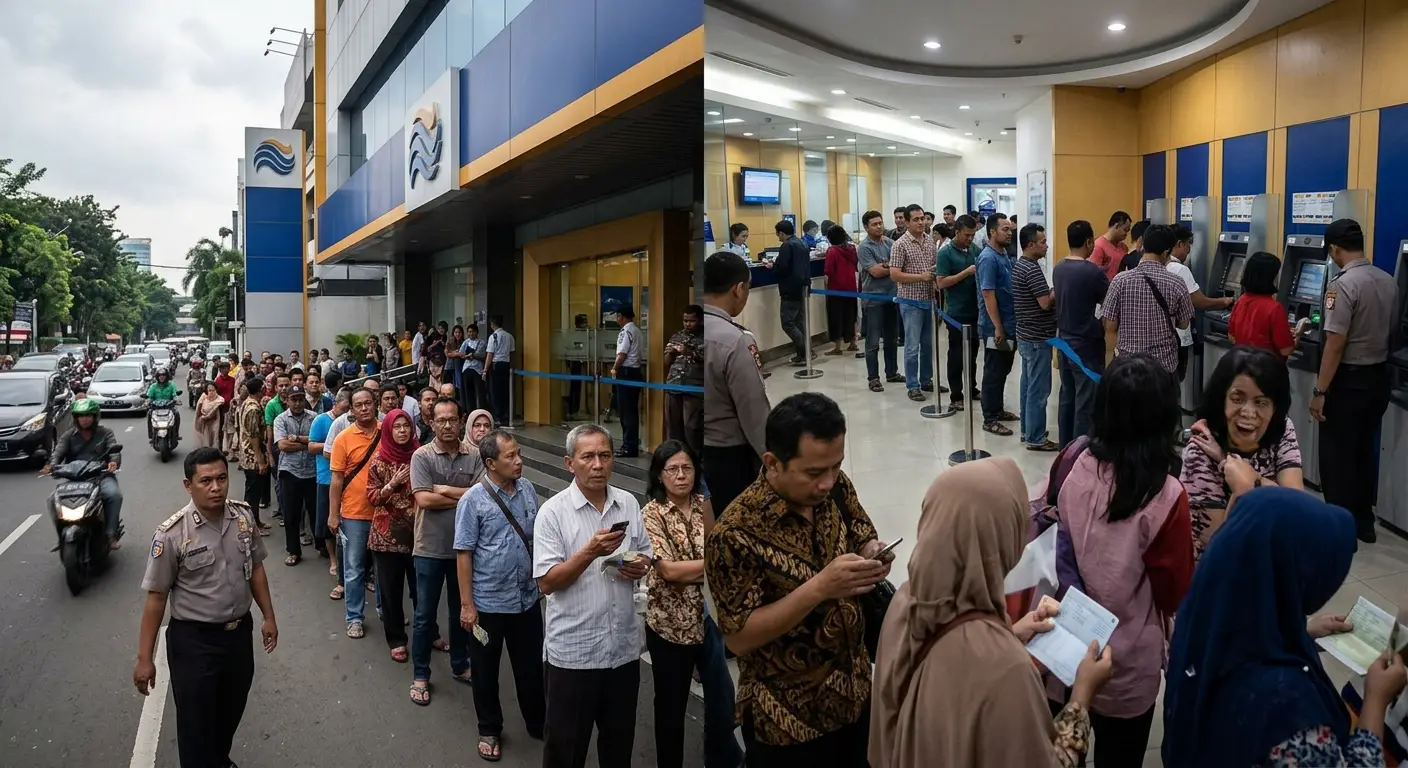
Rush Money Illustration | Source: AI
What is a money rush? Simply put, a money rush is a situation where customers rush to withdraw cash from the bank simultaneously and in large amounts.
This term is popularly used in Indonesia, while in other countries a similar phenomenon is better known as a bank run.
Economist from Gadjah Mada University, Eddy Junarsin, explained that a money rush is a large-scale and simultaneous withdrawal of money by depositors.
If only one or two people withdraw cash, it's not a problem.
However, when done en masse, bank liquidity will be shaken and the banking system could be in chaos.
Read Also: The Impact of Bank Mandiri's Cancel Culture on BMRI's Share Price
Causes of Rush Money
Understanding the causes of a money rush is the first step in anticipating it. According to various sources, several key factors trigger this phenomenon.
Loss of Public Trust
The main cause of the money rush is the loss of customer trust in the banks where they keep their money.
This trust can collapse due to various things, such as bank mismanagement, corruption cases, or economic crises that hit a country.
Panic and Provocation
Rush money is often triggered by widespread panic, either through hoax information or provocative calls on social media.
In the case of Bank Mandiri, calls to close accounts and withdraw funds en masse spread after the blocking of activists' accounts sparked controversy.
Economic and Political Crisis
Unstable economic conditions or heated political situations can also be triggers.
People who are worried about the security of their savings tend to prefer to withdraw their money and keep it themselves.
Read Also: Indonesian Bonds Become a Foreign Target, Will the Rupiah Also Strengthen?
The Impact of Rush Money: A Real Threat to the Economy
The impact of the money rush cannot be underestimated.
This phenomenon has a chain effect that is detrimental to many parties, from customers to the national economy as a whole.
Banks Run Out of Liquidity and Go Bankrupt
The most immediate impact of the money rush is that banks are short of cash.
When customers withdraw large amounts of funds simultaneously, even healthy banks can experience liquidity problems.
If not handled immediately, the bank could experience default and eventually go bankrupt.
Losses for Customers and the Small Community
Customers who join in withdrawing funds can also experience financial losses, especially if the funds they withdraw are immature or have decreased in value.
Worse still, those most affected are the lower-middle class and MSMEs.
CELIOS Executive Director Bhima Yudhistira stated that wealthy individuals can easily move their assets abroad, while lower-income communities struggle to access cash, hindering their economic activities.
Read Also: Mandiri Stocks Today: BMRI Under Pressure, Is BBCA Safer?
Shocks to National Economic Stability
If a widespread rush on money occurs, the impact can trigger an economic recession because the flow of money and business activities are disrupted.
The government was forced to spend large sums of money to rescue the affected banks, which ultimately burdened the state's finances.
Interested in learning more about the world of finance and investment? Register now with Bittime, a trusted crypto asset investment platform.
Example of Rush Money: The Case of Bank Mandiri 2026
The case of blocking Bank Mandiri accounts is the latest example of rush money that has attracted public attention.
This incident began when the account belonging to Supriyono, coordinator of the United Pati Community Alliance (AMPB), was blocked by Bank Mandiri.
MUI Criticism and Threat of Mass Fund Withdrawal
Deputy Chairman of the MUI, Buya Anwar Abbas, strongly criticized the blocking action.
He considered this step to be a procedural error that could potentially trigger a crisis of public confidence and the threat of mass withdrawals or a rush on funds, similar to the one that triggered the 1998 crisis.
Buya Anwar Abbas emphasized that excessive intervention of power over customer accounts without a clear legal basis would harm the reputation of national banking.
If people start to doubt the security of their savings, the risk of a money rush cannot be avoided.
Rush Money Invitation on Social Media
This account blocking triggered calls for a money rush on social media.
Banking observer Doddy Ariefianto believes that the invitation is counterproductive and does not resolve the underlying issue of account blocking.
He appealed to the public not to be provoked and to take legal action if they felt they had been wronged.
Legal expert Ferry Koto also warned that inviting others to carry out mass fund withdrawals that trigger a money rush could potentially result in criminal sanctions.
Read Also: Bitcoin Heads to the September FOMC: Will the BTC Rally Stop?
Conclusion: Be Alert, Don't Be Provoked
Rush money is a dangerous phenomenon that can shake the stability of the financial sector and the national economy.
The Bank Mandiri case reminds us all how fragile trust in the banking world can be if it is disturbed by interventions that have no clear legal basis.
The public is advised not to be easily provoked by calls to rush money on social media.
Instead of panicking, it is better to maintain clear information and continue economic activities as usual.
If there is dissatisfaction with bank policies, legal action is a wiser and more responsible way.

Bittime is a licensed and regulated Digital Financial Asset Trader (PAKD) supervised by Indonesia’s Financial Services Authority (OJK) — where you can buy Bitcoin in Indonesia and hundreds of other crypto assets starting from just Rp10,000. The registration process is fast, secure, and you can get started today.
Track USDT to IDR conversions and monitor your favorite crypto assets in real time. Everything is available in one crypto investment app that you can download for free on the Play Store
Ready to start? Register now on Bittime and execute your investment strategy with a platform trusted by millions of users in Indonesia.
FAQ
What is rush money?
A money rush occurs when customers simultaneously and in large amounts withdraw cash from banks. This phenomenon is also known as a bank run in other countries.
What is the main cause of rush money?
The main cause of the money rush is the loss of public trust in banks, which can be triggered by panic, hoaxes, provocation, economic crisis, or unstable political situations.
What is the impact of rush money on the economy?
The impact of a money rush is very serious, including: banks running out of liquidity and risking bankruptcy, customers suffering losses, MSMEs being hampered, and the stability of the national economy being shaken to the point of potential recession.
Is the Bank Mandiri case an example of rush money?
The Bank Mandiri case is an example of rush money because the blocking of activists' accounts triggered calls for mass withdrawals on social media and drew criticism from the Indonesian Ulema Council (MUI), which warned of the risks of rush money, similar to the 1998 crisis.
How to deal with the issue of rush money?
The public is urged not to panic and not be provoked by offers to rush money. Ensure the information received is accurate, and if there are any issues with the bank, resolve them through available legal channels.
Disclaimer: The views expressed belong exclusively to the author and do not reflect the views of this platform. This platform and its affiliates disclaim any responsibility for the accuracy or suitability of the information provided. It is for informational purposes only and not intended as financial or investment advice.

.png)