STBL Review: What Are the Risks of RWA Stablecoins for Indonesian Traders?
2025-11-11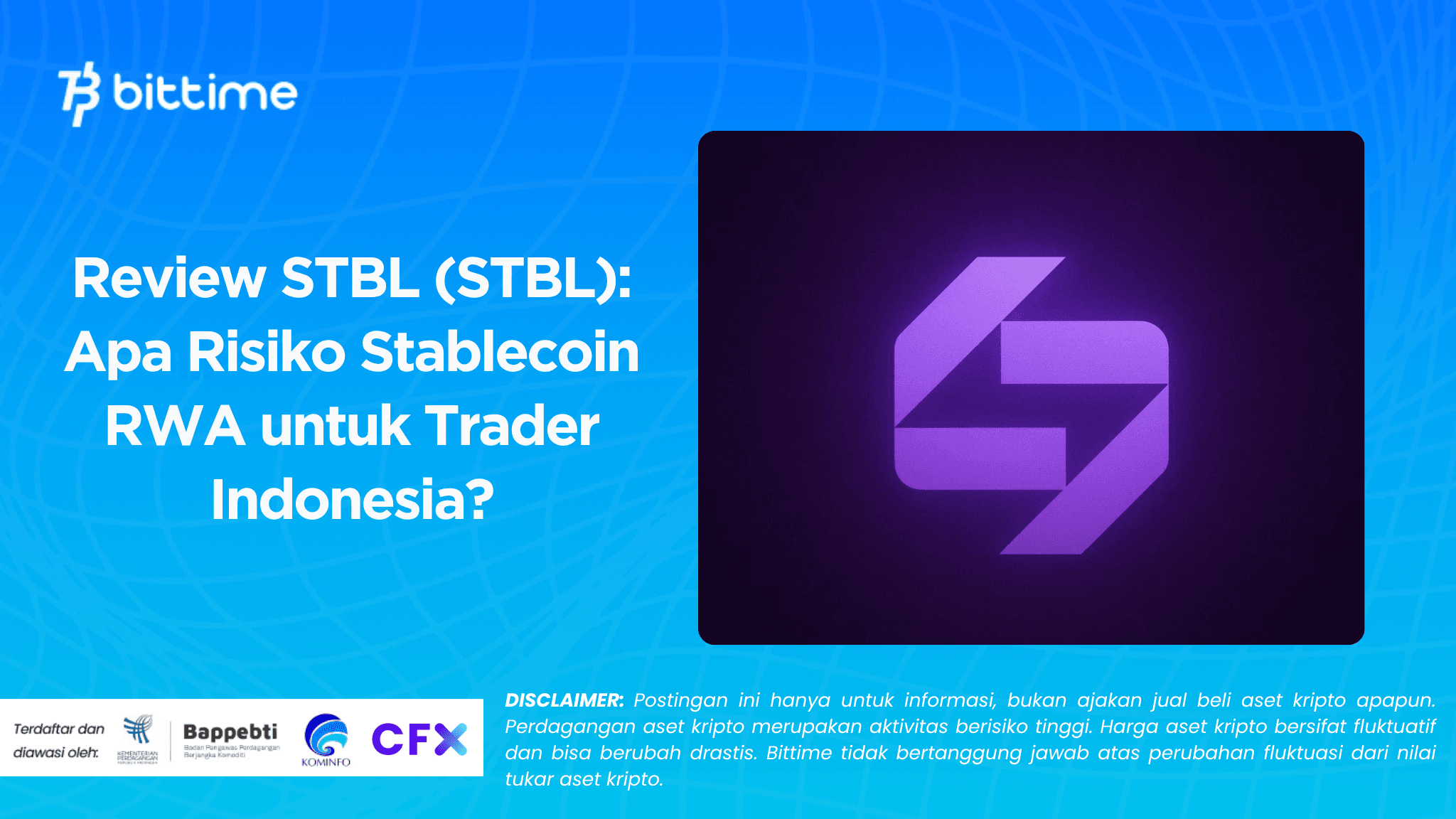
In recent years, stablecoins have become the backbone of the crypto ecosystem due to their stable value tied to a specific asset, such as the US dollar or real assets.
One that has attracted attention recently is STBL, a stablecoin backed byReal World Assets (RWA)The RWA concept allows real-world assets such as debt securities, government bonds, or other traditional financial instruments to be tokenized and used as collateral on the blockchain.

What are the advantages of STBL?
In theory, this approach sounds promising.STBL offers higher transparencycompared to conventional stablecoins like USDT and USDC, because all collateral recording is done on-chain.
In addition, STBL also carries a profit-sharing model that provides potential returns for token holders, making it more than just a value stability tool.
However, despite this potential, Indonesian traders need to understand that this type of stablecoin is not free from complex risks, especially since it involves both traditional financial markets and the crypto world.
Read Also:STBL Token Officially Listed on Bittime
STBL's Main Risks for Indonesian Traders
1. Regulatory Uncertainty in the RWA Stablecoin Market
One of the biggest challenges facing STBL is regulatory uncertainty. In Indonesia, regulations regarding stablecoins and RWA assets are still in their infancy.
Authorities such as Bappebti and OJKThere is no clear guidance regarding the classification and legal treatment of real-world asset-based stablecoins.
This means that if regulations change at any time, STBL trading or storage activities could be significantly impacted. This risk is crucial for local traders who rely on policy stability for their long-term strategies.
2. Limited Liquidity
According to circulating data, only around 5% of the STBL supply is actively circulating in the market. This means its liquidity is still relatively low, making prices and trading volumes susceptible to whale activity or large fluctuations.
For traders, this can be a problem when they want to exit a position or exchange STBL for another asset in a short period of time.
3. Risks from Collateral and Fixed Income Market Interest Rates
Because STBL relies on assets such as Treasuries and debt securities, changes in global interest rates can affect the stability of STBL's value.
If the fixed income market experiences pressure, the value of the collateral backing the STBL could decline, creating a potential imbalance between the value of the asset and the tokens in circulation.
This differs from stablecoins like USDT, which are largely based on cash or cash-equivalent dollar reserves, which are easier to control.
4. Concentrated Governance
Although STBL has community governance mechanisms, the reality is that a small number of large holders have significant influence over project decisions.
In the long term, this can create governance risks, where strategic decisions may benefit large holders more than the general community.
5. Fierce Competition in the Stablecoin Market
STBL also has to compete with major players like USDT, USDC, DAI, and TUSD, which already have strong liquidity and reputations. While STBL offers innovation through RWA integration, mass adoption remains a major challenge.
Traders should consider whether the potential profits are worth the risks of limited liquidity and adoption.
Read Also:How to Buy STBL on Bittime — DeFi Stablecoin Asset
STBL's Potential and Opportunities in the Future
Despite its risks, STBL still holds exciting prospects, especially for those who believe in the future of real-world asset tokenization. Its on-chain transparency and RWA-based yield system could make it one of the most innovative stablecoins in the coming years.
If regulations in Indonesia and globally become clearer, STBL has the potential to bridge the gap between traditional finance and the crypto ecosystem, opening up new opportunities for traders and institutional investors.
However, for Indonesian retail traders, the key is to invest with a full understanding of the risks. Don't be tempted by yields or RWA hype without assessing fundamental stability and market conditions.
Read Also:Today's Stbl Price
Want to Try STBL Trading? Start at Bittime!
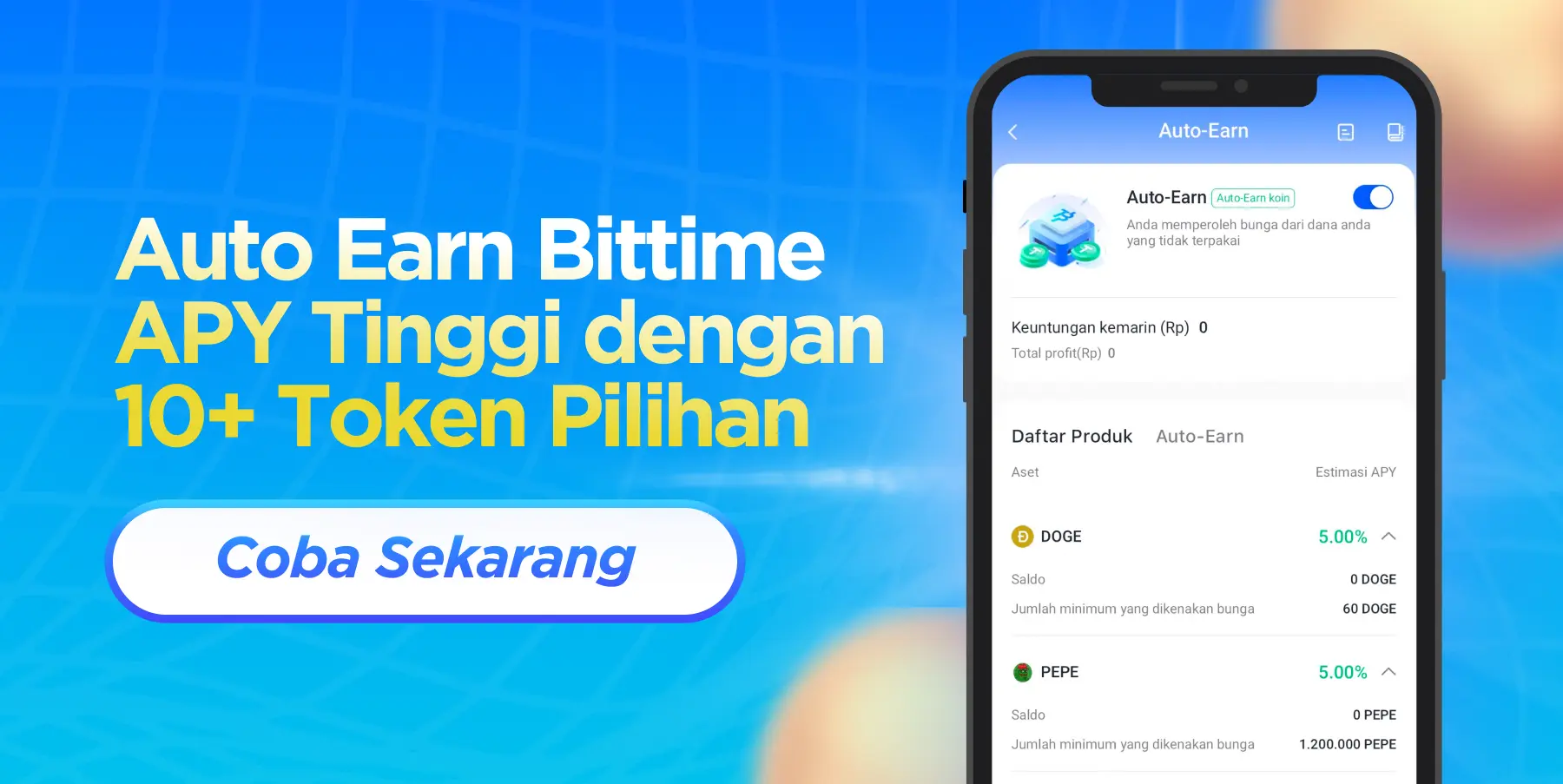
Before going further in trading stablecoins like STBL, register yourself on a trusted crypto platform like Bittime.
Bittime provides a secure trading ecosystem, is registered with Bappebti, and offers a variety of popular stablecoins and other digital assets.
With Bittime, Indonesian traders can explore the world of RWA stablecoins more securely and transparently, while monitoring regulatory and global market developments.
Conclusion
STBL (STBL) brings a new concept to the stablecoin world by combining real-world assets, on-chain transparency, and yield sharing.
However, this innovation comes with significant risks for Indonesian traders, ranging from regulatory uncertainty to low liquidity and interest rate risk.
For traders looking to capitalize on opportunities in the RWA sector, a thorough understanding of STBL's mechanisms, governance, and risks is crucial before deciding to invest.
With a cautious approach and the use of a secure platform like Bittime, Indonesian traders can remain adaptable to innovation without compromising the security of their assets.
FAQ
What is STBL?
STBL is a Real World Assets (RWA)-based stablecoin that records all its collateral on-chain and offers yield sharing to its token holders.
What is the difference between STBL and USDT or USDC?
Unlike USDT and USDC, which are backed by cash reserves, STBL is backed by financial assets such as bonds and Treasuries, making it more connected to traditional financial markets.
Is STBL safe for Indonesian traders?
Its security depends on the project's regulations and transparency. Traders should exercise caution, as regulations in Indonesia are still developing and STBL's liquidity remains limited.
Can STBL provide returns?
Yes, STBL has a profit sharing model from the underlying real-world assets, but the returns are still dependent on market conditions and collateral performance.
Where can I buy or trade STBL?
You can start trading STBL on a trusted platform like Bittime, which offers a variety of stablecoins and crypto assets under Bappebti supervision.
Disclaimer: The views expressed belong exclusively to the author and do not reflect the views of this platform. This platform and its affiliates disclaim any responsibility for the accuracy or suitability of the information provided. It is for informational purposes only and not intended as financial or investment advice.

.png)