Bittime: Regulations and Collaboration Are Key to RWA Development in Indonesia
2026-09-29
Jakarta, September 29, 2026 — Bittime, a Digital Financial Asset Trader (PAKD) registered with and supervised by the Financial Services Authority (OJK), highlights the development of the Real-World Assets (RWA) and Tokenized Stocks ecosystem in Indonesia alongside the strengthening of regulatory frameworks and cross-sector collaboration.
As “Indonesia’s Gateway to Global Assets,” Bittime views this development as part of the growing access to global assets through the digital ecosystem.
Collaboration Becomes the Foundation for Tokenization Development
The development of tokenized assets requires the involvement of various parties because the process is not solely related to technology.
Aspects such as the characteristics of the underlying assets, issuance structure, transaction mechanisms, custody, governance, and consumer protection are also part of the tokenization ecosystem.
This direction is in line with the digital finance development agenda outlined by OJK in the FEKDI x IFSE 2026 Press Release.
In the press release, OJK identifies synergy across authorities as one of the digital finance development agendas, alongside adaptive governance and regulation, cybersecurity and consumer protection, as well as digital talent development.
OJK also recorded 1,357 partnerships between Financial Sector Technology Innovation (ITSK) providers and Financial Services Institutions (LJK). According to OJK, these partnerships reflect increasingly close collaboration between technological innovation and the financial services sector in expanding access to financial services for the public.
Bittime Operations Director Ryan Lymn noted that such collaboration is relevant to the development of RWA and Tokenized Stocks because tokenization brings digital asset technology together with various components of the financial ecosystem, including asset issuers or owners, infrastructure providers, custodians, and financial institutions.
“The development of RWA requires an ecosystem involving various parties, from asset owners or issuers, technology infrastructure, and custodians to digital asset service providers. Therefore, cross-sector collaboration is important so that tokenization innovation can develop with clear structures and governance,” Ryan said.
RWA Regulatory Direction Is Becoming Clearer
This collaboration is taking place alongside developments in Indonesia’s RWA regulatory framework.
Based on the OJK Board of Commissioners Meeting Press Release April 2026, OJK stated that it is preparing a Draft OJK Regulation (RPOJK) on Tokenized Asset Offerings or Real World Asset (RWA) Tokenization.
The draft covers several aspects, including criteria for RWAs that can be tokenized, procedures for conducting tokenized asset offerings, licensing processes, consumer protection, and mechanisms for financial recording and reporting by token issuers.
The development of the regulatory sandbox also indicates that several business models related to tokenization have entered the OJK testing process.
In the OJK Board of Commissioners Meeting Press Release August 2026, OJK stated that seven sandbox participants had completed the testing process and were declared to have passed, with several business models related to tokenization, including gold tokenization, securities tokenization through the Fund Management Contract (KPD) scheme, and tokenization of property ownership benefits.
OJK also stated that the principle of collaboration is one of the foundations of sandbox implementation, including the involvement of Financial Services Institutions in several business models being tested.
“The development of the regulatory framework provides important context for industry players in understanding the direction of tokenization development in Indonesia. Clarity regarding asset characteristics, transaction mechanisms, governance, and consumer protection is an important part of ensuring that innovation can develop in a structured manner,” Ryan said.
Tokenized Stocks Grow in the Global Market
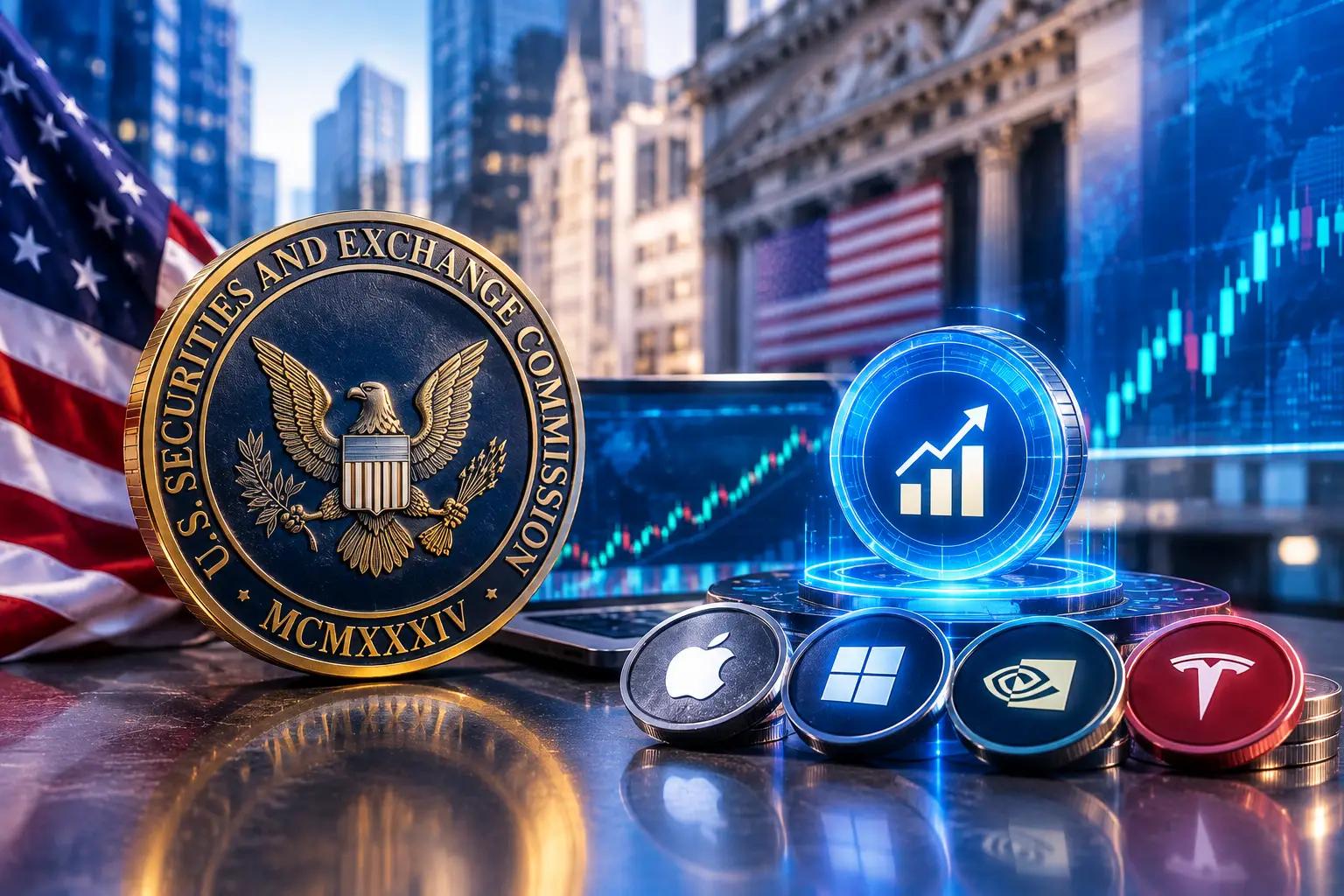
At the global level, data shows increased activity in the Tokenized Stocks category. According to the RWA Report 2026 from CoinGecko Research, the market capitalization of Tokenized Stocks reached approximately US$486.69 million on March 31, 2026, up from approximately US$2.09 million in June 2025.
CoinGecko also recorded spot trading volume for Tokenized Stocks of approximately US$15.12 billion in Q1 2026, higher than the US$14.84 billion recorded throughout the final two quarters of 2025.
Despite the increase in activity, CoinGecko noted that trading in the five largest tokenized equities remained below 1% of the total stock trading volume in the TradFi market.
The data illustrates that Tokenized Stocks remain a relatively small category compared with the traditional stock market, but have shown increases in market capitalization and trading activity since their development began in 2025.
“This global development provides important context for understanding how access to global assets can expand through digital infrastructure. However, product development needs to progress alongside regulatory readiness, transparency regarding asset structures, and users’ understanding of the risks associated with these products,” Ryan said.
This development also provides context for digital asset platforms in Indonesia to expand access to global assets through tokenization-based products.
For Bittime, the development of RWA and Tokenized Stocks is part of efforts to expand global asset options for Indonesian users while continuing to take regulatory developments and user protection principles into consideration.
Tokenized U.S. Stocks Activity on Bittime
The global market development is also reflected in Tokenized U.S. Stocks activity on Bittime, which increased 2.5 times in July 2026 compared with June 2026.
Currently, Bittime provides 34 Tokenized U.S. Stocks, offering access to digital assets that represent shares of a number of global companies. Some of the available assets include MSTRX, CRCLX, TSLAX, NVDAX, and SPYX.
However, Tokenized Stocks have characteristics and mechanisms that may differ from direct stock ownership. Users need to understand the product structure, underlying assets, issuance and custody mechanisms, as well as market and technology risks before conducting transactions.
“We view the development of Tokenized U.S. Stocks as part of the increasingly broad range of access options to global assets through digital infrastructure. Bittime will continue to monitor market and regulatory developments, placing transparency, compliance, and education as important elements in developing this access,” Ryan concluded.
The development of Tokenized Stocks in Indonesia will continue to be influenced by regulatory readiness, infrastructure, and collaboration between the financial and technology sectors.
As the RWA ecosystem grows, Tokenized Stocks also create opportunities to expand access to global assets through the digital ecosystem, in line with Bittime’s role as “Indonesia’s Gateway to Global Assets”.
Disclaimer: The views expressed belong exclusively to the author and do not reflect the views of this platform. This platform and its affiliates disclaim any responsibility for the accuracy or suitability of the information provided. It is for informational purposes only and not intended as financial or investment advice.

.png)