Global Crypto Regulation Becoming More Targeted, G20 Paves the Way for Blockchain Innovation
2026-09-03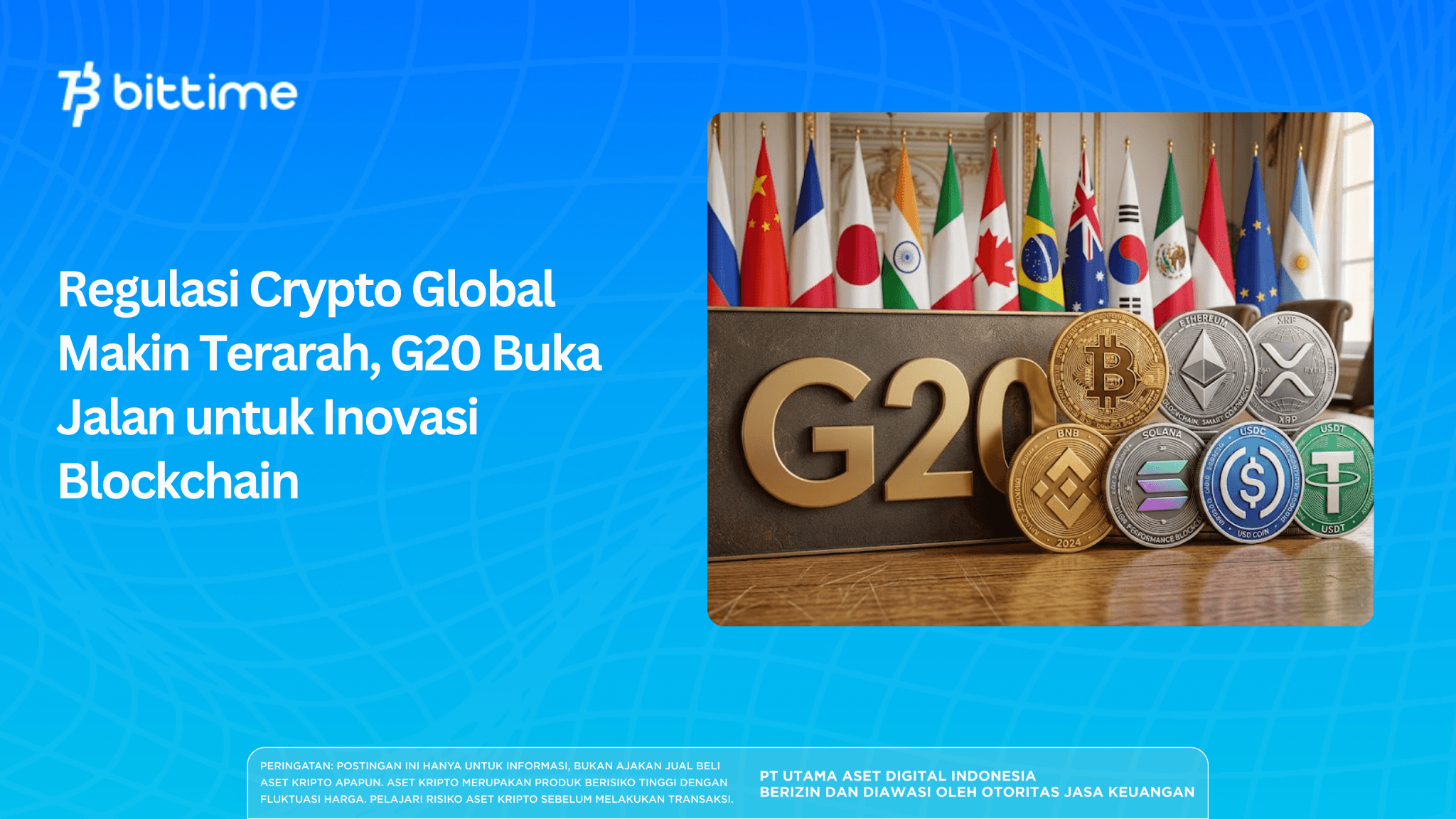
Seven years ago, the G20 only asked its members to be wary of crypto asset risks. On 1 September 2026, the same forum stated that digital asset innovation has the potential to boost global economic growth — a shift in tone that rarely happens this quickly in multilateral policy circles.
The official G20 statement in Asheville, North Carolina, was immediately welcomed by industry players who have been waiting for clarity in international crypto rules for years, and also serves as a strong signal that global digital asset regulation is moving towards a more open stance on blockchain innovation.
Key Takeaways
- G20 officially supports a clearer regulatory path for digital assets and blockchain, without issuing new binding global rules.
- 21 major global banks, including Goldman Sachs, Citi, and Bank of America, commit to forming a dollar stablecoin company targeted to launch in early 2027.
- The G20's shift from focusing on risk oversight (2019–2025) to supporting growth marks a new chapter in global blockchain adoption.
G20's Shift in Stance on Global Crypto Regulation
This G20 statement appears in the G20 Chair's Statement published by US Treasury Secretary Scott Bessent following the second finance track meeting under the 2026 US presidency.
Finance ministers and central bank governors stressed the importance of developing regulatory and supervisory frameworks that provide a "clear path" for digital financial innovation, according to Catenaa.
This direction is vastly different from the G20's previous stances. In 2019, the G20 only asked members to monitor crypto asset risks. Under India's presidency in 2023, the forum began pushing for stronger regulation and oversight of the crypto ecosystem.
A year later, under South Africa's presidency, the Financial Stability Board (FSB) even found many gaps in the implementation of crypto and stablecoin recommendations across various countries, according to TheNewsCrypto. The 2026 statement is the first time the G20 has placed digital innovation on equal footing with economic growth as a main agenda.
Read Also: Nvidia's $500 Billion AI Funding, AI Crypto Tokens Also Benefiting?
Interestingly, this statement is not a full consensus communiqué. China objected to several paragraphs on global economic imbalances, IMF surveillance, and sovereign debt sustainability — but raised no objections at all to the section on digital assets.
In other words, support for the direction of global crypto regulation is virtually unanimous among all G20 members. Still, the G20 reaffirms that it will not issue a single global rule; detailed regulation remains up to each jurisdiction, while awaiting the FSB's report on cross-border stablecoin schemes.
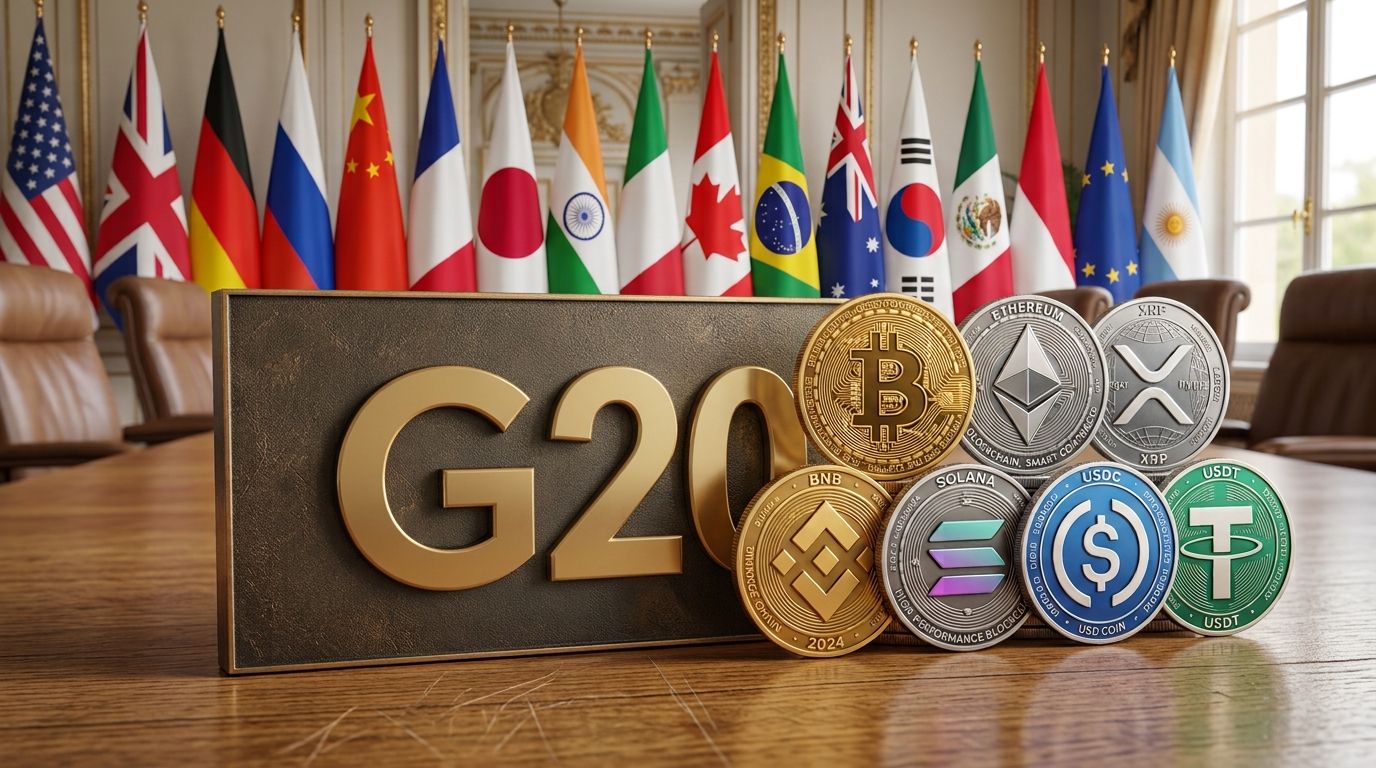
Illustration: Generated Image
Such policy clarity is also relevant for investors in Indonesia. As a platform operating under OJK supervision, Bittime offers legal and secure access to start trading crypto assets amid increasingly clear global regulatory directions. Register now at Bittime to start exploring the digital asset ecosystem with clear regulatory protection.
21 Global Banks Prepare to Launch Dollar Stablecoin
Coinciding with the G20 meeting, 21 major financial institutions announced a commitment to form a stablecoin issuing company.
The list includes big names such as Goldman Sachs, Citi, Bank of America, Deutsche Bank, UBS, Wells Fargo, Fidelity Investments, Capital One, PNC Financial Services, Scotiabank, and TD Bank Group — involving institutions from North America, Europe, East Asia, the Middle East, and Africa, according to crypto.news.
The joint venture is planned to be established in the second half of 2026, with a USD-denominated stablecoin targeted to launch in the first half of 2027.
After the dollar token, the next priority is a euro stablecoin, followed by other G7 currencies gradually. These products are designed to support wholesale, institutional, and retail payments, as well as digital asset settlement.
Read Also: Tokenized Stocks vs Regular Stocks: Definition, Differences, and How to Buy
Reuters confirmed that the consortium is committed to complying with the GENIUS Act in the United States and MiCA in the European Union before operating globally — two regulations that are currently the most mature references for the latest digital asset rules in their respective regions.
This news immediately impacted stock markets: Circle's share price, the issuer of USDC stablecoin, came under pressure due to concerns over intensifying competition.
To give a sense of market scale, total stablecoin market capitalization currently stands at around $313 billion, with USDT still dominating at $183.27 billion and USDC at $73.75 billion.
This 21-bank consortium is not the only one — a separate group of 37 financial institutions called Qivalis is also preparing a euro stablecoin, with BBVA involved in both initiatives simultaneously.
Read Also: 10 Free Bitcoin Mining and Faucet Sites 2026, Which Are Legit?
What It Means for the Future of Cryptocurrency and Web3 Industry Opportunities
The combination of the G20 policy signal and the concrete steps of dozens of major banks points in the same direction: global blockchain adoption is moving from the experimental phase towards mainstream financial infrastructure.
The G20 also encourages extending the operating hours of high-value payment systems and adopting the ISO 20022 messaging standard, given that blockchain networks and stablecoins can run 24/7 — unlike conventional banking infrastructure, which is usually limited to business hours.
Read Also: 10+ Best AI Coins 2026: List of Artificial Intelligence-Themed Crypto!
For Web3 industry players, such regulatory clarity has two sides. On one hand, clear rules on licensing, reserves, custody, and reporting can facilitate the participation of large institutions and accelerate market confidence in digital assets.
On the other hand, overly strict rules risk limiting competition or driving activity to jurisdictions with lighter oversight.
The G20 itself has not yet answered these policy choices in detail — the broad direction is only to state that responsible digital asset innovation is now considered compatible with financial stability, not a threat to it.
Conclusion
The G20 statement in Asheville marks a significant turning point in international crypto policy: from merely monitoring risks to supporting growth through clearer regulatory paths, even without a single binding global rule for all countries.
The concrete step of 21 major global banks forming a dollar stablecoin company is tangible proof that traditional financial institutions are ready to embrace this direction more seriously.
Going forward, the policy directions of individual countries and the FSB's report on global stablecoins will determine how quickly blockchain adoption and Web3 industry opportunities are truly realised on a broad scale.
Check the prices of Bitcoin (BTC), Ethereum (ETH), XRP, Solana (SOL), GRAM, and BNB, and also top memecoins DOGE. You can trade directly on Bittime!

Bittime is a Digital Asset Trading Platform (PAKD) licensed and supervised by the Financial Services Authority — where you can buy Bitcoin in Indonesia and hundreds of other crypto assets starting from Rp10,000. The registration process is fast, secure, and can be started today.
Monitor the USDT to IDR conversion and real-time price movements of your favourite crypto assets. All are available in one crypto investment app that can be downloaded for free on the Play Store.
Ready to start? Register now at Bittime and execute your investment strategy with a platform trusted by millions of users in Indonesia.
FAQ
1. What is the main content of the G20 statement on global crypto regulation?
The G20 supports the development of clearer regulatory paths for digital assets and blockchain, while maintaining financial stability. This statement does not issue new global rules, but rather provides policy direction for individual countries.
2. Does the G20 issue crypto rules that apply to all countries?
No. The G20 explicitly leaves the details of digital asset regulation to the respective jurisdictions of its member countries.
3. Which banks are part of the dollar stablecoin consortium?
The consortium consists of 21 institutions, including Goldman Sachs, Citi, Bank of America, Deutsche Bank, UBS, and Wells Fargo, spanning North America, Europe, East Asia, the Middle East, and Africa.
4. What are the GENIUS Act and MiCA mentioned in the banks' plans?
The GENIUS Act is the US stablecoin regulatory framework, while MiCA is the EU's crypto-asset markets regulation. The 21-bank consortium commits to complying with both rules before their dollar stablecoin operates globally.
5. What is the impact of clearer digital asset regulation on the Web3 industry?
Clear rules on licensing, reserves, and reporting can facilitate the entry of large institutions and strengthen market confidence. However, overly strict rules also risk limiting competition or driving activity to jurisdictions with lighter oversight.
Disclaimer: The views expressed belong exclusively to the author and do not reflect the views of this platform. This platform and its affiliates disclaim any responsibility for the accuracy or suitability of the information provided. It is for informational purposes only and not intended as financial or investment advice.

.png)