What's the Difference Between a Spot Portfolio and a Futures Portfolio? Here's an Explanation
2026-08-14
Understanding the difference between a spot portfolio and a futures portfolio is important before starting crypto trading. A spot portfolio essentially contains assets that are owned directly, while a futures portfolio records futures contracts, margin, and positions with or without leverage.
These structural differences make the risks, use cases, and management approaches of the two portfolios very different.
Key Takeaways
- A spot portfolio focuses on crypto assets that are purchased and owned directly.
- A futures portfolio contains derivative contract positions and margin, and it may involve leverage, making the risks higher.
- Spot is simpler for asset ownership, while futures are more flexible for long positions, short positions, hedging, and active trading strategies.
What Is a Spot Portfolio?
A spot portfolio is a collection of assets purchased through the spot market and owned directly by the user. If you buy BTC, ETH, or another crypto asset worth IDR 1 million on the spot market, that asset is then recorded as part of your spot portfolio.
The portfolio value moves in line with changes in the prices of the assets held. If the price of Bitcoin increases, the value of BTC in the portfolio also rises. Conversely, if the price falls, the portfolio value decreases.
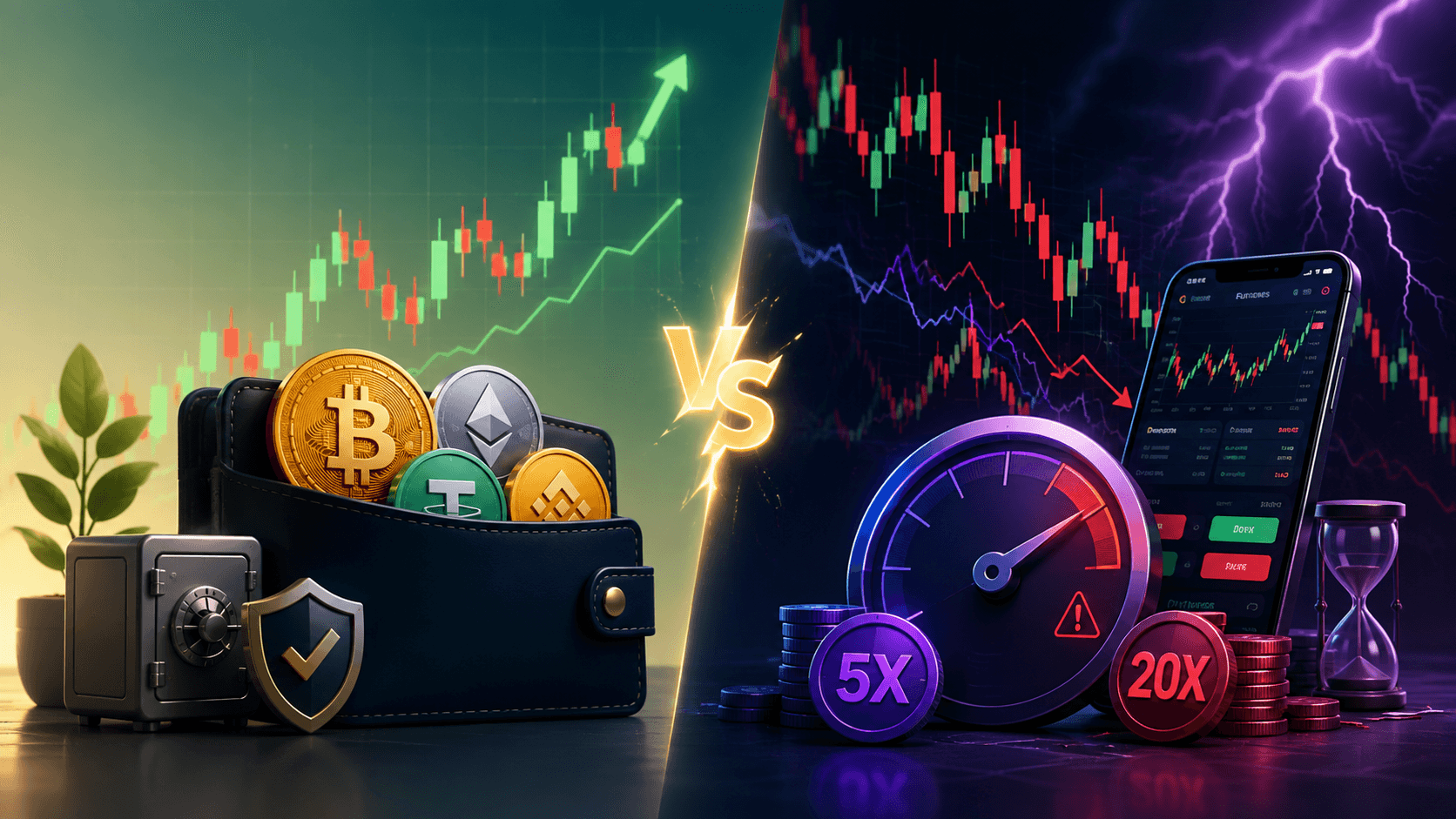
Source: AI-Generated Image
In a standard spot transaction, users do not need to maintain maintenance margin to keep ownership of the asset. Therefore, a decline in the asset price does not automatically cause the position to be closed through liquidation, as can happen with leveraged futures positions.
For example, someone buys IDR 5 million worth of BTC and holds it in a spot portfolio. If the BTC price falls by 20%, the asset value also drops by around 20%, but the amount of BTC owned remains the same as long as it is not sold.
Read also: Crypto Position Sizing: How to Determine Trading Position Size
What Is a Futures Portfolio?
A futures portfolio contains positions created through futures contract trading. Users gain exposure to an asset’s price movements without having to own the underlying asset directly.
In crypto futures, traders can typically take a long position when they expect the price to rise or a short position when they expect the price to fall. Futures also use the concept of margin, which is the capital required to open and maintain a position.
A futures portfolio therefore typically displays information that differs from a spot portfolio, such as:
- margin value;
- position size;
- leverage;
- entry price;
- unrealized profit and loss;
- maintenance margin;
- liquidation price for certain products;
- long or short position.
Leverage allows traders to gain greater exposure than the capital they use. However, leverage magnifies both profits and losses. If the market moves significantly against the position and the margin no longer meets the minimum requirements, a leveraged futures position may be liquidated.
Read also: What Is ATR in Crypto Trading?
Differences Between Spot and Futures Portfolios
The most fundamental difference lies in what the trader actually owns.
In spot trading, users buy the asset directly. In futures, users hold contract positions whose value tracks the underlying asset. Futures margin is not a down payment for purchasing the underlying asset, so opening a futures position is not the same as buying that asset directly.
1. Asset Ownership
In a spot portfolio, the crypto assets purchased become part of the user’s holdings according to the mechanism of the platform being used.
In a futures portfolio, traders gain exposure to price changes through derivative contracts without having to own the underlying crypto asset.
2. Use of Leverage
Standard spot trading does not require leverage. If you have IDR 1 million in capital, the maximum purchase value is simply around IDR 1 million before fees are taken into account.
Futures can use leverage, allowing a smaller amount of capital to control a larger position. For example, 10x leverage allows US$1,000 in capital to provide exposure to a position of around US$10,000. However, even small price changes then have a much greater effect on the trader’s capital.
3. Liquidation Risk
A standard spot portfolio does not have a liquidation price because the asset is purchased directly without a leveraged futures position.
In leveraged futures, liquidation can occur when the position no longer meets maintenance margin requirements due to adverse price movements.
This is one reason futures require much stricter risk management.
4. Opportunities When Prices Fall
Spot users generally profit when the price of the asset they bought increases and they later sell it at a higher price.
Futures offer different flexibility because traders can take either long or short positions. A short position allows traders to gain exposure based on the expectation that the price will fall.
5. Intended Use
Spot is easier to use for building asset ownership or an investment strategy based on an increase in asset value over a certain period.
Futures are more commonly used for active trading, speculation, improving capital efficiency, or hedging. Futures can also be used to help manage portfolio risk against events that may move the market.
Read also: What Does Cut Loss Mean? When Should You Sell or Keep HODLing?
Spot Portfolio vs Futures Portfolio: Which Is Riskier?
In general, leveraged futures are more complex and carry higher risk because price movements are amplified by leverage. Derivatives market regulators also emphasize that leverage can magnify the impact of price changes on both profits and losses.
As a simple illustration, a trader opens a US$1,000 position using US$100 in capital and 10x leverage. A price movement of around 5% against the position has a much greater effect on the US$100 capital than if the trader had simply purchased US$100 worth of the asset on the spot market.
However, this does not mean spot trading is risk-free. Crypto remains highly volatile, so spot asset prices can fall sharply. The difference is that this risk is not amplified by futures leverage when the spot purchase is made without leverage.
Read also: What Is a Stop Loss? How to Use It in Trading
When Should You Use Spot and Futures?
Spot is easier to understand for users who want exposure by purchasing the asset directly and do not need leverage or short strategies.
Futures are more suitable for traders who already understand margin, leverage, liquidation, long and short positions, and risk management. In addition to speculation, futures can be used for hedging or adjusting portfolio exposure.
Neither option is automatically better. The right instrument depends on each user’s goals, strategy, experience, and risk tolerance.
If you want to learn more about the differences between spot and futures, Bitcoin developments, altcoins, and other crypto market information, you can register with Bittime and follow the latest news updates and educational materials before making a decision.
Conclusion
The difference between a spot portfolio and a futures portfolio mainly lies in ownership and how exposure is obtained. A spot portfolio contains assets that are owned directly, while a futures portfolio contains contracts, positions, and margin used to gain exposure to price changes.
Spot is simpler and does not carry liquidation risk from futures leverage. In contrast, futures offer flexibility for long positions, short positions, hedging, and leverage, but require a stronger understanding of risk management.
Before choosing, understand how the product works and do not focus only on potential profit. The greater the leverage used, the greater the impact of price movements on your capital.

Bittime is a licensed Digital Financial Asset Trader (PAKD) platform regulated and supervised by the Financial Services Authority (OJK) — where you can buy Bitcoin in Indonesia and hundreds of other crypto assets starting from IDR 10,000. Registration is fast and secure, and you can get started today.
Track the conversion of USDT to IDR and the price movements of your favorite crypto assets in real time. Everything is available in one crypto investment app that can be downloaded for free from the Play Store.
Ready to get started? Register with Bittime now and execute your investment strategy on a platform trusted by millions of users in Indonesia.
FAQ
What Is the Difference Between a Spot Portfolio and a Futures Portfolio?
A spot portfolio focuses on assets that are owned directly. A futures portfolio contains contract positions, margin, and information such as leverage and position profits or losses.
Are Futures Riskier Than Spot Trading?
Leveraged futures generally carry higher risk because leverage magnifies both profits and losses. Positions can also be liquidated if margin requirements are not met.
Does Spot Trading Use Leverage?
In standard spot transactions, purchases are made using available funds without leverage. Spot margin features are a separate product and should not be confused with standard spot trading.
What Are the Advantages of a Futures Portfolio?
Futures allow traders to take long or short positions, use capital more efficiently through margin, and implement hedging strategies. However, these features come with more complex risks.
Which Is More Suitable for Beginners, Spot or Futures?
Spot is generally easier to understand because its mechanism is simpler and does not involve liquidation caused by futures leverage. Beginners should first understand spot trading, crypto risks, leverage, and margin before considering futures.
Disclaimer: The views expressed belong exclusively to the author and do not reflect the views of this platform. This platform and its affiliates disclaim any responsibility for the accuracy or suitability of the information provided. It is for informational purposes only and not intended as financial or investment advice.

.png)