Crypto vs Bitcoin: Differences and Similarities Explained
2026-04-14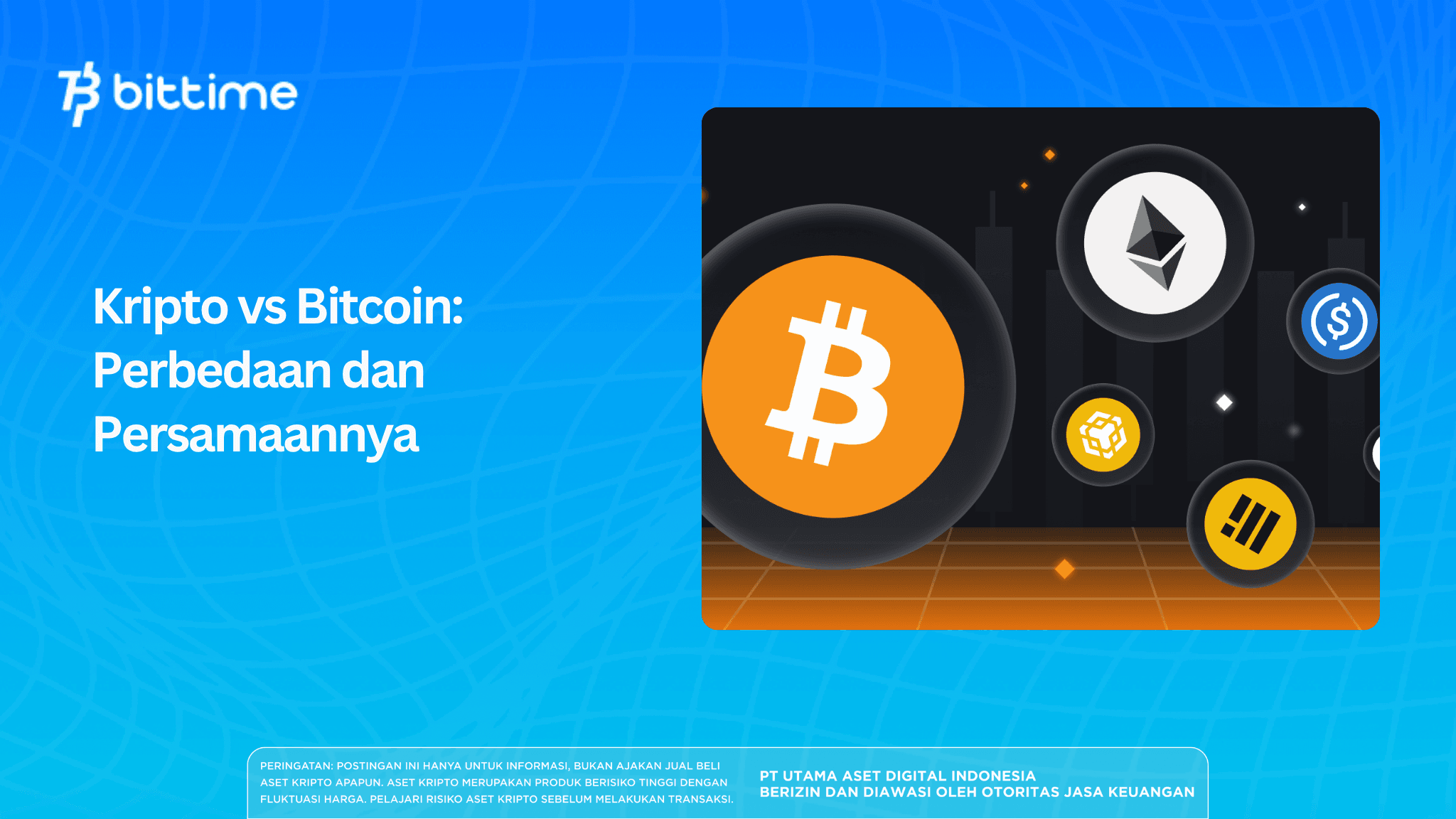
Many people new to digital assets assume Bitcoin and crypto are the same thing — essentially interchangeable terms. They're not. Bitcoin and cryptocurrency are closely related, but they are not synonyms.
Understanding the difference between crypto and Bitcoin isn't just a matter of terminology — it directly shapes smarter, more informed investment decisions. Here's everything you need to know, laid out clearly.
Key Takeaways:
- Cryptocurrency is a broad category encompassing thousands of digital assets, while Bitcoin is just one of them — the first and most well-known.
- Bitcoin was specifically designed as a medium of exchange and store of value, while other cryptocurrencies serve diverse purposes: smart contracts, NFTs, decentralized applications (dApps), and more.
- Understanding the distinction matters before investing, since each asset carries a different risk profile, volatility, and long-term potential.
Understanding Bitcoin and Cryptocurrency
Before comparing them, it helps to understand each on its own terms. Cryptocurrency (or "crypto") refers to digital currency that operates on blockchain technology — a distributed ledger that records all transactions transparently, securely, and without central authority like a bank or government. Crypto has no physical form and encompasses thousands of different digital assets traded globally.
Bitcoin, on the other hand, is the first cryptocurrency ever created. Launched in 2009 by an individual or group using the pseudonym Satoshi Nakamoto, Bitcoin was designed as a digital medium of exchange enabling peer-to-peer transactions without intermediaries.
Since then, it has grown into the digital asset with the largest market capitalization — often called "digital gold." One distinguishing feature from day one: Bitcoin's supply is permanently capped at 21 million coins.
Key Differences Between Crypto and Bitcoin
The easiest way to understand the relationship is through an analogy: cryptocurrency is a category (like "fruit"), while Bitcoin is one specific type within that category (like "apple"). All Bitcoin is crypto, but not all crypto is Bitcoin.
In terms of function, Bitcoin focuses on financial transactions and storing value — much like digital gold. Other cryptocurrencies serve broader or more specialized purposes: Ethereum powers smart contracts and decentralized applications; Solana processes up to 50,000 transactions per second; stablecoins like USDC peg their value to the US dollar to minimize volatility.
On the technology side, Bitcoin uses a proof-of-work mechanism requiring energy-intensive computational mining. Many newer cryptocurrencies use proof-of-stake, which is far more energy-efficient. In terms of market dominance, Bitcoin consistently leads — its market share remains higher than any other single crypto asset.
Similarities Between Crypto and Bitcoin
Despite their differences, Bitcoin and other cryptocurrencies share important common ground. Both run on blockchain technology, both exist only in digital form, and neither is controlled by any central authority. Both can be traded on crypto exchanges, both carry significant price volatility, and both are increasingly recognized as investment instruments — including in Indonesia, where Bappebti has legalized hundreds of crypto assets as commodity investments.
One critical similarity worth emphasizing: both carry substantial market risk. Prices can surge dramatically within days — but can fall just as fast. This is why thorough understanding before investing isn't just good advice. It's essential.
Which Is Better: Crypto or Bitcoin?
This is one of the most common questions, and the honest answer is: it depends on your goals and risk tolerance. Bitcoin tends to appeal to investors looking for a long-track-record asset with high liquidity and a reputation as a relative "safe haven" within the crypto ecosystem. For those seeking more stability in digital asset investing, Bitcoin is the more conservative choice.
Other cryptocurrencies, meanwhile, offer the potential for larger short-term gains — paired with correspondingly higher risk. Altcoins like Ethereum, Solana, or Cardano have rapidly evolving technological ecosystems that can generate exceptional returns, or equally significant losses. For many investors, the smartest approach is diversification: holding a core position in Bitcoin as an "anchor," then allocating a smaller portion to selected altcoins based on research and personal risk tolerance.
Conclusion
Crypto and Bitcoin are not the same thing — Bitcoin is a pioneer that sits within a much broader cryptocurrency ecosystem. Each has its own role, function, and characteristics. Before investing in either, take the time to understand both clearly, so that decisions are informed, measured, and driven by knowledge rather than hype.
FAQ
1. Are Bitcoin and crypto the same thing? No. Bitcoin is one type of cryptocurrency, not a synonym for it. Crypto is a broad category covering thousands of digital assets, while Bitcoin is simply the first and most well-known of them.
2. What is the main functional difference between crypto and Bitcoin? Bitcoin is primarily used as a medium of exchange and store of value (like digital gold). Other cryptocurrencies serve more diverse functions — smart contracts (Ethereum), high-speed transactions (Solana), or price stability (stablecoins).
3. Which is better for investment — crypto or Bitcoin? It depends on your risk profile. Bitcoin is more stable and suits long-term investing. Altcoins offer higher return potential but with greater risk. Diversification across both is often the most balanced strategy.
4. Is crypto legal in Indonesia? Yes. Indonesia's Bappebti has legalized hundreds of crypto assets as investment commodities. However, Bank Indonesia has not recognized crypto as an official payment instrument.
5. What do Bitcoin and other cryptocurrencies have in common? Both are blockchain-based, exist only in digital form, operate without central authority, can be traded on exchanges, and share high price volatility as a defining characteristic.
How to Buy Crypto on Bittime?

Want to trade sell buy Bitcoins and crypto investment easily? Bittime is here to help! As an Indonesian crypto exchange officially registered with Bappebti, Bittime ensures every transaction is safe and fast.
Start with registration and identity verification, then make a minimum deposit of IDR 10,000. After that, you can immediately buy your favorite digital assets!
Check the exchange rate BTC to IDR, ETH to IDR, SOL to IDR and other crypto assets to find out today's crypto market trends in real-time on Bittime.
Also, visit the Bittime Blog for interesting updates and educational information about the crypto world. Find reliable articles about Web3, blockchain technology, and digital asset investment tips designed to enrich your crypto knowledge.
Disclaimer: The views expressed belong exclusively to the author and do not reflect the views of this platform. This platform and its affiliates disclaim any responsibility for the accuracy or suitability of the information provided. It is for informational purposes only and not intended as financial or investment advice.
.png)