Savings and Loan Cooperative (KSP) — Definition, How to Borrow, and How It Works
2026-04-14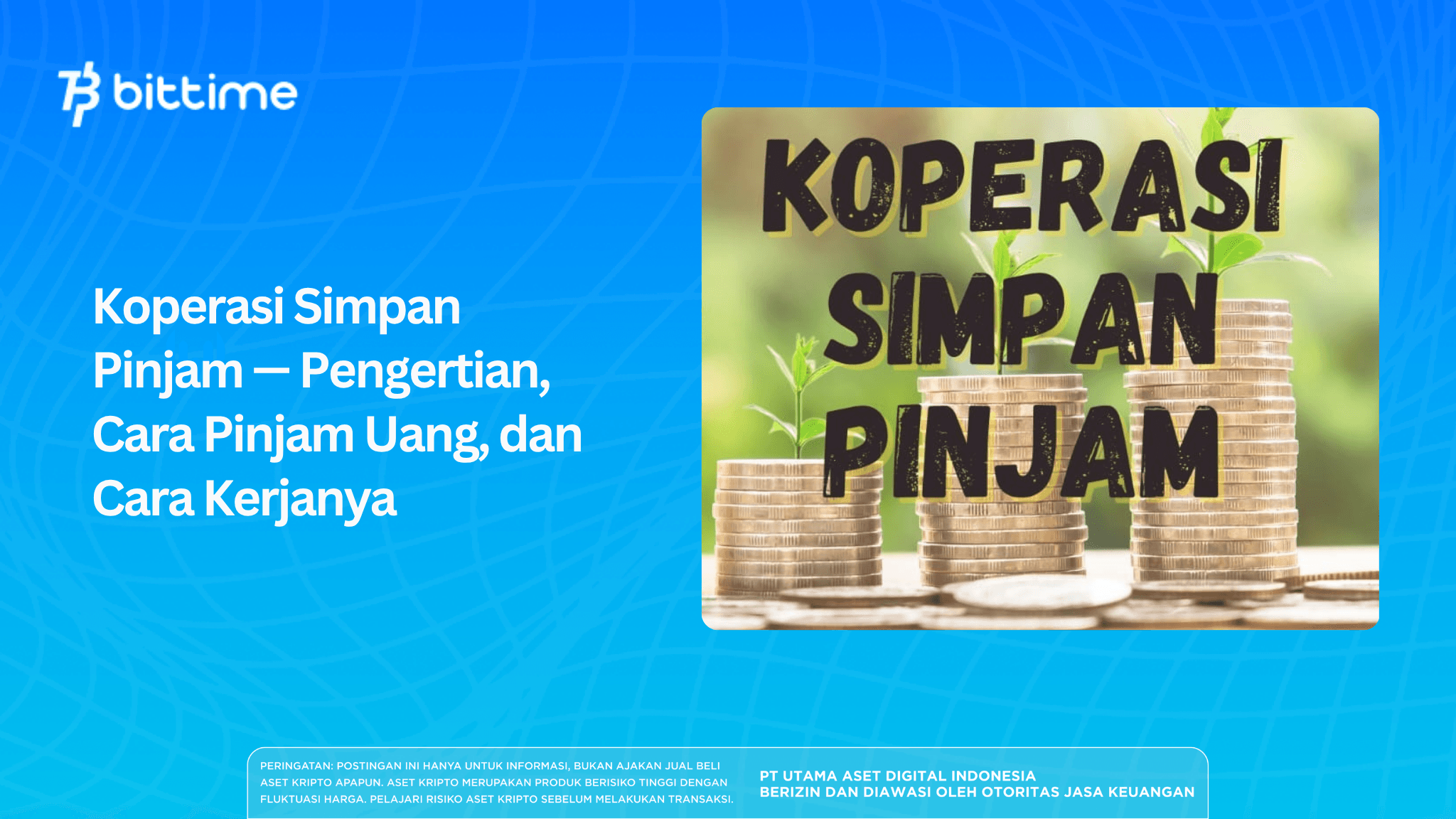
When financial emergencies strike, people need reliable, affordable, and accessible borrowing options. In Indonesia, one long-trusted solution is the savings and loan cooperative, or Koperasi Simpan Pinjam (KSP).
Unlike conventional banks, cooperatives operate on the principle of mutual benefit and collective ownership. This article explains what a savings and loan cooperative is, how it works, and how to borrow money from one — step by step.
Key Takeaways:
- A savings and loan cooperative (KSP) is a member-based financial institution that collects and distributes funds among its members — governed by Indonesian Government Regulation No. 9 of 1995 and Law No. 17 of 2012.
- Its mechanism is straightforward: members save, funds are pooled, and loans are extended to members in need at relatively low interest rates.
- To borrow, you must register as a member, meet savings obligations, and submit a loan application with documents that are generally easy to prepare.
What Is a Savings and Loan Cooperative?
According to Indonesian Government Regulation No. 9 of 1995, savings and loan activities are defined as activities carried out to collect and channel funds from and to the cooperative's members, prospective members, and other cooperatives.
In plain terms, a KSP is a communal financial pool — those who have surplus funds save, while those who need liquidity borrow.
A KSP is not merely a lending institution; it is a legally recognized cooperative body rooted in the values of kinship and economic independence.
Members are not just customers — they are simultaneously the owners and beneficiaries of the cooperative. This is the fundamental distinction that sets a KSP apart from a bank or other commercial financial institution.
How Does a Savings and Loan Cooperative Work?
The KSP mechanism is essentially a collectively managed fund cycle. Members contribute savings in various forms: a principal savings paid once upon joining, mandatory savings paid monthly, and optional voluntary savings. These pooled funds become the capital from which loans are granted to members who apply.
Borrowing members repay the loan plus a service fee (interest) within an agreed period. After deducting operational costs, the net income is distributed back to all members as the Residual Business Result (SHU) — essentially a dividend proportional to each member's participation.
Because cooperatives do not operate purely for profit, loan interest rates are generally more competitive than those of commercial lenders.
How to Borrow Money from a Savings and Loan Cooperative
The borrowing process at a KSP is more flexible than at a bank, yet follows a clear structured flow. Here are the typical steps:
- Register as a member — Complete the membership form and pay the mandatory principal savings as set by the cooperative.
- Fulfill savings obligations — Make regular mandatory savings deposits. Some cooperatives require a minimum membership period before loan eligibility kicks in.
- Submit a loan application — Fill in the loan request form, specifying the desired amount and purpose of the funds clearly.
- Prepare supporting documents — Typically: a national ID card, proof of income (pay slip or business records), and — depending on loan size — collateral.
- Await review and disbursement — The cooperative board assesses eligibility. Upon approval, funds are often disbursed within days — much faster than most bank loan processes.
Benefits of Using a Savings and Loan Cooperative
Why do many Indonesians still choose a KSP over fintech apps or digital banks? The answer lies in its combination of accessible procedures, affordable costs, and genuine social value.
Because cooperatives are not purely profit-driven, loan interest rates tend to be lighter than commercial alternatives. Requirements are also simpler — no perfect credit history is needed, making KSP an ideal option for informal workers and small business owners.
On top of that, active members earn a share of the annual Residual Business Result (SHU), and funds that circulate within the cooperative directly strengthen the economic wellbeing of the whole community.
Conclusion
A savings and loan cooperative is a solid financial alternative for individuals who need borrowing access through simpler procedures grounded in a spirit of mutual aid. By understanding how it works and following the membership process, anyone can leverage a KSP as a fair, community-driven financial solution.
FAQ — Frequently Asked Questions
1. What is a savings and loan cooperative (KSP)?
A KSP is a legally recognized cooperative body that collects savings from its members and channels those funds as loans. Members are both the owners and the users of the cooperative's services, guided by principles of kinship and mutual benefit.
2. What is the difference between a cooperative and a bank?
Banks are profit-oriented and serve the general public, while cooperatives prioritize member welfare. In a cooperative, members have voting rights at meetings, receive annual profit-sharing (SHU), and generally face simpler loan requirements than at a bank.
3. Do I have to be a member to borrow from a KSP?
Generally yes. However, under Government Regulation No. 9 of 1995, a KSP may also serve prospective members and other cooperatives. Specific eligibility criteria depend on each cooperative's internal policies.
4. How much interest does a cooperative charge on loans?
Interest rates vary by cooperative, but typically range from 1–3% per month or lower. Because cooperatives are not purely profit-oriented, their rates tend to be more competitive than those from commercial non-bank financial institutions.
5. What is SHU in a savings and loan cooperative?
SHU (Sisa Hasil Usaha), or Residual Business Result, is the cooperative's net income distributed to members at the end of each fiscal year. The amount each member receives is proportional to their activity — the more actively they save and transact, the larger their SHU share.
How to Buy Crypto on Bittime?

Want to trade sell buy Bitcoins and crypto investment easily? Bittime is here to help! As an Indonesian crypto exchange officially registered with Bappebti, Bittime ensures every transaction is safe and fast.
Start with registration and identity verification, then make a minimum deposit of IDR 10,000. After that, you can immediately buy your favorite digital assets!
Check the exchange rate BTC to IDR, ETH to IDR, SOL to IDR and other crypto assets to find out today's crypto market trends in real-time on Bittime.
Also, visit the Bittime Blog for interesting updates and educational information about the crypto world. Find reliable articles about Web3, blockchain technology, and digital asset investment tips designed to enrich your crypto knowledge.
Disclaimer: The views expressed belong exclusively to the author and do not reflect the views of this platform. This platform and its affiliates disclaim any responsibility for the accuracy or suitability of the information provided. It is for informational purposes only and not intended as financial or investment advice.

.png)