Hyperliquid Becomes Lazarus Group’s Transaction Channel—What Are the Risks?
2026-09-01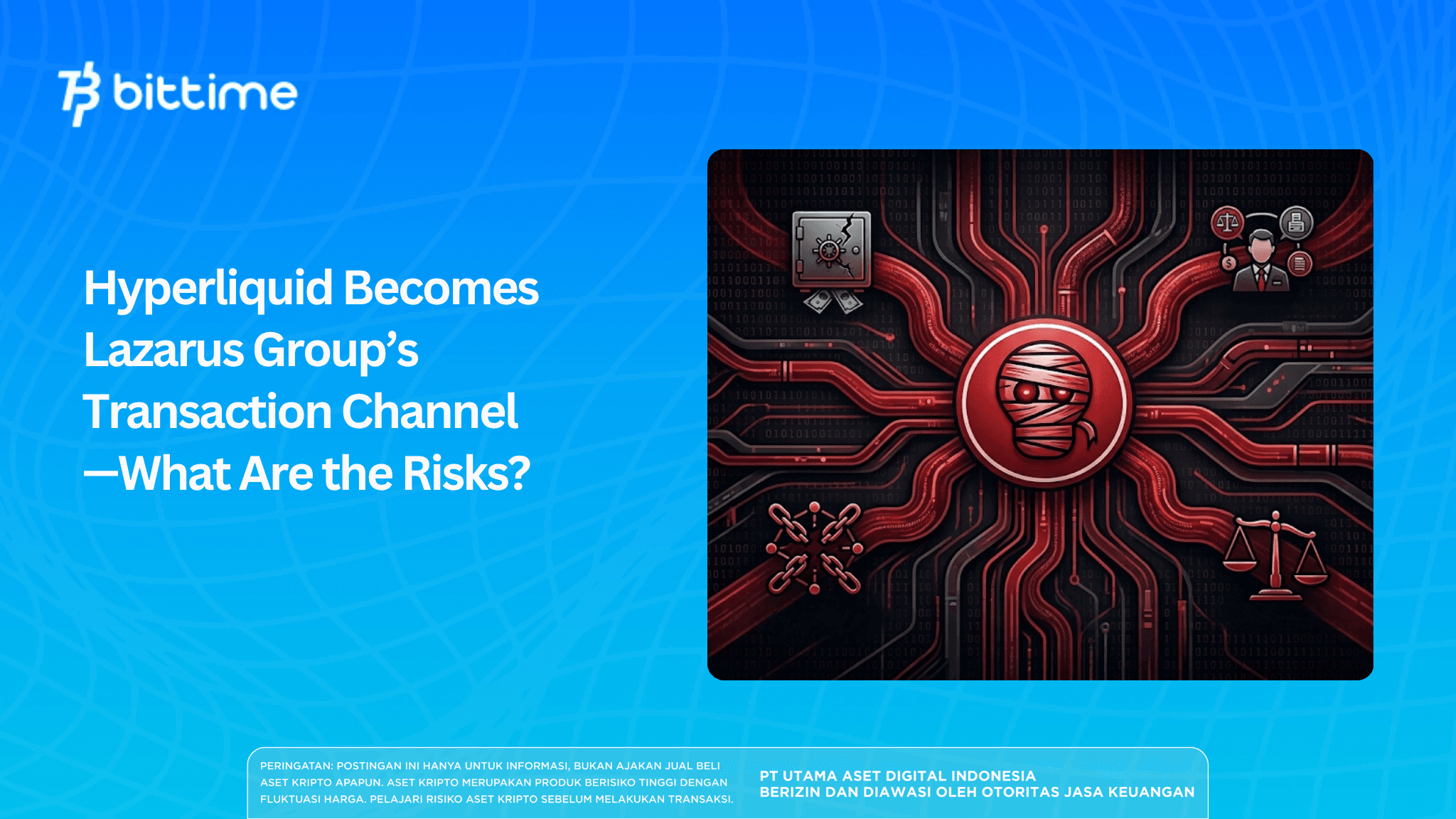
Wallet activity associated with Lazarus Group has once again drawn attention in the crypto market. According to blockchain data, a wallet linked to the North Korean hacking group has sold more than US$30 million worth of Bitcoin through Hyperliquid over the past three weeks.
The funds were then used to purchase Ethereum (ETH) and Solana (SOL), before some of the assets were transferred to centralized exchanges.
This movement does not automatically mean that Hyperliquid was involved or knew the identity of the wallet owner. However, the case once again highlights AML (anti-money laundering) challenges on blockchain-based trading platforms.
For Hyperliquid, the issue is more sensitive because the platform is currently in an expansion phase and is getting closer to discussions surrounding access to the US market.
So, what risks does Lazarus Group pose to Hyperliquid in terms of regulation, reputation, and the HYPE token?
Key Takeaways
- A wallet linked to Lazarus Group reportedly sold more than US$30 million worth of Bitcoin through Hyperliquid, then converted some of the funds into ETH and SOL.
- The activity does not prove that Hyperliquid was involved in money laundering or knew the source of the traded assets.
- The biggest risks for Hyperliquid are increased AML, sanctions screening, and regulatory pressure, especially if the platform wants to expand access to the US market.
Why Is Lazarus Group Using Hyperliquid?
Lazarus Group is a cyber group that the US government has linked to North Korea and has been subject to OFAC sanctions since 2019. The US government has also previously linked the group to various large-scale digital asset thefts.
In the latest case, Arkham data shows that a wallet linked to Lazarus sold more than US$30 million worth of Bitcoin through Hyperliquid over a period of approximately three weeks.
After these transactions, the proceeds were used to purchase ETH and SOL before the assets moved to several centralized exchanges.
This pattern is important because it demonstrates how digital assets can move across multiple networks and platforms before reaching their final destination. Blockchain may be transparent, but the identity behind a wallet address cannot always be determined directly.
Therefore, the term Bitcoin Lazarus Group in this context is better understood as assets originating from a wallet that has been identified or linked to Lazarus based on blockchain analysis, rather than proof that all of these transactions were directly carried out by individuals whose identities are known.
Read Also: US Government Asks for North Korean Hacker Lazarus Group's Digital Assets to Be Seized
What Are the AML Risks for Hyperliquid?
The main risk lies in Hyperliquid's AML measures and the platform's ability to handle transactions involving high-risk wallets.
Hyperliquid has different characteristics from traditional exchanges. Users can interact with the protocol through crypto wallets, while trading activity is recorded on-chain.
This structure provides transaction transparency, but it also makes identity controls and user screening more complex compared with platforms that use traditional account systems.
The Lazarus case illustrates this dilemma.
On one hand, blockchain transactions can be traced. Analytics companies such as Arkham can even link certain addresses to specific groups based on data and previous investigations.
On the other hand, wallets can move assets to new addresses, exchange one token for another, or use multiple platforms, making the fund trail longer.
The US government has long highlighted the risk of digital assets being used to launder proceeds from cybercrime. The Treasury has also previously taken action against mixers such as Blender and Sinbad, which have been linked to asset laundering activities by Lazarus.
Therefore, the latest transactions on Hyperliquid could give regulators reason to pay closer attention to how decentralized platforms handle activities associated with flagged wallets.
Crypto trading is more convenient when asset security and the withdrawal process can be relied upon. Register on Bittime and start trading more safely and confidently!
Could This Hinder Hyperliquid's Expansion into the US?
This is the most strategic part.
Around the same time as reports of Lazarus activity emerged, discussions also surfaced regarding the possibility of Hyperliquid products accessing the US market through a more regulated structure.
If Hyperliquid wants to expand further into the US market, the compliance standards it faces will likely be significantly higher. Regulators may examine customer identification mechanisms, sanctions screening, transaction monitoring, and access controls for derivatives products.
This means Hyperliquid regulation could become an increasingly important theme.
Wallet activity linked to Lazarus does not automatically constitute a violation by Hyperliquid. There is no evidence in the available information that Hyperliquid knew about or intentionally facilitated the activity.
However, regulators typically do not only consider whether a platform directly committed a violation. They may also question whether the available monitoring mechanisms are effective enough to reduce the risk of the platform being used by sanctioned actors.
This is a particular challenge for platforms seeking to maintain their permissionless nature while gaining access to markets with strict compliance requirements.
Read Also: Hyperliquid Gains Dominance, Perpetual Futures Open Interest Reaches US$4.3 Billion
What Is the Impact on HYPE?
The next question is whether the Lazarus impact on HYPE will be felt directly in the market.
In the short term, negative sentiment may emerge if the news develops into a narrative that Hyperliquid has compliance problems. Investors may become concerned about potential access restrictions, increased compliance costs, or changes to product design.
However, the relationship between Lazarus wallet activity and the price of HYPE is not direct.
HYPE price movements are more heavily influenced by Hyperliquid usage, trading volume, protocol revenue, ecosystem growth, HIP-3 developments, and expectations surrounding market expansion.
Therefore, a single suspicious transaction case is not enough to conclude that HYPE's fundamentals have changed.
The risk would increase if regulatory action, sanctions against related parties, access restrictions, or evidence that the platform's monitoring system is unable to handle high-risk activity were to emerge.
In other words, the market will likely pay more attention to Hyperliquid's response than to the Lazarus transactions themselves.
Read Also: Coinsbuy Hacked: US$7.9 Million in Ethereum and Tron Assets Stolen
Does Hyperliquid Need to Tighten Its Monitoring?
This case shows that the DeFi model faces an increasingly difficult question: how can it maintain its permissionless nature without allowing the platform to become an easy route for sanctioned actors?
Hyperliquid may face pressure to enhance its on-chain analytics capabilities, strengthen sanctions screening, or implement certain access controls for products intended for regulated markets.
However, the stricter these controls become, the greater the question of how far Hyperliquid can continue to maintain its permissionless characteristics.
This is the main trade-off between decentralization and compliance.
For Hyperliquid, the issue is not only how to prevent Lazarus Group transactions, but also how to build a system that regulators can trust without eliminating the platform's key advantages.
Convert 1 HYPE to IDR - Hyperliquid to Indonesian Rupiah Exchange Rate
So, How Significant Is the Lazarus Risk to Hyperliquid?
For now, the biggest risks appear to be regulatory and reputational, rather than the security of user funds.
There is no information in the report indicating that Hyperliquid was hacked or that user funds were stolen. The reported activity consists of transactions by an external wallet interacting with the platform.
However, the timing makes this case significant. Hyperliquid is developing into one of the major players in the crypto perpetuals market, while the possibility of expansion into the US market could raise its compliance standards even further.
Therefore, the impact of Lazarus Group on Hyperliquid will depend heavily on the platform's and regulators' responses over the coming months.
For HYPE holders, three important indicators to monitor are developments in US regulations, changes to Hyperliquid's compliance mechanisms, and whether trading volume and user activity remain strong after the issue emerges.

Interested in trading HYPE? In addition to the HYPE/IDR pair, Bittime also provides HYPE/USDT to make your trading and investment strategies easier.
Bittime is a licensed Digital Financial Asset Trader (PAKD) platform authorized and supervised by the Financial Services Authority (OJK) — where you can buy Bitcoin in Indonesia and hundreds of other crypto assets starting from IDR 10,000. Registration is fast and secure, and you can get started today.
Monitor USDT to IDR conversion rates and your favorite crypto asset prices in real time. Everything is available in a single crypto investment app that can be downloaded for free from the Play Store.
Ready to get started? Register now on Bittime and execute your investment strategy with a platform trusted by millions of users in Indonesia.
FAQ
What Is Lazarus Group?
Lazarus Group is a cyber group linked to the North Korean government and sanctioned by the US. The group is known to be involved in various cyberattacks and digital asset thefts.
Is It True That Lazarus Sold US$30 Million Worth of Bitcoin Through Hyperliquid?
According to the provided report, Arkham data shows that a wallet linked to Lazarus sold more than US$30 million worth of Bitcoin through Hyperliquid over a period of approximately three weeks.
Is Hyperliquid Involved in Lazarus Activity?
There is no evidence in the report that Hyperliquid knew about or intentionally facilitated Lazarus transactions. A wallet's interaction with a protocol does not by itself prove the involvement of the platform operator.
Could the Lazarus Case Cause HYPE's Price to Fall?
It could affect sentiment if it develops into a regulatory or reputational issue. However, the impact on HYPE is not automatic and needs to be assessed alongside developments in volume, user activity, protocol revenue, and regulatory policies.
What Does Hyperliquid AML Mean?
Hyperliquid AML refers to efforts to apply anti-money laundering principles within the Hyperliquid ecosystem, including transaction monitoring, identification of suspicious activity, and screening wallets associated with sanctioned entities.
Disclaimer: The views expressed belong exclusively to the author and do not reflect the views of this platform. This platform and its affiliates disclaim any responsibility for the accuracy or suitability of the information provided. It is for informational purposes only and not intended as financial or investment advice.

.png)