November 2026 FOMC Results and Their Impact on the Crypto Market
2026-11-19
The November 2026 FOMC results have strengthened the possibility that the Fed will raise interest rates again in December. The minutes released on November 18, U.S. time, show that most central bank officials remain concerned about inflation and believe current monetary policy is not yet restrictive enough to achieve the 2% target.
The news comes as Bitcoin struggles to hold around $62,000. For crypto investors, the biggest question is no longer simply whether rates will rise, but how aggressively the Fed will act and how the market will respond.
Key Takeaways
- The November 2026 FOMC minutes have reinforced expectations of a Fed interest rate hike in December.
- A 25-basis-point increase is the market's main scenario, although a 50-basis-point hike remains possible.
- The direction of the crypto market in December will depend on the Fed's decision, capital flows, and liquidity conditions.
November 2026 FOMC Results: The Fed Turns More Hawkish
The Federal Reserve released the minutes of its Federal Open Market Committee (FOMC) meeting on November 19, 2026, at 2:00 a.m. WIB (Western Indonesia Time). The document covers discussions from the October 27–28, 2026 meeting, not a new interest rate decision in November.
At its October meeting, the Fed kept its benchmark interest rate in the 3.75%–4.00% range in a 10–2 vote. Nevertheless, differences of opinion among central bank officials became increasingly apparent, particularly over the next steps needed to curb inflation.
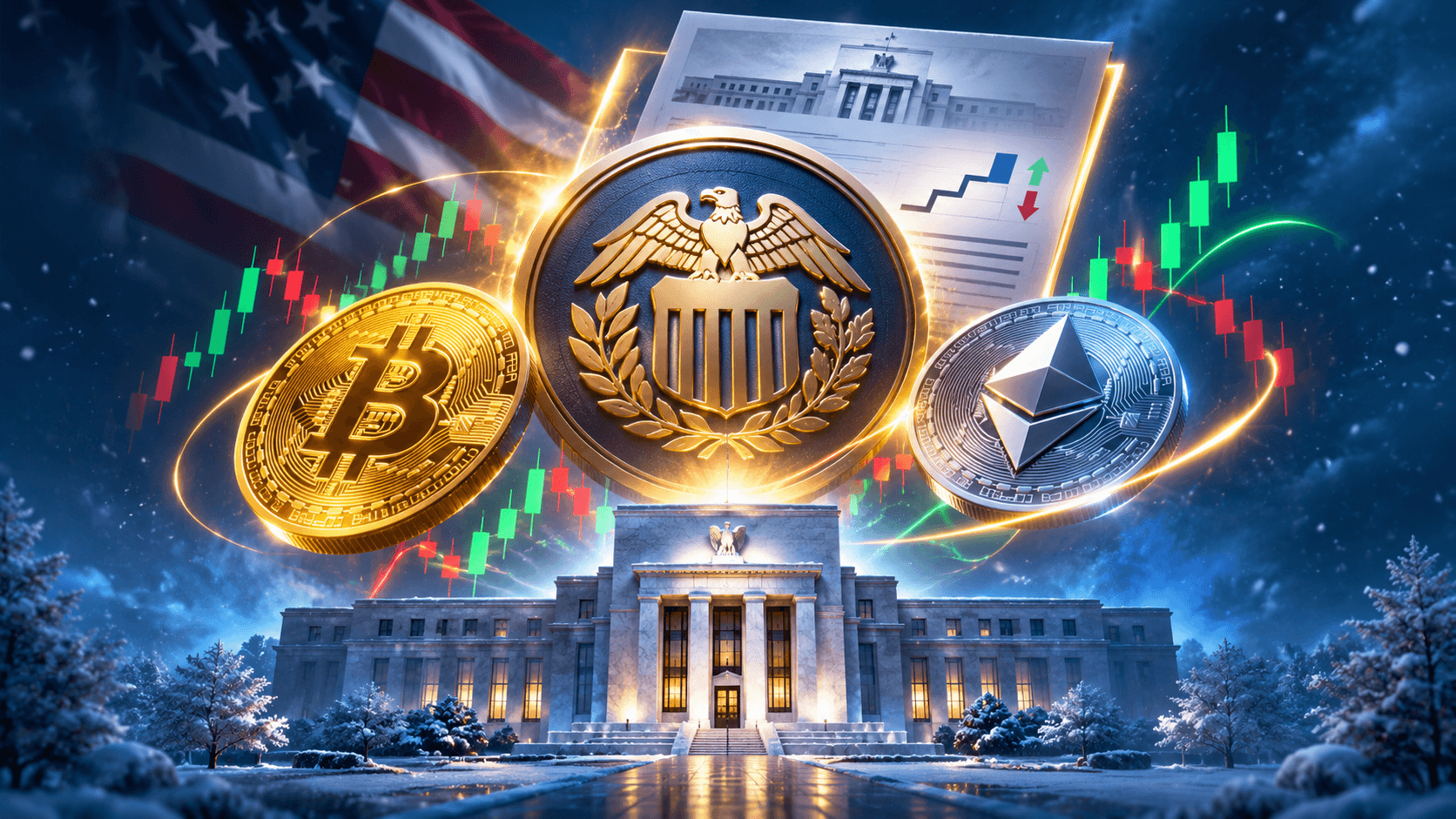
Key Points from the November 2026 FOMC Minutes
Several findings in the FOMC minutes deserve investors' attention:
- Almost all meeting participants believed further interest rate hikes would likely be necessary.
- Lisa Cook and Beth Hammack had previously supported a 25-basis-point increase in October.
- Two participants raised the possibility of a hike exceeding 25 basis points if inflationary pressures persist.
- Inflationary pressures are beginning to spread across various sectors of the economy.
- The expansion of artificial intelligence (AI) infrastructure has emerged as a new concern in inflation discussions.
The minutes indicate that the decision to hold rates steady in October does not necessarily signal the end of the monetary tightening cycle.
Read also: BI Raises Interest Rates! Here Are 6 of the Safest and Most Profitable Investment Options
Will the Fed Raise Interest Rates in December 2026?
The possibility of another Fed rate hike has increased as several U.S. economic indicators continue to point to relatively strong growth.
In October 2026, nonfarm payrolls increased by 165,000, while the Consumer Price Index (CPI) rose 0.4% month over month. A relatively resilient labor market gives the Fed room to prioritize bringing inflation under control.
Probability of a 25- to 50-Basis-Point Rate Hike
CME FedWatch data from November 18, 2026, put the probability of a December rate hike at around 95%. Most market participants expected a 25-basis-point increase.
However, the possibility of a larger increase has not been completely ruled out. Federal Reserve Governor Christopher Waller previously said that a 50-basis-point hike would be worth considering if inflation remained high.
The table below illustrates how the benchmark rate could change under three possible Fed decisions:
Keep in mind that CME FedWatch probabilities reflect market expectations, not an official central bank decision. Those probabilities may change as new economic data emerges ahead of the December meeting.
Read also: Gold Hits Its Lowest Price in 2026: What Does It Mean for PAXG and XAUT?
Why Has AI Investment Become a Concern for the Fed?
Amid the discussion of interest rates, growth in the AI industry has also come under scrutiny. Large-scale data center construction is increasing demand for energy, semiconductors, labor, and construction materials.
The challenge is that when demand grows faster than industries can expand supply, production costs may rise. This could create additional inflationary pressure in the short term.
On the other hand, AI could also improve productivity and reduce operating costs over the longer term. The Fed must weigh both effects when determining the direction of monetary policy.
For crypto investors, developments in the AI industry matter because shifts in sentiment toward technology stocks often coincide with changes in appetite for risky assets, including Bitcoin.
How the November 2026 FOMC Results Affect Bitcoin Prices
Bitcoin has yet to escape the selling pressure seen over the past several days. After the FOMC minutes were published, BTC moved from around US$63,100 to US$62,600 within minutes.
Additional pressure came from the U.S. spot Bitcoin ETF market, which recorded approximately US$239.9 million in net outflows on November 17, 2026.
These conditions have made Bitcoin's recovery increasingly dependent on renewed buying interest, particularly as institutional investors begin reducing their exposure to digital assets.
Key Bitcoin Price Levels to Watch
Heading into December, several price levels may serve as useful reference points for monitoring Bitcoin's movements.
The US$60,000 area is an important level to watch. If selling pressure pushes Bitcoin below that level, the risk of liquidations in leveraged positions could increase.
Conversely, a move back above US$65,000, supported by strong trading volume, could be an early indication that buyers are returning to the market.
Amid uncertainty over Fed policy, you can monitor Bitcoin (BTC) prices and Ethereum (ETH) on Bittime for the latest insights into how markets are responding to shifts in global economic sentiment.
3 Ways Fed Rate Hikes Could Affect the Crypto Market
The effects of monetary policy extend beyond Bitcoin's price movements. Changes in interest rates also influence investment choices, trading activity, and the allocation of capital across the crypto market.
1. Investors Begin Looking Toward Lower-Risk Assets
When interest rates rise, instruments such as U.S. government bonds become more attractive because they offer potential returns with relatively low volatility.
Some investors may choose to move capital from crypto into those instruments. If large amounts of money flow out, demand for digital assets could weaken.
2. The Risk of Liquidating Leveraged Positions Increases
Volatility ahead of FOMC decisions poses particular challenges for traders who use leverage.
A sharp price decline can trigger forced liquidations of long positions and add to selling pressure. Under certain conditions, this chain reaction can make a market correction unfold faster than anticipated.
3. Altcoins Become More Vulnerable to Shifts in Sentiment
As uncertainty rises, investors tend to become more selective about where they allocate capital. Tokens with small market capitalizations and low trading volumes are generally more vulnerable to capital outflows.
Ethereum and Solana are not immune to the risk of corrections. However, the severity of any pressure still depends on fundamentals, network activity, and demand for each asset.
Read also: CLARITY Act 2026 Stalls in the Senate: What Happens to Trump Coin and WLFI?
December 2026 Crypto Market Outlook: 3 Possible Scenarios
An interest rate hike does not always lead to falling crypto prices. Markets respond to expectations, so a decision that is already priced in may not trigger a major correction.
At least three scenarios could unfold at the December 2026 FOMC meeting.
1. The Fed Raises Rates by 25 Basis Points
A 25-basis-point increase is the scenario most closely aligned with current market expectations. If most investors have already priced it in, the pressure on Bitcoin may be more limited.
Market attention would likely shift to interest rate projections for 2027 and the possibility of further tightening.
2. The Fed Raises Rates by 50 Basis Points
This scenario could trigger a stronger market reaction because it would exceed most investors' expectations.
A stronger U.S. dollar and higher bond yields could weaken appetite for risky assets. Bitcoin could experience a further correction, while altcoins may face greater volatility.
3. The Fed Keeps Rates Unchanged
A decision to hold rates steady could be a positive surprise if supported by improving inflation data. Bitcoin and altcoins could stage a relief rally as concerns about monetary tightening ease.
However, the response could be different if the Fed holds rates because it sees signs of economic weakness. In that case, investors may still be reluctant to take on more risk.
Whatever the Fed decides in December, you can follow market developments through the BTC/IDR and ETH/IDR trading pairs on Bittime before deciding on your trading strategy.
December 2026 FOMC Schedule and Key Economic Events
The next FOMC meeting is scheduled for December 8–9, 2026. It will be the Fed's final opportunity to adjust interest rates in 2026.
Before that meeting, investors should also pay attention to the release dates for several U.S. economic indicators.
PCE inflation and employment data will be particularly important because both could influence the Fed's deliberations before its decision.
The December meeting will also include the release of the Summary of Economic Projections (SEP) and the dot plot. These documents will give investors insight into the expected direction of interest rates throughout 2027.

5 Indicators Crypto Investors Should Monitor
In addition to tracking macroeconomic developments, you can watch several indicators to better understand changing market conditions ahead of the FOMC meeting.
- CME FedWatch Tool: Tracks changes in the probability of different Fed interest rate decisions.
- U.S. Dollar Index (DXY): Tracks the dollar's strength, which can influence demand for risky assets.
- Bitcoin ETF fund flows: Shows whether demand through Bitcoin investment products is strengthening or weakening.
- Crypto Fear and Greed Index: Tracks changes in sentiment among crypto market participants.
- Open interest and funding rates: Help identify a buildup of leveraged positions that could trigger large-scale liquidations.
Monitoring these indicators together can help you distinguish a recovery supported by genuine demand from a temporary price increase driven by speculation.
Read also: New Crypto Regulations in Indonesia: OJK Can Block Suspicious Transactions
How to Manage Crypto Volatility Ahead of the FOMC Meeting
No one can predict with certainty how markets will react once an interest rate decision is announced. That is why managing risk matters more than rushing to guess the next price move.
If you actively invest in or trade crypto, consider the following steps:
- Limit your use of leverage ahead of major economic announcements.
- Set a loss limit that matches your financial capacity.
- Avoid entering positions solely out of fear of missing out (FOMO).
- Watch trading volume before concluding that a trend reversal has occurred.
- Consider making purchases gradually if you have long-term investment goals.
If you want to follow Bitcoin and altcoin prices ahead of the December FOMC decision, you can sign up for Bittime to track market movements before making investment decisions.
Conclusion
The November 2026 FOMC results suggest that the Fed has not yet finished addressing inflation. A December interest rate hike looks increasingly possible, but the size and direction of subsequent policy moves will still depend on forthcoming economic data.
For the crypto market, December's decision could determine whether Bitcoin builds momentum for a recovery or continues its correction through the end of the year. Amid this uncertainty, understanding shifting market expectations and maintaining sound risk management remain essential for investors.
FAQ
What Were the November 2026 FOMC Results?
The FOMC minutes released in November show that most Fed officials still believe further interest rate hikes may be necessary. Until the next decision is announced, the benchmark rate remains in the 3.75%–4.00% range.
Will the Fed Raise Interest Rates in December 2026?
Markets view a 25-basis-point increase as the most likely scenario. However, the official decision will not be known until after the December FOMC meeting and could still be influenced by inflation and employment developments.
How Would a Fed Rate Hike Affect Bitcoin?
Higher interest rates could make Bitcoin less attractive because investors have lower-risk investment alternatives. Even so, BTC prices will not necessarily fall if the hike has already been priced into the market.
When Is the December 2026 FOMC Meeting?
The FOMC meeting is scheduled for December 8–9, 2026, U.S. time. The meeting will also include updated Fed economic and interest rate projections.
Will the Crypto Market Recover in December 2026?
A recovery remains possible if demand for digital assets increases and Fed policy is no more aggressive than the market expects. Conversely, inflationary pressures and weakening liquidity could hold back a recovery in Bitcoin and altcoin prices.
Disclaimer: The views expressed belong exclusively to the author and do not reflect the views of this platform. This platform and its affiliates disclaim any responsibility for the accuracy or suitability of the information provided. It is for informational purposes only and not intended as financial or investment advice.

.png)