US Gas Prices Drop, Here's What Could Cause Gas Prices to Rise Again
2026-07-03
US gas prices dropped ahead of Independence Day weekend, giving drivers some breathing space as they prepare for summer travel. However, this drop doesn't mean the fuel price pressure is over.
GasBuddy data estimates the national average price of regular gasoline will be around $3.75 per gallon on July 4, 2026, after six consecutive weeks of price declines. While down from the May peak, that level remains one of the most expensive July 4 prices on record.
Key Takeaways
- HairUS gasoline prices fell as oil supply concerns eased, but prices are still higher than last year.
- The risk of gas prices rising again remains high if the Middle East conflict worsens, global oil prices rise, or refinery supplies are disrupted.
- The West Coast remains the region with the highest gas prices due to taxes, fuel standards, distribution, and refinery capacity limitations.
Register at Bittime now and start trading crypto with a fast, safe, and easy process in the app.
Why Are American Gasoline Prices Dropping?
The decline in US gasoline prices came as the oil market began to respond to some easing of geopolitical tensions. GasBuddy noted that the framework of the US-Iran deal helped ease supply concerns, although the deal remains fragile.
Patrick De Haan, Head of Petroleum Analysis at GasBuddy, warned that any disruption in the process could reverse the price decline quickly.
TheStreet also reported that national gasoline prices were hovering around $3.79 per gallon heading into the July 4th weekend.
That's about 17% lower than the peak in May, but still up 34% since the start of the year. In other words, consumers are seeing lower prices in the short term, but they're still relatively expensive compared to early 2026.
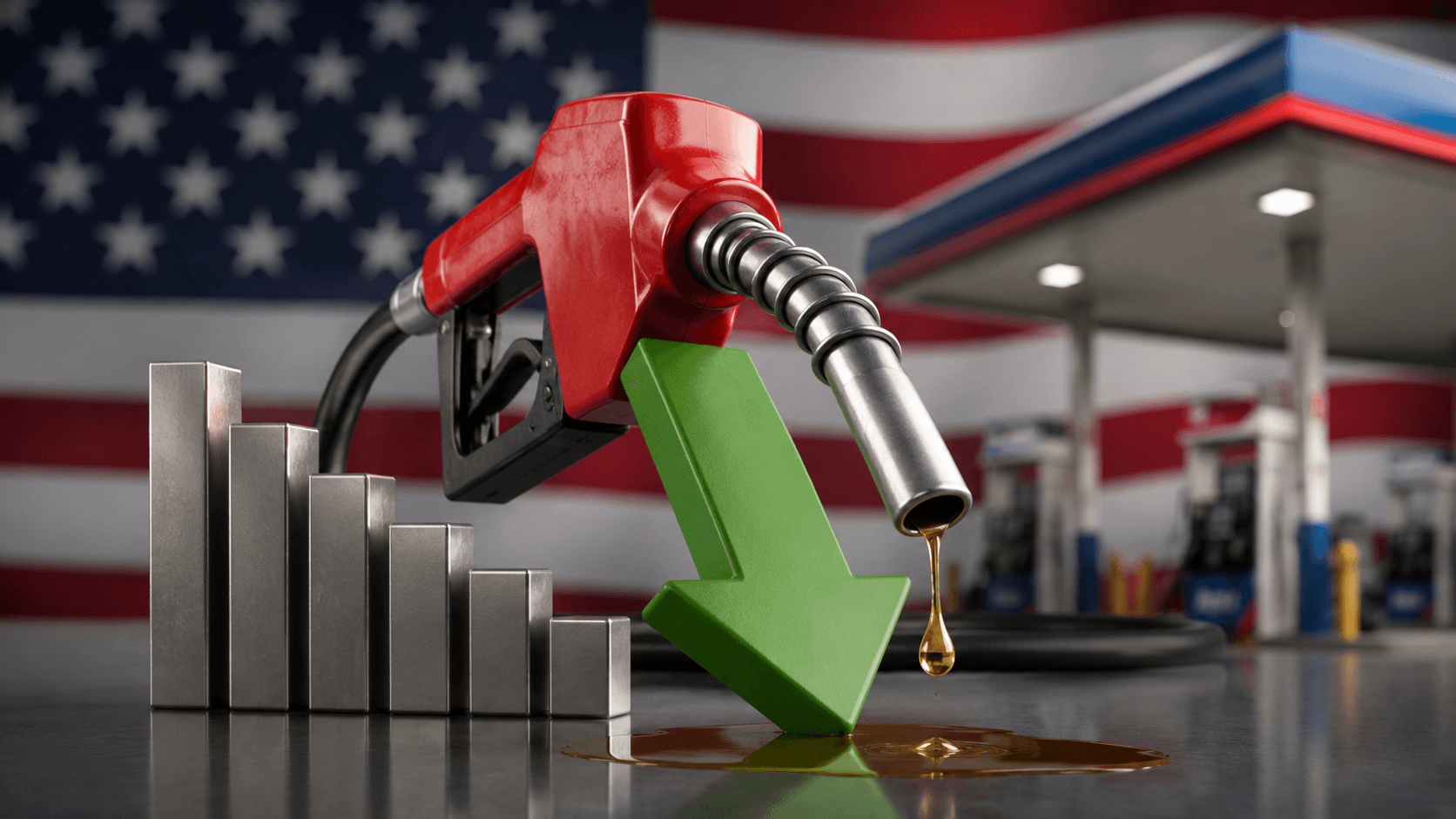
(Sumber: Generated-AI image)
This price decline is also in line with weakening global oil prices. Reuters reported that the CEO of Petrobras sees oil prices in the range of US$72 to US$75 per barrel, although the market has not yet fully returned to normal due to the ongoing Middle East conflict, which continues to create uncertainty. Brent crude was trading at around US$72.05 per barrel on July 1, 2026.
Read also: Buy US Stocks via Crypto, Get 7% Daily Rewards at Bittime
US Gasoline Prices Remain High Compared to Last Year
Despite the drop, American gasoline prices are still not cheap. GasBuddy estimates the national average price will be around US$3.75 per gallon on July 4, 2026. This is still about 65 cents higher than the July 4, 2025, average of US$3.10 per gallon.
GasBuddy also noted that the price is still the second-highest for Independence Day, after the record $4.80 per gallon in 2022.
AAA provides a similar context. In its Independence Day travel projections, AAA stated that 85% of travelers are expected to drive to their destinations, despite gas prices reaching a four-year high.
AAA also noted that 2026 prices were higher than last year, but still lower than the average of $4.80 per gallon on Independence Day 2022.
This means that the current price reductions are more accurately described as "relief" or temporary relief, not a major shift toward lower prices. Consumers are still paying more than last year, especially in states with high taxes and significant distribution costs.
Read also: US Vice President J.D. Vance Apparently Holds IDR 4 Billion in Bitcoin
Key Factors That Could Cause Gas Prices to Rise Again
Gas prices aren't determined by just one factor. Crude oil prices, refinery conditions, taxes, distribution, gasoline stocks, weather, and travel demand all influence the final price at the pump.
The EIA explains that crude oil prices are the largest factor in determining retail gasoline prices. According to March 2026 data, crude oil accounted for approximately 57% of regular retail gasoline prices, with the remainder coming from refining, distribution, and marketing costs, and taxes.
Here are the most important factors to monitor.
1. Middle East Conflict and the Strait of Hormuz
The Middle East conflict poses the biggest risk to gas price forecasts. Reuters reports that the Strait of Hormuz previously served as a conduit for approximately 20% of global oil supply before the conflict, so disruption to this route could trigger a price increase.
If tensions between the United States, Iran, or other countries in the region escalate, the oil market could react immediately. Rising oil prices don't always directly affect gasoline prices, but the impact is clear. When crude oil prices rise, gasoline feedstock costs also rise.
TheStreet also wrote that Middle East tensions have not completely subsided and a new war with Iran could push gasoline prices higher.
2. World Oil Prices
Global oil prices remain a key indicator. If Brent and WTI rise due to supply disruptions or increased demand, gas prices typically follow suit.
Currently, oil prices appear more stable than at the peak of previous tensions. However, stability does not mean risk-free. Reuters noted that the market has not yet returned to normal as the Middle East conflict continues to create uncertainty.
For readers who want to monitor the direction of gas prices, pay attention to these three indicators:
- Brent crude price.
- WTI crude price.
- The spread between the oil price and the wholesale gasoline price.
If all three rise together, pressure on pump prices could reappear.
3. Summer Fuel Price Demand
Summer typically increases gasoline demand as more people take road trips. Demand pressures will remain strong in 2026. AAA estimates that 72.2 million Americans will travel at least 50 miles from home between June 27 and July 5, slightly higher than the 71.8 million people last year.
Reuters also noted that travel remains at record levels, even though gas and airfare prices are squeezing household budgets.
AAA estimates that 61.4 million people will travel by car during the July 4th week. This figure is nearly identical to last year, so gasoline demand from road trips remains strong.
If travel demand remains high throughout July and August, price declines could be contained. Prices may not spike if supply is sufficient, but the room for declines could also be limited.
4. Refinery Disruptions and Refining Capacity
Gas prices don't just follow oil prices. Refineries also determine how much oil can be processed into ready-to-use gasoline.
The EIA expects gasoline prices to decline overall in 2026 and 2027, but refinery capacity cuts could cushion some of the impact of lower oil prices, particularly on the West Coast. The EIA also noted that the West Coast typically has the highest gasoline prices, and that trend is expected to continue.
If there is refinery maintenance, fires, power outages, extreme weather, or distribution problems, local prices can rise even if global oil prices do not spike significantly.
5. Higher West Coast Gas Prices
West Coast gas prices tend to be higher than other regions. The EIA noted that on June 29, 2026, regular gasoline prices on the West Coast were around US$4.919 per gallon, while the Gulf Coast was around US$3.321 per gallon.
California is around US$5.245 per gallon, Washington US$5.029, San Francisco US$5.349, and Los Angeles US$5.144.
This difference occurs due to several factors:
- Higher fuel taxes.
- Fuel standards are stricter.
- Distribution infrastructure is more limited.
- Supply connections with other regions are not as flexible as the Gulf Coast.
- Regional refinery capacity is more sensitive to disruptions.
TheStreet also notes that the highest prices are on the West Coast and many western states, with California, Hawaii, and Washington facing prices above $5 per gallon.
Read also: Trump Apparently Stores $50 Million Worth of Bitcoin in a Cold Wallet, Here Are the Facts
What is the Impact on Consumers?
For American households, lower gas prices mean slightly lower travel costs. However, the impact varies across regions.
Drivers in Texas, Oklahoma, or certain areas of the South and Midwest may enjoy lower prices. Conversely, drivers in California, Hawaii, Washington, and cities like San Francisco or Seattle still face prices well above the national average.
WUNC reports that high gas prices are also driving some North Carolinians to choose alternative modes of transportation.
AAA reports a 6% increase in the use of alternative modes such as trains, cruise ships, and transportation other than cars. Despite this, more than 2 million North Carolinians are still expected to travel by car for the Fourth of July holiday.
This suggests that gas prices influence travel choices, but not enough to discourage road tripping, especially during major holidays.
Read also: CZ Sued in London, What's Going On? Here's the Chronology of the Lawsuit Against the Binance Founder
Gas Price Prediction: Down Again or Up Again?
Gas price predictions for the remainder of the summer should be read with caution. Yahoo Finance, in its video clip, suggests that gas prices are likely to remain lower throughout the remainder of the summer.
However, such projections remain contingent on stable oil prices and the absence of major supply disruptions.
Scenario-wise, there are three possibilities.
Bullish Scenario for Consumers
Gasoline prices could fall further if oil prices remain stable at a low level, the US-Iran deal holds, refinery supplies remain normal, and summer demand doesn't exceed expectations. In this scenario, motorists could see lower prices after the July 4th peak travel period.
Neutral Scenario
Prices could remain flat if oil prices stabilize but travel demand remains high. This means consumers won't see a significant drop, but won't face a sharp spike either.
Bearish Scenario for Consumers
Gas prices could rise again if the Middle East conflict worsens, the Strait of Hormuz is disrupted again, refineries experience problems, or oil prices surge. These conditions could make the current price decline merely a temporary respite.
Read also: The Strategy and Michael Saylor Case: The Impact on Stocks and Bitcoin
How to Monitor the Risk of Rising Gas Prices
Readers looking to monitor gas prices don't need to guess. There are several simple indicators you can use.
Monitor the following indicators:
- Brent and WTI prices.
- Data GasBuddy gas prices.
- AAA national average.
- EIA weekly data.
- West Coast and California prices.
- Middle East conflict news.
- Refinery disruption or extreme weather.
- Summer travel volume.
If several indicators move up together, the risk of gas prices rising also increases.
Read also: Bitcoin vs. AI: BlackRock and JPMorgan Have Different Outlooks for 2026
Can the President Force Gas Prices Down?
This question often arises as gas prices quickly become a political issue. TheStreet writes that President Trump is pushing for an investigation and wants lower prices, but Patrick De Haan of GasBuddy states that the president can't actually order oil companies to lower prices to $2.50 a gallon.
This makes sense, as gas prices are influenced by many factors. Governments can influence some factors through energy policy, taxes, strategic reserves, refinery permits, and regulations.
However, global crude oil prices, distribution costs, and market conditions still play a significant role.
New to crypto investing? Bitcoin (BTC) and Ethereum (ETH) are among the most popular starter cryptocurrencies to explore and trade on Bittime.
Conclusion
American gas prices did indeed drop ahead of Independence Day weekend. GasBuddy estimates the national price will be around US$3.75 per gallon on July 4, 2026, while TheStreet reports prices will be around US$3.79 per gallon.
This decrease provides relief for motorists, especially after prices peaked higher in May. However, this decrease doesn't mean the risks are over. Prices are still higher than last year. Summer demand remains strong.
The West Coast continues to face high prices. The Middle East conflict and global oil prices remain major risks.
For consumers, the best course of action is to monitor actual data, compare prices before filling up, and understand that gas prices can change rapidly.
For readers following the energy market, the primary focus remains on global oil prices, refinery supplies, and geopolitical developments.

Let’s start trading crypto with the largest assets, such as BTC/IDR and ETH/IDR, right in the Bittime app.
Bittime is a licensed and regulated Digital Financial Asset Trader (PAKD) supervised by Indonesia’s Financial Services Authority (OJK) — where you can buy Bitcoin in Indonesia and hundreds of other crypto assets starting from just Rp10,000. The registration process is fast, secure, and you can get started today.
Track USDT to IDR conversions and monitor your favorite crypto assets in real time. Everything is available in one crypto investment app that you can download for free on the Play Store
Ready to start? Register now on Bittime and execute your investment strategy with a platform trusted by millions of users in Indonesia.
FAQ
Why are American gasoline prices dropping?
US gasoline prices fell as supply concerns eased and global oil prices stabilized. However, prices remain higher than last year.
Could gas prices rise again?
Yes, gas prices could rise again if the Middle East conflict worsens, global oil prices rise, or refinery disruptions occur. These risks remain significant as long as the energy market remains unstable.
Why is West Coast gas more expensive?
The West Coast has higher taxes, stricter fuel standards, higher distribution costs, and limited refining capacity. These factors contribute to higher gasoline prices in California, Washington, and cities like San Francisco.
What is GasBuddy's predicted gas prices for July 4, 2026?
GasBuddy estimates the national average price will be around $3.75 per gallon on July 4, 2026. This is down from the May peak, but still one of the most expensive July 4 prices on record.
What is the relationship between world oil prices and gasoline prices?
Crude oil is the largest component of gasoline prices. The EIA noted that crude oil accounted for approximately 57% of regular retail gasoline prices in March 2026, so changes in oil prices significantly impact prices at the pump.
Disclaimer: The views expressed belong exclusively to the author and do not reflect the views of this platform. This platform and its affiliates disclaim any responsibility for the accuracy or suitability of the information provided. It is for informational purposes only and not intended as financial or investment advice.

.png)