Muhammadiyah Fatwa on Crypto: Halal or Haram?
2026-03-09
The Muhammadiyah fatwa on crypto has once again become a hot topic because many people want to understand its legal position more clearly. The most frequently asked question is, according to Muhammadiyah, is crypto halal or haram.
It turns out the answer is not as simple as yes or no. In the latest interpretation, crypto is not positioned the same way for all functions. There is a distinction between crypto as a digital asset and crypto as a means of payment.
This is where many people often get confused. This article will discuss it in simple language so you can more easily understand the direction of the fatwa, its boundaries, and how to respond to it wisely before making a decision.
For Muslim readers, understanding this fatwa is important so that financial activities remain aligned with sharia principles. So, our focus is not only on profit and loss, but also on the transaction method, the purpose of use, and the type of asset chosen.
Key Takeaways
- The Muhammadiyah fatwa on crypto views crypto in greater detail, not simply in black and white.
- According to Muhammadiyah, crypto may be considered permissible as a digital asset if it meets strict sharia requirements.
- Whether crypto is halal or haram according to Muhammadiyah depends on its function, object, and transaction method.
Summary of the Muhammadiyah Fatwa on Crypto
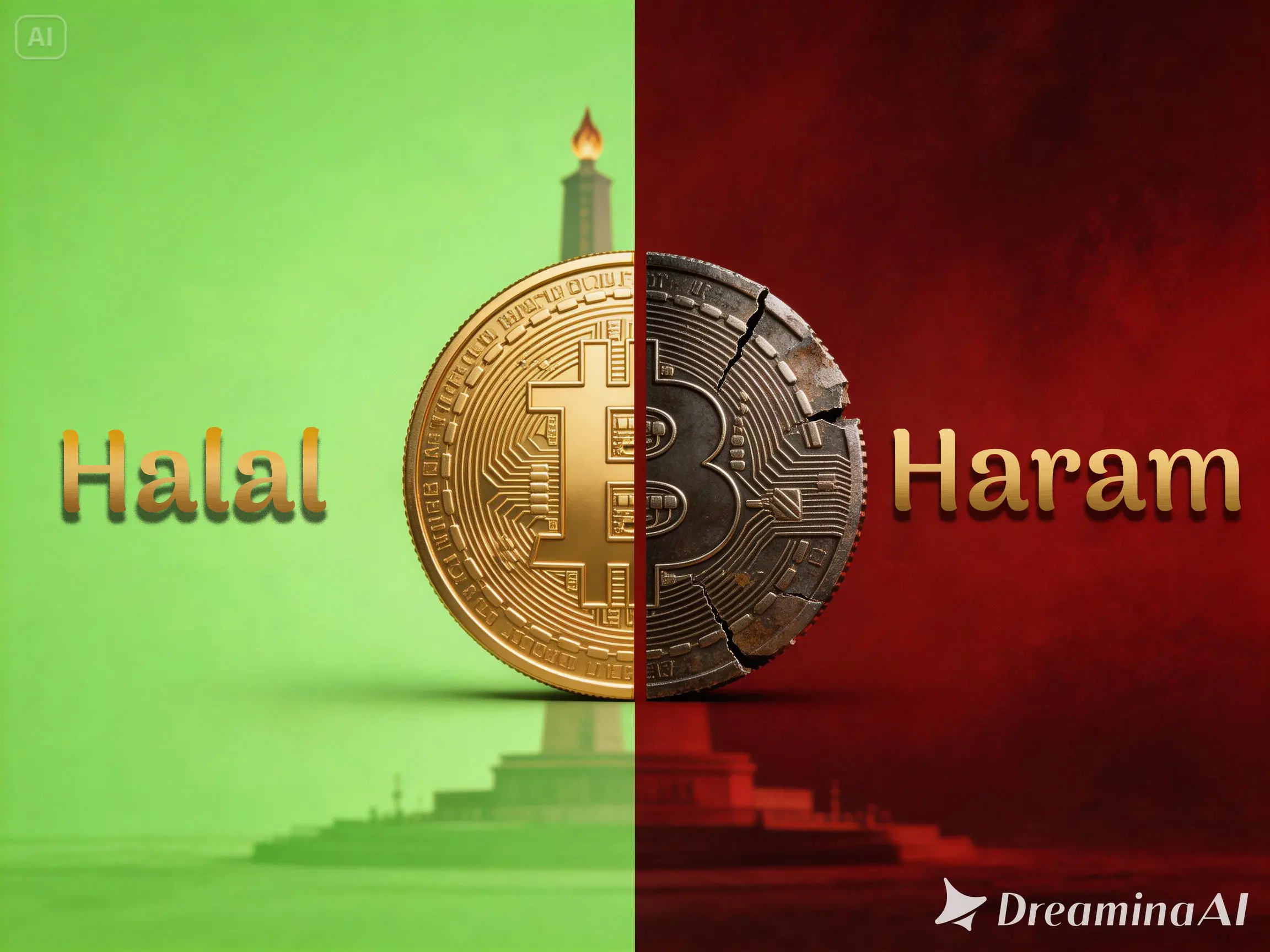
The Muhammadiyah fatwa on crypto basically invites Muslims to examine crypto more carefully. In the latest discussion, crypto is not immediately treated as something fully permissible or fully prohibited. The approach is more cautious and contextual.
This is important, because the world of digital assets is evolving quickly and their uses are becoming increasingly diverse. Some tokens are merely speculative tools, while others have real utility within digital ecosystems.
Therefore, when discussing crypto according to Muhammadiyah, we first need to distinguish the function of crypto. If crypto is positioned as a digital asset, there is room for permissibility under certain conditions.
However, if crypto is used as a means of payment, its position is different. At this point, the fatwa emphasizes that the legal assessment is closely related to its benefits, risks, and impact in muamalah.
Read Also: 7 Effective Crypto Trading Methods for Beginners, Complete with Tips and Tricks
Crypto as a digital asset
From this perspective, crypto is understood as a digital financial asset that has economic value and can be owned. This means not all crypto is automatically rejected simply because it is not physical in form.
As long as the asset has clear benefits, is recognized by the public, and exists within an understandable ecosystem, then there is a basis for considering it legitimate wealth in the context of muamalah.
However, this permissibility is not unconditional. The fatwa emphasizes that the asset being bought must not be connected to haram activities, must not be based on fraudulent schemes, and must not rely solely on euphoria without clear utility value.
So, if you ask whether crypto is halal or haram according to Muhammadiyah, the answer on the asset side is that it is permissible in a limited sense, not freely without conditions.
Crypto as a means of payment
On the other hand, Muhammadiyah clearly distinguishes the use of crypto as a payment instrument. At this point, it is not permitted. The reason is simple and easy to understand. The value of crypto is highly fluctuating, making it difficult to serve as a stable standard of exchange.
In addition, its use as payment also conflicts with official regulations in Indonesia that establish the rupiah as the legal means of payment.
So, people looking for a short answer often misunderstand. They assume the new fatwa immediately states that all crypto is halal.
In fact, that is not the case. The Muhammadiyah fatwa on crypto actually sets clear boundaries. As an asset, there may be room for permissibility. As a means of payment, it is not permitted.
Read Also: Join the Bittime Futures Public Beta Waitlist and Get Trial Funds Rewards up to 1500 USDT
Crypto According to Muhammadiyah: What Are the Conditions?

After understanding the big picture, the next question is of course: what are the conditions? This is the most important part. Because many people only read the headline and stop at the word permissible. In practice, however, there are several sharia safeguards that must be maintained.
Without these safeguards, a transaction that was initially mubah can shift into being prohibited.
This is where the fatwa’s caution lies. Muhammadiyah does not encourage people to enter digital assets without knowledge. On the contrary, Muslims are urged to assess both the object and the transaction method. So, it is not only about which token is bought, but also how the buying and selling process is carried out.
Conditions regarding the asset object
The chosen crypto asset must have reasonable benefits or utility. The project must also not be connected to activities prohibited under sharia. This means investors should not only look at rising prices.
They also need to look at whether the token has a real function, a healthy ecosystem, and a clear purpose.
In addition, the asset must be free from Ponzi schemes or pyramid schemes. This is very important. Many projects look attractive at first, but in reality they only rely on funds from new members.
If the model is like this, then it contradicts healthy muamalah principles. So, crypto according to Muhammadiyah is not about following trends, but about the quality of the asset being purchased.
Conditions regarding the transaction method
It is not just the object that matters; the transaction method must also be clean. Practices involving interest, leverage, margin trading, short selling, and market manipulation are not in line with the stated boundaries.
This shows that the fatwa does not support overly speculative and high-risk trading patterns. The message is quite clear. If you want to get involved in digital assets, choose mechanisms that are fair, transparent, and do not oppress other parties.
So, when people ask whether crypto is halal or haram according to Muhammadiyah, the answer is also greatly influenced by how it is transacted. An asset that appears good may become problematic if traded the wrong way.
Read Also: Crypto Trading Strategies for Beginners, Don’t Do This!
What Does This Fatwa Mean for Muslim Investors?
For Muslim investors, this fatwa provides more practical guidance. You do not have to reject all digital assets, but you also should not enter without screening. The approach is balanced. There is room to benefit from financial innovation, but still within the limits of sharia values. This is good news for readers who want to understand, not just follow the crowd.
In other words, the Muhammadiyah fatwa on crypto encourages literacy. Investors need to learn how to read projects, understand risks, and distinguish between sensible investment and excessive speculation.
The higher the level of understanding, the smaller the chance of being trapped in emotional decisions.
Focus on utility, not sensation
Many people are attracted to crypto because of promises of quick profits. In fact, this kind of approach is precisely what makes it dangerous. From a sharia perspective, financial decisions ideally should not be built on momentary excitement.
Therefore, it is important to assess whether the asset truly has function and benefit.
When reading this latest fatwa, we can grasp the message that utility is more important than hype. If a project is only viral but its benefit is unclear, then investors should be more cautious. A calm attitude is often safer than rushing in.
Prioritize discipline and caution
This fatwa also reminds us that investment decisions require discipline. Do not be easily tempted by excessive promotions, instant signals, or promises of large returns in a short time. The principle of caution remains relevant, especially in a fast-moving market like crypto.
For those who are still confused about crypto according to Muhammadiyah, the safest way is to start from the basics.
First understand the function of the asset, check its transaction mechanism, then assess whether everything is in line with sharia principles. That way, you are not only pursuing opportunities, but also preserving peace of mind.

Conclusion
The Muhammadiyah fatwa on crypto delivers a more mature and careful message. In the latest interpretation, crypto may be considered permissible as a digital asset if it fulfills sharia requirements, has utility, and is traded in the proper way.
However, crypto is not permitted as a means of payment, and transaction practices involving interest, manipulation, or excessive speculation must still be avoided.
So, if you are still asking whether crypto is halal or haram according to Muhammadiyah, the answer is that it depends on its function and mechanism. To better understand the world of digital assets, you can explore trading opportunities on Bittime Exchange or read the latest crypto market updates on Bittime Blog.
FAQ
What is the short version of the Muhammadiyah fatwa on crypto?
In essence, crypto may be considered permissible as a digital asset under certain conditions, but it may not be used as a means of payment.
According to Muhammadiyah, is crypto automatically halal?
Not automatically. Its permissibility is limited and must meet conditions related to both the asset and the transaction method.
Is crypto halal or haram according to Muhammadiyah?
The answer is not absolute. It can be mubah as a digital asset, but it can be haram if used for payment or traded in prohibited ways.
Are all crypto tokens considered permissible?
No. Tokens associated with haram activities, Ponzi schemes, or those with no clear utility should be avoided.
What is the safest attitude for Muslim investors?
Study the project, understand its transaction mechanism, avoid leverage and manipulation, and make sure the activity remains in line with sharia principles.
How to Buy Crypto on Bittime?

Want to trade and sell buy Bitcoin and invest in crypto easily? Bittime is here to help! As an Indonesian crypto exchange officially registered with Bappebti, Bittime ensures that every transaction is safe and fast.
Start by registering and verifying your identity, then make a minimum deposit of Rp10,000. After that, you can immediately buy your favorite digital assets!
Check the exchange rate for BTC to IDR, ETH to IDR, SOL to IDR and other crypto assets to find out today’s crypto market trends in real time on Bittime.
In addition, visit the Bittime Blog to get various interesting updates and educational information about the crypto world. Discover trusted articles about Web3, blockchain technology, and digital asset investment tips designed to enrich your knowledge in the world of crypto.
Disclaimer: The views expressed belong exclusively to the author and do not reflect the views of this platform. This platform and its affiliates disclaim any responsibility for the accuracy or suitability of the information provided. It is for informational purposes only and not intended as financial or investment advice.

.png)