Latest SEC Crypto FAQ: Who Controls the Network?
2026-11-03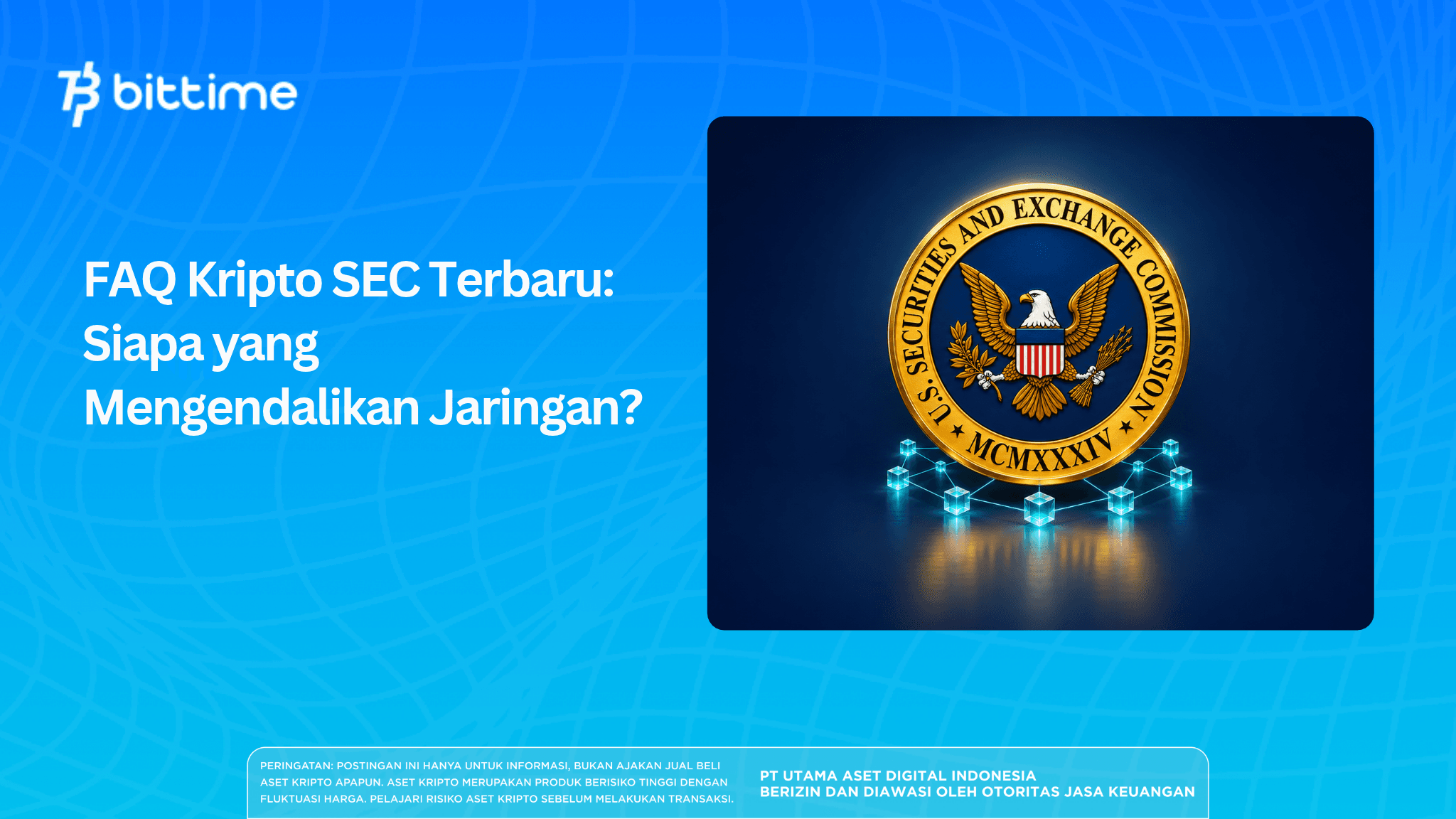
The SEC's crypto FAQs were updated on November 2, 2026, with three additional questions about governance, network control, and decentralization. Through these answers, staff in the Division of Corporation Finance explain who may be considered to control a crypto system in the context of asset classification.
A project may have thousands of token holders, but who has the authority to change its rules? To answer that question, you need to examine the decision-making process, the relationships among participants, and the powers they actually hold.
Key Takeaways
- The additional FAQs 1.4–1.6 address governance participants, control over participation, and the relationship between functionality and decentralization.
- The assessment of a controlling party considers operational, economic, or voting control based on the facts and circumstances.
- The FAQs express SEC staff views, have no legal force, and create no new obligations.
What Has Changed in the SEC's Crypto FAQs?
Three new questions, numbered 1.4–1.6, supplement the FAQs first published on September 25, 2026. Their answers refer to Section III of the SEC's March 17, 2026 interpretation on the classification of crypto assets.
Together, they help distinguish governance processes from power over a network. In practice, the right to participate in voting needs to be examined alongside the authority to implement or alter the resulting decisions.
This explanation is useful when reading claims that a project is community-run. Such claims become clearer when accompanied by information about who proposes changes, approves them, and implements them.
Read also: SEC and CFTC Clarify Regulations on Crypto Staking, Mining, and Airdrops
3 Key Explanations About Governance and Decentralization
1. Are Governance Participants Considered Controlling Parties?
FAQ 1.4 addresses the position of participants in broad-based governance. The question is when they may be considered a group within the definition of a central party, meaning a party with operational, economic, or voting control over the system.
According to SEC staff, participants generally do not constitute such a group if they are unaffiliated and have no agreement to act together beyond their participation in governance. This assessment also covers informal agreements and coordination through delegation.
If participants are considered a single group, the assessment does not end there. That group must also have operational, economic, or voting control to meet the definition of a controlling party in this context.
Imagine several token holders supporting the same proposal after reading it independently. In this illustration, similar choices alone do not prove that they have agreed to control the network's decisions.

2. What Does Controlling Network Participation Mean?
FAQ 1.5 addresses who has the authority to determine access at the protocol, validator, or user level. Examples include unilateral power to restrict access, change voting processes, select consensus participants, modify code, or reverse transactions.
The focus is on the powers that a particular party can exercise. The number of users does not reveal whether a single operator can still make important decisions unilaterally.
Staff also explain the conditions under which all essential aspects of operations run automatically according to code, without human discretion. If any decision-making discretion remains, that authority must be exercised solely through broad-based governance whose participants are not considered a controlling party in order to meet the conditions described in the FAQ.
When reading documentation, identify who has authority at each stage of a change. Sometimes a voting outcome still requires action by an administrator account, so the limits of that account's authority also need to be explained.
3. What Is the Difference Between a Functional System and a Decentralized System?
FAQ 1.6 separates the question of a system's usefulness from the question of who controls it. A system is functional if its native asset can be used for its programmed utility, while decentralization concerns autonomous operation without a party exercising operational, economic, or voting control.
In the discussion of digital commodities, the associated functional system has characteristics of decentralization, the degree of which may vary depending on the circumstances. This explanation should be read alongside the definitions and scope of the referenced interpretation.
As a hypothetical example, a token can already be used to access an operating service. To understand who controls it, you still need to know who can change how that service works.
Read also: SEC Proposes New Crypto Custody Rules: Here Are the Key Points
Why Is a Governance Token Not Enough to Assess Decentralization?
A governance token provides a way to express preferences in governance under a project's rules. To understand its role, check who can submit proposals, how voting rights are distributed, and how decisions are implemented.
The FAQs describe broad-based governance as a transparent, rules-based process involving a broad and diverse set of independent participants. This transparency extends to proposals, discussions, voting mechanisms, outcomes, and the implementation of decisions.
Decision-making rules should be available to read before voting takes place. Users also need to know the procedures for changing those rules so that it is clear how governance can evolve and who can initiate changes.
Token holders may delegate their votes when they do not follow every proposal. When assessing the outcome, consider whether delegation concentrates decisions among affiliated or coordinated parties.
Read also: SEC Paves the Way for US Stock Tokenization as Bittime Monitors Market Developments
Does This Update Introduce New US Crypto Rules?
This FAQ update is not a new regulation. The document states that it expresses staff views, has no legal force, does not alter applicable law, and imposes no new obligations on anyone.
Staff guidance remains useful for understanding the approach it describes. For compliance decisions, readers need to review the referenced rules and interpretations, along with how they apply to their particular circumstances.
FAQ 1.4 is limited to the description of digital commodities in Section III of that interpretation. Its answer about groups of governance participants does not apply to every provision of securities law that uses the concept of a group.
When following US crypto regulation, pay attention to the type of document being reported on and who issued it. A single governance feature is not enough to determine a token's legal status.
Read Also: SEC Updates Rules: Are Blockchain-Based Digital Shares Coming Soon?
5 Questions for Examining Control Over a Crypto Network
For users who want to understand who controls a crypto network, the following questions can serve as a starting point when reading documentation:
- Who can grant, restrict, or revoke user access?
- Who has the authority to change voting procedures and protocol updates?
- How do validators gain the right to participate in validating transactions?
- Who can implement code changes or reverse transactions?
- Are governance decisions made independently, or are they concentrated through affiliations and coordination?
Use the answers to these questions to build an initial picture of the network. Cross-check the explanations in governance documents against the technical rules and their implementation history before drawing conclusions.
For developers, this list can help identify information that has not yet been explained to users. Documentation about who holds authority, how changes are made, and the limits of access makes operational risks easier to understand.
Read Also: How Is Blockchain Changing Share Ownership Systems?
What Does This Mean for Crypto Readers in Indonesia?
The SEC discussion provides context on US regulatory staff's approach to asset classification. The document does not, by itself, determine an asset's authorization status or legal treatment in Indonesia.
You can use the discussion to ask more specific questions about a project's governance. When you encounter decentralization claims, look for documents showing how authority is distributed and exercised.
This assessment also needs to be kept separate from investment decisions. A more open governance structure does not guarantee code security, sufficient liquidity, or trading outcomes.
To learn more about digital asset markets, you can sign up for Bittime and explore the available crypto guides and information. Always check the characteristics and risks of each asset before making a transaction.
Developments to Monitor Next
Start by monitoring the dates and content of revisions on the official FAQ page. Quotes in circulation may refer to older versions, so their context needs to be checked before use.
Also track legislative developments, proposed regulations, and the issuance of final rules separately. Each process has its own stages; progress in one does not mean another has been completed.
For projects you follow, examine how proposals progress through to the implementation of decisions. This history helps show whether governance practices align with the published rules.
Conclusion
The SEC's crypto FAQs help explain the position of governance participants, control over network access, and the difference between functionality and decentralization. Assessing these issues requires examining actual authority and the circumstances of each system.
These additional explanations remain staff views and do not determine the status of all tokens. You can continue reading guides on DAOs, governance tokens, and crypto network risks to understand the context further.

Bittime is a Digital Financial Asset Trader (PAKD) platform licensed and supervised by the Financial Services Authority — a place where you can buy Bitcoin in Indonesia and hundreds of other crypto assets starting from IDR 10,000. Registration is fast and secure, and you can get started today.
Track conversions from USDT to IDR and the price movements of your favorite crypto assets in real time. Everything is available in one crypto investment app that you can download for free from the Play Store.
Ready to get started? Sign up for Bittime now and put your investment strategy into action with a platform already trusted by millions of users in Indonesia.
FAQ
What Do the Three Latest SEC Crypto FAQs Cover?
FAQs 1.4–1.6, added on November 2, 2026, address governance participants, control over participation, and functionality and decentralization. They explain terms in the context of crypto asset classification under the referenced interpretation.
Do Governance Participants Automatically Become Controlling Parties?
Not automatically. The assessment depends on affiliations, agreements to act together, and the operational, economic, or voting control they hold.
What Is the Difference Between a Functional Network and a Decentralized Network?
Functionality concerns the use of a native asset for its programmed utility. Decentralization assesses the system's operations and whether any party exercises control as defined in the interpretation.
Does a Governance Token Prove Decentralization?
The existence of a governance token alone is not enough. Decision-making processes, the distribution of voting rights, delegation, and implementation authority still need to be examined.
Are the SEC's Crypto FAQs a New Regulation?
No. The FAQs express SEC staff views, have no legal force, and create no new obligations.
Disclaimer: The views expressed belong exclusively to the author and do not reflect the views of this platform. This platform and its affiliates disclaim any responsibility for the accuracy or suitability of the information provided. It is for informational purposes only and not intended as financial or investment advice.
.png)