Crypto Exchanges Can Be Hacked, Banks Are Also Vulnerable: Should You Hold Liquid Assets?
2026-11-04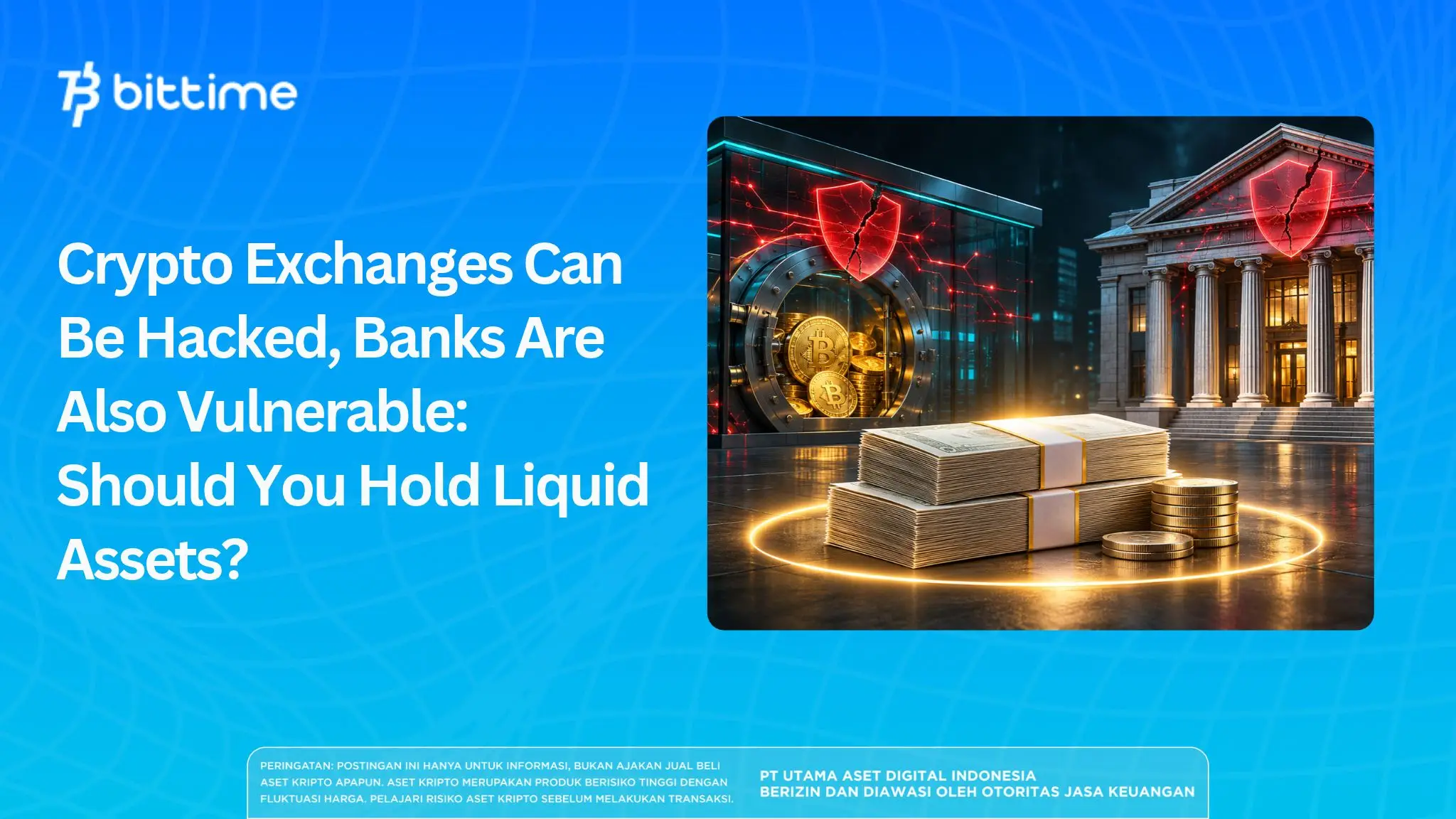
Binance hacked news reminding asset owners that a large balance does not necessarily mean that funds are always available for use.
When the platform stops withdrawals to handle the incident, the need to pay the bill continues.
The issues include asset security as well as availability of access.
Holding liquid assets helps to deal with such situations, provided liquidity is properly understood.
Assets that are easy to trade may not be easy to liquidate when the platform, network, or account is disrupted.
Key Takeaways
Banks and exchanges face cyber risks, but their customer protection practices differ.
Funds for immediate needs should be accessible without relying on crypto sales or a single app.
Diversification of payment access complements account security and asset storage.
Binance Hacked: Why Is Fund Access an Issue?

A Yahoo Finance article dated October 30, 2026, mentioned that the Binance incident had an impact on funds worth US$6.3 billion.
Binance stopped withdrawals and said it would cover the losses.
The replacement commitment remains different from the customer's ability to use the funds immediately.
This is one of the risks of storing crypto on an exchange: customers are at the mercy of the platform's infrastructure and operational policies.
Personal accounts may remain protected, but withdrawals may be stopped while the service provider conducts an investigation.
Therefore, the security of crypto assets needs to be assessed through two questions.
Are assets protected from loss, and can they be used when needed?
Read Also: Binance Hack Chronology: Lazarus Group and the Largest Crypto Heist in History
Are Banks Safer Than Crypto Exchanges?
Changpeng Zhao stated that banks also face increasing hacking threats.
However, the statement that banks are in a more dangerous position is his assessment, not the result of a comparison of the security levels of all financial institutions.
The question banks are safer than crypto exchanges cannot be answered only through one incident.
Comparisons should consider oversight, access management, complaint handling, and protection when institutions fail.
In Indonesia, bank deposits have a LPS guarantee framework of up to Rp2 billion per customer per bank, with applicable terms and conditions.
This limit is not an automatic guarantee for any loss resulting from cybercrime.
Want to have exposure to American stocks?Register at Bittime and start investing through tokenized stocks.
A comparison of banks vs. crypto exchanges shows the differences in function.
Rupiah savings for bills and crypto for investment exposure do not have to be placed in one needs category.
Read Also: Binance Uses Half of SAFU's BTC Reserves, What Impact Will This Have on Users?
A Bank Hack Doesn't Always Mean Loss of Customer Balances
The term bank hack can refer to different events: data theft, application disruption, or unauthorized transactions.
The impact needs to be examined before concluding that all customer funds are at risk of being lost.
OJK includes hacking, malware, ransomware, and attacks that disrupt services as examples of cyber incidents.
The OJK also has a digital resilience framework that encompasses anticipation, operational recovery, and customer handling.
This means that the risk of bank cyber attacks still needs to be considered without equating all disruptions with bankruptcy.
Digital banking security includes the ability to prevent attacks as well as restore services when initial protections fail.
Read Also: Binance Uses Half of SAFU's BTC Reserves, What Impact Will This Have on Users?
What Kind of Liquid Assets Are Needed?
For urgent needs in rupiah, the practical measures are speed of access, stability of value, and ease of payment.
Balances that require asset sales, inter-platform transfers, and additional conversions have more steps.
The choice of assets during a crisis depends on the type of crisis.
This principle is relevant to distinguish the need to preserve wealth from the need to pay immediate expenses.
As an illustration, the need for IDR 1 million tomorrow will not automatically be met just because the portfolio is worth IDR 10 million.
If the withdrawal is delayed or the price drops before the sale, the portfolio value has not yet been converted into a means of payment.
Cash can help when digital payments are disrupted, but it carries the risk of loss and theft.
Meanwhile, accounts at different institutions can provide an alternative route, although shared network disruptions may still affect access.
Read Also: PEPE and UNI Purchased by Wallet Allegedly Linked to Binance Hack
How to Reduce Dependence on One Platform
Start by mapping out expenses that need to be paid in the near future.
Ensure you have funds available to use without waiting for the crypto market to recover or for exchange withdrawals to reopen.
Separate transaction needs from investment storage.
For crypto, personal wallet gives control over the key, but at the same time transfers the responsibility for its security to the owner.
Use unique passwords, additional authentication, and verify website addresses before logging in. Avoid using one phone or account as the sole route to all your funds.
If you want to know about crypto transaction services, you can register at Bittime. Keep your investment budget separate from your daily expenses and learn the withdrawal terms.

Bittime is a licensed and regulated Digital Financial Asset Trader (PAKD) supervised by Indonesia’s Financial Services Authority (OJK) — where you can buy Bitcoin in Indonesia and hundreds of other crypto assets starting from just Rp10,000. The registration process is fast, secure, and you can get started today.
Track USDT to IDR conversions and monitor your favorite crypto assets in real time. Everything is available in one crypto investment app that you can download for free on the Play Store
Ready to start? Register now on Bittime and execute your investment strategy with a platform trusted by millions of users in Indonesia.
FAQ
Is it necessary to hold liquid assets after an exchange hack?
Yes, to maintain the ability to pay for necessities when platform access is disrupted. The amount should depend on each individual's expenses and circumstances.
Are banks safer than crypto exchanges?
The protections vary. Assessments should include institutional status, safeguards, and problem-solving mechanisms.
Should all funds be withdrawn as cash?
Not automatic. Cash provides immediate access, but carries physical risks and limitations on use.
Can a cold wallet replace an emergency fund?
Cold wallets store access to crypto; their value fluctuates, and withdrawals require a series of steps.
Does LPS compensate for all losses due to bank hacking?
Don't assume it. Deposit insurance and cyber transaction loss resolution are separate issues.
Disclaimer: The views expressed belong exclusively to the author and do not reflect the views of this platform. This platform and its affiliates disclaim any responsibility for the accuracy or suitability of the information provided. It is for informational purposes only and not intended as financial or investment advice.

.png)