Could Ethereum Fall Behind Other L1s? This Is the Threat of Tokenization
2026-10-05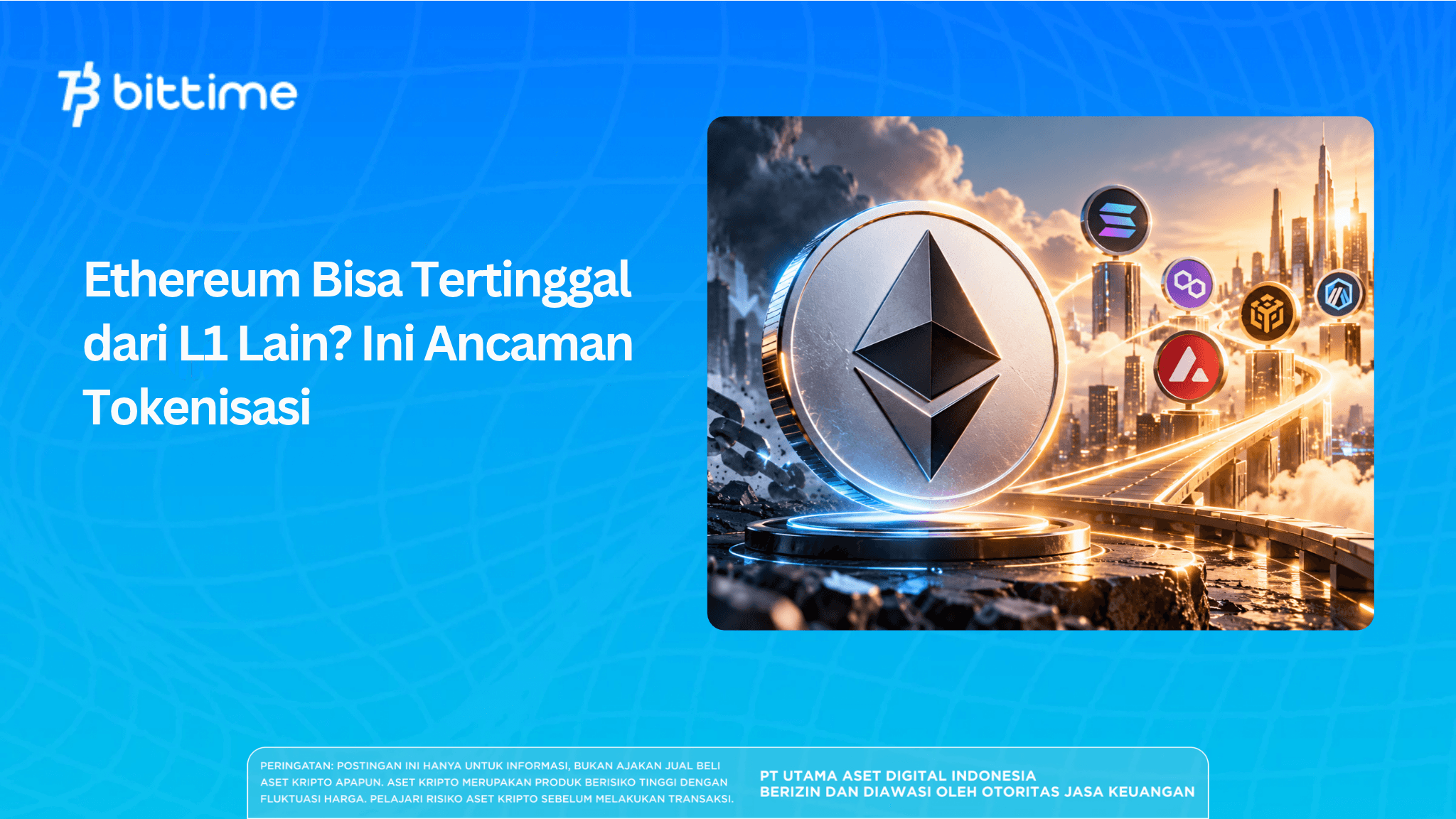
Ethereum has long been one of the leading blockchains in the digital asset ecosystem. However, as Ethereum tokenization enters a new phase, an important question arises: could Ethereum L1 actually risk losing some of the opportunities presented by the growth of tokenized assets?
These concerns have emerged as tokenization activity begins to expand across Ethereum L2 networks and other chains, such as Base, Arbitrum, and Robinhood Chain. On the other hand, Ethereum still has significant advantages in the regulated asset ecosystem, so this issue alone is not enough to conclude that Ethereum has fallen behind.
Key Takeaways
- Ethereum faces new competition in tokenization, particularly from L2 networks and newer blockchains.
- Low tokenized stock trading volume on Ethereum L1 does not automatically mean that the Ethereum ecosystem is losing its dominance.
- Ethereum's future in tokenization will depend on the ability of its L1, L2 networks, and broader ecosystem to attract issuers and institutional assets.
Why Are Ethereum and Tokenization in the Spotlight?
Tokenization transforms real-world assets, such as stocks, bonds, and financial instruments, into digital representations that can be traded or used within blockchain infrastructure.
This trend matters because the tokenized securities market is currently estimated at around US$3.2 billion and is projected to potentially reach approximately US$2 trillion by 2028. If this growth materializes, blockchains that serve as the primary infrastructure for issuing and trading these assets could capture significant economic value.
As a result, competition in tokenization is not limited to crypto projects. Blockchains are also beginning to compete to become infrastructure for financial institutions and large corporations.
Read also: Ethereum Price After US CPI: Could ETH Rise?
Is Ethereum L1 Starting to Fall Behind?
One issue fueling the debate is Ethereum L1's position in tokenized stock trading on spot DEXs.
Data cited in recent discussions indicates that the Ethereum mainnet accounts for almost none of the trading volume in tokenized stocks on spot DEXs. Meanwhile, activity is expanding through networks such as Robinhood Chain, Arbitrum, and Base.
This situation raises an important question: if tokenization activity continues to grow but transactions do not take place directly on Ethereum L1, how much economic value does Ethereum actually capture?
However, low DEX trading volume should not immediately be interpreted as a failure by Ethereum in tokenization.
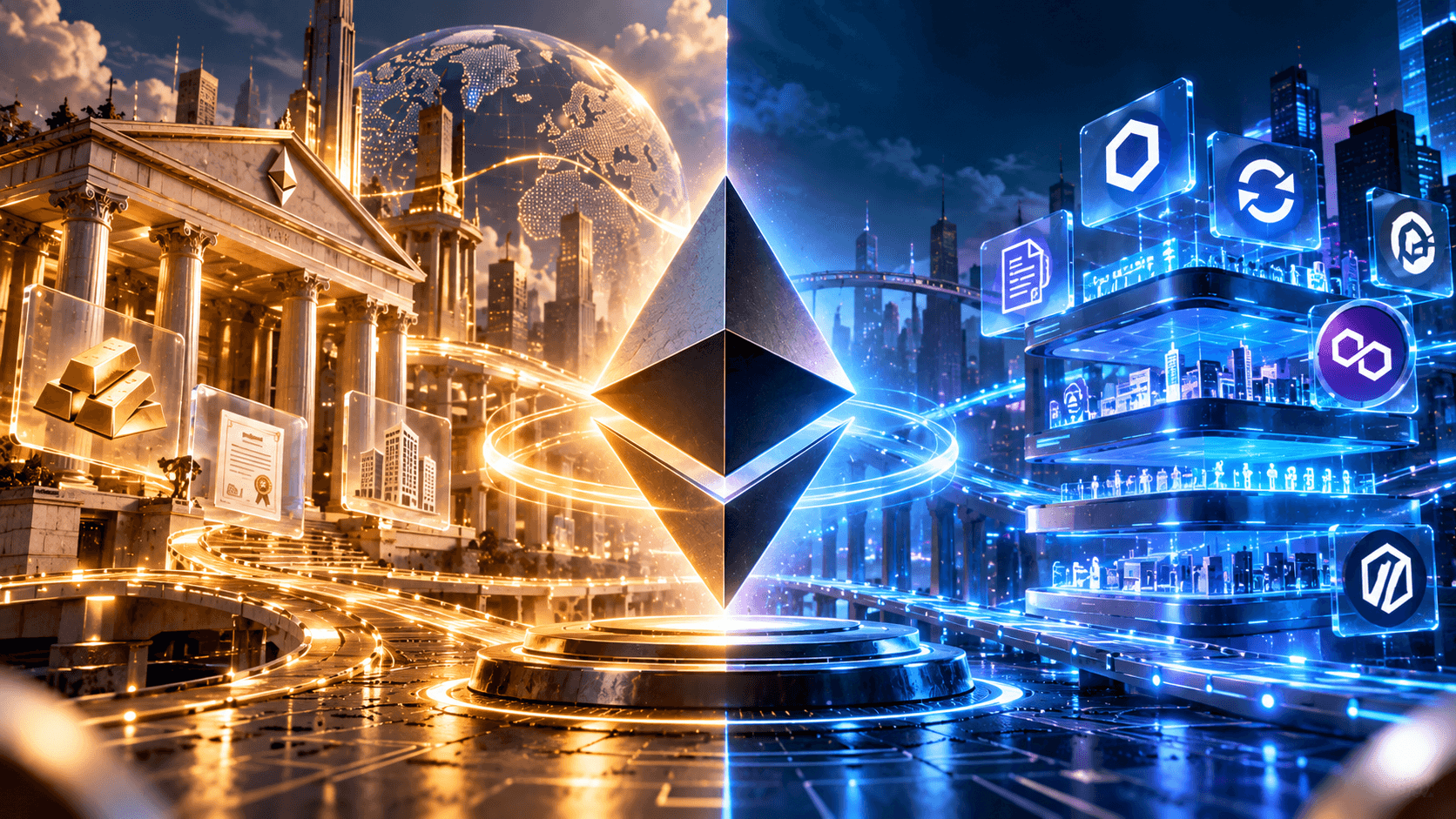
Ethereum L1 vs. Ethereum L2 in Tokenization
Ethereum has a different structure from blockchains that rely on a single main network.
Ethereum L1 serves as the base layer, while L2 networks are designed to handle activity with different cost and capacity characteristics. This allows companies to build applications or even their own L2 networks while continuing to use the Ethereum ecosystem.
Robinhood Chain is one example. Tokenization activity can take place on that network while maintaining a connection to Ethereum infrastructure. From an ecosystem perspective, moving activity to L2 does not necessarily mean users are abandoning Ethereum.
The issue, however, is value capture.
If most activity, users, and economic fees move to L2, the next question is how much of that benefit flows back to Ethereum L1.
Read also: ETH Nears US$2,500: Is US$3,000 the Next Target?
3 Reasons Ethereum Could Fall Behind in Tokenization
1. Newer blockchains are more aggressive in pursuing emerging assets
Ethereum has a historical advantage in crypto assets. However, stocks and other financial assets are newer categories that remain open to competition.
Newer blockchains can design their infrastructure specifically for institutional needs, including transaction costs, speed, compliance, and user experience.
2. Tokenization activity is becoming increasingly distributed
Tokenization growth does not have to take place on the Ethereum mainnet.
Base, Arbitrum, Robinhood Chain, and other networks can serve as venues for issuing and trading tokenized assets. This means Ethereum must compete not only with Solana and BNB Chain, but also with various networks that have specialized focuses.
3. Ethereum must define the roles of L1 and L2
The biggest issue is not simply the number of transactions.
Ethereum needs a clear strategy for determining which activities should remain on L1, which should move to L2, and how the two layers can benefit one another. This issue is also connected to the longstanding debate over how much value Ethereum captures from L2 growth.
Read also: Ethereum vs. Hyperliquid 2026: Which Is Better?
Does Ethereum Still Have an Advantage in the Tokenization Era?
The answer is not necessarily no.
One argument in Ethereum's favor is the size of its tokenized asset supply, rather than trading volume on DEXs alone. Ethereum Institutional argues that the amount of regulated assets issued on the network is more relevant than trading volume by itself.
This is an important distinction.
Trading volume indicates how actively assets are being traded, while supply indicates how many tokenized assets are held within the ecosystem.
In other words, Ethereum could have lower DEX trading volume and still maintain an important position if it serves as the home for high-value tokenized assets and institutional issuers.
Read also: Why Are Bitcoin and Ethereum Staying Stable Despite Renewed US-Iran Tensions?
3 Advantages Ethereum Has in Tokenization
First-Mover Advantage
Ethereum already has a mature ecosystem and a large developer base.
L2 Ecosystem
L2 growth does not have to be viewed as a threat. If tokenization activity moves to L2 while continuing to strengthen Ethereum as a settlement and infrastructure layer, the Ethereum ecosystem can still benefit.
Access to Institutions
Competition in tokenization will likely be determined by more than transaction costs alone. Issuers need infrastructure that can meet requirements for security, liquidity, compliance, and market access.
Therefore, Ethereum still has significant opportunities if it can attract regulated issuers and trading venues.
How Significant Is the Threat from Other L1s?
The biggest threat does not come only from Solana, BNB Chain, or any particular blockchain.
Technology companies, traditional brokers, and financial institutions are also beginning to explore their own blockchains for issuing tokenized assets. This means Ethereum could face competition from infrastructure specifically designed to meet institutional needs.
If Ethereum fails to attract new issuers, tokenization could grow without giving Ethereum the same level of dominance it enjoyed during the early era of crypto assets.
Conversely, if Ethereum succeeds in becoming a foundation for regulated assets while integrating L2 growth, this narrative could turn into a positive catalyst.
Read also: Solana vs. Ethereum: Why Solana Leads in RWA Adoption While Ethereum Still Dominates Asset Value
What Will Determine Ethereum's Future?
There are three main factors to watch.
First, the L1 and L2 strategy. Ethereum needs to demonstrate how the two layers complement each other.
Second, institutional adoption. The number of companies and issuers that choose Ethereum will be an important indicator.
Third, asset quality. The key considerations are not just how many transactions take place, but also the total value of assets issued, who issues them, and whether those assets have genuine demand.
So, Does Ethereum Still Have an Advantage?
For now, it is too early to conclude that Ethereum is losing the tokenization race.
Tokenized stock trading volume data does provide reasons to question Ethereum L1's position. However, this metric reflects only one part of the market. The supply of regulated assets, L2 activity, the number of issuers, liquidity, and Ethereum's ability to serve as a settlement layer must also be considered.
The more relevant question is whether Ethereum can turn its infrastructure advantages into dominance in the tokenization of crypto assets and real-world assets.
If you want to follow developments in Ethereum, RWAs, and asset tokenization, you can register on Bittime to receive the latest market updates, news, and analysis.
Conclusion
Ethereum tokenization is entering a more competitive phase. Ethereum L1 is facing challenges as tokenized stock activity begins to expand across L2 networks and other blockchains, but this is not enough to conclude that Ethereum has lost its position.
The next key challenge is Ethereum's ability to win over institutional issuers, maintain its position in regulated assets, and ensure that L2 growth continues to generate value for the Ethereum ecosystem. With the tokenization market projected to grow substantially, competition among L1 blockchains could become even more intense.

Bittime is a licensed and supervised Digital Financial Asset Trading Platform (PAKD) regulated by Indonesia's Financial Services Authority (OJK) — where you can buy Bitcoin in Indonesia and hundreds of other crypto assets starting from IDR 10,000. Registration is quick and secure, and you can get started today.
Track the USDT to IDR conversion rate and the real-time price movements of your favorite crypto assets. Everything is available in one crypto investment app that you can download for free from the Play Store.
Ready to get started? Register on Bittime now and put your investment strategy into action on a platform trusted by millions of users in Indonesia.
FAQ
Does Ethereum still have an advantage in the tokenization era?
Ethereum still has advantages in terms of its ecosystem, security, liquidity, and developer base. However, competition is increasing as L2 networks and newer blockchains begin attracting tokenization activity.
Could Ethereum lose to other L1 blockchains?
This possibility cannot be ruled out, particularly if other blockchains succeed in attracting issuers and high-value assets. However, Ethereum still has opportunities to maintain its position through its L1, L2 networks, and broader ecosystem.
What is the relationship between Ethereum L1, L2, and tokenization?
L1 serves as Ethereum's base layer, while L2 networks can handle activity with different costs and capacity. Tokenization that takes place on L2 can still be part of the Ethereum ecosystem.
Why is tokenization important for Ethereum?
Tokenization can open up new markets for assets such as stocks and financial instruments. If Ethereum becomes the primary infrastructure for these assets, tokenization growth could expand the use of the Ethereum ecosystem.
Which blockchains compete with Ethereum in tokenization?
Competition comes from several directions, including other L1 blockchains and networks such as Base, Arbitrum, and Robinhood Chain. In the future, blockchains developed by financial or technology companies could also become competitors.
Disclaimer: The views expressed belong exclusively to the author and do not reflect the views of this platform. This platform and its affiliates disclaim any responsibility for the accuracy or suitability of the information provided. It is for informational purposes only and not intended as financial or investment advice.

.png)