Ethereum Fusaka Upgrade: PeerDAS, More Capacity, and Changes to Know
2025-12-12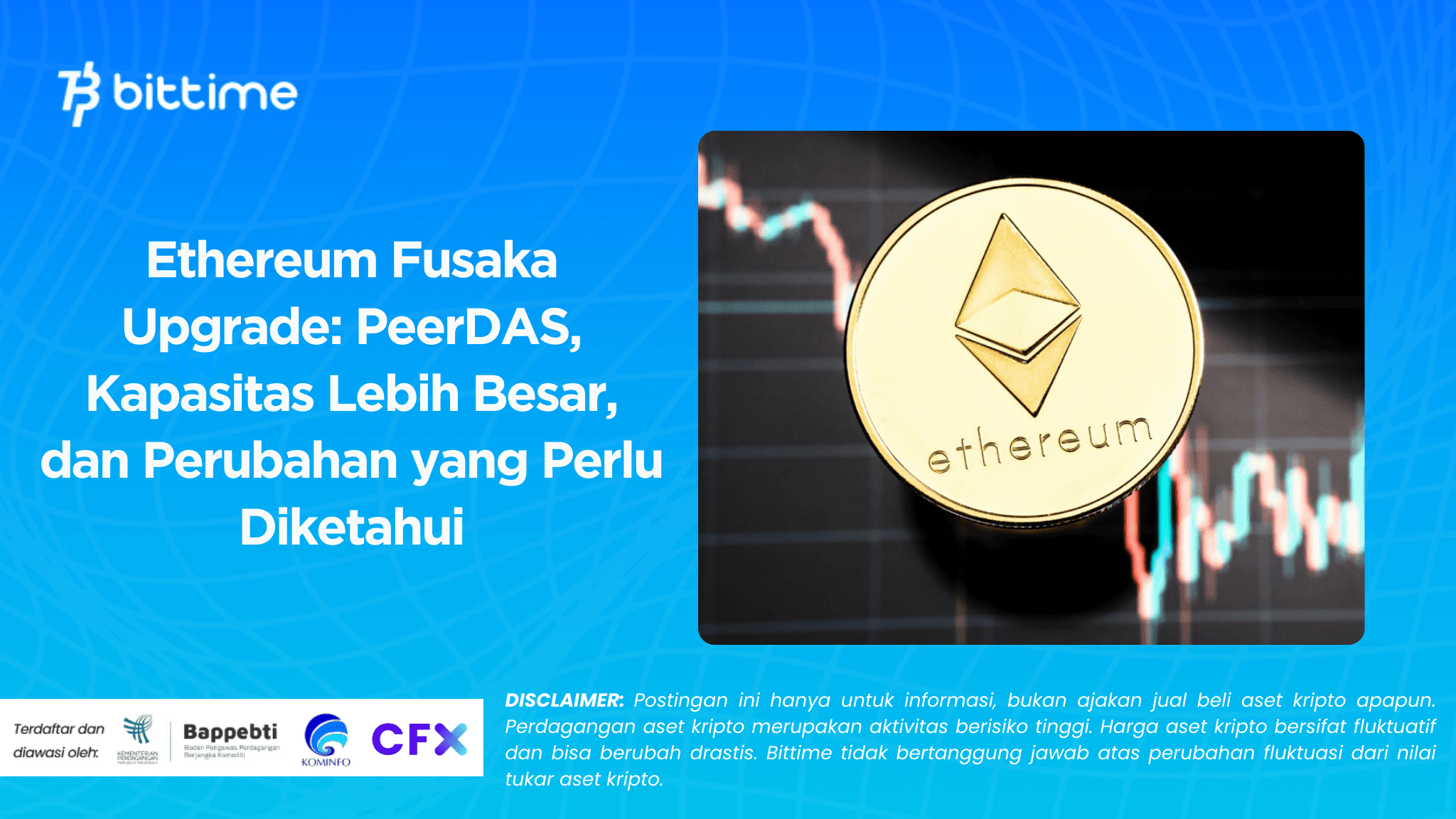
Bittime - The Ethereum Fusaka upgrade is emerging as the next chapter in Ethereum's technical journey. The terms "Ethereum Fusaka Upgrade" and "What is an Ethereum Fusaka Upgrade" have been widely discussed since the EIP packages were consolidated and tested on the testnet.
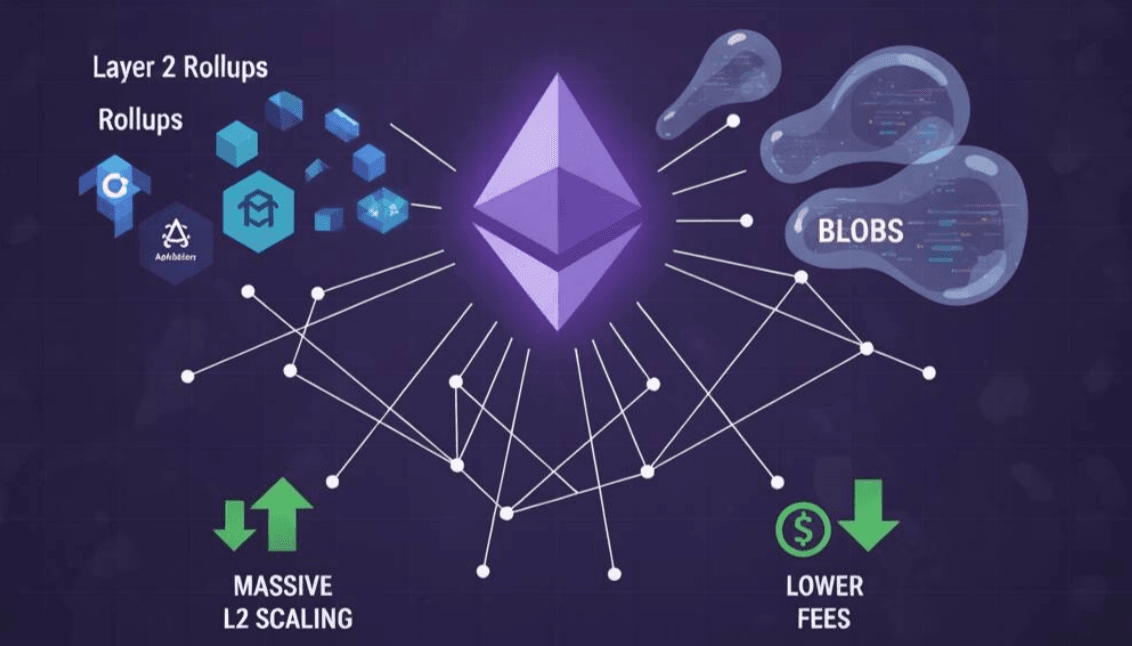
Fusaka is not just a series of minor improvements but a collection of features designed to increase block data capacity and lower costs for Layer 2 networks.
The development and testing of this feature involved node clients, researchers, and infrastructure operators who wanted to ensure the change ran smoothly on the mainnet.
This article discusses what's changing, when the upgrade is scheduled, and its immediate impact on users, validators, and the rollup ecosystem.
What is Fusaka and its main components
Fusaka is an Ethereum upgrade package that combines several Ethereum Improvement Proposals into one coordinated hard fork.
At the heart of Fusaka is PeerDAS, a new approach to blob data delivery that aims to balance storage and processing costs.
Additionally, there is an EIP that increases the default block gas limit to allow for more computation per block.
There is an EIP that optimizes data blob costs to better align with processing costs, thereby reducing unreasonable price swings.
This combination of features is designed to increase relevant throughput for rollups without forcing all nodes to store excess data.
Technical consensus is established through EIP review and testing on the testnet before being rolled out to the mainnet.
Read Also:Top 5 Airdrops for December 2025: Token Distribution List to Watch
When was Fusaka launched and how was the timing determined?
Fusaka's mainnet activation schedule is set for December 3, 2025, with the activation time published by the developers and infrastructure operators.
The timing is based on the specific block slot and the average block time at that time.
Prior to mainnet, Fusaka was run on several testnets including Sepolia Holesky and Hoodi to verify client and ecosystem compatibility.
Since the upgrade process is triggered by a block or slot number, the estimated activation time can be determined well in advance of the launch through coordination between client teams and infrastructure services.
After a successful testnet phase and zero critical issues identified, the mainnet date is announced as the final coordination point.
Read Also:BTC Price Prediction According to Suli Crypto: Analysis of Instagram Discussions
Main technical impacts on performance and cost
Fusaka's technical impact occurred on two immediate levels.
Firstly increasing block capacity allows more transactions or computations per block thus increasing L1 throughput.
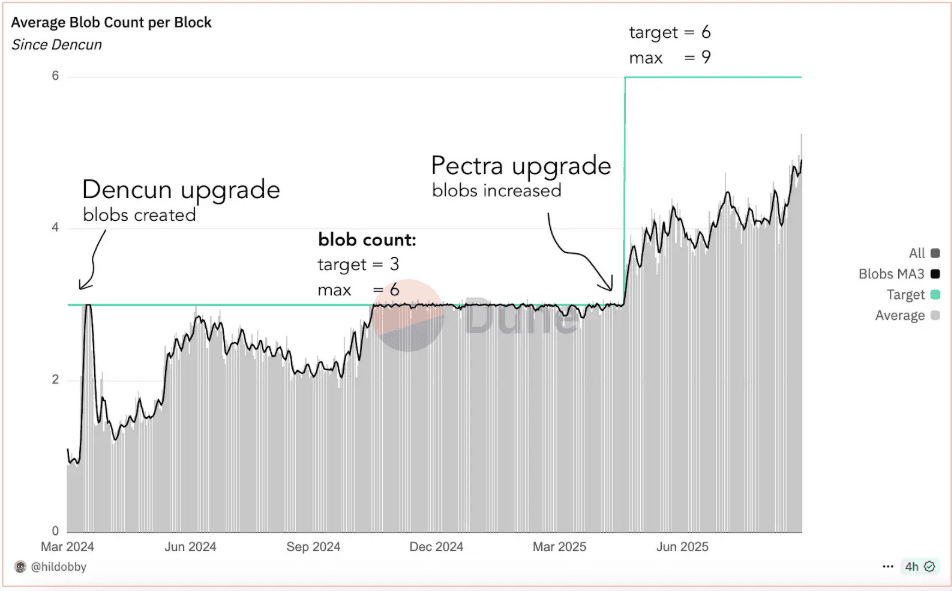
Both PeerDAS and blob cost adjustment mechanisms attempt to keep data prices stable so that rollups that rely on data blobs enjoy lower and more predictable costs.
For nodes and validators the impact varies depending on hardware configuration and gas parameter selection.
Some operators may need to adjust resource limits.
On the other hand, end users may experience reduced fees for certain rollup interactions while the infrastructure ecosystem will undergo a brief adaptation to optimize operational expenses.
Read Also: Free Crypto Mining Apps 2026: The Best Choice to Make Profit from Crypto
Implications for rollups and second layers
Rollups that rely on sending data blobs benefit immediately because Fusaka improves blob throughput efficiency while stabilizing costs.
With blob costs more closely aligned with processing load, rollup operators can more reliably project publishing costs and design more aggressive batching strategies.
This has the potential to lower the cost per rollup transaction which ultimately lowers user costs.
However, this transition requires integration testing from the rollup side and alignment with infrastructure providers to ensure data availability and publication order remain secure.
Fusaka strategically strengthens Ethereum's role as a settlement layer for scaling solutions on top of it.
Operational risks and reactions of miners or validators
While Fusaka's goal is increased capacity and cost stability, any major upgrade carries operational risks.
Node operators should check client software compatibility, update default gas limit configurations, and test blob storage performance.
Validators and infrastructure operators who are not prepared risk increased resource usage or longer synchronization times.
Additionally, the possibility of post-release bugs requires coordinated rollback or hotfix readiness.
The client community prepares patches and emergency response plans so that the risk of network failure can be minimized during and after activation.
Medium-term market impact and adoption
Market-wise, Fusaka brings expectations of lower rollup operating costs and increased capacity, which could spur activity in DeFi and other on-chain applications.
However, fundamental changes don't automatically become short-term price catalysts; market reaction depends on perceived adoption and the actual benefits users receive.
Institutions and custodian services will monitor the technical impact and then adjust their products if there is a significant cost reduction.
In the medium term the combination of lower fees and higher throughput could drive innovation and migration of workloads from L1 alternatives to rollup-based solutions on top of Ethereum.
Conclusion
Fusaka is a scaling upgrade that combines several EIPs to increase block capacity, improve the blob fee mechanism, and introduce PeerDAS as a data management solution.
Mainnet is scheduled for December 3, 2025 after a successful testnet series.
For users the measurable effects are seen in potentially lower rollup costs and increased throughput.
For network operators the effect depends on technical readiness and client adaptation.
In short, Fusaka lays the technical foundation for second-layer efficiency, but implementation and adoption determine how much the ecosystem benefits.
FAQ
What is ethereum fusaka upgrade?
Fusaka is an Ethereum upgrade package that combines a number of EIPs aimed at increasing block data capacity, processing power, and blob fee stability, thus supporting rollup efficiency and lowering fees for users.
When is the ethereum fusaka upgrade scheduled?
The official announcement set mainnet activation for December 3, 2025.
Prior to that Fusaka has been tested on several testnets to ensure ecosystem compatibility.
What are the key technology features in Fusaka?
Key features include PeerDAS for more efficient delivery and provisioning of blob data, EIP for default gas limit adjustments, and EIP for adjusting blob fees to reflect actual processing costs.
How does Fusaka affect user fees?
In theory, Fusaka lowers costs for rollup users because data blobs become more efficient and costs are more predictable.
The immediate effect on L1 transactions may be limited but the rollup ecosystem is likely to see a reduction in publishing fees.
Do users or validators need to take action before Fusaka?
Validators and node operators are advised to update clients and test configurations in a staging or testnet environment.
Regular users do not need to take any special action but are advised to follow announcements from wallet or exchange service providers.
How to Buy Crypto on Bittime

Want to trade sell buy Bitcoins and crypto investment easily? Bittime is here to help! As an Indonesian crypto exchange officially registered with Bappebti, Bittime ensures every transaction is safe and fast.
Start with registration and identity verification, then make a minimum deposit of IDR 10,000. After that, you can immediately buy your favorite digital assets!
Check the exchange rate BTC to IDR, ETH to IDR, SOL to IDR and other crypto assets to find out today's crypto market trends in real-time on Bittime.
Also, visit the Bittime Blog for interesting updates and educational information about the crypto world. Find reliable articles about Web3, blockchain technology, and digital asset investment tips designed to enrich your crypto knowledge.
Disclaimer: The views expressed belong exclusively to the author and do not reflect the views of this platform. This platform and its affiliates disclaim any responsibility for the accuracy or suitability of the information provided. It is for informational purposes only and not intended as financial or investment advice.

.png)