ETF vs. Mutual Funds: Which Is Better for Your Investment Portfolio?
2026-06-23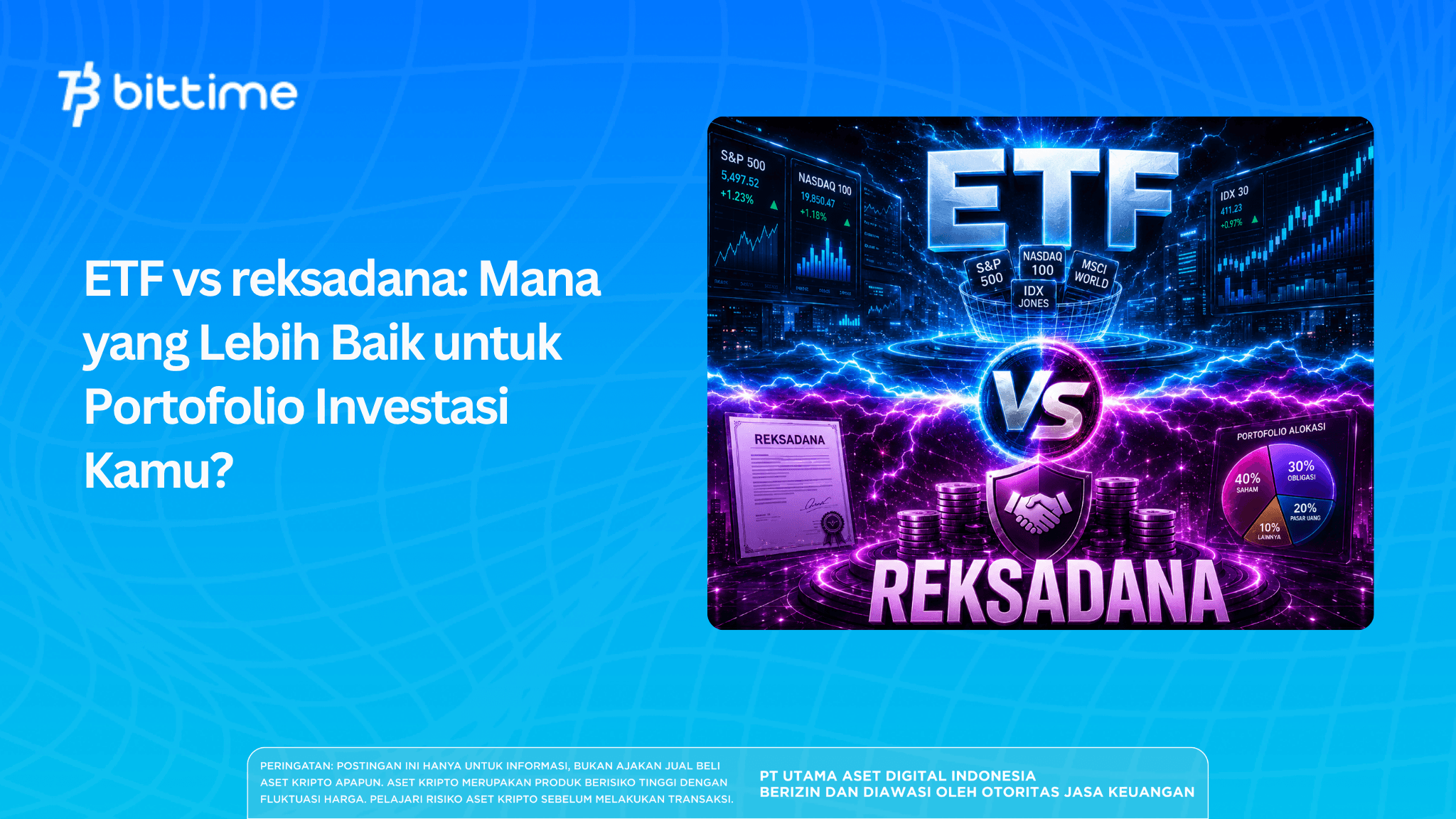
Many Indonesian investors are still unsure whether to choose ETFs or mutual funds. Both are excellent investment instruments for diversification. However, they have different characteristics that can affect your portfolio’s performance.
An ETF, or Exchange-Traded Fund, is essentially a mutual fund that is traded on an exchange just like a stock. Meanwhile, conventional mutual funds are bought and sold through investment managers or sales agents. These differences in mechanism create distinct advantages and disadvantages for each.
Key Takeaways
- ETFs excel in high liquidity, lower costs, and real-time transactions, making them suitable for active investors.
- Mutual funds are easier and more passive, ideal for beginners or investors who don't want to monitor the market every day.
- Many successful investors use both simultaneously according to their individual goals and risk profiles.
Register at Bittime now and start trading crypto with a fast, safe, and easy process in the app.
What are ETFs and mutual funds?
An ETF is a mutual fund in the form of a collective investment contract whose units are traded on the Indonesia Stock Exchange. You can buy and sell ETFs during trading hours with real-time prices.
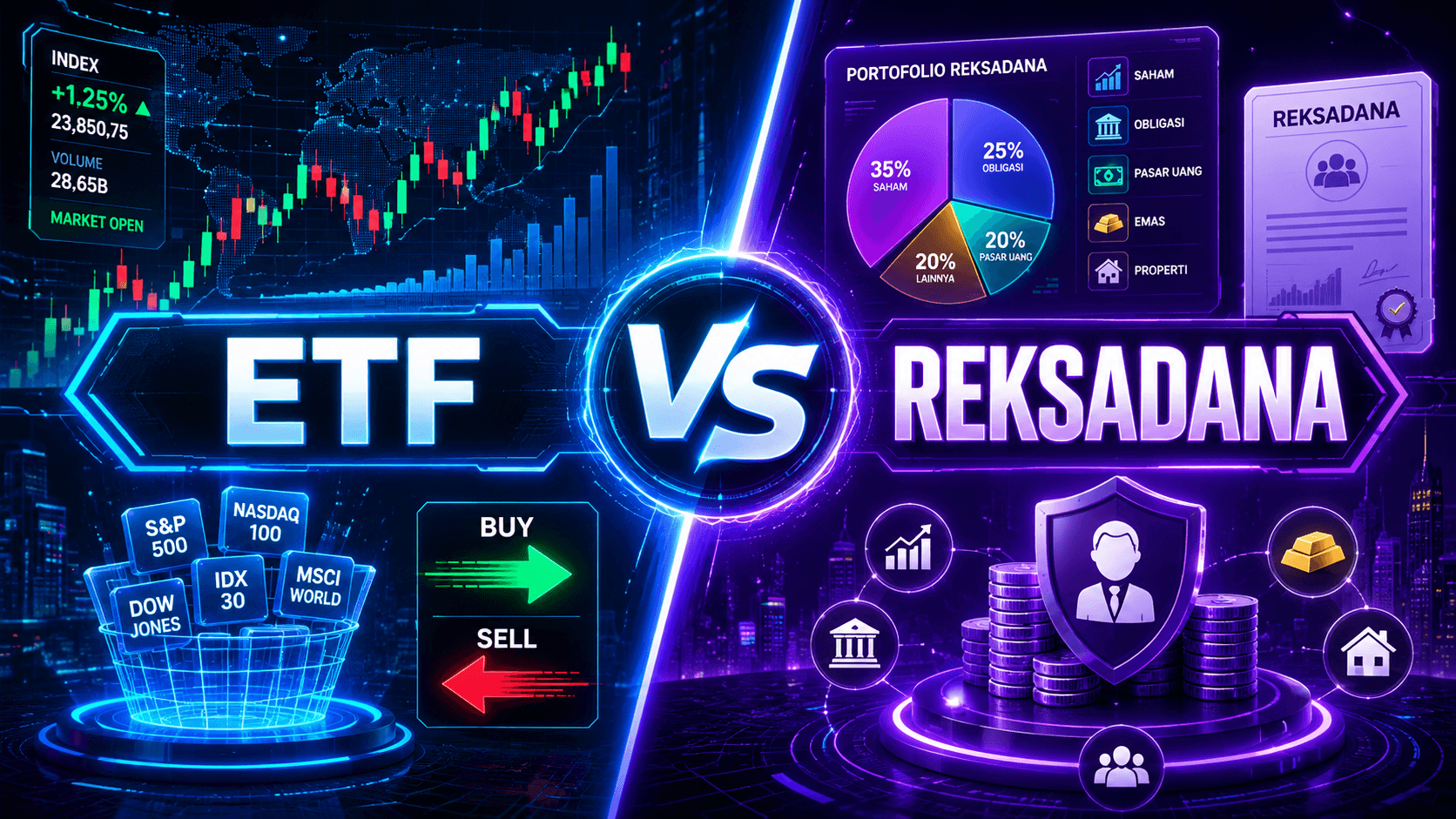
(Image source: AI Image Generated)
Mutual funds are investment vehicles that pool public funds and are invested in various assets by professional investment managers. Transactions are conducted directly with the investment manager or through an app, not on the stock exchange.
Both provide automatic diversification. The differences lie in transaction methods, costs, and flexibility.
Read also: Bitcoin Spot ETF Positive Note: Attract $2 Billion in Investment by April 2026
Key Differences Between ETFs and Mutual Funds
Here are the most important direct comparisons for your investment decision:
Transaction Method
ETFs are traded on exchanges like stocks. You can buy or sell them at any time during trading hours. Mutual funds can only be bought or sold through an investment manager, usually at a daily price (NAV).
Price and Time
ETFs have real-time prices that constantly change. Mutual funds use NAVs, which are only known after the market closes.
Cost
ETFs are usually cheaper. You only pay a brokerage commission. Mutual funds often charge purchase and redemption fees (which can range from 1-3%) plus higher management fees.
Minimum Investment
ETFs on the secondary market require a minimum of 1 lot or 100 units. Mutual funds are typically more flexible, starting from as little as Rp10,000 or Rp50,000.
Liquidity
ETFs win hands down. You can enter and exit positions quickly. Mutual funds require a redemption process that can be time-consuming.
Transparency
ETFs are more transparent. Portfolio composition and iNAV are published daily. Mutual funds are also transparent, but not as detailed and real-time as ETFs.
Management
Both can be managed passively, tracking an index. However, active mutual funds often have higher fees due to the investment manager's efforts.
Read also: Bitcoin ETF “Leak” in January 2026: Outflow Figures, Main Causes, and Impact on BTC Price?
Advantages and Disadvantages of Each
Advantages of ETFs
- High liquidity and flexibility
- Lower transaction costs
- Can be monitored in real time
- Suitable for both short and long term strategies
- Fast settlement (T+2)
Disadvantages of ETFs
- Need a stock account and a little trading knowledge
- Prices can fluctuate greatly throughout the day.
- Minimum 1 lot sometimes feels expensive for very small investors.
Advantages of mutual funds
- Very easy for beginners
- You can invest regularly with small amounts.
- Fully managed by professionals
- Perfect for busy passive investors
Disadvantages of mutual funds
- Higher costs in the long run
- Lower liquidity
- Prices are only updated once a day
- Redemption sometimes takes time
Read also: When Will the Bitcoin ETF in Indonesia Be Released? Latest Update 2025
Which is Better for Your Portfolio?
There's no one-size-fits-all answer. The answer depends on your investment profile and goals.
Choose ETFs if you:
- Active investor who likes to monitor the market
- Already have a stock account
- Want the lowest possible costs
- Requires high flexibility to enter and exit positions
- Want to quickly diversify into certain indexes (LQ45, JII, ESG, etc.)
Choose mutual funds if you:
- Beginners who are still learning
- Want automatic investment every month (dollar cost averaging)
- Don't have time to monitor the market
- Prefer a very simple process
- Routine investment capital is still small
Many experienced investors actually use both of themThey use mutual funds as the core of their long-term portfolio and ETFs for tactical purposes or when they want quick exposure to a specific sector.
Read also: JPMorgan Increases Bitcoin ETF Holdings, Institutional Investors Return
How to Invest in ETFs and Mutual Funds in Indonesia
For ETFs:
Open a securities account with a trusted securities firm. Deposit funds. Buy ETFs just like you would buy stocks in a trading app. Select the ETF code that best suits your goals (e.g., LQ45 ETF or High Dividend ETF).
For mutual funds:
Open an account on a mutual fund or securities app. Choose a product that suits your risk profile. You can start with a small amount and set up automatic monthly debits.
Both are supervised by the OJK and BEI, so they are relatively safe from a regulatory perspective.
Check the prices of tokenized stocks like Amazon Tokenized Stock Ondo (AMZON), Netflix Tokenized Stock Ondo (NFLXON), Microsoft Tokenized Stock Ondo (MSFTON), and more—only on Bittime.
Other Considerations: Risk and Taxes
Both carry market risk. ETFs tend to be more volatile due to real-time pricing. Mutual funds are more stable within a day due to daily NAV.
Taxes for both are relatively low in Indonesia. Profits from mutual funds and ETFs are typically subject to final tax, which is automatically deducted.
The most important thing is consistency and alignment with your financial goals, not just choosing one instrument.
Conclusion
ETFs and mutual funds are both powerful tools for building wealth. ETFs offer greater flexibility and cost efficiency for active investors, while mutual funds provide convenience and simplicity for passive or beginner investors.
The best choice is the one that aligns with your lifestyle, time commitment, and investment goals. Many successful people actually combine both in a well-balanced portfolio.
Start assessing your risk profile today. Open an account if you don’t already have one, explore some of the available ETFs and mutual funds, and then take a small step to get started.
Consult with a financial planner or securities relationship manager if you need more personalized guidance. The right investment is one you understand and can stick with over the long term.
Keep an eye on other stock tokens like AMZON, AMDON, and NFLXON, as well as MSFTON, and then you can start trading on the most comprehensive crypto exchange, Bittime.
Bittime is a licensed and regulated Digital Financial Asset Trader (PAKD) supervised by Indonesia’s Financial Services Authority (OJK) — where you can buy Bitcoin in Indonesia and hundreds of other crypto assets starting from just Rp10,000. The registration process is fast, secure, and you can get started today.
Track USDT to IDR conversions and monitor your favorite crypto assets in real time. Everything is available in one crypto investment app that you can download for free on the Play Store
Ready to start? Register now on Bittime and execute your investment strategy with a platform trusted by millions of users in Indonesia.
FAQ
Are ETFs always more profitable than mutual funds?
Not always. ETFs are usually more cost-efficient and liquid, but active mutual funds can sometimes outperform in certain market conditions. The final result depends heavily on the product and investment timing.
Can I own ETFs and mutual funds at the same time?
It's possible, and in fact, many advisors recommend it. Use mutual funds for core long-term holdings and ETFs for those that require greater flexibility.
Which is safer, ETFs or mutual funds?
Both are supervised by the Financial Services Authority (OJK). Safety is determined more by the underlying assets and diversification, rather than the type of instrument. The primary risk remains market fluctuations.
Are ETFs suitable for beginner investors?
It's suitable for beginners who are already comfortable with stock trading apps. If you're still very new and want a super simple process, starting with mutual funds is more convenient.
How much money do I need to prepare to get started?
Mutual funds can start from IDR 10,000–IDR 100,000. ETFs can be as low as one lot (can be hundreds of thousands of rupiah depending on the price per unit). Choose according to your budget.
Disclaimer: The views expressed belong exclusively to the author and do not reflect the views of this platform. This platform and its affiliates disclaim any responsibility for the accuracy or suitability of the information provided. It is for informational purposes only and not intended as financial or investment advice.
.png)