Alleged Binance Hack:US$5.7 Billion in Crypto Assets Moves into the Spotlight
2026-10-30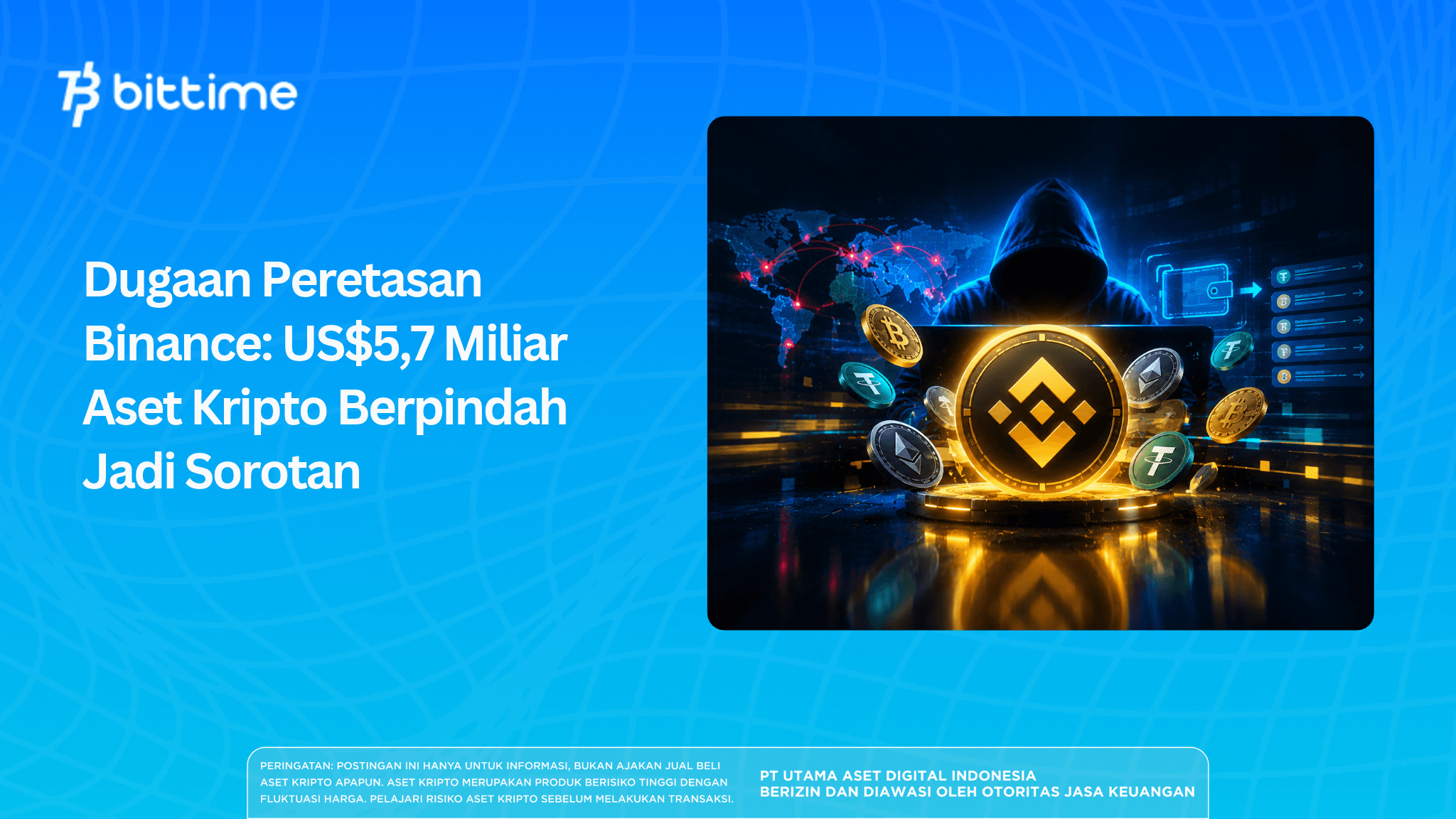
Suspicions of a Binance hack emerged after billions of dollars' worth of assets were reportedly transferred from several wallets linked to the exchange. Binance stated that user funds remain safe, while security investigations and withdrawal restrictions have become major concerns.
An estimated US$5.7 billion has also been circulating in reports, but this figure has not been confirmed as the final loss. To understand the impact, you need to look at three things: the origin of this figure, the actions taken by Tether and Circle, and developments in Binance's services.
Key Takeaways
- Binance is investigating a security issue and has stated that user funds remain safe.
- The figure of approximately US$5.7 billion remains an estimate related to asset tracking.
- Stablecoin freezes and withdrawal restrictions have not yet clarified the incident's final losses.
Suspected Binance Hack Begins with Wallet Activity
Attention turned to Binance after blockchain observers identified large-scale asset transfers. One report recorded approximately US$3.55 billion flowing into an unlabeled wallet, followed by nearly US$900 million moving to another address.
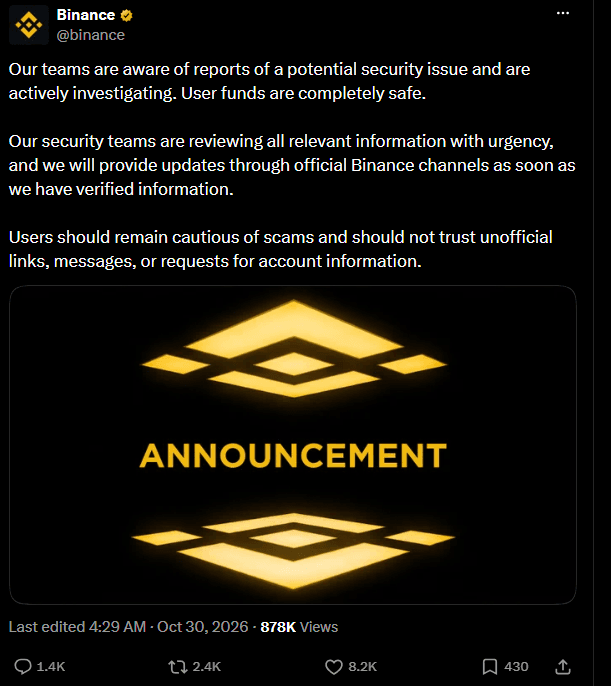
Binance subsequently stated that it was reviewing reports of a potential security issue. CZ also said the incident appeared to be a hack, while emphasizing that he no longer manages the company.
As of the reports used as the basis for this article, the cause of the incident and the identity of the perpetrators had not been confirmed. There is not yet sufficient evidence to conclude whether the issue originated from stolen keys, transaction approval processes, or internal access.
The sequence of events can be summarized in three stages: asset transfers were detected, the company began an investigation, and stablecoin issuers restricted the associated tokens. A final technical explanation is still pending the investigation's outcome.
Read also: CoinDCX Hack: 15.99 Million USDT Lost, Initially Described as a False Alarm
Are Binance Users' Funds Safe?
Binance has stated that user funds remain safe. This statement reflects the company's position, but it does not yet provide details about the final losses or the results of a comprehensive investigation.
CZ also expressed his hope that all user funds would be covered. Since he was speaking as a shareholder, this statement should not be treated as an official announcement of a compensation plan or schedule.
For users, account balances, the ability to withdraw funds, and an exchange's financial condition are three different things. A balance that appears normal does not necessarily mean all services have been restored, while a delayed withdrawal does not automatically prove that the balance has been lost.
Therefore, you should start by checking your own account. Look for any unrecognized transactions, changes to security settings, or withdrawals that have not yet been processed.
If you find an issue, record the time of the incident, asset type, network, and transaction ID. This information helps the support team investigate your report specifically, rather than having to rely on screenshots of your balance.
What Is the Status of Binance Withdrawals?
In an update reported on October 30, 2026, at 5:15 AM WIB, Binance stated that withdrawals would resume once the security issue had been resolved. However, the statement did not provide a specific recovery schedule.
Other reports noted differences in the status of individual assets and networks at specific observation times. This means that news about one network remaining operational cannot be used to conclude that all withdrawals are functioning normally.
Before submitting a withdrawal request, check the asset, network, and notifications displayed in the app directly. Do not rely on old screenshots when making a new transaction.
If you have already submitted a request, check whether the exchange has issued a transaction hash. The hash can be used to verify the transaction on the blockchain, while the status displayed in the app helps you determine whether the request is still being processed by the platform.
Avoid transferring assets through alternative networks you do not understand just to bypass restrictions. Wallets receiving your assets must support the same network and token to prevent additional problems during the transfer.
Read also: Why JPMorgan Blocks AI Agents from Customer Accounts
Where Does the US$5.7 Billion Figure Come From?
One report stated that a group of 55 tracked addresses held approximately US$5.78 billion in assets. This figure represents assets at addresses linked to the incident, not a final loss figure announced by Binance.
Other reports used different transaction and blockchain coverage. Therefore, the figures appearing in news headlines do not necessarily measure the same thing.
There are three figures that need to be distinguished:
- Transaction value: the amount of assets transferred in a particular transaction.
- Wallet balance: the assets held at an address at the time it is checked.
- Final losses: the value of assets lost after accounting for the investigation and any recovery.
For example, if US$100 million in assets moves from wallet A to B and then from B to C, this generates two transactions. Counting both transactions as US$200 million in lost funds would mean counting the same assets twice.
This example is not a recalculation of the Binance case. It illustrates why large figures derived from blockchain tracking need to be reconciled before they are described as losses.
Read also: Timothy Ronald Case: Two Investigations Discontinued, Here's Why
Tether and Circle Freeze USDT and USDC
Available updates state that Tether froze nearly US$1.57 billion and Circle froze more than US$800 million in connection with the incident. Their combined value was reported to exceed US$2.38 billion.
Earlier reports cited approximately US$1.79 billion. The initial figure should not be added again to subsequent updates because some of the tokens counted may be the same.
What Happens When Tokens Are Frozen?
Stablecoin issuers have mechanisms to restrict tokens at specific addresses. Circle, for example, can block USDC transfers to and from addresses placed on its restriction list.
This freeze does not mean that all USDT or USDC users have lost access to their tokens. Its scope depends on the addresses and measures targeted by the issuer.
Have the Funds Been Returned?
Not necessarily. Tokens that can no longer be transferred still require further procedures before they can be returned to the rightful parties.
Therefore, recovery progress needs to be supported by an announcement or a return transaction. The value of frozen assets alone does not show how much of the loss has been recovered.
Read also: Bitget Suspected of Being Hacked, US$388 Million in Assets Affected, North Korea Under Scrutiny
Market Impact: What Should You Watch?
Bitcoin was reportedly trading below US$79,000 as news of the incident developed. However, price movements occurring around the same time as the Binance news are not enough to explain all the factors behind the market decline.
To assess developments in the case, pay attention to information that could change the risk assessment: investigation results, the restoration of withdrawals, and the amount of funds successfully returned. These updates provide more concrete context than speculative comments about price direction.
If you are considering making a transaction, separate your need to access funds from your decision to buy or sell assets. These involve different considerations and do not need to be decided based solely on a single news headline.
Four Security Checks for Users
1. Use Familiar Access Points
Open the official app or the website address you normally use. Avoid compensation links sent through private messages, social media replies, or accounts claiming to represent customer support.
2. Review Devices and Login Activity
Check connected devices as well as account and email activity. If you notice an unrecognized login, follow the security procedures through the app or official support channels.
3. Protect Your Authentication Codes
Never share your password, OTP, or 2FA code with anyone. Be cautious of requests to share your screen or provide remote access while your account is open.
4. Do Not Pay Unverified Recovery Claims
Treat messages asking you to transfer funds to unlock your balance as suspicious and verify them first. Contact support through the app rather than using phone numbers or links included in those messages.
These steps are intended to reduce the risk of scams targeting personal accounts. Security checks on an exchange's infrastructure remain the service provider's responsibility.
Conclusion
The suspected Binance hack has raised questions about the cause, final losses, and restoration of services. Users should prioritize checking their transaction status and following announcements that clearly specify the timing and scope of each update.
Readers interested in using Bittime's services can register for Bittime and review its fees, features, and terms before trading. Choose a service based on your needs and understanding of the risks, rather than acting out of panic.
Bittime is a licensed Digital Financial Asset Trader (PAKD) platform authorized and supervised by the Financial Services Authority (OJK) — where you can buy Bitcoin in Indonesia and hundreds of other crypto assets starting from IDR 10,000. Registration is quick and secure, and you can get started today.
Track the USDT to IDR conversion rate and monitor your favorite crypto assets' price movements in real time. Everything is available in one crypto investment app that you can download for free from the Play Store.
Ready to get started? Register on Bittime today and put your investment strategy into action with a platform trusted by millions of users in Indonesia.
FAQ
Has Binance Confirmed the Hack?
Binance has acknowledged that it is addressing a security issue. The reports reviewed do not yet contain a final investigation conclusion regarding the cause or total losses.
Is It True That Binance Lost US$5.7 Billion?
The figure of approximately US$5.7 billion is related to an asset-tracking estimate. It cannot yet be described as a final loss confirmed by the company.
Have Binance Withdrawals Returned to Normal?
Available reports mention restrictions during the security investigation, with statuses potentially varying by network. Check the latest information for the asset you intend to withdraw before submitting a transaction.
Have All Users' USDT and USDC Been Frozen?
The freezes related to the incident targeted specific addresses. These measures do not automatically freeze the assets of all USDT and USDC holders.
Is There a Fund Recovery Schedule?
This article does not yet have confirmation of a return schedule or an official compensation plan. Do not follow claim instructions from anyone asking for your password, authentication code, or a fund transfer.
Disclaimer: The views expressed belong exclusively to the author and do not reflect the views of this platform. This platform and its affiliates disclaim any responsibility for the accuracy or suitability of the information provided. It is for informational purposes only and not intended as financial or investment advice.

.png)