DeFi Exploit: Summer Finance Loses $6 Million, 2.08 Million Percent APY Becomes a Protocol Security Alarm
2026-07-07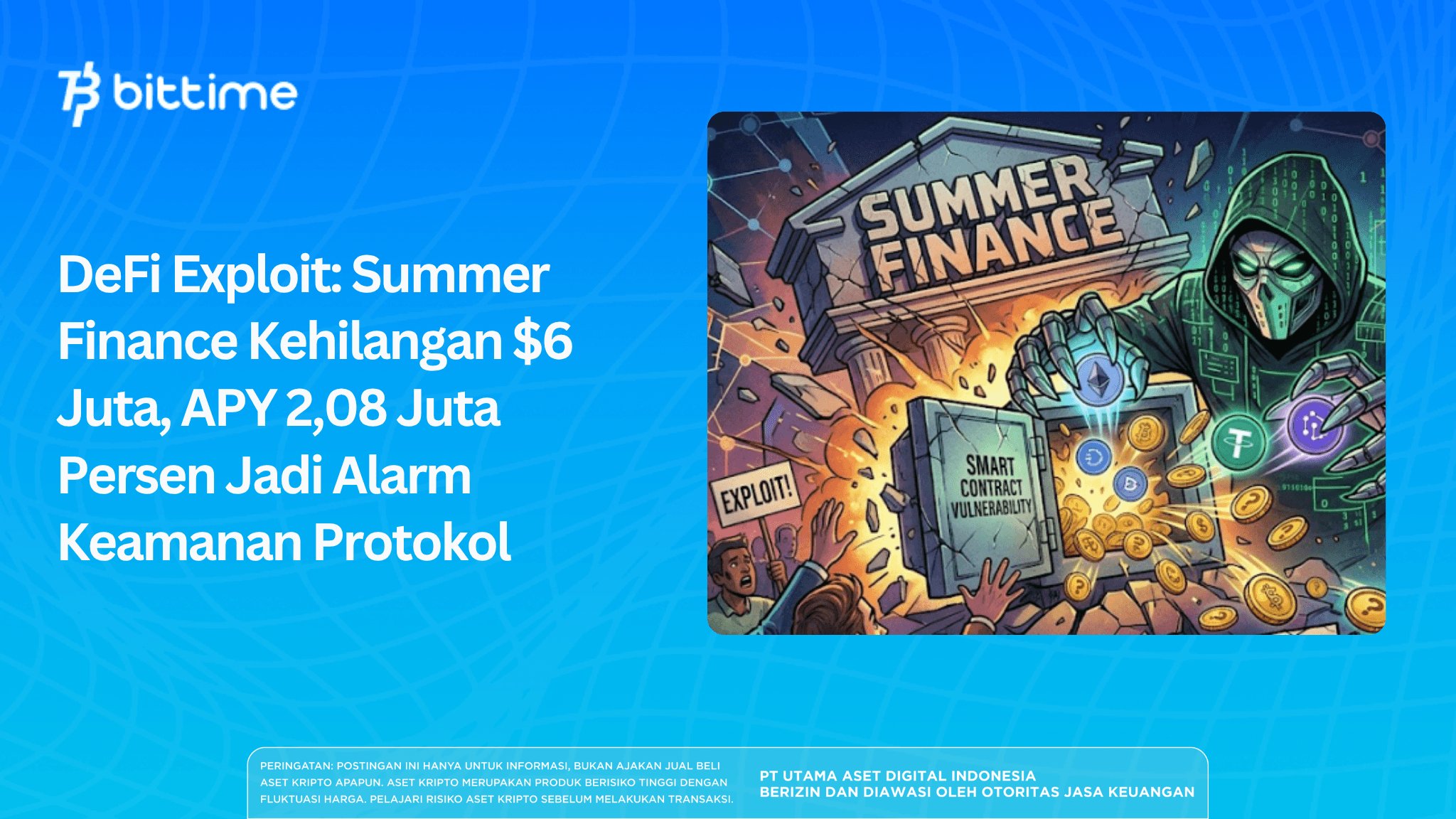
The security of the DeFi sector is once again being tested after the Summer Finance exploit caused losses of approximately US$6 million.
While user funds were drained from the vault, the system temporarily displayed an APY of 2.08 million percent, a figure far from normal conditions and sparking speculation of manipulation in the investment return recording mechanism.
The incident adds to the long list of exploits against decentralized finance protocols throughout 2026.
Although the investigation is still ongoing, several blockchain security analysts assess that the extreme APY spike does not reflect real profits, but rather the result of exploitation of the smart contract logic and vault accounting system.
Key Takeaways
- Summer Finance lost approximately US$6 million due to an exploit on the LazyVault USDC product.
- APY spiked to 2.08 million percent, suspected to be the effect of system manipulation, not real profits.
- The protocol temporarily halted vault operations while conducting an investigation with the security team.
Chronology of Summer Finance Losing US$6 Million
Based on a report by CoinMarketCap Community citing PeckShieldAlert, the exploit was first detected when approximately US$6 million in Ethereum assets was successfully transferred by the perpetrator.
On-chain data shows the incident primarily affected LazyVault LVUSDC, the vault product that manages USDC stablecoin. After suspicious transactions were identified, the total value of assets stored in the vault experienced a significant decline.
Shortly after the security report circulated, the official Summer.fi account confirmed that the team was aware of the incident and immediately:
- halted operations of all LazyVaults,
- conducted an investigation into the root cause,
- and prepared updates for the community.
This temporary suspension was implemented to prevent potential further losses during the audit process.
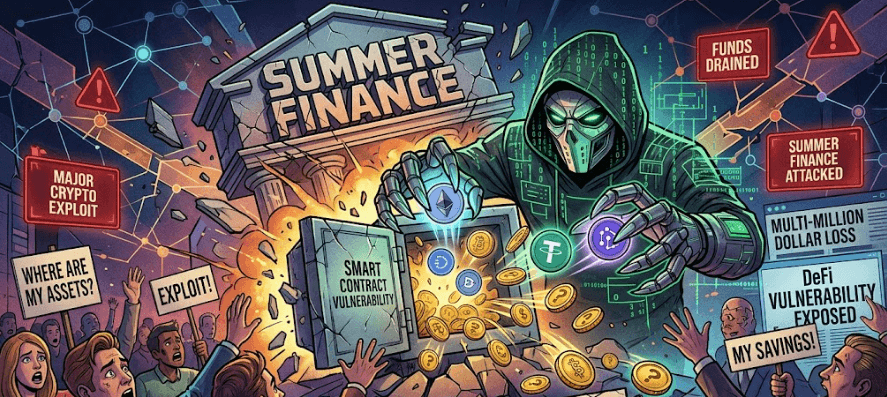
Illustration: Generated by AI
Read Also: Tokenized Stocks Can Earn Dividends? Here's How It Works
Why Did the 2.08 Million Percent APY Appear?
One of the most attention-grabbing aspects of this case was the appearance of an Annual Percentage Yield (APY) of 2,084,431% on the vault dashboard.
Normally, an APY of that magnitude is almost impossible in a healthy DeFi protocol.
According to analysis cited by CoinMarketCap Community, the spike did not indicate extraordinary profits for users. Instead, the figure is suspected to have appeared due to:
- manipulation of liquidity data after vault assets were drained,
- sudden changes to the total assets used as the basis for APY calculation,
- or disruption in the smart contract accounting mechanism.
When funds in the vault decreased drastically due to the exploit, the investment return calculation formula could produce extremely large numbers even though users actually suffered losses.
Therefore, the extreme APY is more viewed as a indicator of system anomaly, not an investment opportunity.
Read Also: US Stock Tokenization: Hold Your Favorite US Stocks and Earn 7% Rewards Every Day
Suspected Cause of the Exploit and Smart Contract Risks
As of the writing of this article, Summer Finance has not released a complete technical investigation report regarding the root cause of the attack.
However, based on initial information, some possibilities under consideration include:
- vulnerabilities in smart contract implementation,
- vault liquidity manipulation,
- weaknesses in asset recording mechanisms,
- and the possibility of exploitation of the protocol's internal logic.
Cases like this frequently occur in DeFi protocols that rely on complex interactions between vaults, oracles, and automated asset management strategies.
Blockchain security analysts also remind that smart contract audits do not always eliminate all risks. Code changes, new integrations, or cross-protocol interactions can still open previously undetected vulnerabilities.
Read Also: 10+ Best AI Coins 2026: Here's the List of Artificial Intelligence Themed Cryptocurrencies!
Impact of the Summer Finance Exploit on the DeFi Ecosystem
This event once again serves as a reminder that high yield rates do not always reflect a secure protocol condition.
For DeFi investors, the following indicators should be checked before placing funds:
- status of the latest smart contract audit,
- developer team transparency,
- vault security mechanisms,
- unusual on-chain activity,
- and official announcements from developers in case of incidents.
The Summer Finance case also highlights the importance of monitoring by blockchain security firms like PeckShield, which often become the first to detect suspicious transactions before official announcements are issued.
During the investigation process, users are advised to follow official updates from Summer.fi and not make decisions based solely on the APY displayed on the protocol dashboard.
Read Also: How to Buy SpaceX Tokenized Stock (SPCXon): SpaceX Stock Token Guide on Ondo
Conclusion
The exploit that hit Summer Finance is one of the notable DeFi security incidents in 2026.
Losses of approximately US$6 million and the appearance of APY up to 2.08 million percent demonstrate how manipulation of smart contracts can produce misleading data while threatening user funds.
Although LazyVault operations have been temporarily suspended for investigation, this case serves as a reminder that security analysis, protocol transparency, and on-chain activity monitoring remain important factors before investing in the DeFi sector.

Check prices for Bitcoin (BTC), Ethereum (ETH), XRP, Solana (SOL), Polygon (POL), and BNB as well as leading memecoins DOGE. You can trade directly on Bittime!
Bittime is a licensed and supervised Digital Financial Asset Trader (PAKD) platform by the Financial Services Authority — a place where you can buy Bitcoin in Indonesia and hundreds of other crypto assets starting from Rp10,000. The registration process is fast, secure, and can be started today.
Monitor conversions USDT to IDR and the price movements of your favorite crypto assets in real-time. All available in one crypto investment app that can be downloaded for free on the Play Store.
Ready to start? Register now on Bittime and execute your investment strategy with a platform trusted by millions of users in Indonesia.
FAQ
What happened to Summer Finance?
Summer Finance experienced an exploit that caused approximately US$6 million in assets to leave LazyVault USDC. The project team then halted vault operations for investigation.
Did the 2.08 million percent APY really generate profits?
No. The APY is suspected to be the result of system manipulation or disruption following the exploit, not actual returns received by users.
Which vault was affected?
The incident was reported to primarily affect LazyVault LVUSDC, which manages USDC-based assets.
Has the cause of the exploit been identified?
Not yet. The Summer Finance team is still conducting an investigation to determine the technical root cause of the attack.
What is the lesson for DeFi users?
Users should not only look at the size of the APY but also check smart contract security, audit results, developer transparency, and on-chain activity before depositing funds into a protocol.
Disclaimer: The views expressed belong exclusively to the author and do not reflect the views of this platform. This platform and its affiliates disclaim any responsibility for the accuracy or suitability of the information provided. It is for informational purposes only and not intended as financial or investment advice.

.png)