What Is Crypto Mining? Complete Guide to How It Works & Mining Rigs
2026-03-31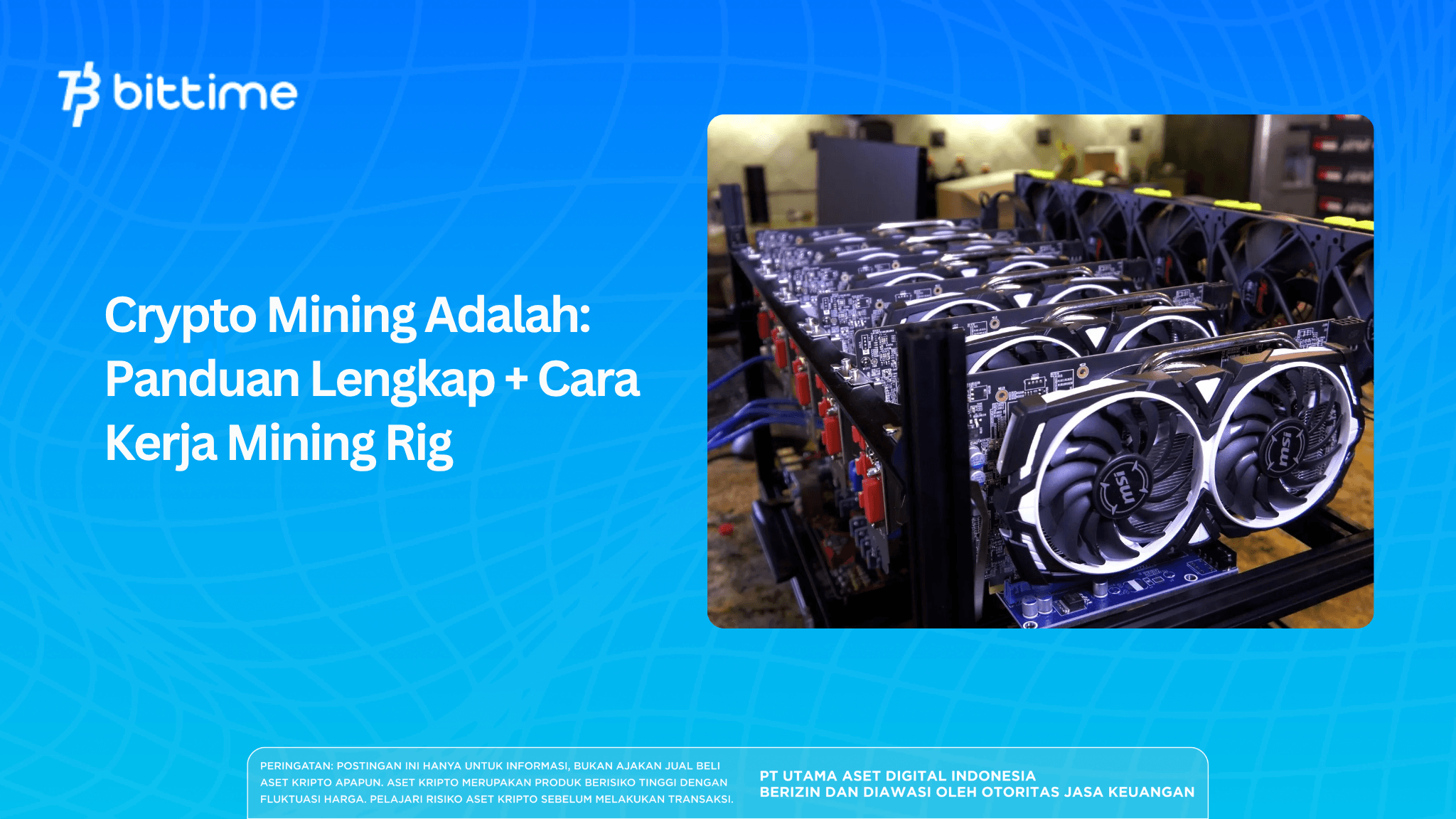
Crypto mining is the process by which powerful computers compete to solve complex mathematical puzzles — verifying transactions on a blockchain network and earning newly minted cryptocurrency as a reward.
Think of miners as the network's auditors: they confirm every transaction is legitimate and add it permanently to the public ledger. While the concept may sound technical, understanding it reveals how decentralized networks like Bitcoin stay secure without any central authority.
This guide covers everything from the basics of how mining works, to the components of a mining rig, the main methods available today, and the key factors that determine whether mining is actually profitable.
Key Takeaways
• Crypto mining is a way to earn cryptocurrency by contributing computing power to validate blockchain transactions — no direct purchase required.
• Miners can choose from several methods: GPU rigs, ASIC devices, cloud mining, and pool mining — each with different costs and flexibility trade-offs.
• Profitability depends on three core variables: electricity cost, the current market price of the mined coin, and hardware efficiency.
Register on Bittime now and start trading crypto with a fast, secure, and easy process on the app.
What Is Crypto Mining and How Does It Work?
Every time someone sends cryptocurrency, the transaction isn't instantly recorded. It first needs to be verified by the network. Miners handle this job. Using specialized computers, they bundle pending transactions into blocks and race to solve a cryptographic puzzle — a process called Proof of Work (PoW).
The first miner to crack the puzzle broadcasts the solution to the network; once verified, the block is added to the blockchain and the winner receives a block reward (newly created coins) plus transaction fees.
Because each block contains the cryptographic fingerprint of the previous one, altering any historical transaction would require re-mining every block that followed it — a practically impossible task on large networks like Bitcoin, making the ledger extremely tamper-resistant.
What Is a Crypto Mining Rig and What Are Its Key Components?
A crypto mining rig is a purpose-built computer optimized for maximum computational throughput. Unlike standard PCs that rely on a single CPU, mining rigs run multiple GPUs (Graphics Processing Units), which excel at the parallel calculations required for mining algorithms.
The core components of a GPU mining rig include: a motherboard capable of supporting 4 to 8 GPUs, a CPU (processor) to run the operating system and mining software, at least 4–8 GB of RAM, a high-capacity Power Supply Unit — typically 1,200 watts or more, a robust cooling system, an SSD for storage, and mining software connected to a crypto wallet.
The two leading GPU manufacturers are Nvidia and AMD, each offering different performance profiles across various mining algorithms. ASIC (Application-Specific Integrated Circuit) devices are an alternative — purpose-built for one algorithm, highly efficient, but far less versatile.
Mining Methods: GPU, ASIC, Cloud, and Pool Mining
Not every miner needs to build their own rig. There are four primary paths into crypto mining. GPU mining is the most flexible option — a single rig can mine different cryptocurrencies by switching software, making it ideal for adapting to market conditions.
ASIC mining uses dedicated hardware engineered for one specific algorithm, delivering superior efficiency but zero flexibility. Cloud mining lets users rent remote hashing power from a provider without buying any hardware — a low-barrier entry point, though it requires careful vetting to avoid scams.
Pool mining invites multiple miners to combine their resources and share rewards proportionally, offering a more predictable income stream compared to the high-variance nature of solo mining.
Factors That Determine Crypto Mining Profitability
Mining can be profitable — but it can just as easily become a loss-making exercise without careful planning.
The four most influential variables are: electricity cost, which is the single largest recurring expense and the primary reason miners in low-cost energy regions have a structural advantage; coin price, since cryptocurrency markets are highly volatile and a sharp price drop can eliminate a rig's margins overnight; mining difficulty, which automatically adjusts upward as more miners join the network, reducing individual rewards over time; and hardware efficiency, measured as the hash rate produced per watt consumed.
Before committing capital, use online profitability calculators such as minerstat or NiceHash to model returns against current market conditions. The Bitcoin halving cycle — which reduces block rewards roughly every four years — is another critical long-term factor to factor into any mining business plan.
Conclusion
Crypto mining remains the foundational mechanism that keeps decentralized blockchain networks secure and functional. For those willing to invest in the right hardware, manage electricity costs carefully, and stay informed about market dynamics, mining continues to be a viable way to accumulate cryptocurrency in 2026.
Whether you choose to build a GPU rig, invest in an ASIC device, or start small with cloud mining, success comes down to doing the research, running the numbers honestly, and treating it as a business rather than a shortcut.
FAQ — Frequently Asked Questions
1. Is crypto mining still profitable in 2026?
It can be, depending on the coin, hardware efficiency, and local electricity rates. Use real-time calculators like minerstat or NiceHash to project returns before investing.
2. How much does it cost to build a basic mining rig?
A 6-GPU rig typically costs between $1,300 and $1,500 in hardware alone in 2026, excluding monthly electricity bills and ongoing maintenance costs.
3. What is the difference between GPU mining and ASIC mining?
GPU mining is flexible and can mine many different coins by switching software. ASIC mining is more energy-efficient for a specific algorithm but is locked to that use case.
4. Can a beginner start mining without expensive hardware?
Yes. Cloud mining platforms allow newcomers to rent hashing power remotely without assembling any hardware — though due diligence in choosing a reputable provider is essential.
5. Which cryptocurrencies are most popular to mine right now?
Bitcoin (BTC) remains the top choice, but competition is intense. Litecoin (LTC) and Monero (XMR) are popular alternatives for individual miners due to lower network difficulty and ASIC-resistant algorithms.
How to Buy Crypto on Bittime?

Want to trade sell buy Bitcoins and crypto investment easily? Bittime is here to help! As an Indonesian crypto exchange officially registered with Bappebti, Bittime ensures every transaction is safe and fast.
Start with registration and identity verification, then make a minimum deposit of IDR 10,000. After that, you can immediately buy your favorite digital assets!
Check the exchange rate BTC to IDR, ETH to IDR, SOL to IDR and other crypto assets to find out today's crypto market trends in real-time on Bittime.
Also, visit the Bittime Blog for interesting updates and educational information about the crypto world. Find reliable articles about Web3, blockchain technology, and digital asset investment tips designed to enrich your crypto knowledge.
Disclaimer: The views expressed belong exclusively to the author and do not reflect the views of this platform. This platform and its affiliates disclaim any responsibility for the accuracy or suitability of the information provided. It is for informational purposes only and not intended as financial or investment advice.
.png)