How to Protect a Spot Crypto Portfolio with Futures
2026-08-07
Crypto portfolio hedging is a strategy used to reduce the impact of price declines without immediately selling spot assets. Investors keep their crypto holdings and then open a short on a futures or perpetual futures.
When prices fall, profits from the short position can help offset spot losses. The outcome is still affected by fees, price differences, and liquidation risk.
Key Takeaways
- Short futures can reduce the directional exposure of spot crypto assets.
- Hedge can be set up as a full or partial hedge depending on risk tolerance.
- Leverage, funding rate, margin, and basis must be calculated from the outset.
What Is Crypto Portfolio Hedging?
Hedging means taking a position that moves in the opposite direction to the primary asset. An investor holding 1 BTC in the spot market has long. To reduce downside risk, the investor can open a short BTC perpetual position with an equal or smaller notional value.
In a hedge full hedge, a decline in the spot asset’s value is theoretically offset by profits from the short. If the price rises, spot gains will be offset by losses on the futures. The final result is not always zero because it is affected by the execution price, transaction fees, funding rate, and basis risk.

Differences Between Spot Crypto and Perpetual Futures
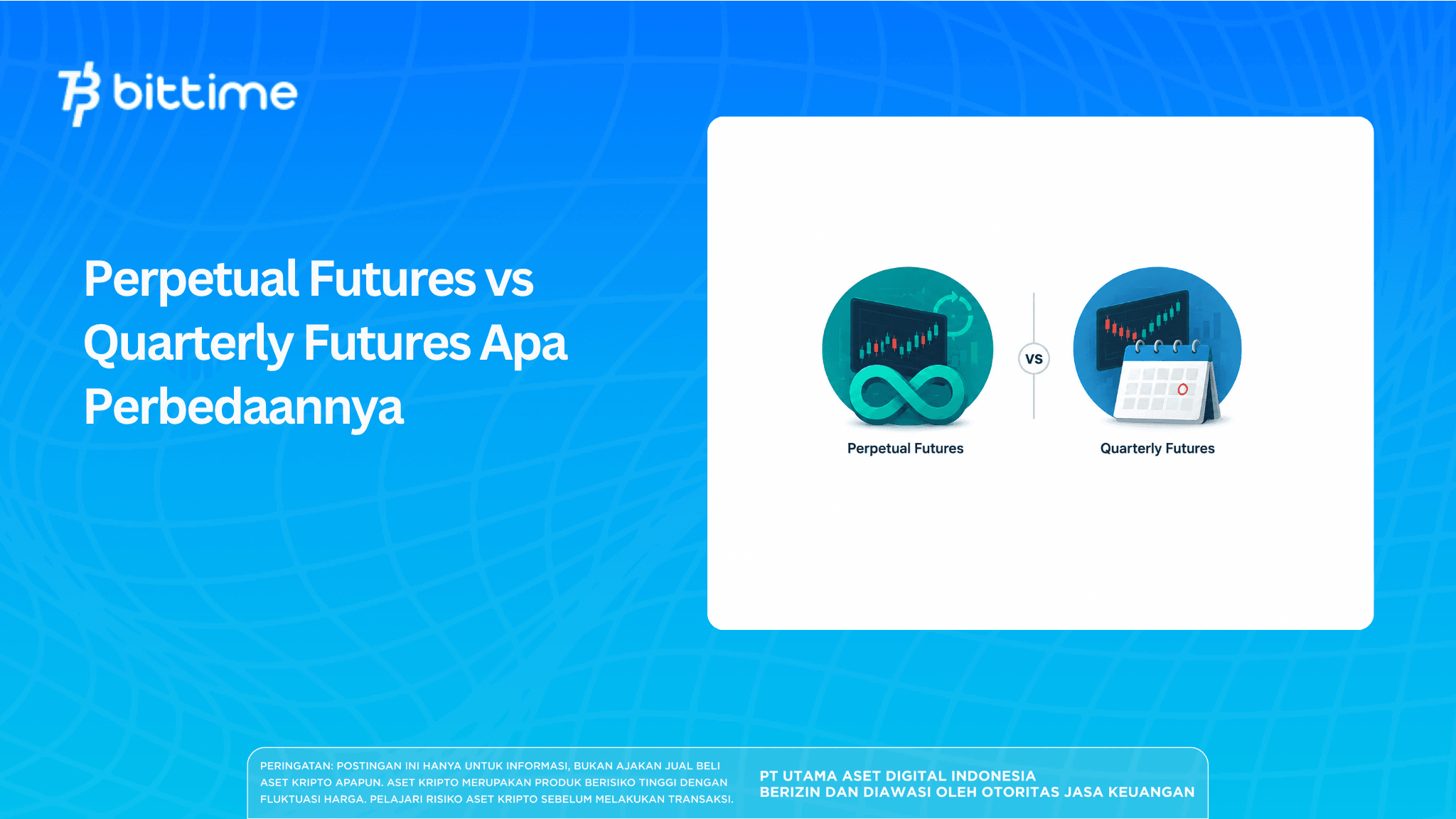
Spot crypto provides direct ownership of the asset. Perpetual futures are derivative contracts with no fixed expiration date that allow traders to take long or short.
Perpetual contracts use a funding rate to keep their price close to the spot market. When funding is positive, long positions usually pay short. When funding is negative, the payment direction may reverse. Because the rate changes, the cost of the hedge must be evaluated regularly.
Read also: Futures Open Interest: How to Read Market Trends and Sentiment
How to Hedge Spot Crypto with Futures
1. Calculate Your Spot Exposure
Record the amount of assets and the market value you want to protect. Holding ETH worth IDR 60 million means a long exposure of IDR 60 million.
2. Determine the Hedge Ratio
Hedge 100% uses a short position with a notional value equal to the spot exposure. Hedge 50% protects only half of the exposure, so the investor still retains some upside potential if the price rises.
3. Open a Short Futures Position
Choose a contract with the same underlying asset. Size the position based on its notional value, not the margin amount. Leverage can reduce the initial capital requirement, but it also increases liquidation risk.
4. Prepare Additional Margin
A short position can temporarily incur losses when the price surges. Additional margin provides more room so the position is not liquidated too quickly.
5. Monitor and Close the Hedge
Set the protection period and exit conditions from the beginning. Reduce or close the short when the risk has passed, funding becomes too expensive, or the portfolio value changes.
Read also: Margin Calls in Crypto Futures? Do This to Avoid Liquidation
Crypto Futures Hedging Example
An investor holds BTC spot worth IDR 100 million and opens a short perpetual position worth IDR 50 million. If BTC falls 20%, the spot holding loses approximately IDR 20 million, while the short position may generate IDR 10 million before fees. The net loss becomes approximately IDR 10 million because the hedge ratio is only 50%.
If BTC rises 20%, the spot holding gains approximately IDR 20 million, while the short position loses IDR 10 million. The investor still records a net gain of approximately IDR 10 million before fees. This example is illustrative and does not guarantee results.
To access market education and digital asset news, you can register with Bittime and review the latest updates before developing a strategy.
Read also: Long vs Short Crypto Futures Strategies: When Should You Buy and Sell?
Risks of Futures Strategies
Hedging is not a risk-free strategy. Leverage can amplify losses and trigger liquidation. Basis risk arises when futures and spot prices do not move identically, while the funding rate can make the protection increasingly expensive.
Other risks include slippage, low liquidity, position-sizing errors, and platform disruptions. Indonesian users should also check product legality and availability because crypto asset supervision is now under the OJK.
Conclusion
Hedging crypto with futures can help reduce the downside risk of spot assets through full or partial short positions. This strategy is most useful when investors want to keep their assets while anticipating short-term volatility.
Its effectiveness depends on position size, low leverage, adequate margin, funding rate, and disciplined exits. Start with a simulation and do not treat a hedge as a guarantee of portfolio safety.
Check the prices of Bitcoin (BTC), Ethereum (ETH), XRP, Solana (SOL), and BNB, as well as the popular meme coin DOGE. You can trade directly on Bittime!

Bittime is a licensed Digital Financial Asset Trader (PAKD) supervised by Indonesia’s Financial Services Authority (OJK)— where you can buy Bitcoin in Indonesia and hundreds of other crypto assets starting from IDR 10,000. Registration is fast and secure, and you can get started today.
Track the USDT to IDR conversion and the real-time price movements of your favorite crypto assets. Everything is available in one crypto investment app that can be downloaded for free from the Play Store.
Ready to get started? Register with Bittime now and execute your investment strategy on a platform trusted by millions of users in Indonesia.
FAQ
Does crypto hedging guarantee that you will not lose money?
No. Hedge only reduces certain risks and is still affected by fees, basis risk, leverage, and liquidation.
What short position size is needed for a full hedge?
The notional value of the short position is generally set equal to the spot exposure. Its size must be adjusted when the price or amount of the asset changes.
Are perpetual futures suitable for beginners?
This product is complex because it uses margin and leverage. Beginners should understand liquidation and practice through simulations first.
What is the difference between a full and partial hedge?
Hedge neutralizes most price movements. Hedge only reduces risk and still leaves some upside potential.
When should a hedge be closed?
Close the hedge when the risk period ends, the market direction changes, or the funding cost is no longer justified by the protection it provides.
Disclaimer: The views expressed belong exclusively to the author and do not reflect the views of this platform. This platform and its affiliates disclaim any responsibility for the accuracy or suitability of the information provided. It is for informational purposes only and not intended as financial or investment advice.

.png)