How to Build a Trading Bot for Solana Meme Coins with an AI Agent
2026-11-26 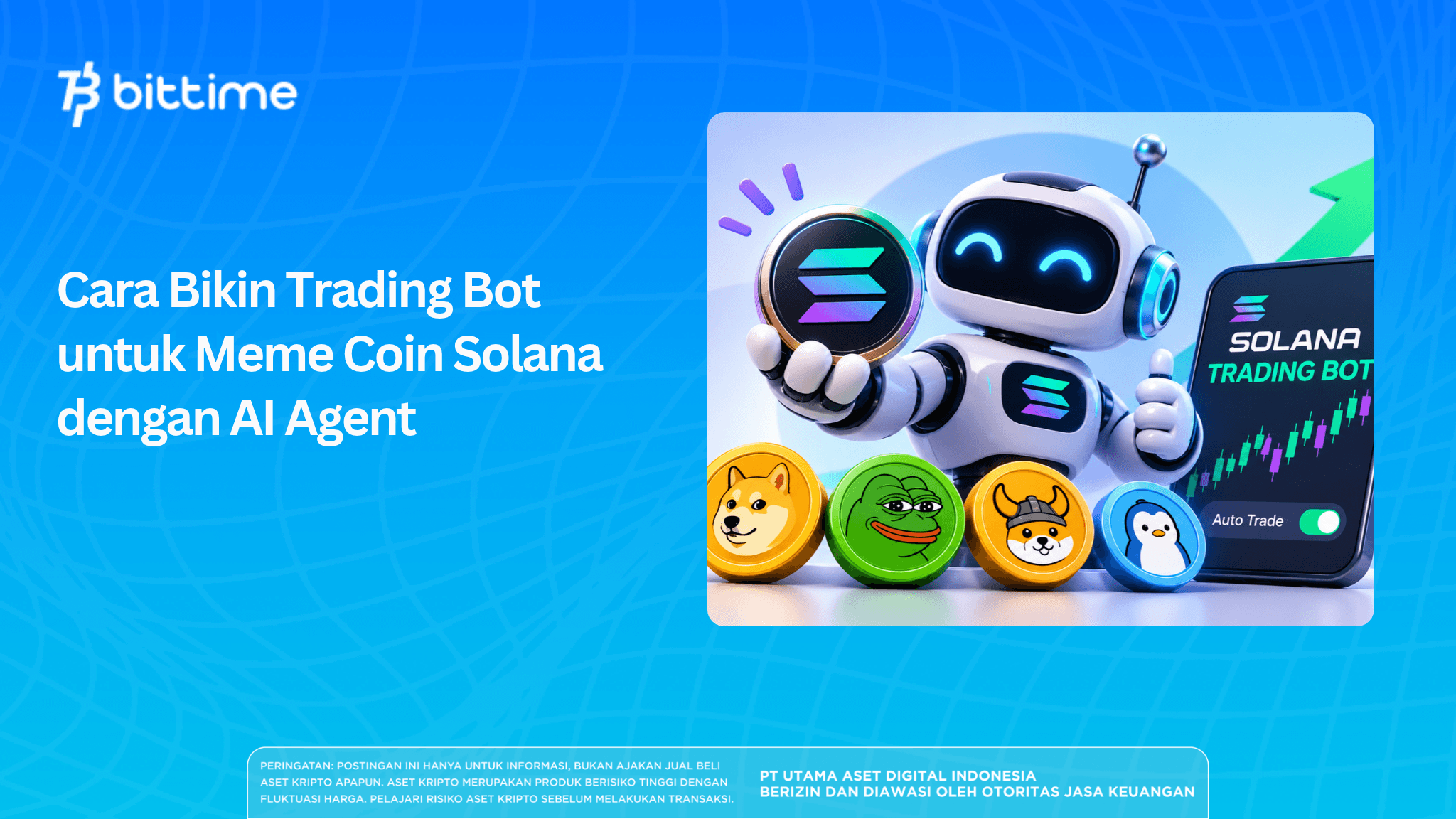
In the Solana meme coin market, a difference of just a few seconds can separate a profit from a trap. That is why some traders are beginning to rely on bots to monitor the market and execute trades.
This guide to building a Solana trading bot summarizes the workflow shared by Indonesian trader @oezank_idc, along with two technical guides on AI agents for meme coin trading bots. This content is for educational purposes only and does not encourage trading.
Key Takeaways
- A meme coin trading bot operates through six stages: trigger, filter, security check, entry, exit, and dry run.
- Infrastructure and wallet security are just as important as the strategy, particularly permission restrictions and spending limits.
- All bot profit claims remain independently unverified, while rug pull risks and potential losses remain high.
Why Are Traders Switching to Meme Coin Trading Bots?
According to a post by Oezank - IDC on X, meme coin trading is now dominated by bots. Many smart wallets enter and exit positions within minutes, leaving manual traders who are targeting 10–20% gains struggling to sell in time. He prefers taking smaller profits of 10–20% per trade with small position sizes, but can execute 50–80 trades per day.
He claims that his experimental bot turned Rp1 million into Rp8 million. This claim has not been independently verified, and the author himself states that the results are not guaranteed.
If you want to learn about popular meme coins first, sign up now at Bittime and explore assets such as DOGE, PEPE, WIF, and FLOKI before making any decisions.
Read Also: CATGENT Uses AI for Trading and Collecting CASHCAT: How Does It Work?
Six Steps to Building a Meme Coin Trading Bot
According to Oezank - IDC, he recommends discussing each stage with your respective AI agent:
- Trigger. The bot does not need to scan every token. It only needs to wait for tokens from specific sources, such as DexScreener events, GMGN trending lists, Meteora hot pools, Pump.fun migrations, smart wallet activity, Telegram calls, or specific X accounts. First, monitor how often tokens rise in price and when they begin to dump.
- Filter. Market capitalization, liquidity, volume, token age, developer ownership, bundler and sniper percentages, top 10 holders, and 1-minute and 5-minute price changes. All figures are stored in a config file. If data is missing or has a value of 0, the token must be skipped. This stage is described as the longest one and can take months.
- Security check. Check for honeypots, mint authority, freeze authority, and token program risks. If any check fails, skip the token immediately.
- Entry. Purchases are made through the Jupiter API, with limits defined in the config file. These include the maximum number of open positions, transaction amount, slippage, daily loss and profit limits, and transaction fees.
- Exit. Monitor positions every 2–5 seconds using a hard stop-loss, take-profit, trailing stop, and maximum holding period. For example, a trailing stop can be activated after a 10% profit with a 5% distance. This means that when the price rises by 50%, the exit threshold moves to around 45%.
- Dry run. Test hundreds of positions without using real money and record the win rate, largest loss, slippage, and fees.
Infrastructure and Wallet Security Must Not Be Overlooked
Daniel Yavorovych, CTO of Dysnix, who also builds RPC services, wrote on Medium that agents often fail because of weak infrastructure rather than poor prompts. He identifies fast RPC, transaction landing guarantees, data streaming through Yellowstone gRPC, and restricted wallet permissions (an embedded wallet with spending limits) as essential requirements.
He also recommends testing on devnet, simulating transactions, and installing a circuit breaker to prevent bugs from draining the wallet. It is worth noting that he sells node services, so the latency figures he cites are vendor claims.
For frameworks, he mentions Solana Agent Kit, Eliza, GOAT, and Rig. A guide published on DEV Community by Moon Soon offers another approach: AI only decides which tokens to trade, while execution is handled through a swap API with gradually adjusted slippage retries. The example uses an EVM chain and promotes the swapapi.dev product, so only its underlying principles are relevant to Solana.
The two guides also disagree on certain points. The DEV tutorial stores the private key in a .env file, while the Medium article describes this as the number one mistake.
Risks to Understand Before Using Real Money
According to Oezank - IDC, filters that are too loose cause bots to enter rug-pull tokens frequently, while filters that are too strict leave almost no trading opportunities. He also points out that placing a large amount of capital in a single token makes it vulnerable to being "taken out" by the developer.
The DEV guide warns that meme coin swaps often revert because of slippage, token transfer taxes, and MEV attacks. Increasing slippage tolerance also means accepting a worse execution price.
The X author concludes with a standard warning: results are not guaranteed, this is not financial advice, only use money you can afford to lose, and always do your own research.
Read Also: Must-Know! 6 Top AI Meme Coins on the Solana Network
Conclusion
Building a meme coin trading bot on Solana involves creating a layered system: triggers, filters, security checks, entry and exit rules, followed by extensive testing before using real money. Automation speeds up execution, but it does not eliminate rug pull risks or potential losses.
FAQ
What is a Solana meme coin trading bot?
It is a program that monitors tokens from specific sources, filters them, and then automatically buys and sells them through an API such as Jupiter, based on rules you define.
What role does an AI agent play in building this bot?
According to Oezank - IDC, an AI agent helps organize the workflow and populate filter values in the config file. The DEV guide uses an LLM only to select tokens, while execution is delegated to a swap API.
How much initial capital is safe to use for testing?
Neither the X nor Medium source provides a definitive amount. The DEV guide recommends using a small wallet with around US$100, while Oezank - IDC advises running dry tests first until the bot has demonstrated profitability across hundreds of positions.
How can you secure a bot wallet?
Avoid storing the main private key in your code or in a .env file. Use restricted permissions, spending limits, and a circuit breaker to help limit potential losses.
Are bot profits guaranteed?
No. The claim of turning Rp1 million into Rp8 million has not been verified, and the author himself states that the results may not be the same for everyone.
How to Buy Crypto on Bittime

Want to trade and invest in crypto with ease? Bittime is an Indonesian crypto exchange registered with and supervised by the OJK. Get started by registering and verifying your identity, then make a minimum deposit of Rp10,000 and buy your favorite assets.
Check the BTC to IDR, ETH to IDR, and SOL to IDR exchange rates to monitor market trends. Also visit the Bittime Blog for information about Web3, blockchain, and digital asset investment tips.
Disclaimer: The views expressed belong exclusively to the author and do not reflect the views of this platform. This platform and its affiliates disclaim any responsibility for the accuracy or suitability of the information provided. It is for informational purposes only and not intended as financial or investment advice.
.png)