State-Owned Commercial Banks: Examples of State-Owned Banks: Mandiri, BRI, BNI, BTN & Their Roles
2026-06-12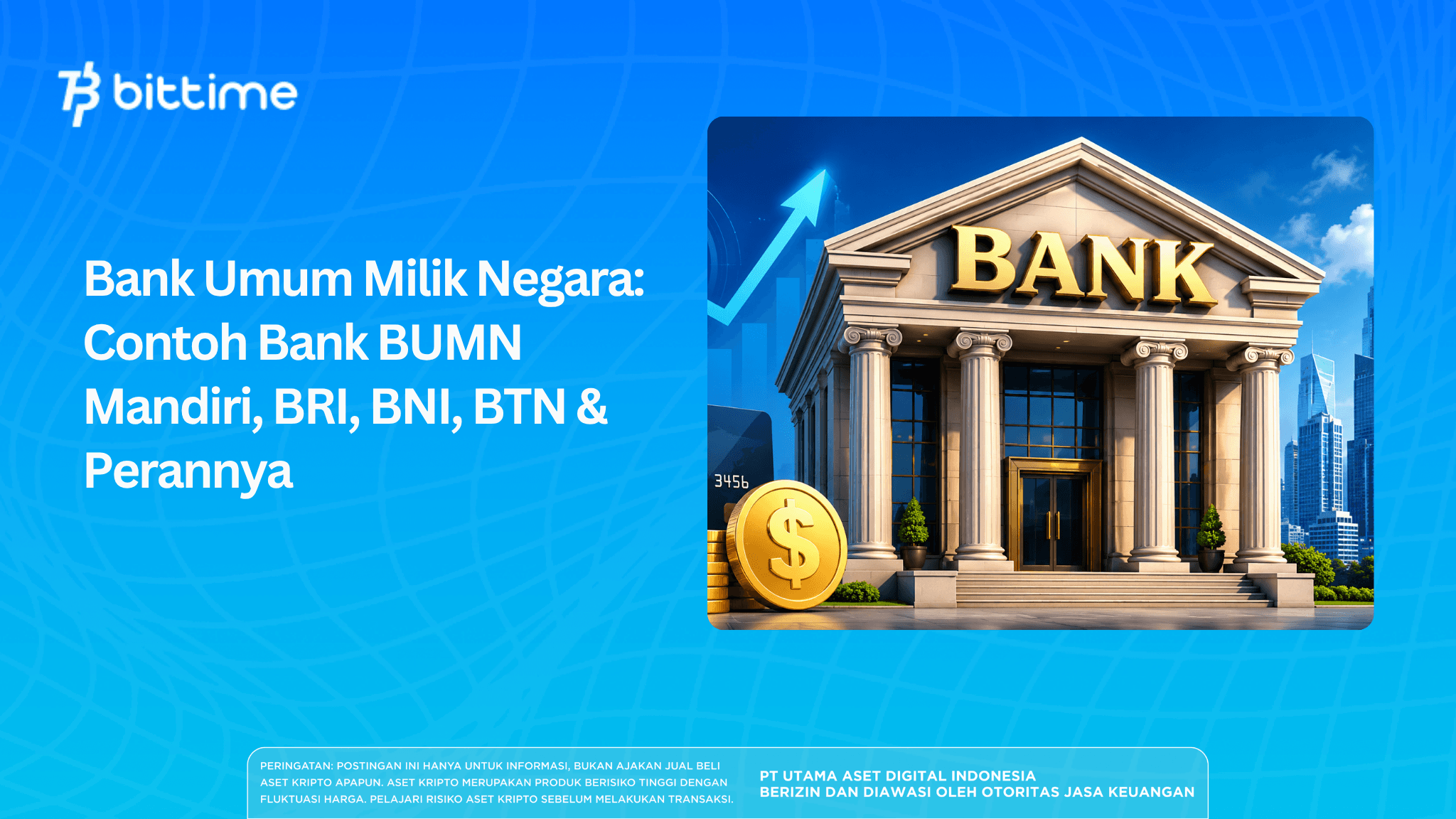
In Indonesia, the term “state-owned commercial bank” often comes up when discussing the stability of the national financial system.
Many people seek examples of state-owned banks, including Bank Mandiri, BRI, BNI, BTN, and Bank Negara Indonesia, and want to understand their role in maintaining the stability of Indonesia’s banking sector.
State-owned commercial banks are financial institutions in which the majority of shares are owned by the government, whether at the central or local level.
They are not merely ordinary banks, but rather important instruments of the government to drive economic growth, promote financial inclusion, and maintain public confidence in the banking system.
Key Takeaways
- State-owned commercial banks is a bank that is mostly or entirely owned by the government (central or regional state-owned enterprises) and functions as a channel for economic policy and maintains the stability of the financial system.
- Key examples/state-owned banks in Indonesia are Bank Mandiri, BRI, BNI, BTN, and Bank Syariah Indonesia (BSI), which is known as Himbara and has a wide network throughout the archipelago.
- The role of state-owned banks is very vital for the stability of Indonesian banking due to government support, credit distribution to priority sectors, and the ability to survive in times of crisis.
Register at Bittime now and start trading crypto with a fast, safe, and easy process in the app.
Definition and Characteristics of State-Owned Commercial Banks
According to the Banking Law, a bank is a business entity that collects funds from the public in the form of savings and distributes them back in the form of credit or other forms to improve the living standards of the people.
General banks are the type of bank with the most comprehensive services, ranging from savings, current accounts, deposits, to credit and international payment services.

State-owned commercial banks fall under the category of banks classified by ownership. Their capital is majority- or wholly-owned by the government. There are two main categories: banks owned by the central government (BUMN) and banks owned by local governments (BPD).
State-owned commercial banks have specific characteristics that distinguish them from private banks. They often serve as the vanguard in implementing government programs, such as the People’s Business Credit (KUR), subsidized Home Ownership Loans (KPR), and infrastructure financing.
Because of government support, these banks tend to be more stable and trusted by the public, especially in remote areas.
However, they are also required to remain competitive, efficient, and to implement good governance so as not to become a burden on the state.
Read also: Crypto Trading Strategies When Interest Rates Rise
Examples of State-Owned Banks in Indonesia (Himbara and BPD)
Here is a prime example: state-owned commercial banks the most well known:
Central Government-Owned Banks (Himbara):
- Mandiri Bank: Indonesia's largest bank by assets. It emerged from the merger of four state-owned banks in 1998. It focuses on corporate, retail, and digital banking services.
- BRI (Bank Rakyat Indonesia): Specializing in financing for MSMEs and micro-enterprises. We have the widest network, extending to remote villages.
- BNI (State Bank of Indonesia): Founded in 1946, focused on large corporations, international trade, and digital services.
- BTN (State Savings Bank): Expert in housing finance (KPR). Plays a major role in the government's million-home program.
- BSI (Bank Syariah Indonesia): The result of the merger of state-owned Islamic banks, is now a major player in national Islamic banking.
Regional Government-Owned Banks (BPD):
There are 27 regional banks (BPD) in Indonesia, including Bank DKI Jakarta, Bank Jabar Banten (BJB), Bank Jateng, Bank Jatim, and Bank BPD DIY. They support economic development in their respective provinces.
Read also: What is the CFX10 Index? The First Crypto Index in Indonesia
The Role of State-Owned Banks in the Indonesian Economy and Banking Stability
Role state-owned banks very strategic:
- Government Policy Distributer— To be a key partner in priority programs such as KUR, subsidized KPR, and MSME financing.
- Financial System Stability Guard— Thanks to government support, state-owned banks act as a buffer during economic turmoil. They help maintain public trust in the banking sector as a whole.
- Promoting Financial Inclusion— BRI, for example, is very active in serving lower-income communities and remote areas.
- Regional Economic Development— BPD plays a role in supporting MSMEs and development projects in their respective provinces.
- Indonesian Banking Stability— State-owned banks have a significant market share. The combination of assets and trustPublic funds make the national banking system more crisis-resistant.
Read also: How to Invest in Global Stocks with Small Capital Through Tokenized Stocks
Comparison with State-Owned Banks in Other Countries
To broaden the perspective, let's look at two examples of state-owned banks outside Indonesia:
- DBS Bank Singapore: Although not wholly state-owned, the Singaporean government, through Temasek, holds a significant stake. DBS is known for its efficiency, digital innovation, and is one of the strongest banks in Southeast Asia. Its model demonstrates that government ownership can coexist with high professionalism.
- Bank of North Dakota (United States): This is a unique example of a state-owned bank. Founded in 1919, it focuses on supporting the local economy, farmers, and small businesses. This public banking model is often used as a reference for countries seeking to strengthen the role of state-owned banks.
From this comparison, we can see that the success of state-owned banks depends heavily on governance, management professionalism, and a focus on public interest, not just politics.
Read also: Is it Safe to Exchange Rupiah to USDT Now? Consider the Benefits and Risks
Advantages and Challenges of State-Owned Commercial Banks
Superiority:
- High stability due to government support
- Extensive network and public trust
- Able to implement government socio-economic programs
- Acting as a stabilizer during a crisis
Challenge:
- Risk of inefficiency if management is less professional
- Potential for political intervention
- Pressure to compete with more agile private banks and fintechs
- The need for rapid digital transformation
Therefore, the government continues to encourage reform and digitalization in state-owned banks to remain relevant and competitive.
New to crypto investing? Bitcoin (BTC) and Ethereum (ETH) are among the most popular starter cryptocurrencies to explore and trade on Bittime.
Conclusion
State-owned commercial banks are a key pillar of Indonesia’s banking system. With leading examples such as Bank Mandiri, BRI, BNI, BTN, and BSI, these banks not only mobilize and channel funds but also serve as government instruments to maintain the stability of Indonesia’s banking sector and promote inclusive economic growth.
Despite facing competitive challenges and the need for efficiency, the strategic role of state-owned banks remains irreplaceable, particularly in reaching the broader public and supporting national priority programs.
If you want to gain a deeper understanding of the Indonesian banking sector or are considering banking products from state-owned banks, start by familiarizing yourself with each bank’s services based on your needs.
Always check the latest information on the banks’ official websites or the Financial Services Authority (OJK) because the banking industry is constantly evolving.

Let’s start trading crypto with the largest assets, such as BTC/IDR and ETH/IDR, right in the Bittime app.
Bittime is a licensed and regulated Digital Financial Asset Trader (PAKD) supervised by Indonesia’s Financial Services Authority (OJK) — where you can buy Bitcoin in Indonesia and hundreds of other crypto assets starting from just Rp10,000. The registration process is fast, secure, and you can get started today.
Track USDT to IDR conversions and monitor your favorite crypto assets in real time. Everything is available in one crypto investment app that you can download for free on the Play Store
Ready to start? Register now on Bittime and execute your investment strategy with a platform trusted by millions of users in Indonesia.
FAQ
What is a state-owned commercial bank?
State-owned commercial banks are banks whose shares are majority owned by the central government (BUMN) or regional governments. Their function is to collect public funds and distribute them in the form of credit and other banking services to support the national economy.
What are some examples of state-owned banks in Indonesia?
The main examples of state-owned banks (Himbara) are Bank Mandiri, BRI, BNI, BTN, and Bank Syariah Indonesia (BSI). There are also dozens of Regional Development Banks (BPD) owned by provincial governments.
What is the role of state-owned banks in the stability of Indonesian banking?
State-owned banks serve as a buffer for public trust, a channel for government programs, and a stabilizer during economic turmoil. Government support makes them more resilient to crises than some private banks.
Are state-owned banks safer than private banks?
In general, state-owned banks enjoy a high level of security due to government guarantees. However, security ultimately depends on the financial health of each bank and the oversight of the Financial Services Authority (OJK). All banks in Indonesia are guaranteed by the LPS (Lembaga Penjamin Nasional Indonesia) to a certain extent.
How do Indonesian state-owned banks compare with DBS or Bank of North Dakota?
Singapore's DBS demonstrates efficiency and digital innovation despite government involvement. The Bank of North Dakota is an example of a state-owned bank focused on supporting the local economy. Both models can provide lessons for the future development of state-owned banks in Indonesia.
Disclaimer: The views expressed belong exclusively to the author and do not reflect the views of this platform. This platform and its affiliates disclaim any responsibility for the accuracy or suitability of the information provided. It is for informational purposes only and not intended as financial or investment advice.

.png)