What Is Z500? Ansem's First Memecoin Index
2026-08-18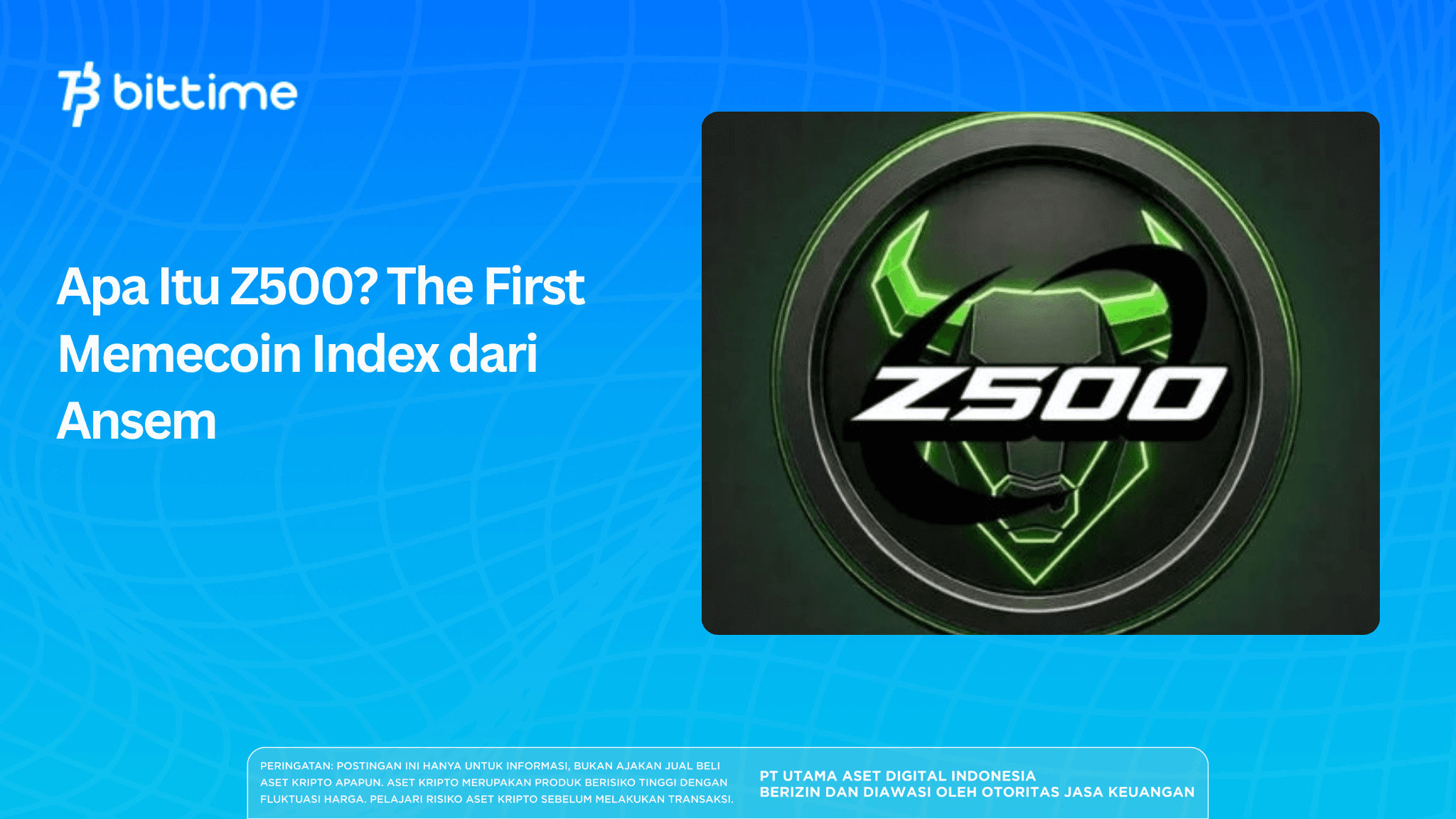
A token called Z500 surged over 6,000% in 24 hours, just hours after its trading pair appeared on PumpSwap.
Such a crazy surge is no coincidence. Z500 is part of a new experiment by well-known Solana trader Ansem, through a system he calls the first memecoin index in crypto—a model that claims to flip the way influencer-based token marketing works.
Instead of large traders (KOLs) selling their free allocations to the market and leaving holders at a loss, Z500 instead pushes new projects to send value first to $ANSEM token holders. Intriguing, but also full of risks. Here is the full explanation.
Key Takeaways
- Z500 is the first memecoin index launched by Ansem through the ansem.io platform on August 17, 2026.
- Projects climb the Z500 leaderboard by sending token airdrops to $ANSEM holders and burning $ANSEM.
- The Z500 token was flagged as a "community takeover" on DexScreener because its official link was originally a drainer link—a high-risk red flag to be aware of.
What Is Z500? Definition and Basic Concept of the Memecoin Index
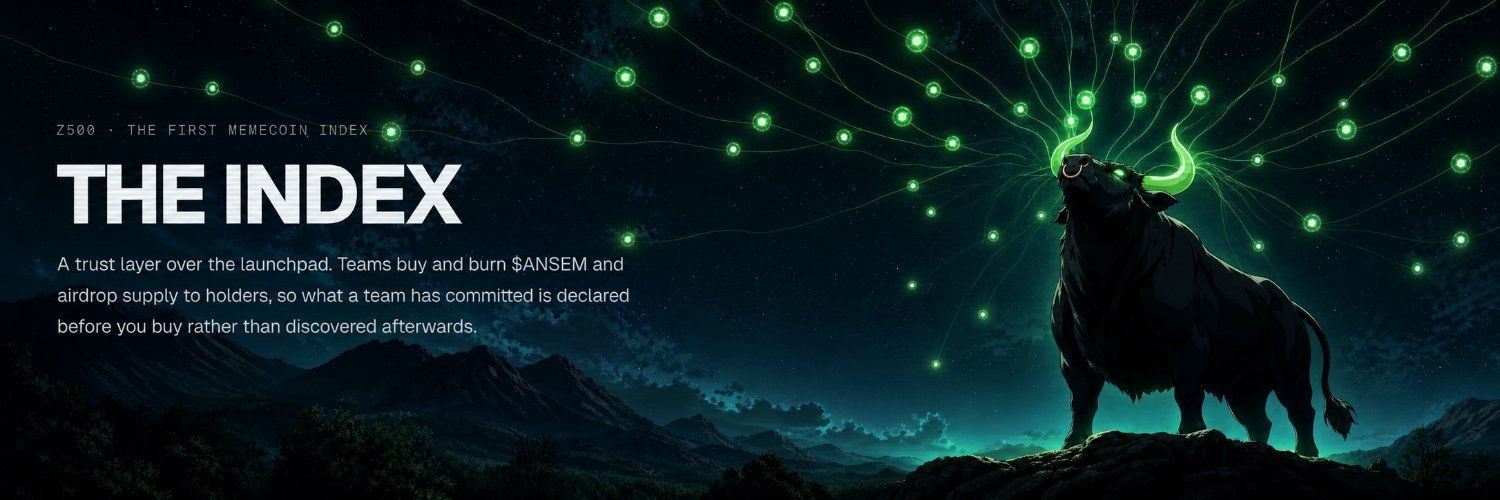
Z500 is an on-chain index—essentially a leaderboard—that hosts new token projects on Solana and ranks them based on contributions to the $ANSEM community.
This system was introduced alongside the launch of ansem.io, a new token launchpad owned by Ansem, on August 17, 2026. Bankless calls Z500 "the first memecoin index"—the first index that explicitly ties a crypto trader's reputation to a token curation system on pump.fun.
Ansem himself is no stranger to Crypto Twitter. The man, whose real name is Zion Thomas, has over 750,000 followers on X with the account @blknoiz06, known for his analysis and price signals around Solana and memecoins.
Also Read: What Is Ansemothy? Solana Meme Coin, Legit or Risky?
Interestingly, Ansem is not the creator of the $ANSEM token ("The Black Bull") that underpins this ecosystem—that token was created by an anonymous developer who sent an airdrop to his wallet to attract attention, and Ansem later promised to share a portion of creator fees with community traders.
The goal of Z500, according to Bankless, is to address the curation problem on pump.fun: many tokens are born every day, but few actually survive or grow. This model also reverses the typical KOL marketing pattern—where influencers take paid allocations and dump them to the market—by forcing projects to give value to holders first.
Want to try exploring crypto assets on an officially supervised platform? You can start understanding digital market dynamics early through Bittime, a crypto exchange platform operating under OJK supervision.
How Z500 Works: From Airdrop to Buy-and-Burn of $ANSEM
The mechanics of Z500 are actually quite simple when broken down step by step.
First, the project team launches their token on pump.fun via a dedicated launch wallet that is already funded for community airdrops and gas fees. Projects can pay a one-time fee to open an "enhanced" token page—complete with a banner, project story, roadmap, and periodic updates.
Second, to earn higher statuses like Gold or Diamond, the project must burn a certain amount of $ANSEM tokens. All these metrics are recorded on-chain and can be verified directly via Solscan, so anyone can check the validity of burn claims without taking them at face value.
Also Read: Popular Tokenized Stocks in 2026: Technology Stocks Become Investor Favorites
Third, specifically to climb the Z500 leaderboard, the project sends a portion of their new token supply as an airdrop to existing $ANSEM holders. Projects can then optionally buy and burn more $ANSEM to climb higher in the rankings.
Leaderboard position is determined by two factors: the size of the burn and the market capitalization value of the airdropped token. Top-ranked projects receive active promotion through Ansem's own channels.
This model essentially makes $ANSEM a kind of "reputation currency" within the pump.fun ecosystem—the more projects burn it, the greater the potential buy pressure on the token itself.
Z500 Token: Latest Market Data and Risks to Watch Out For
The token named Z500 itself (not just the index concept) is already being traded on the Z500/SOL pair via PumpSwap. According to DexScreener data, its price briefly touched around $0.001987 with a market cap of roughly $1.9–2 million and liquidity around $136,000.
Its volatility is extreme—24‑hour price change recorded a spike of over 6,000%, with thousands of traders actively transacting within just hours of the pair's creation. The token briefly held the #3 spot on the Z500 leaderboard, competing with other tokens like "The Black Bull" $ANSEM at #1.
Here is the crucial part: the DexScreener page for this Z500 token is marked with a "community takeover" status, with an explicit note that "there is no official page, the previously linked URL was a drainer link".
Also Read: 10 Free Bitcoin Mining Sites and Faucets 2026, Which Ones Are Legit?
This means that the original official link attached to this token's profile had previously pointed to a wallet drainer site—a scam that drains victims' crypto wallets—before being reclaimed by the community.
This fact is important to underline for two reasons. First, token naming that matches an official concept (the Z500 index) can be exploited by irresponsible parties to create fake tokens or insert malicious links.
Second, extreme volatility plus a history of drainer links is a classic combination indicating high risk—a hallmark of new memecoins in their early, untested launch phase.
Also Read: 10+ Best AI Coins 2026: This is the List of Artificial Intelligence Themed Crypto!
Conclusion
Z500 shows how the narrative of an influential trader can be directly translated into real market mechanisms—airdrops, burns, and leaderboards all verifiable on-chain. From a design perspective, this model does offer healthier incentives than the old KOL marketing pattern, because projects are forced to give value to holders before asking for attention.
But good incentives on paper do not automatically eliminate real‑world risks. The drainer link history of the Z500 token proves that even a big name like Ansem is not immune to scams that ride on his popularity.
For anyone interested in following the Z500 experiment, the most sensible step is to verify every link and contract through official block explorers, not just trust the big name behind it.
Check the prices of other Memecoins such as Dogecoin (DOGE), Shiba Inu (SHIB), Pepe (PEPE), and Bonk (BONK), and start trading on Bittime.
Bittime is a licensed Digital Financial Asset Trader (PAKD) platform supervised by the Financial Services Authority — where you can buy Bitcoin in Indonesia and hundreds of other crypto assets starting from Rp10,000. The registration process is fast, secure, and can be started today.
Monitor USDT to IDR conversion and the price movements of your favorite crypto assets in real-time. All available in one crypto investment app that can be downloaded for free on the Play Store.
Ready to start? Register now at Bittime and execute your investment strategy with a platform trusted by millions of users in Indonesia.
FAQ
What is Z500?
Z500 is the first memecoin index launched by Ansem through the ansem.io platform, functioning as a leaderboard that ranks token projects based on burn contributions and airdrops to $ANSEM holders.
Who created Z500?
The Z500 system and the ansem.io platform were launched by Solana trader Ansem (Zion Thomas) on August 17, 2026, although he is not the creator of the $ANSEM token itself.
Is the Z500 token safe to buy?
The Z500 token is considered high-risk due to extreme volatility and its "community takeover" history on DexScreener because the original link was a drainer link. Verify contracts and official links before transacting.
How does a project climb the Z500 leaderboard?
Projects send a portion of their new token supply as an airdrop to $ANSEM holders, then optionally buy and burn additional $ANSEM. Rankings are determined by the size of the burn and the market cap of the airdropped token.
Did Ansem create the $ANSEM token?
No. The $ANSEM token ("The Black Bull") was created by an anonymous developer who sent an airdrop to Ansem's wallet to attract attention, and Ansem later promised to share a portion of creator fees with the community traders.
Disclaimer: The views expressed belong exclusively to the author and do not reflect the views of this platform. This platform and its affiliates disclaim any responsibility for the accuracy or suitability of the information provided. It is for informational purposes only and not intended as financial or investment advice.
.png)