What Is the Trade Balance? The Impact of Surpluses and Deficits on the Economy
2026-07-02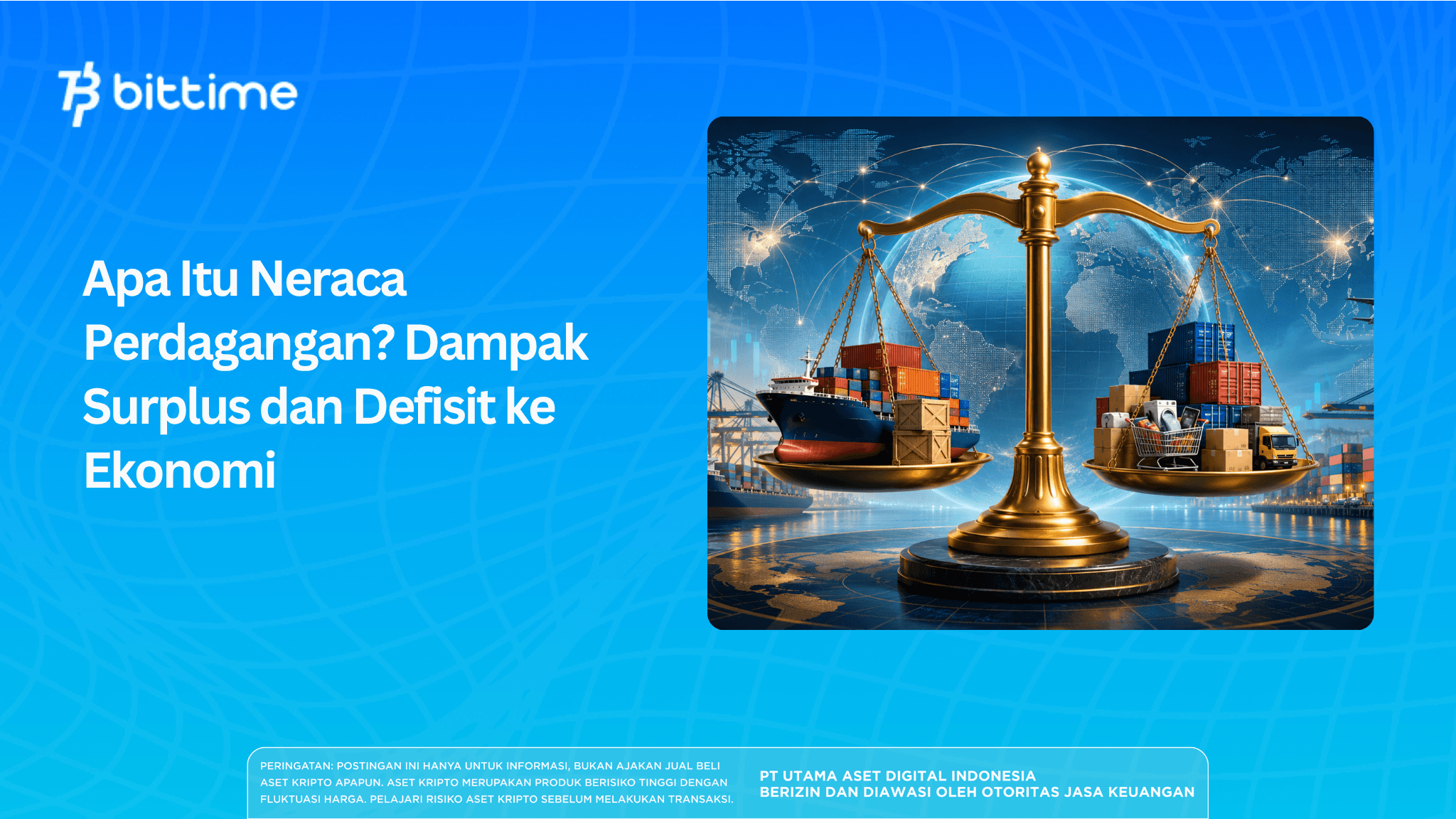
What is a trade balance? Simply put, the trade balance is the difference between the value of a country's exports and imports of goods during a given period.
If exports exceed imports, the country experiences a trade surplus. Conversely, if imports exceed exports, the country experiences a trade deficit.
Key Takeaways
- The trade balance shows the difference between the value of a country's exports and imports of goods.
- A trade surplus is usually positive for external resilience, but it does not necessarily mean a problem-free economy.
- A trade deficit could be a sign of economic pressure if it occurs due to high consumption imports and weakening exports.
Register at Bittime now and start trading crypto with a fast, safe, and easy process in the app.
Understanding the Balance of Trade
The definition of a trade balance is a record of the value of a country's exports and imports of goods during a specific period, usually monthly, quarterly, or annually. In economic reports, the trade balance is often referred to as trade balance.
The simple formula is:
Trade Balance = Value of Goods Exports - Value of Goods Imports
If the result is positive, it means the country is selling more goods abroad than it is buying. This condition is called a surplus. If the result is negative, it means the country is buying more goods abroad than it is selling. This condition is called a deficit.
Simple example:
- Indonesia's exports in one month: US$25 billion
- Indonesia's imports in one month: US$22 billion
- Trade balance: US$3 billion surplus
On the contrary:
- Exports: US$20 billion
- Imports: US$24 billion
- Trade balance: US$4 billion deficit
So, the trade balance isn't just a technical figure. This indicator can reveal export strength, import needs, industrial competitiveness, and even pressure on the exchange rate.
Read also: What Does MSCI's Emerging Market Status Mean for Indonesia and Stock Investors?
Function of Trade Balance in Economics
The trade balance serves several important functions. For governments, businesses, investors, and the general public, this data helps gauge the direction of the national economy.
The following are the most important functions of the trade balance.
1. Measuring Export and Import Performance
The trade balance helps determine whether a country's exports outweigh its imports. If exports increase, it indicates that domestic products are in demand in the global market.
Conversely, if imports grow faster than exports, the government needs to examine the causes. High imports can be positive if they are raw materials and capital goods for production. However, excessive imports of consumer goods can signal weak domestic production.
2. Reading the Competitiveness of National Industry
A trade surplus can indicate a country's competitiveness in the global market. For example, Indonesia frequently records surpluses in non-oil and gas commodities such as coal, palm oil, iron and steel, nickel, footwear, and certain manufactured products. Statistics Indonesia (BPS) noted that Indonesia's trade surplus in January–February 2026 was supported by a non-oil and gas surplus, while oil and gas commodities remained in deficit.
This means that simply looking at the total surplus isn't enough. We also need to consider which sectors are contributing to the surplus and which sectors are still in deficit.
3. Become an Indicator of External Resilience
Bank Indonesia views the trade surplus as a positive factor supporting the external resilience of the Indonesian economy. External resilience refers to the economy's ability to withstand external pressures, such as a weakening rupiah, rising global oil prices, or declining export demand.
A strong trade balance typically contributes to foreign exchange reserves and exchange rate stability. However, if the deficit widens, the market could see pressure on the currency.
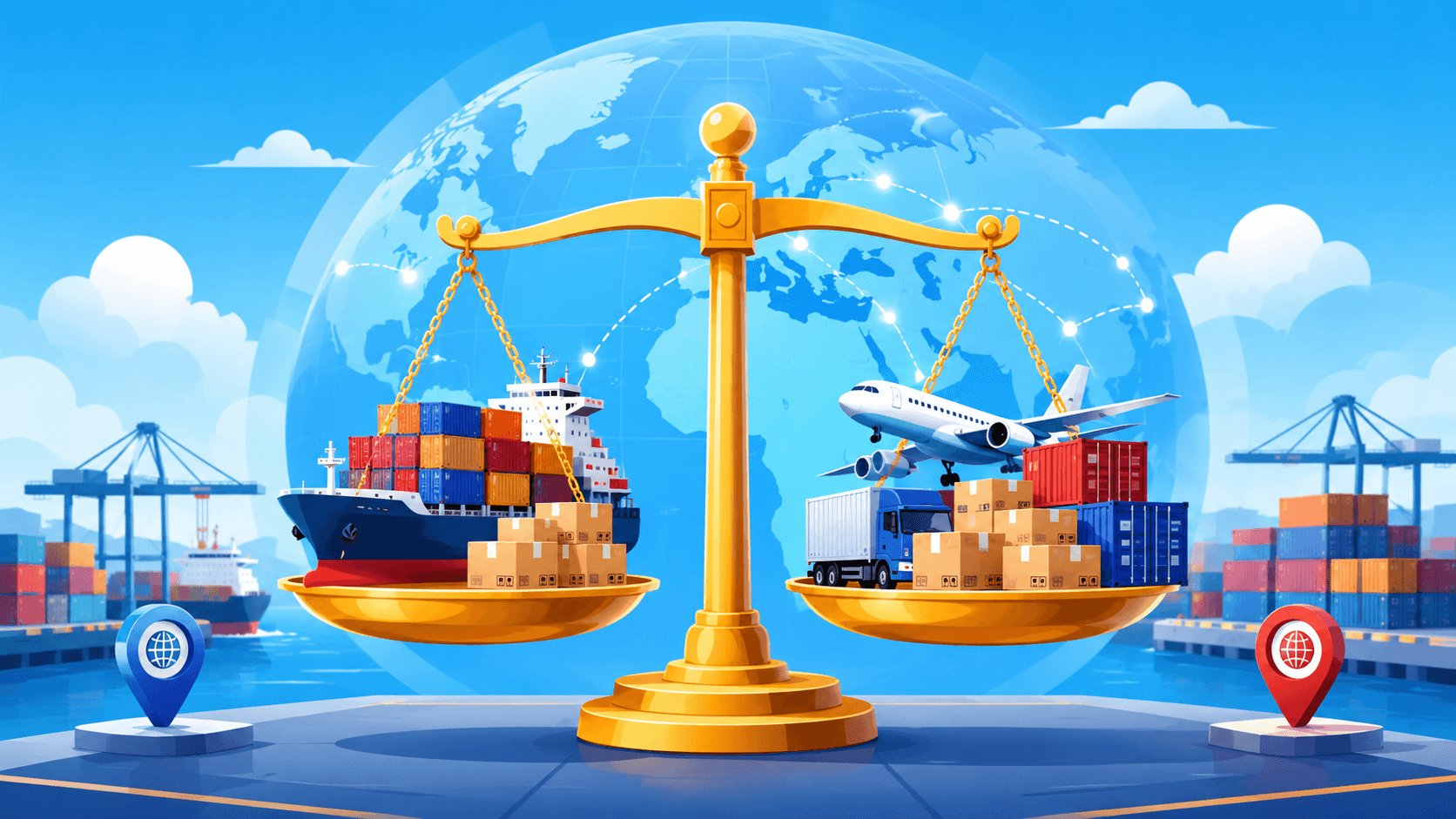
(Sumber: Generated-AI image)
4. Helping the Government Formulate Policies
Trade balance data is used to design export, import, industrial, energy, food, and fiscal policies. For example, if the oil and gas deficit continues to widen, the government can promote energy efficiency, import substitution, or domestic energy development.
If commodity exports weaken, the government can seek downstreaming strategies, market diversification, or expanding trade agreements.
5. Become a Signal for Investors
Investors pay close attention to the trade balance because this data influences sentiment toward a country's economy. A strong surplus can improve market perceptions of economic stability. Large and recurring deficits can raise concerns about the exchange rate, imported inflation, and the need for external financing.
Read also: What is the MSCI Emerging Market Index and why is Indonesia's status a focus for investors?
Trade Surplus: What Does It Mean?
A trade surplus occurs when the value of exports exceeds the value of imports. Generally, a surplus is considered positive because the country earns more foreign exchange from selling goods abroad.
However, surpluses need to be interpreted with caution. A healthy surplus typically occurs because exports are growing strongly, industry is competitive, and global demand for a country's products is increasing.
The positive impacts of a trade balance surplus include:
- Increase the country's foreign exchange
Exports generate foreign exchange earnings. This foreign exchange is essential for paying imports, repaying foreign debt, and maintaining economic stability. - Support the rupiah exchange rate
When exports are high, demand for the rupiah can be boosted as exporters exchange foreign exchange for domestic currency. - Driving industrial growth
Strong export demand can increase production, investment and employment. - Strengthening investor confidence
A surplus indicates that the country has good sources of external revenue. - Reducing current account pressure
The goods trade balance is an important part of the current account in the balance of payments.
However, surpluses aren't always perfect. If a surplus occurs because imports decline sharply due to weakening consumption and investment, it could signal a sluggish domestic economy.
Read also: What is the Function of the MSCI Country Classification Standard in Stock Portfolio Analysis?
Trade Deficit: Why Does It Happen?
A trade deficit occurs when the value of imports exceeds exports. This isn't always a bad thing, but it's important to understand the causes.
Deficits can occur due to several factors.
1. Energy Imports Increase
Countries dependent on oil or fuel imports are vulnerable to deficits when global energy prices rise. If oil and gas imports increase, the trade balance could be under pressure even if non-oil and gas exports remain strong.
Reuters reported that Indonesia recorded a trade deficit in May 2026, its first in six years, as exports fell and imports rose, including a surge in refined oil imports.
2. Commodity Exports Weaken
If global commodity prices fall, the export value of commodity-producing countries could also decline. For Indonesia, commodities such as coal, nickel, crude palm oil (CPO), iron, steel, and mineral products significantly impact export performance.
3. Imports of Raw Materials and Capital Goods Increase
A deficit isn't always negative if imports rise due to industrial expansion. Imports of machinery, raw materials, and capital goods can indicate growing production activity.
However, the benefits will only be felt if the imports result in higher output, exports, investment, or productivity.
4. Weakening Exchange Rate
When the rupiah weakens against the US dollar, import prices become more expensive. This can increase the value of imports in dollars or reduce production costs for companies that rely on imported raw materials.
5. Domestic Demand Is Too Dependent on Imported Products
If society and industry rely too heavily on imported goods, the deficit could widen. This could happen in electronics, machinery, chemicals, certain foods, or energy.
The Impact of Trade Balance Surpluses and Deficits on the Economy
The impact of trade surpluses and deficits isn't just felt by the government. The effects can extend to the exchange rate, prices of goods, industry, employment, and public purchasing power.
1. Impact on Exchange Rate
A trade surplus tends to help stabilize the currency because it generates foreign exchange earnings from exports.
Conversely, a trade deficit can put additional pressure on the rupiah if the need for foreign exchange to pay for imports increases.
However, the exchange rate is not solely influenced by the trade balance. Other factors such as interest rates, foreign capital flows, foreign exchange reserves, global risks, and central bank policies also play a role.
2. Impact on Inflation
The trade balance can be linked to inflation, particularly through imported goods. If imported energy, food, or raw materials become more expensive, domestic prices can also rise.
As an example of the macro context, Indonesia's annual inflation in June 2026 rose to 3.34% and exceeded the consensus estimate, with pressure coming from food, gasoline, transportation, and gold jewelry, among others.
Rising fuel prices or energy imports can impact transportation and distribution costs. If logistics costs rise, the prices of everyday goods could also rise.
3. Impact on Industry
An export surplus can stimulate industrial growth due to increased foreign demand. Companies can increase production, create jobs, and boost investment.
However, if the surplus relies too heavily on raw commodities, the economy can be vulnerable to global price fluctuations. Therefore, downstreaming and export diversification are crucial.
4. Impact on Employment
When exports increase, related sectors such as manufacturing, mining, plantations, logistics, and ports can absorb more workers.
Conversely, if exports fall sharply, companies may reduce production, delay investment, or even implement workforce efficiency measures.
5. Impact on People's Purchasing Power
The impact of the trade balance on purchasing power is usually indirect, but can be felt through the exchange rate and inflation. If the deficit weakens the rupiah and makes imports more expensive, the prices of goods dependent on imported raw materials could rise.
As a result, people pay more for certain goods. If incomes don't rise, purchasing power declines.
Read also: Investment Strategy When Gold Prices Drop: What Should You Do?
Examples of Balance of Trade in Everyday Life
To make it easier to understand, imagine a country like a household.
If a household sells Rp10 million worth of products and purchases Rp7 million worth of goods from abroad, it has a surplus of Rp3 million. The household earns more income than it spends on external goods.
However, if a household sells Rp7 million worth of products and buys Rp10 million worth of external goods, it will have a deficit of Rp3 million. This deficit must be covered by savings, loans, or other sources of income.
On a national scale, the concept is similar. The difference is that it only measures exports and imports of goods between countries.
Practical example:
- Indonesia exports coal, CPO, nickel, footwear, and textiles.
- Indonesia imports oil, machinery, electronics, wheat, chemicals and industrial components.
- If the export value is higher, the trade balance is in surplus.
- If the import value is higher, the trade balance is in deficit.
- Governments and central banks monitor this data to gauge the strength of the external economy.
Read also: What Is Free Float Stock? Here's the Definition, Function, and Impact on Investors
Difference between Balance of Trade and Balance of Payments
Many people confuse the balance of trade with the balance of payments, but they are distinctly different.
The trade balance only measures exports and imports of goods. The balance of payments, on the other hand, encompasses a broader range of transactions, such as trade in goods, trade in services, investment income, transfers, and capital flows.
Thus, a country may have a trade surplus, but its balance of payments remains under pressure if there is a large capital outflow or a deficit in services and primary income.
Bank Indonesia once noted that the current account can remain in deficit even though the goods trade balance is in surplus, because the services and primary income balances are in deficit.
How to Read Trade Balance Data Correctly
To avoid misunderstanding economic news, here's how to read the trade balance more intelligently.
1. Don't Just Look at Surplus or Deficit
A surplus isn't always good, and a deficit isn't always bad. Look at the underlying causes.
A surplus due to rising exports is healthier than a surplus due to falling imports due to a weakening economy. A deficit due to imports of machinery for investment can be more productive than a deficit due to excessive imports of consumer goods.
2. Separate oil and gas and non-oil and gas
Indonesia frequently experiences a non-oil and gas surplus but an oil and gas deficit. Statistics Indonesia (BPS) noted that in January–February 2026, the trade surplus was supported by non-oil and gas, while the oil and gas deficit remained.
This is important because the oil and gas deficit could worsen when global oil prices rise.
3. Pay attention to the main commodities
If the surplus relies on one or two commodities, the risks are greater. For example, when coal prices fall, exports could be affected.
A healthy economy typically has more diverse exports, including commodities, manufacturing, services, and value-added products.
4. Look at Trends, Not Just One Month
Monthly data can fluctuate due to seasonal factors, global prices, long holidays, or large shipments. To gauge the direction of the economy, look at trends over several months or a year.
5. Relate to Exchange Rates and Inflation
If the deficit widens in conjunction with a weakening rupiah and rising inflation, the economic pressure could be more severe. However, if the deficit arises from imports of capital goods for investment, the impact could be positive in the long run.
Read also: Top 10 Tokenized Stocks in July 2026: Ondo and xStocks
Is a Surplus Always Better than a Deficit?
The short answer: not always.
A surplus is often viewed positively because it indicates greater exports than imports. However, a surplus that is too large and sustained can also indicate weak domestic consumption or suboptimal investment growth.
Meanwhile, a deficit can be healthy if it arises from imports of capital goods to build factories, infrastructure, and production capacity. Problems arise if the deficit is financed by short-term debt, is persistent, and does not increase productivity.
So, the quality of the surplus or deficit is more important than the numbers alone.
New to crypto investing? Bitcoin (BTC) and Ethereum (ETH) are among the most popular starter cryptocurrencies to explore and trade on Bittime.
Conclusion
What is a trade balance? The trade balance is the difference between the value of a country's exports and imports of goods. If exports exceed imports, a surplus occurs. If imports exceed exports, a deficit occurs.
The trade balance is crucial because it helps assess export-import performance, industrial competitiveness, exchange rate stability, external resilience, and potential inflationary pressures. Bank Indonesia also views a trade surplus as a positive factor in supporting the economy's external resilience.
However, surpluses and deficits must be read in context. A healthy surplus stems from strong exports and competitive industries. A productive deficit can arise from imports of capital goods for investment.
Of particular concern are deficits arising from weakening exports, increasing consumer imports, or a high dependence on imported energy.
By understanding the trade balance, people can more easily read economic news, understand the movement of the rupiah, and see how international trade affects the prices of everyday goods.

Start diversifying your portfolio today. Bittime also offers digital gold assets like XAUT and PAXG for hassle-free gold investing!
Bittime is a licensed and regulated Digital Financial Asset Trader (PAKD) supervised by Indonesia’s Financial Services Authority (OJK) — where you can buy Bitcoin in Indonesia and hundreds of other crypto assets starting from just Rp10,000. The registration process is fast, secure, and you can get started today.
Track USDT to IDR conversions and monitor your favorite crypto assets in real time. Everything is available in one crypto investment app that you can download for free on the Play Store
Ready to start? Register now on Bittime and execute your investment strategy with a platform trusted by millions of users in Indonesia.
FAQ
What is the balance of trade?
The trade balance is the difference between a country's exports and imports of goods during a given period. If exports exceed imports, a surplus occurs; if imports exceed exports, a deficit occurs.
What is the trade balance formula?
The trade balance formula is the value of exports minus the value of imports. A positive result is called a surplus, while a negative result is called a deficit.
What is an example of a trade balance?
If Indonesia exports US$25 billion worth of goods and imports US$22 billion in a month, it will have a US$3 billion surplus. Conversely, if imports exceed exports, it will have a deficit.
What is the impact of a trade surplus?
A surplus can increase foreign exchange reserves, support rupiah stability, strengthen investor confidence, and contribute to external resilience. However, the underlying cause of a surplus still needs to be examined.
What is the impact of a trade deficit?
A deficit can depress the exchange rate, increase the need for foreign exchange, and trigger imported inflation if it persists. However, a deficit can be productive if it is caused by imports of capital goods for investment.
Disclaimer: The views expressed belong exclusively to the author and do not reflect the views of this platform. This platform and its affiliates disclaim any responsibility for the accuracy or suitability of the information provided. It is for informational purposes only and not intended as financial or investment advice.

.png)


