What Is Marlin Crypto (POND)? Token Utility, Layer-0 Technology, and Web3 Use Cases
2026-06-03
As blockchain adoption grows, network performance remains one of the biggest challenges for DeFi and Web3 applications. While many crypto projects focus on building faster blockchains or scaling layers, Marlin (POND) takes a different approach by improving the communication layer underneath blockchain networks.
For investors and crypto users trying to understand what is Marlin POND, the project stands out because it focuses on infrastructure rather than consumer-facing applications.
Marlin aims to make decentralized networks faster, more efficient, and better suited for high-performance Web3 ecosystems.
Key Takeaways
- Marlin is a layer-0 protocol designed to optimize blockchain networking and data propagation.
- The POND token powers staking, governance, validator incentives, and ecosystem security.
- Marlin’s Oyster platform expands its role into confidential computing and AI infrastructure.
Register on Bittime now and start trading crypto with a fast, secure, and easy process on the app.
What Is Marlin (POND)?
Marlin is an open decentralized network protocol focused on improving blockchain communication and performance. Instead of competing directly with Ethereum or Solana, Marlin works underneath blockchain ecosystems as a networking infrastructure layer.
The project is often described as a Marlin network layer 0 solution because it optimizes how nodes exchange data across decentralized systems.
In simple terms, Marlin acts like a high-speed communication network for blockchains. It helps transactions, blocks, and validator data travel faster between nodes, reducing delays and improving efficiency.
According to the official Marlin documentation, the protocol enables developers to build programmable overlay networks optimized for decentralized applications, DeFi protocols, and Web3 services.
Some of Marlin’s primary use cases include:
- Low-latency block propagation
- Faster mempool synchronization
- Edge computing infrastructure
- Anonymous networking
- Confidential computing for AI and Web3
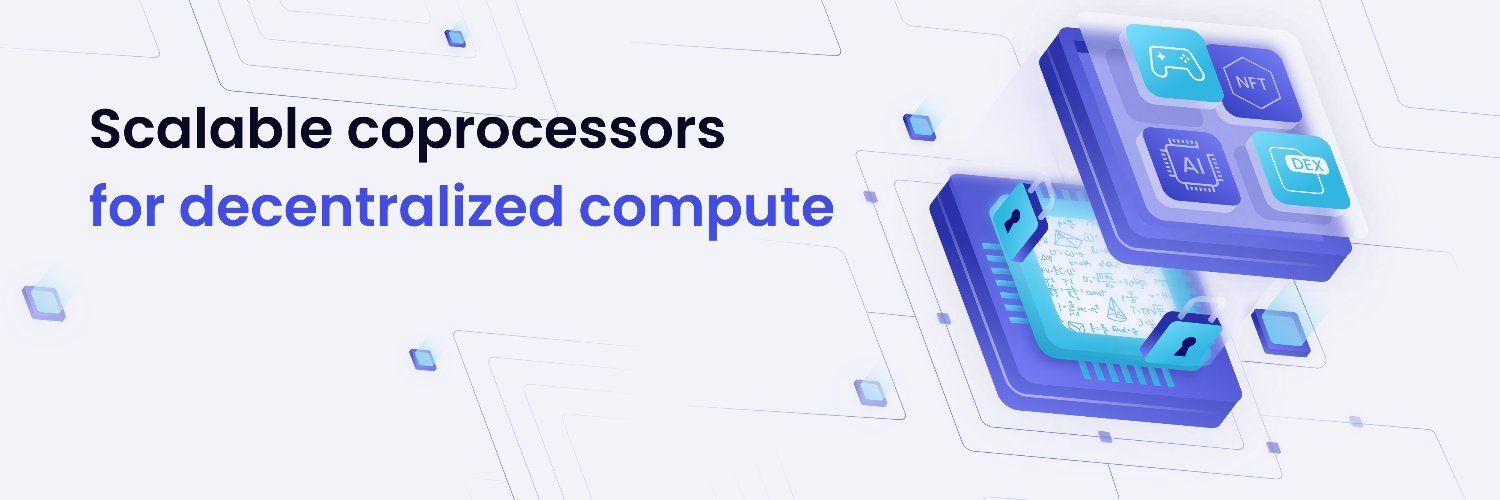
One of the project’s latest innovations is Oyster, a confidential computing platform powered by Trusted Execution Environments (TEE).
How Does Marlin Network Layer 0 Work?
Unlike traditional blockchain projects, Marlin focuses on networking infrastructure instead of consensus mechanisms or smart contract execution.
The protocol uses specialized relay nodes called Metanodes that optimize the routing and propagation of blockchain data.
These nodes help:
- Reduce network latency
- Improve block propagation speed
- Lower communication bottlenecks
- Enhance validator coordination
- Improve blockchain throughput
In conventional blockchain systems, inefficient data propagation can lead to:
- Slower transaction finality
- Temporary chain forks
- Higher MEV risks
- Reduced validator performance
Marlin attempts to solve these problems through optimized networking architecture.
The protocol also offers SDK tools that allow blockchain developers to integrate Marlin’s networking layer without changing their base-layer infrastructure.
Read Also: 5 Web3 Jobs in Indonesia with the Highest Salaries
POND Token Utility and Staking
The POND token is the primary utility asset within the Marlin ecosystem.
As an ERC-20 token, POND supports several network functions tied to governance, security, and infrastructure incentives.
1. Staking
Users can stake POND tokens to help secure the network and earn rewards.
2. Governance
Token holders participate in governance decisions involving ecosystem upgrades and protocol proposals.
3. Validator Participation
Validators and node operators use POND for delegation and network participation.
4. Ecosystem Incentives
POND rewards relayers, operators, and infrastructure contributors.
Marlin also introduced MPOND, a secondary governance-focused token designed for advanced validator coordination and voting rights.
You can also track the prices of popular DeFi tokens like Stellar (XLM) directly on Bittime!
Why Marlin Matters for DeFi and Web3
The crypto industry often focuses on transaction speed and scalability at the blockchain layer itself. However, network communication efficiency is equally important.
This is where Marlin positions itself as a Web3 scalability solution.
By improving how blockchain nodes communicate, Marlin aims to create:
As decentralized finance expands, protocols increasingly require infrastructure capable of handling real-time transactions and secure computation.
Marlin’s networking layer could help reduce congestion and improve responsiveness across DeFi ecosystems.
Read Also: What Is Open Loot (OL)? A Comprehensive Guide to the Web3 Gaming Platform
Oyster and Marlin’s AI Infrastructure Expansion
One of Marlin’s most discussed developments is Oyster.
Oyster is a decentralized confidential computing platform that uses Trusted Execution Environments (TEE) to process sensitive workloads securely.
This technology is becoming increasingly relevant in AI and Web3 because many applications require secure off-chain computation without exposing private data.
According to updates shared by the official Marlin X (Twitter) account, Oyster has already processed thousands of confidential computing jobs while supporting large-scale virtual CPU workloads.
This positions Marlin beyond traditional DeFi infrastructure and closer to the growing AI infrastructure narrative within crypto markets.
Recent POND Price Momentum and Market Attention
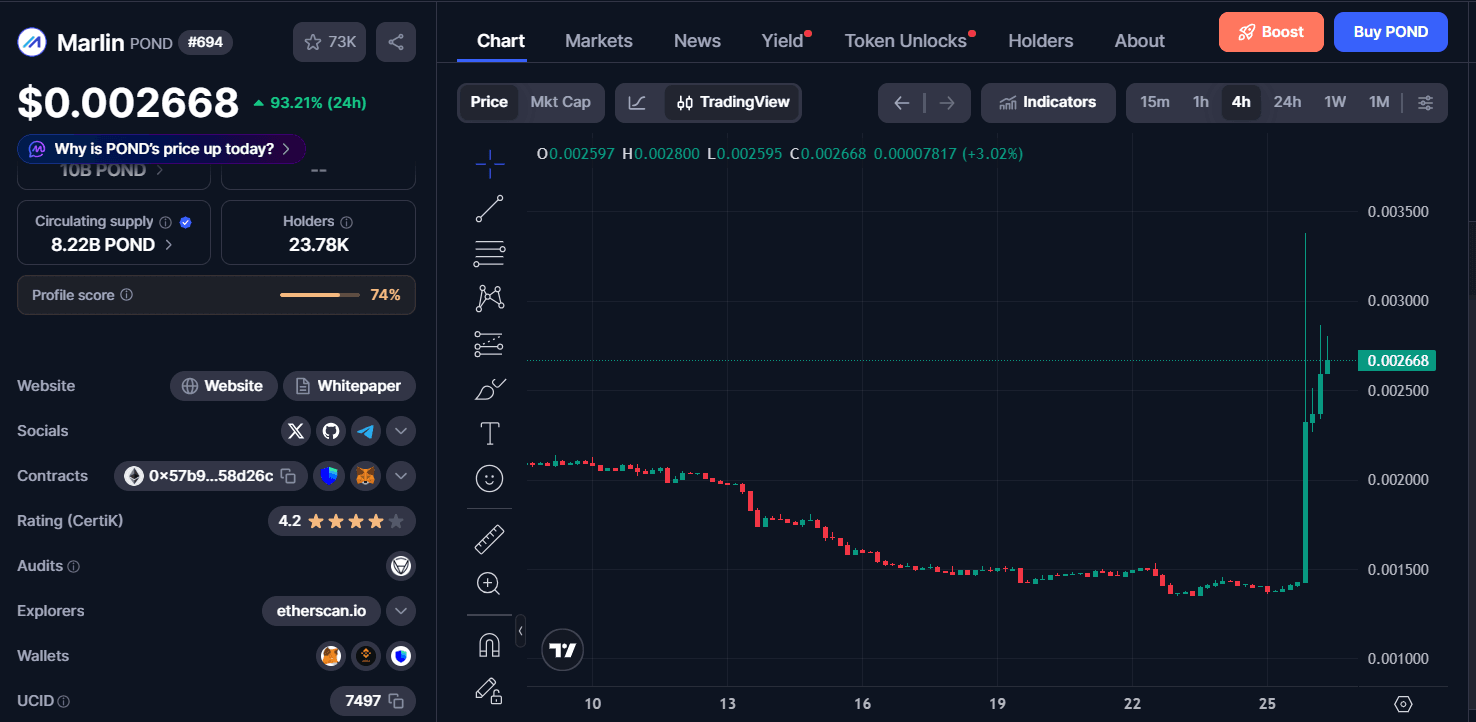
POND recently attracted attention after posting significant price gains within a short period.
Data from crypto market trackers showed:
- Strong increases in daily trading volume
- Rapid price appreciation
- Growing social media engagement
- Increased speculative trading activity
Several factors may have contributed to the rally:
- Rising interest in AI-related crypto projects
- Growing demand for Web3 infrastructure
- Increased visibility from confidential computing narratives
- Broader altcoin market momentum
However, like many mid-cap crypto assets, POND remains highly volatile and sensitive to market sentiment.
Read Also: 9 Best Web3 Wallets of 2026: Easy to Use and Features
Conclusion
Marlin (POND) is a blockchain infrastructure project designed to improve the speed and efficiency of decentralized networks. Through its Marlin network layer 0 architecture, the protocol focuses on solving communication bottlenecks that affect blockchain scalability and performance.
With the introduction of Oyster and confidential computing services, Marlin is also positioning itself within the growing AI infrastructure sector.
While the project offers promising technology and strong infrastructure use cases, investors should still evaluate market risks and adoption progress carefully before making investment decisions.

POND is a DeFi token. Let’s explore other DeFi tokens on Bittime, such as HYPE dan YB Token!
Bittime is a licensed and regulated Digital Financial Asset Trader (PAKD) supervised by Indonesia’s Financial Services Authority (OJK) — where you can buy Bitcoin in Indonesia and hundreds of other crypto assets starting from just Rp10,000. The registration process is fast, secure, and you can get started today.
Track USDT to IDR conversions and monitor your favorite crypto assets in real time. Everything is available in one crypto investment app that you can download for free on the Play Store
Ready to start? Register now on Bittime and execute your investment strategy with a platform trusted by millions of users in Indonesia.
FAQ
What is Marlin (POND)?
Marlin is a decentralized layer-0 protocol focused on improving blockchain networking performance and data propagation.
What is the POND token used for?
POND is used for staking, governance, validator participation, and ecosystem incentives.
Is Marlin an AI crypto project?
Marlin is expanding into AI infrastructure through its confidential computing platform called Oyster.
What is Oyster by Marlin?
Oyster is a decentralized confidential computing platform powered by Trusted Execution Environments (TEE).
Can users stake POND tokens?
Yes. POND supports staking for network security and reward generation.
What makes Marlin different from other blockchain projects?
Marlin focuses on networking infrastructure and blockchain communication efficiency instead of building a new layer-1 blockchain.
Disclaimer: The views expressed belong exclusively to the author and do not reflect the views of this platform. This platform and its affiliates disclaim any responsibility for the accuracy or suitability of the information provided. It is for informational purposes only and not intended as financial or investment advice.

.png)