What Are Sharia-Compliant Crypto Assets? Criteria and Developments
2026-10-23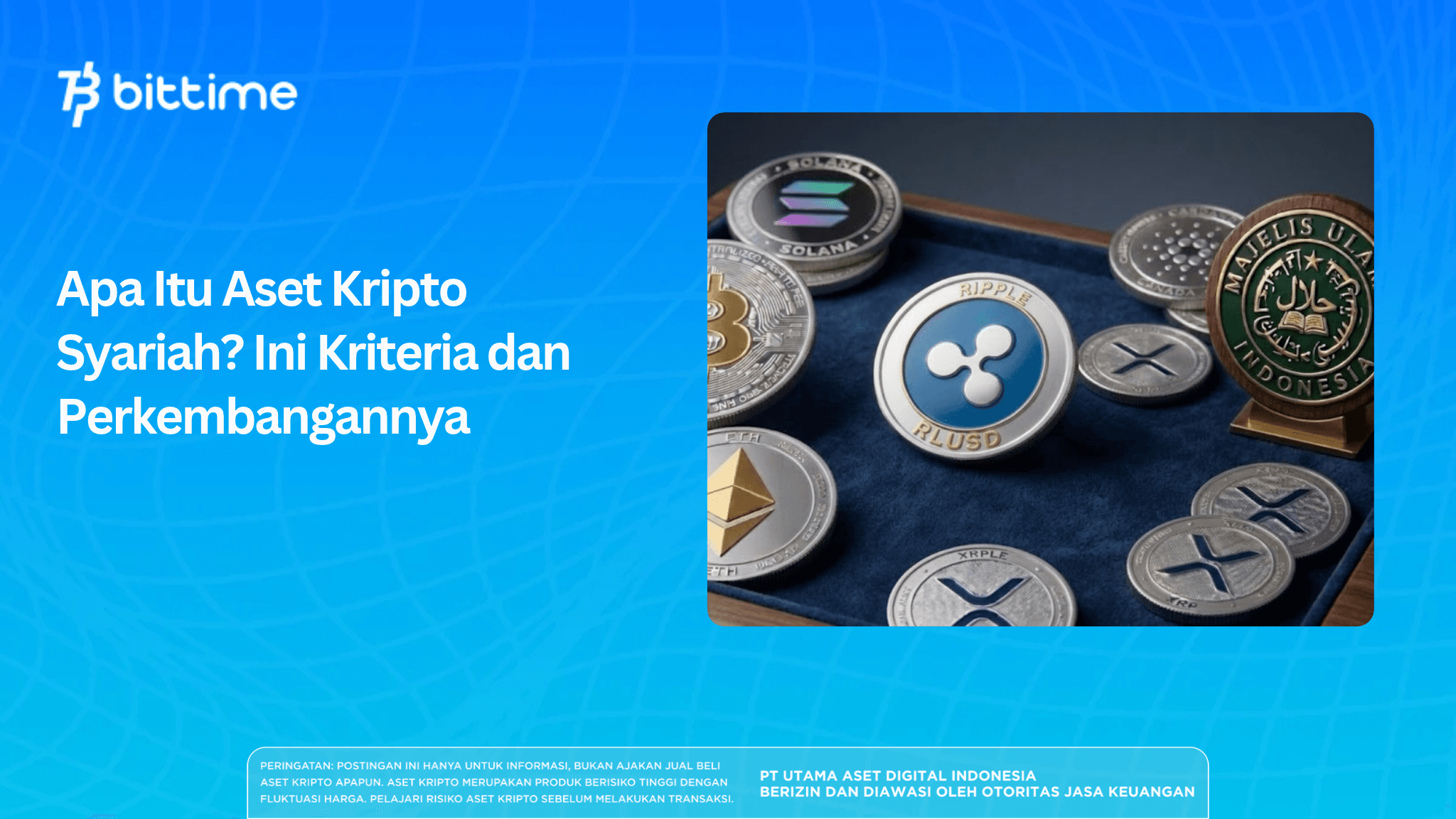
Since 2021, the question of whether crypto is halal or haram has been answered by MUI with a conditional decision. Five years later, the discussion of sharia crypto has entered a new phase.
On October 21, 2026, the National Sharia Council of MUI (DSN MUI) mentioned two categories of crypto assets that have the potential to be recognized as sharia-compliant. A DSN-MUI crypto fatwa specifically governing this has not yet been issued, but the direction is starting to become visible.
Key Takeaways
- Sharia crypto is not yet an official status. DSN MUI has only mentioned two candidate categories: Real World Asset (RWA) and tokenization of sharia financial instruments.
- The main criterion is a clear underlying asset, along with clarity of form and ownership.
- A detailed fatwa awaits an official request and infrastructure readiness from OJK.
What Are Sharia-Compliant Crypto Assets?
Sharia-compliant crypto assets are crypto assets that meet sharia principles, especially regarding clarity of the underlying asset, ownership, and transaction mechanisms. This term does not yet have official status. According to Coinvestasi, DSN MUI emphasized that this does not mean all crypto assets have been declared halal. The two categories mentioned are still candidates.
Deputy Treasurer of DSN MUI, M Gunawan Yasni, conveyed this on the sidelines of the XXII DSN MUI Ijtima Sanawi in Jakarta. According to MUI Digital, the assessment refers to the availability of an underlying asset as well as the clarity of its form and ownership in the real world.
For readers who want to get to know crypto assets first, users can register at Bittime, a licensed crypto asset trading platform supervised by OJK.
Crypto Law in Islam: The 2021 MUI Fatwa
The initial basis was the VII Ijtima Ulama of the MUI Fatwa Commission on November 11, 2021. Based on a report by detikFinance, the decision contained three dicta:
- The use of crypto as currency is haram, because it contains gharar (uncertainty) and dharar (harm), and conflicts with the rules on payment instruments in Indonesia.
- Crypto as a commodity or digital asset is not validly traded if it contains gharar, dharar, and qimar (speculation), and does not meet the requirements of sil'ah.
- Crypto as a commodity or asset that meets the requirements of sil'ah, has an underlying, and has clear benefits, is validly traded.
According to Kontan, the sil'ah requirement includes having physical form, having value, a known definite quantity, being ownable, and being deliverable to the buyer. This means that the ruling on whether crypto assets are halal or haram does not apply equally to all coins. A similar discussion for the largest coin is available in the review Bitcoin halal or haram.
Read Also: MUI Fatwa on Crypto: Halal or Haram? This Is the Explanation According to the Islamic Perspective
Sharia Crypto Criteria and Two Potential Categories
The DSN MUI version of sharia crypto criteria centers on real underlying assets with economic value. The two categories considered most possible:
- Real World Asset (RWA). Crypto assets backed by physical assets with economic value that are halal. Examples include gold and commercial buildings that are leased, as long as the business activities do not conflict with sharia.
- Tokenization of sharia financial instruments. Financial products that are already legally valid and sharia-compliant, such as sukuk, then represented in the form of digital tokens.
One example is the tokenization of Foreign Currency State Sukuk, which according to MUI Digital is being coordinated by OJK together with the Ministry of Finance through DJPPR.
Gunawan explained that Foreign Currency State Sukuk are usually denominated at very high amounts, reaching thousands to millions of US dollars per unit. With tokenization, the instrument can be split into small units so that it is affordable for the general public.
Nevertheless, sharia status still depends on the characteristics of the asset and its transaction mechanism. A token labeled RWA is not automatically halal.
Read Also: 9 Advantages of Profitable Digital Gold Investment in 2026 (XAUT & PAXG)
Sharia Crypto Regulation in Indonesia: Waiting for OJK
DSN MUI says the draft and internal study of the sharia crypto asset fatwa are ready to be discussed in a plenary session. The process is still waiting for two things, according to MUI Digital.
First, an official request from OJK. So far, requests have only come from industry players through the Indonesian Sharia Fintech Association (AFSI). Crypto supervision has shifted from Bappebti to OJK since early 2025 based on the P2SK Law, so OJK is considered the authorized party to submit.
Second, infrastructure readiness. DSN MUI wants sharia crypto trading to refer to Self-Regulatory Organization standards such as those of the Indonesia Stock Exchange, complete with custodian and clearing guarantee institutions.
Gunawan likened it to KSEI and KPEI in the capital market. According to him, once that infrastructure exists, DSN MUI only needs to detail the fatwa.
In other words, Indonesia's sharia crypto regulation is still in the preparation stage. No deadline has been announced.
Read Also: The Law of Crypto Trading in Islam, Halal or Haram?
What Prospective Muslim Investors Should Note
Before a specific fatwa exists, several things can be considered:
- There is no official "sharia crypto" label at present, so unilateral claims from any project need to be checked.
- Use registered and OJK-licensed platforms.
- Understand the type of asset and its underlying, not just follow trends.
- Avoid overly speculative practices. In a Bittime review, excessive speculation is said to potentially approach the element of maysir.
- Consult trusted scholars or institutions, because scholarly views still differ.
Conclusion
Sharia crypto investment in Indonesia is still in the preparation stage. The 2021 fatwa sets requirements in the form of an underlying and sil'ah, while DSN MUI now opens opportunities for RWA and sukuk tokenization. The detailed fatwa awaits OJK and trading infrastructure. Until then, halal-haram status depends on the type of asset and how it is transacted.
Check the price of Bitcoin (BTC), Ethereum (ETH), XRP, Solana (SOL), GRAM, and BNB as well as leading memecoin DOGE. You can trade directly on Bittime!
Bittime is a licensed Digital Financial Asset Trader (PAKD) platform supervised by the Financial Services Authority — where you can buy Bitcoin in Indonesia and hundreds of other crypto assets starting from IDR 10,000. The registration process is fast, secure, and can be started today.
Monitor the conversion USDT to IDR and the price movements of your favorite crypto assets in real time. Everything is available in one crypto investment app that you can download for free on the Play Store.
Ready to start? Register now on Bittime and execute your investment strategy with a platform trusted by millions of users in Indonesia.
FAQ
Are all crypto assets halal?
No. DSN MUI emphasized that the categories mentioned are only potentially eligible under sharia, and the rest need to be assessed one by one.
Is there already a specific fatwa on sharia crypto?
Not yet. What exists is the 2021 Ijtima Ulama decision and the plan for a detailed fatwa that is still awaiting the process.
What is RWA?
Real World Asset is a real-world asset, such as gold or rental property, that is represented as a token on a blockchain.
Why is DSN MUI waiting for OJK?
Because OJK has supervised crypto since 2025 and is building custodian and clearing infrastructure. DSN MUI is also waiting for an official request letter from OJK.
Can I invest in crypto now according to MUI?
According to the 2021 decision, crypto is validly traded if it meets the requirements of sil'ah, has an underlying, and has clear benefits. Because scholarly views differ, prospective investors should consult before deciding.
Disclaimer: this article is informative and is not a fatwa, legal advice, or investment advice.
Disclaimer: The views expressed belong exclusively to the author and do not reflect the views of this platform. This platform and its affiliates disclaim any responsibility for the accuracy or suitability of the information provided. It is for informational purposes only and not intended as financial or investment advice.

.png)