What is Leverage in Crypto? Here are the Types!
2025-04-05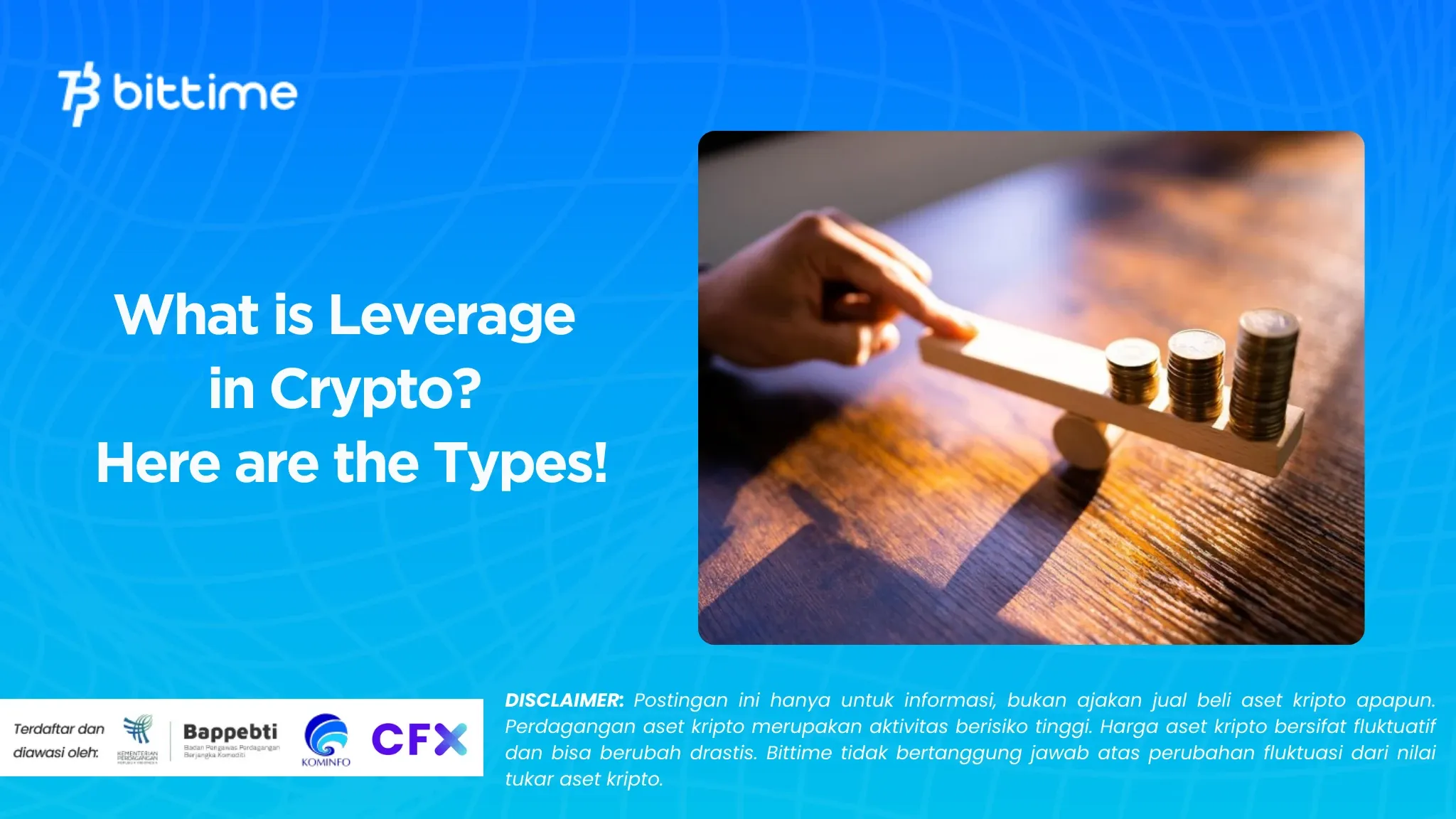
Bittime - Imagine being able to control crypto assets worth tens of millions with only limited capital. This is the main attraction of the deep leverage crypto world.
However, behind the potential for big profits, there are risks lurking. So, what is leverage in crypto and how does it work? Read this article to find out more!

What is Leverage in Crypto?
The term of leverage in crypto refers to the practice of borrowing funds to increase the profit potential of a position. In other words, traders can have exposure to digital assets greater than the capital they have.
Leverage allows users to go long (buy) or short (sell) an asset for an amount greater than the actual funds they own.
Leverage is often offered by centralized exchanges (CEX) in the form of margin trading, but leverage can be accessed through more flexible and innovative ways.
Also Read: What is Decentralization in Blockchain? Here’s the Meaning and Examples!
Types of Leverage in Crypto
If you already know what leverage is, then what are the types? There are at least six types of leverage in crypto. Let's discuss them one by one!
1. Leverage by Borrowing
One of the most common ways to gain leverage in the DeFi ecosystem is by borrowing assets through lending protocols like Aave.
To do this, users connect their wallet to the platform, deposit crypto assets as collateral, then borrow other assets from the available pool.
Typically, platforms like this set a high collateral ratio, for example 150%. This means that to borrow $100, users must deposit a minimum of $150 in other assets.
If the collateral value drops drastically, the loan will be liquidated automatically by a smart contract called a 'keeper'.
2. Leverage with Margin Trading
Slightly different from regular loans, margin trading focuses more on increasing the size of trading positions. Traders can borrow funds to increase their purchasing power or sell assets.
Some DeFi platforms such as dYdX offer up to 20x leverage. Here are the steps.
1. Have an initial crypto balance
2. Connect the wallet to the margin trading platform
3. Select leverage level (e.g. 5x)
4. Confirm transaction
5. Monitor positions regularly to avoid liquidation
Some platforms also provide risk management features such as stop-loss and take-profit to protect capital.
Also Read: What Does the Word Buy Mean in Investment?
3. Leverage with Perpetual Futures
Perpetual futures or futures contracts without expiration is a derivative instrument that allows traders to speculate without having to own the original asset. For example, with $5,000 margin and 5x leverage, a trader could control a position worth $25,000.
Interestingly, there is no expiration date. The contract price is adjusted automatically to the underlying asset through a funding rate mechanism. Popular platforms such as GMX are often used for this type of trading.
4. Leverage with Options
Options is another derivative instrument that gives the right (not the obligation) to buy or sell an asset at a certain price before a certain date. There are two main types, namely calls (for price increases) and puts (for price decreases).
Platforms like Derive (formerly Lyra) allow traders to buy options and sell them at any time before expiry. This provides high flexibility in strategy and maximizes profit potential with leverage.
Also Read: What is the World Trade Organization (WTO)? Here’s the History!
5. Leverage with Tiered Tokens
For those of you who want leverage without the hassle of thinking about loans or collateral ratios, leverage tokens could be an option.
Examples are BTC2X-FLI, ETH2X-FLI, or MATIC2X-FLI provided by Index Coop. This token already contains built-in leverage so you only need to buy it like buying a regular token.
Even though it is simple, the price of this token still experiences automatic rebalancing and the costs are included in the price of the token itself.
6. Leverage with Liquid Staking
In some liquid staking protocols such as Lido, you can stake assets and use the staked tokens as collateral to borrow other assets.
These borrowed funds can be used to open new positions, essentially creating leverage.
But keep in mind, this strategy involves a lot of interaction with smart contracts, and the risks are quite high, especially if the asset price suddenly drops.

Conclusion
You already know what is leverage in crypto. Leverage is a powerful tool for magnifying potential profits, but also magnifying risks.
In the world of crypto and DeFi, traders have a variety of options for using leverage ranging from regular loans, margin, to leveraged tokens and derivative options.
So, always make sure to understand how leverage works and the risks before trying it!
Also Read: Pi Coin Price: Will Pi Network Bounce or Rug Pull?
Leverage FAQs
What is Leverage in Crypto?
Leverage in crypto is the use of borrowed funds to increase exposure to crypto assets. This means that you can open a trading position larger than the capital you have.
Is Leverage in Crypto Safe?
Leverage can increase potential profits, but also increases the risk of loss. If the market moves in the opposite direction, your position can be liquidated and capital exhausted.
What is the Maximum Leverage that Can Be Used?
The maximum leverage that can be used will be depending on the platform that provides it. Some platforms offer leverage of up to 100x, but traders generally use 5x–20x to be safer.
How to Buy Crypto with Bittime

Want to trade sell buy Bitcoins and crypto investment easily? Bittime is here to help! As an Indonesian crypto exchange officially registered with Bappebti, Bittime ensures every transaction is safe and fast.
Start with registration and identity verification, then make a minimum deposit of IDR 10,000. After that, you can immediately buy your favorite digital assets!
Check the exchange rate BTC to IDR, ETH to IDR, SOL to IDR and other crypto assets to find out today's crypto market trends in real-time on Bittime.
Additionally, visit Bittime Blog to get various interesting updates and educational information about the world of crypto. Find trusted articles about Web3, blockchain technology, and digital asset investment tips designed to enrich your knowledge in the world of crypto.
Reference
Tasty Crypto, Leverage in Crypto Trading: 6 Key Examples, accessed April 5, 2025.
Author: IPR
Disclaimer: The views expressed belong exclusively to the author and do not reflect the views of this platform. This platform and its affiliates disclaim any responsibility for the accuracy or suitability of the information provided. It is for informational purposes only and not intended as financial or investment advice.

.png)