What is the Global Digital Water Reserve (GDWR) on Solana?
2026-07-15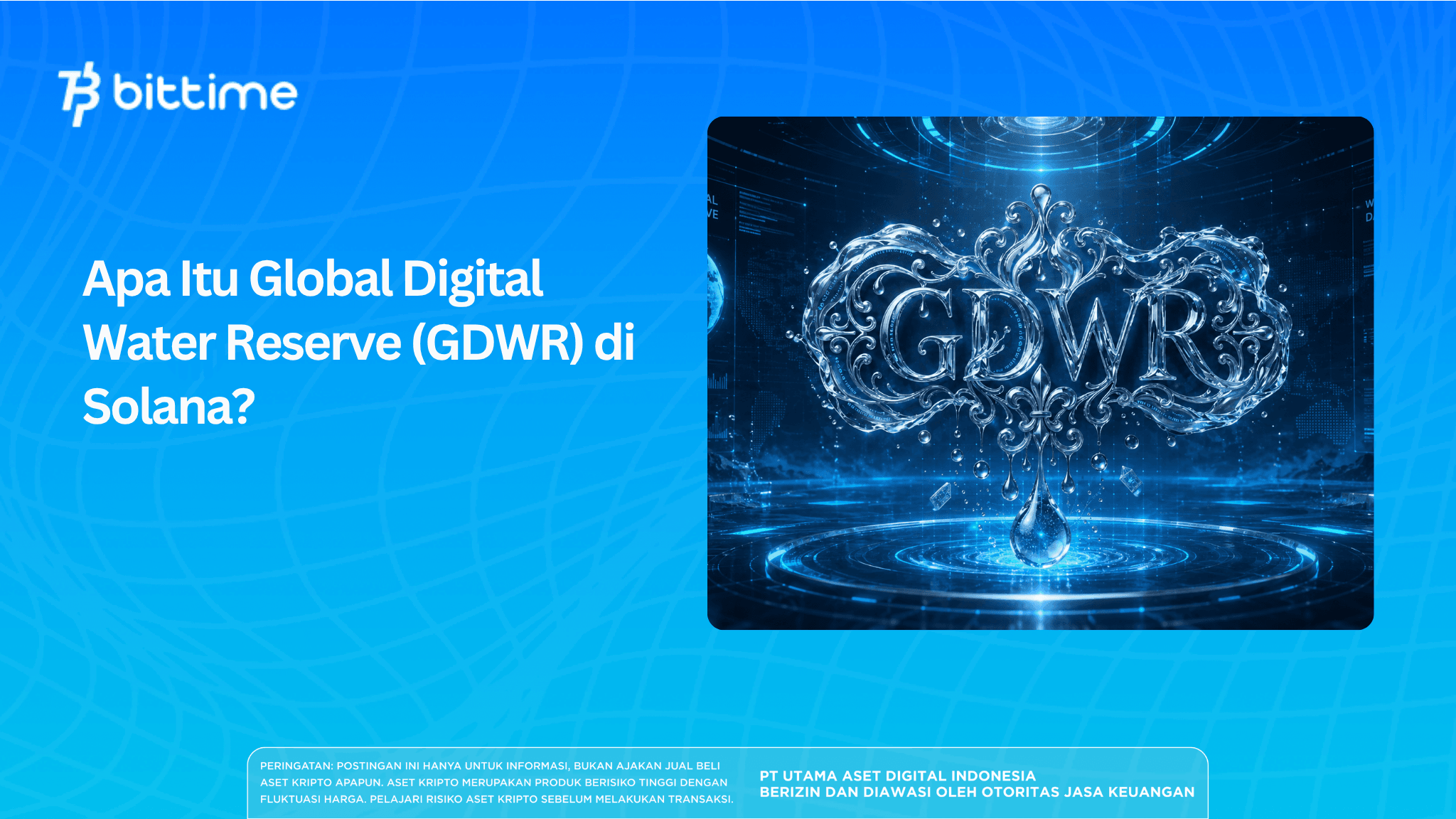
What is GDWR? The Global Digital Water Reserve, or GDWR, is a Solana-based token traded through the GDWR/SOL pair on PumpSwap.
While the name evokes the concept of a global water reserve, there hasn't been enough public evidence to conclude that the token is actually backed by water, water rights, or any real-world asset.
Key Takeaways
- GDWR is a Solana token that can be traded on DEXs, but it does not automatically represent ownership of water reserves.
- There are several tokens named GDWR with different contract addresses so contract address verification is very important.
- Limited liquidity, the pair's very young age, and minimal documentation make GDWR a high-risk speculative crypto asset.
What is GDWR?
GDWR crypto is a token that uses the name Global Digital Water Reserve and the symbol GDWR. The token has a contract address:
h5WxJzWxyApA1pbZDjt1h11eX3XJSTNLSWFpw2Vpump
The token is paired with SOL and traded on PumpSwap. As of July 15, 2026, Dexscreener showed a price of approximately US$0.0001217, liquidity of approximately US$25,000, a market capitalization of approximately US$121,000, and a 24-hour trading volume of approximately US$26,000.
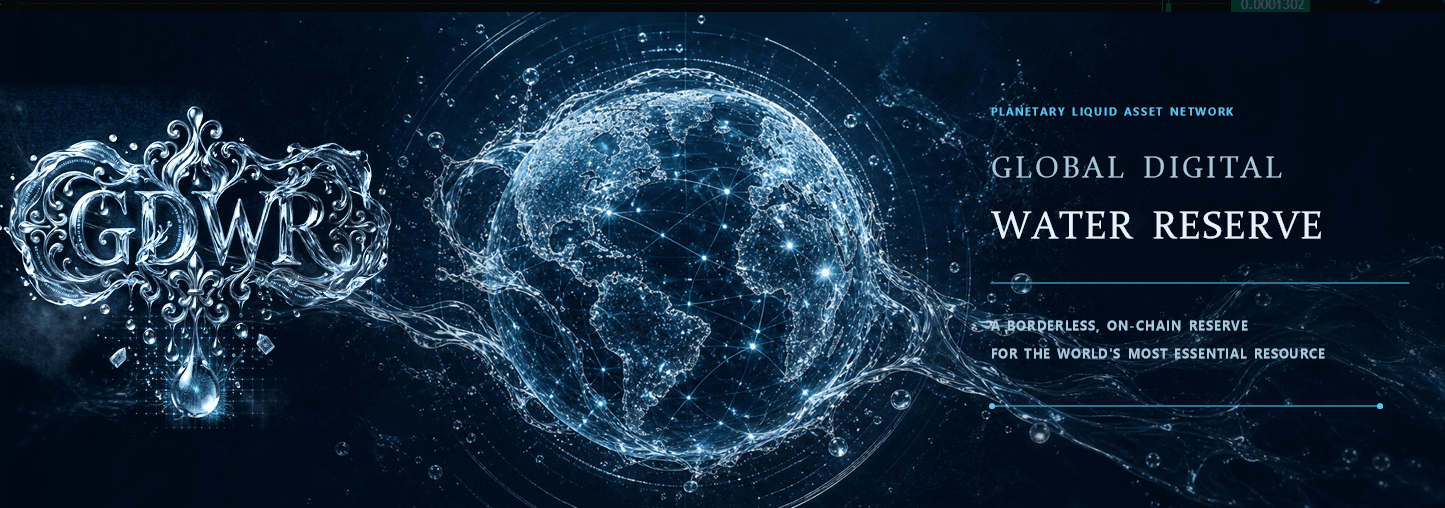
Source Dexscreener |Global Digital Water Reserve
The pair is only about a day old and had approximately 111 holders at the time of the snapshot. All of these numbers are subject to change in a short time.
The term Global Digital Water Reserve sounds like a real-world asset tokenization project or real-world asset however, the token name does not constitute evidence that the holder has rights to water, reservoirs, utility companies, infrastructure revenues, or water-backed financial instruments.
In the examined pair sources, no documents such as whitepapers, custodian agreements, reserve audits, legal opinions, business entity identities, or third-party reports proving the existence of water reserves as underlying assets have been seen.
The token profile on Dexscreener is also unclaimed and does not display an official website link that can be used to verify its business model.
Thus, GDWR is currently better understood as a speculative token that leverages water narratives and digital infrastructure, rather than as the tokenization of proven water reserves.
Read also: What Is VEIL? The Private DePIN Network on Robinhood Chain
Global Digital Water Reserve Isn't the Only Token Named GDWR
One of the most important findings of this audit was the presence of several Solana tokens using the name Global Digital Water Reserve and the symbol GDWR.
The contract that is the focus of this article ish5Wx…pump. However, Phantom displays another token called Global Digital Water Reserve with the address5pJve…GDWr, a total supply of 10 billion tokens, and a warning that the asset has not been verified. This contract differs from the contract in the given Dexscreener pair.
Several price tracker pages also display GDWR with varying addresses, supply, prices, and market capitalizations. This suggests that searching by name or symbol alone is insufficient to identify the correct token.
On the Solana blockchain, a token is uniquely identified by its mint address, not its name and symbol. Solana's documentation explains that a mint account is the account that uniquely defines and identifies a token.
Since names and tickers can be reused, users should always check the mint address before making a transaction.That said, don't just look for "GDWR" in your wallet or DEX. Match the entire contract address to the source in question.
Fancy buying some GDWR? Sign up to Bittime now, buy the underlying asset, then swap it with ease.
How Does the GDWR Token Work?
Technically, GDWR works as a digital token on the Solana network. The token on Solana is known as the SPL Token, a digital asset issued and managed through a token program on the Solana network blockchain Solana.
How GDWR works can be summarized in the following steps.
1. Tokens are created through Mint Account
Each Solana token has a mint account that stores basic information, such as the number of decimal places, total supply, mint authority, and the possibility of freezing authority. Mint authority can be used to create new token units if the authority has not been revoked. Freeze authority can freeze the token account if it is still active.
Before purchasing a GDWR, users should verify that the mint authority and freeze authority have been revoked. A "no issues" display on an automated check should not be treated as a substitute for a manual audit.
2. GDWR Traded against SOL
The pairing provided uses the GDWR/SOL pair on PumpSwap. Users exchange SOL for GDWR when buying, then exchange GDWR back for SOL when selling. The price is determined by liquidity pool conditions and trading activity, not by the official price set by a company.
At the time of the snapshot, the pool held approximately 105.86 million GDWR and 167.16 SOL. The combined liquidity value was around US$25,000. This amount of liquidity is still relatively limited, so large transactions have the potential to cause significant price impact.
3. Transactions are recorded on the Solana blockchain
GDWR purchases, sales, and transfers are recorded in Solana transactions. Each transaction incurs a fee in SOL, consisting of a base fee and, if used, a prioritization fee.
Solana's official documentation states the base fee is 5,000 lampors per signature, while the prioritization fee is optional and subject to change depending on the transaction settings.
In addition to network fees, DEX transactions can involve platform fees, slippage, and price impact. Therefore, the difference between the price displayed and the final value received can be greater than the Solana network fees.
Read also: What Is America Oil Reserve Agility? Learn About the Functions and Potential of This Token Base
Is GDWR Really Backed by Water Reserves?
There is not enough evidence to answer “yes”.
In order for a token to be considered a water-backed token, the project needs to provide at least the following proof:
- Identity of legal entity and operational jurisdiction.
- Ownership rights or contracts relating to water resources.
- Custody mechanism for assets used as reserves.
- Independent assessment of reserve value.
- Audit proposals periodically.
- Explanation of the legal rights of token holders.
- Conversion or redemption mechanism.
- Legal and environmental risks are explained transparently.
The GDWR sources examined have not provided such documentation. Therefore, the term "water reserve" should be read as part of a token name or narrative until verifiable evidence is available.
Tokenizing real-world assets doesn't just happen by creating a token and giving it a commodity-related name. There must be a clear legal relationship between the token, the issuer, the custodian, the underlying asset, and the rights of the token holder.
Read also: What Is Certified Hoodrat ($HOODRAT)? The New Memecoin on Robinhood Chain
Why Does GDWR Use Solana?
Solana is widely used for new token launches because transactions can be processed with relatively low network fees. Each transaction still pays a base fee, and users can add priority fees when they wish to increase processing priority.
GDWR is also traded on the PumpSwap ecosystem. Pump allows anyone to create coins and provides trading access from the start, but the platform also warns that the coin's price can fluctuate rapidly.
The ease of token creation makes Solana a vibrant environment for digital asset experimentation while increasing the number of speculative tokens that must be carefully vetted.
Using Solana provides ease of transactions, but it doesn't prove the project's credibility. The blockchain only records transactions and token ownership; it doesn't automatically verify the veracity of business claims, reserve holdings, or the identity of the token creator.
Start trading SOL/IDR with Bittime here!
GDWR On-Chain Data to Watch Out For
Dexscreener data at the time of the audit showed a 24-hour price increase of around 223%.
While this figure may attract traders' attention, large price movements in newly minted tokens don't always indicate healthy project growth.
The pair is only about a day old, has liquidity of around US$25,000, and recorded 550 trades from 131 traders in the 24-hour period shown.
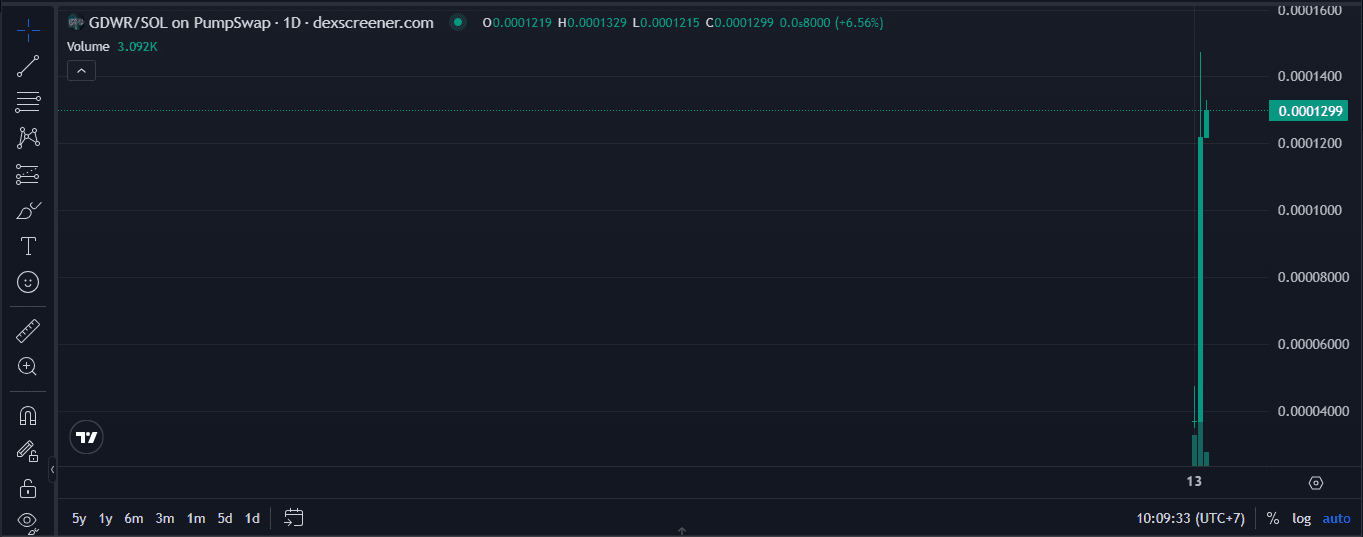
Source: Dexscreener | Global Digital Water Reserve
Dexscreener displays an automated audit result of "No issues," but also warns that the audit may not be 100% accurate.
Automated audits typically only detect specific technical parameters and don't prove the existence of backup assets, a credible team, a viable business, or a developer's long-term commitment.
Data that should be continuously monitored includes:
- Changes in liquidity value.
- The largest concentration of shareholder ownership.
- Creator wallet activity.
- Number of unique buyers and sellers.
- Comparison of volume to liquidity.
- Changes to mint authority and freeze authority.
- Large token transfers.
- History of adding or withdrawing liquidity.
A surge in volume doesn't always indicate organic demand. Activity can originate from short-term traders, bots, interconnected wallets, or repeat transactions.
Research into the Pump.fun token also found speculative dynamics and coordinated behavior in some launches, so transaction volumes need to be analyzed alongside wallet patterns and buyer distribution.
Read Also: What is the United States Water Reserve (USWR)? Clean Water Memecoin on Solana
GDWR Project Risks on Solana
Risk of No Evidence of Underlying Assets
The first risk is the gap between the token name and actual evidence. Without clear backup documentation and legal relationships, GDWR holders cannot assume that their tokens are exchangeable for water or represent ownership of a physical asset.
Low Liquidity Risk
Liquidity of around US$25,000 means large sales could depress the price. Liquidity values can also fluctuate rapidly if traders exit the market or token activity decreases.
Duplicate Token Risk
Some tokens use the GDWR name and ticker. Choosing the wrong contract address can result in users purchasing completely different tokens.
Risks of Very Young Project Age
The examined pair was only created about a day before the snapshot. This short history means that the project's longevity, developer consistency, and market stability cannot yet be adequately evaluated.
Volatility and Manipulation Risk
Small market capitalization and liquidity make prices more volatile due to transactions from multiple wallets. Hundreds of percent increases can be followed by sharp declines without warning.
Risk of Incomplete Information
The absence of a whitepaper, detailed roadmap, tokenomics documentation, team identity, and proof of reserves makes it difficult for investors to assess GDWR's long-term goals.
Read also: What Is NTFS? National Trust Fund System, Memecoin Trust Fund on Solana
Checklist Before Buying GDWR Tokens
Before making a transaction, please perform the following checks:
- Make sure the mint address selected is correct.
- Don't rely on the token's name, ticker, or logo.
- Check mint authority and freeze authority.
- Review the distribution of the largest holders.
- Look for connections between creator wallets and early buyers.
- Check the liquidity value and potential price impact.
- Make sure the token can be resold.
- Use small amounts for trial transactions.
- Do not use basic needs funds or emergency funds.
- Beware of fake sites, social media accounts, and tokens.
- Find whitepapers, audits, legal entities, and proof of support.
- Avoid decisions based solely on short-term price increases.
Read also: What is Stairway to Gold ($GOLD)
Is GDWR Worth Considering?
GDWR may be attractive to traders looking for a new token with a narrative about water, resource scarcity, and the need for digital infrastructure. However, narrative appeal doesn't equate to fundamentals.
Based on the information available, there is insufficient evidence that the GDWR contracts under discussion have:
- Verified water reserves.
- Legal rights to water assets.
- Redemption mechanism.
- Independent audit.
- Public team with a verifiable track record.
- Operational products other than traded tokens.
Therefore, GDWR is more appropriately placed in the very high-risk speculative token category. Users should evaluate tokens based on their contract addresses, on-chain data, liquidity, and project evidence, not on institutional-sounding names.
Conclusion
What is GDWR? The Global Digital Water Reserve is a Solana-based token traded via the GDWR/SOL pair on PumpSwap.
The token uses a narrative about water and digital reserves, but there is not yet sufficient public evidence to prove that GDWR is backed by water reserves or grants rights to a physical asset.
The main risks include the pair's very young age, limited liquidity, high volatility, minimal documentation, and the presence of several other tokens with the same name and symbol. The contract address should be the primary reference for verification.
Don’t miss out on the meme coin craze! Trade DOGE, SHIB, PEPE, WIF, and BONK easily through Bittime
Bittime is a licensed and regulated Digital Financial Asset Trader (PAKD) supervised by Indonesia’s Financial Services Authority (OJK) — where you can buy Bitcoin in Indonesia and hundreds of other crypto assets starting from just Rp10,000. The registration process is fast, secure, and you can get started today.
Track USDT to IDR conversions and monitor your favorite crypto assets in real time. Everything is available in one crypto investment app that you can download for free on the Play Store
Ready to start? Register now on Bittime and execute your investment strategy with a platform trusted by millions of users in Indonesia.
FAQ
What is GDWR crypto?
GDWR is a Solana token called the Global Digital Water Reserve. The contract discussed in this article ish5Wx…pumpand traded against SOL via PumpSwap.
Is GDWR supported by water reserves?
There is insufficient public evidence to prove the existence of water reserves, water management rights, reserve audits, or redemption mechanisms. Until such evidence is available, GDWR should be viewed as a speculative token.
Is there only one GDWR token on Solana?
No. The asset tracker displays several tokens named Global Digital Water Reserve with different contract addresses. Users are required to verify the mint address before purchasing.
Where are GDWR tokens traded?
The contract used in this article is traded using the GDWR/SOL pair on PumpSwap. Pair availability and liquidity are subject to change.
Are GDWR tokens safe to buy?
No crypto token is completely risk-free. GDWR carries additional risks due to the pair's young age, limited liquidity, minimal documentation, and the lack of verifiable evidence of water reserves.
Disclaimer: The views expressed belong exclusively to the author and do not reflect the views of this platform. This platform and its affiliates disclaim any responsibility for the accuracy or suitability of the information provided. It is for informational purposes only and not intended as financial or investment advice.
.png)