What Is Digital Oil ($OIL)? The A Memecoin Inspired by Peter Schiff's Comments and How to Buy It
2026-07-23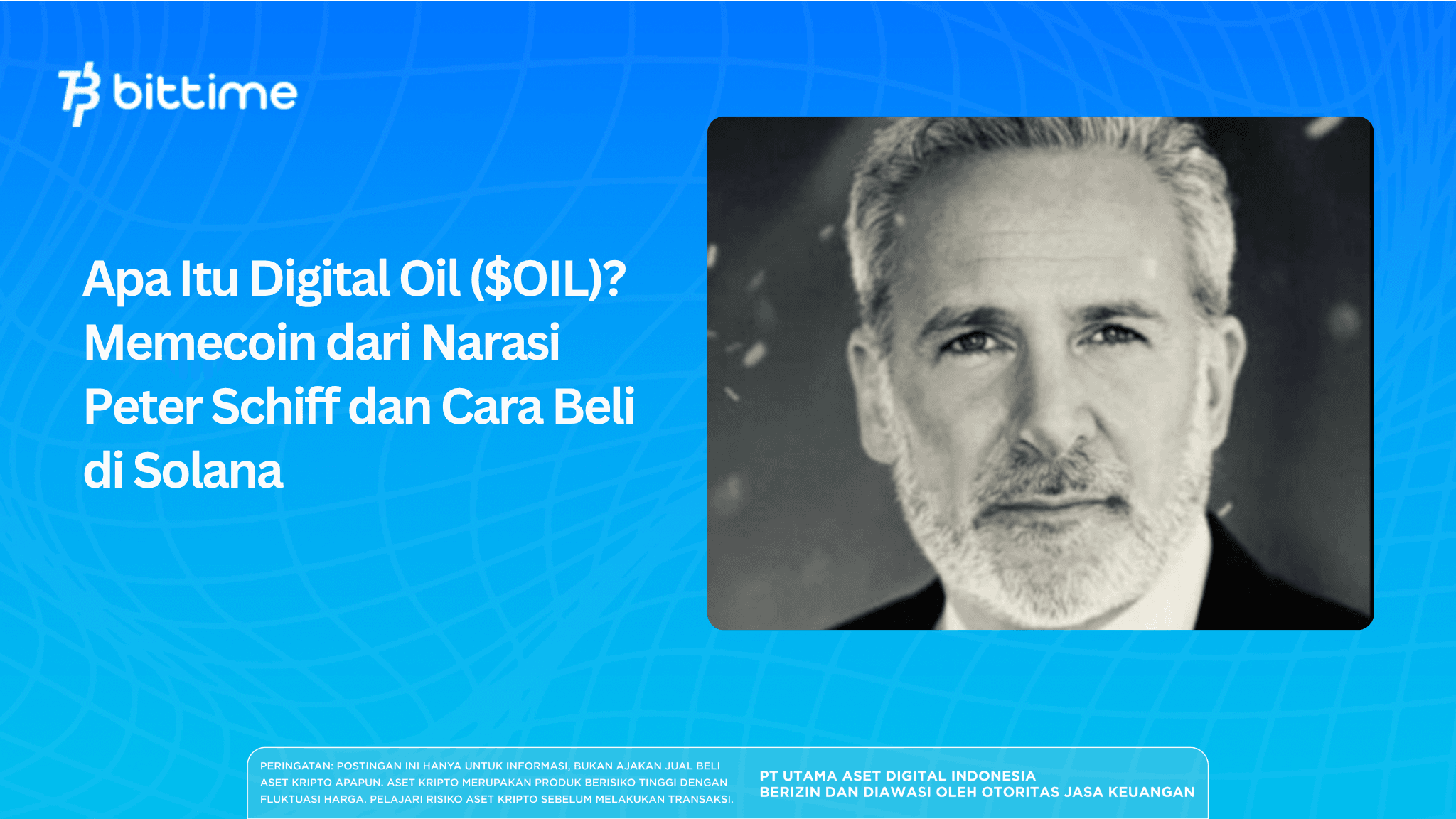
Digital Oil ($OIL) is memecoins on the Solana network born from an ironic comment about the creation of "digital oil." Despite its oil theme, this token is not known to hold physical oil reserves, rights to the commodity, or a mechanism that would allow its price to track crude oil.
Key Takeaways
- Digital Oil is a community memecoin on Solana, not an oil tokenization or commodity investment instrument.
- The $OIL narrative stems from Peter Schiff's response to the idea of creating digital oil, but does not prove that he launched or managed the project.
- Tokens can be purchased through the Solana DEX, but investors face risks of volatility, illiquidity, large holders, counterfeit tokens, and the loss of all capital.
What is Digital Oil ($OIL)?
Digital Oil is a Solana-based cryptocurrency token with the symbol OIL. The project openly describes itself as a memecoin and a social experiment that draws on themes of oil, internet culture, and irony surrounding criticism of cryptocurrency.
The Digital Oil mint address displayed on the project’s website and its primary trading pairs are:
5LS3ips7jWxfuVHzoMzKzp3cCwjH9zmrtYXmYBVGpump
This address is the token's primary identifier. The name "Digital Oil" and the symbol "OIL" can be used by many other tokens, so users should not purchase based on the name or logo alone.
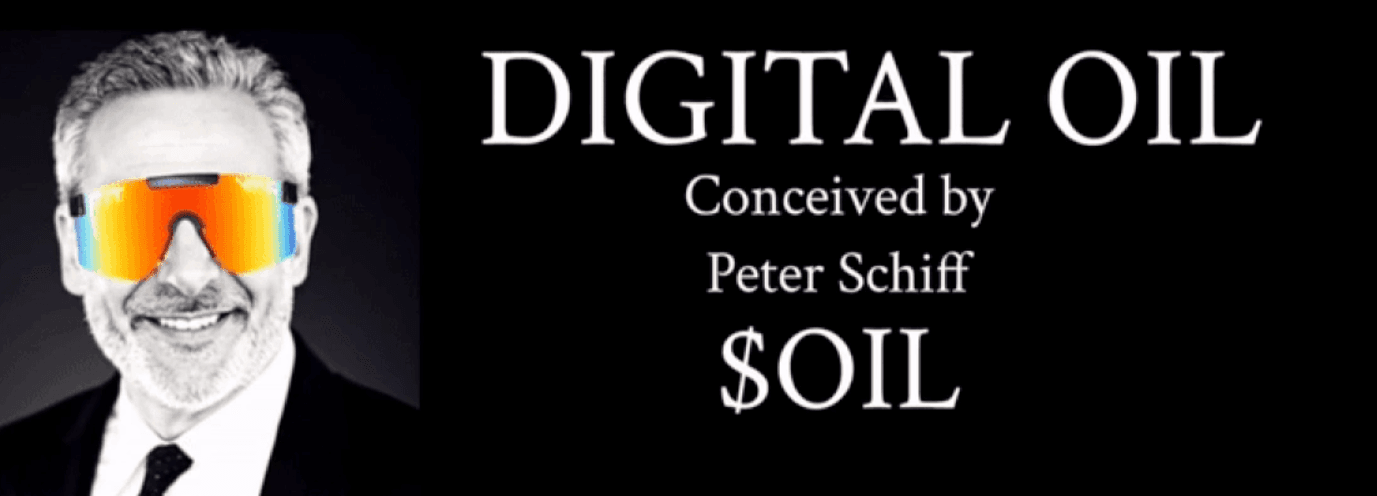
Digital Oil is not known to grant rights to:
- Physical crude oil.
- Oil futures contracts.
- Energy company revenue.
- Refinery or storage facility.
- Oil company shares.
- Production royalties.
- Dividend.
- Exchange tokens for oil barrels.
The project's website even explains that the token was created for entertainment and memes. Therefore, $OIL is more accurately categorized as a community-driven speculative asset than a real-world asset or commodity tokenization.
Read also:What Is Irys (IRYS)? Understanding the Token's Function, Technology, and How to Buy It on Bittime
Who is Peter Schiff and what is his connection to $OIL?
Peter Schiff is an economic commentator, investment advisor, and founder of a business focused on gold and precious metals. He is known for his support of tangible assets and frequently criticizes Bitcoin and other cryptocurrencies that are not backed by physical assets.
Schiff's connection to Digital Oil began with a social media conversation in January 2025. When a user suggested creating an oil memecoin, Schiff replied that the idea was great and that digital oil would be much easier to create than real oil.
The comment later became the basis for the Digital Oil community's story or "lore." The project frames Schiff's reply as the birth of the $OIL idea.
However, the context needs to be understood correctly. A short reply on social media doesn't automatically mean:
- Schiff issues tokens.
- Schiff buys $OIL.
- Schiff became a member of the team.
- Schiff received an allocation of tokens.
- Schiff promoted the project commercially.
- Schiff guarantees the price or security of the token.
- There is an official partnership contract.
There's no evidence that Peter Schiff manages Digital Oil or has any formal business relationship with the project. The term "endorsed by Peter Schiff" is more accurately understood as a community interpretation of humorous comments, not a verified investment endorsement.
Read also:RE Protocol Coin: Definition, Price, and How to Buy It on Bittime
How Does the Oil Price Narrative Give Birth to $OIL?
Memecoins typically develop by embracing current events, figures, jokes, or issues. Digital Oil uses oil prices and geopolitics as narrative sources.
When there are concerns about global oil supplies, traders may start talking about:
- Crude oil prices.
- Strategic shipping routes and straits.
- Conflict in oil producing countries.
- Production policy.
- Oil recommendations.
- Energy inflation.
- Oil company shares.
The $OIL community then linked this attention to their token. In June 2025, for example, the token reportedly surged approximately 400% amid concerns about disruptions to oil shipping routes in the Middle East. The token's movement was driven by speculation and social media momentum, not by $OIL's claim to the rising oil price.
This is the important difference between oil narrative And oil price exposure.
If the price of crude oil rises 10%, the price of $OIL doesn't necessarily rise 10%. The token doesn't have a peg, an oil price oracle, a redemption contract, or any mechanism that automatically ties its value to the commodity.
The price of $OIL is determined by:
- Buying and selling in the liquidity pool.
- Large liquidity.
- Community activities.
- Memecoin sentiment.
- Solana market conditions.
- Social media uploads.
- Big holder movement.
- Interest in geopolitical issues.
Read also:What Is Rain One (RAIN)? Understanding the Token's Function, Ecosystem, and How It Works
What is Memecoin?
Memecoin is a crypto asset whose market value is primarily derived from memes, communities, internet cultural identity, and speculation.
Some memecoins have developed large communities, gained listings, and developed additional products. However, many other tokens have lost attention and liquidity in a short time.
Common characteristics of memecoins include:
- Using popular characters or narratives.
- Have no cash flow.
- Does not grant business ownership rights.
- Influenced by social media.
- Prices are very volatile.
- Trading is concentrated on DEX.
- Depends on the community.
- Prone to FOMO and panic selling.
Digital Oil falls into this category because the site itself positions the token as a meme and does not claim ownership of the physical commodity.
Read also:What Is IF Coin? Is Robinhood Chain's Memecoin Legit or Not?
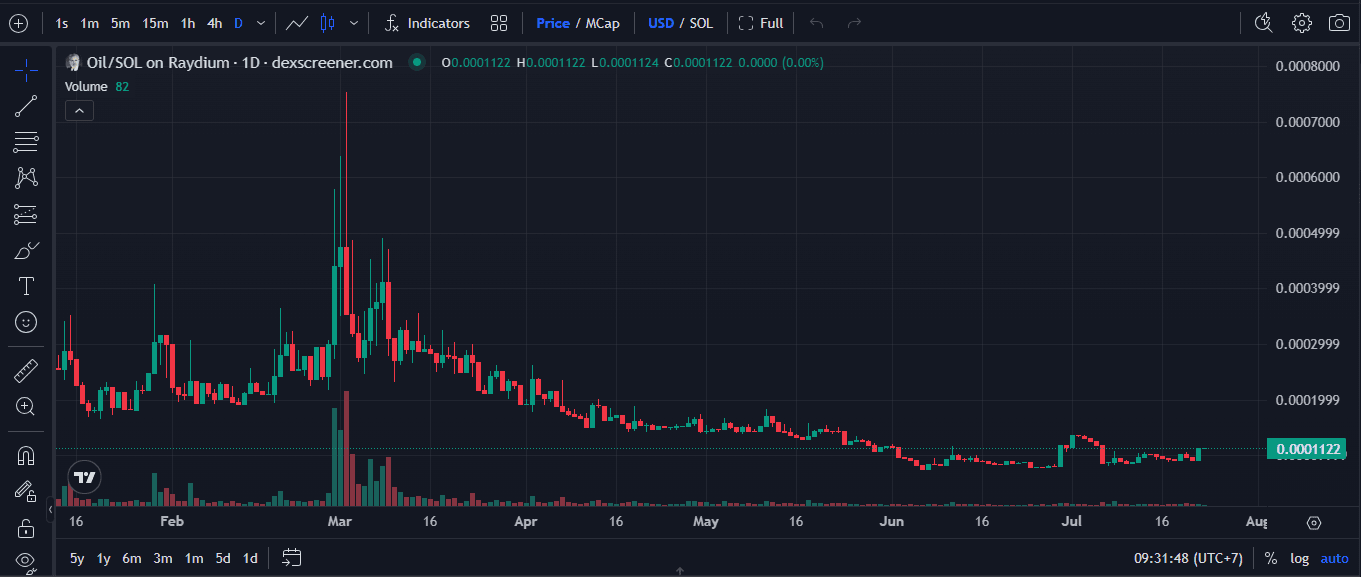
How is $OIL Price Performing Currently?
Memecoins typically gain traction by capitalizing on events, figures, jokes, or issues that are currently in the spotlight. Digital Oil uses oil prices and geopolitics as the basis for its narrative.
When concerns arise about the global oil supply, traders may start discussing:
- The OIL/SOL pair is about one year and three months old.
- The pool holds approximately 323 million OIL.
- The pool also holds around 543 SOL.
- The 24-hour trading volume is around US$3,300.
- There were around 53 transactions in 24 hours.
- The number of holders monitored was around 13,751.
- Prices were down about 1.9% in 24 hours when checked.
The token profile also shows that the community took over the project's identity in January 2025. Community takeovers typically occur when the community continues to promote and manage a token after the original developer is no longer active or the project has transferred social control.
Does $OIL Price Follow World Oil Prices?
There is no mechanism that requires the price of Digital Oil to follow world oil prices.
Digital Oil is not:
- Exchange-traded fund minyak.
- Oil futures contracts.
- Tokens backed by oil barrels.
- Energy company shares.
- Commodity-based stablecoins.
- Oil ownership certificate.
- Commodity derivative instruments.
Short-term correlations can emerge when oil news triggers community promotion of a token. However, these correlations stem from trader attention, not the asset's structure.
For example, tokens can surge during heightened geopolitical tensions, even though global oil prices only move slightly. This suggests that memecoin speculation can react more drastically than the underlying asset.
Investors looking to gain exposure to oil need to understand that buying $OIL is not the same as buying oil, energy stocks, or commodity investment instruments.
Read also:What Is Ansemothy? Is Solana's Meme Coin Legit or Risky?
Where is Digital Oil Traded?
Digital Oil's main pair is traded against SOL through a liquidity pool on Solana. The token was initially issued through the memecoin launchpad and then traded on the Raydium liquidity pool.
Raydium is a permissionless and non-custodial DEX protocol. Users can swap directly using their Solana wallet without opening an account on a centralized exchange. Due to its permissionless nature, the presence of a token in a pool does not necessarily indicate that the token has been fundamentally vetted or approved.
Users can also find swap routes through Solana wallets or aggregators. However, the pairs and prices displayed should still be checked, as other tokens may use the OIL name.
Read also:Pearl Coin (PRL): Mining Crypto While Running AI: Is It Really Possible?
How to Buy $OIL on Solana?
1. Prepare a Solana Wallet
Use a wallet that supports the Solana network. Create a new wallet and save the recovery phrase offline.
Never give a seed phrase to:
- Project site.
- Telegram Admin.
- Support account.
- Bot trading.
- Verification form.
- The person who sent the private message.
2. Fill Wallet with SOL
SOL is used as a payment asset and for network fees. Send SOL from platforms that support withdrawals through the Solana network.
Leave a small amount of SOL for transaction fees. Don't exchange your entire balance into $OIL.
3. Open DEX or Swap Wallet Feature
Access the Solana DEX through the official domain or use the swap feature on a trusted wallet.
DEXs operate on a non-custodial basis, meaning assets remain in the wallet until a user approves a transaction.
4. Enter Mint Address $OIL
Use the following address:
5LS3ips7jWxfuVHzoMzKzp3cCwjH9zmrtYXmYBVGpump
Check the first and last characters before proceeding. The mint address is the token's true identity, as the name and logo can be copied by anyone.
5. Determine the Purchase Amount
Enter the amount of SOL you wish to exchange. Check the estimated tokens you will receive.
Use a small amount first, especially if it is your first time transacting with the token.
6. Check Slippage and Price Impact
Slippage is the difference between the estimated price and the execution price.
Price impact indicates how much a transaction changes the price in a liquidity pool. The larger the transaction relative to the pool size, the higher the potential impact.
7. Simulate and Confirm Transaction
Read the transaction summary in your wallet. Ensure that the transaction only swaps the specified amount.
Reject the transaction if the simulation shows:
- Transfer the entire balance.
- Granting permission that is not understood.
- Foreign wallet destination.
- Incorrect balance changes.
- Suspicious program instructions.
8. Selling Ability Test
After purchasing a small amount, users can simulate a swap back to SOL.
The ability to sell small amounts does not guarantee that large orders can be executed at the same price, but this test can help detect underlying problems.
Read also:What Is Gno.land (GNOT)? A Go-Based Layer-1 Blockchain for Smart Contracts
Can $OIL be purchased on Bittime?
Asset availability may change based on each platform's evaluation process and policies. Users should check the app directly to determine if Digital Oil with the correct contract address is available.
To keep up to date with Solana memecoin developments, digital asset prices, and the latest market news, you can sign up at Bittime and monitor listing updates regularly. Don't buy another token just because it uses the same name or ticker as OIL.
What are the risks of investing in digital oil?
Not Supported by Physical Oil
The name Digital Oil doesn't imply that the token holds oil reserves. There's no visible custodian, reserve audit, or mechanism for converting it into a commodity.
No Official Relationship with Peter Schiff
The project narrative began with Schiff's replies, but there is no evidence that he managed, funded, or had any official partnership with the project.
High Volatility
Memecoins can rise hundreds of percent and then lose most of their value. Prices are highly dependent on short-term attention.
Liquidity Risk
Liquidity determines a user's ability to exit a position. Large sales can lower prices or result in significant slippage.
Risk Keeper Besar
A high number of holders does not guarantee equitable token distribution. Concentration in a few wallets can pose a dump risk.
Risiko Community Takeover
A community takeover can sustain a project after the initial team is inactive. However, this structure can also mean there is no formal organization, roadmap, or legal accountability.
Risk of Fake Tokens
Solana enables permissionless token creation. Anyone can create an asset called Digital Oil, or OIL.
Risiko Phishing
Fake sites can mimic DEX or wallet interfaces. Connecting a wallet and approving malicious transactions can lead to asset loss.
The Risks of Geopolitical Narratives
Prices can spike due to conflict or oil supply concerns. However, such sentiment can dissipate as soon as market attention shifts.
Risk of Loss of Entire Capital
Digital Oil has no guaranteed minimum value. If demand and liquidity disappear, the price could approach zero.
Read also:What Is WOLF Reserve (WOLF)? An Introduction to the RWA-Based ReserveFi Protocol
How to Check the Safety of $OIL Before Buying
Before doing a swap, check the following:
- Match mint addresses from multiple channels.
- Check mint authority and freeze authority.
- Analysis of the 10 largest holders.
- Identify wallet deployer.
- Check initial wallet activity.
- Evaluate the size of the liquidity pool.
- Check the status and number of liquidity providers.
- Compare buy and sell volumes.
- Simulate sales.
- Check price impact.
- Avoid links from private messages.
- Use a separate wallet for memecoin.
- Do not use leverage.
- Don't use the funds for necessities.
- Limit losses according to risk tolerance.
An automated check that shows “no issues” is not a guarantee of security. Monitoring platforms also warn that automated audit results may not be entirely accurate.
Read also:Is Pons Launchpad Legit or a Scam? Learn How It Works and the Risks
Is Digital Oil ($OIL) Worth Your Attention?
Digital Oil has several characteristics that can attract memecoin traders:
- Easy to understand narrative.
- Cultural links with famous figures.
- A community that has survived for more than a year.
- A relatively large number of holders.
- Higher liquidity compared to many micro tokens.
- Potential to gain attention when oil prices become a global topic.
However, these factors do not make it a fundamental investment.
Digital Oil has no cash flows, asset claims, mandatory utilities, or mechanisms linking it to oil prices. Its market potential remains dependent on the community's ability to maintain attention.
This token may be relevant for speculative traders who understand the risks of DEXs and memecoins. $OIL is less suitable for users who:
- Want direct exposure to oil.
- Looking for a steady income.
- Expect prices to stabilize.
- Don't understand Solana wallet.
- Unable to read the liquidity pool.
- Not ready to lose all capital.
- Bought just because of the name Peter Schiff.
Conclusion: Is $OIL Legit?
Digital Oil is a Solana memecoin with a contract, liquidity pool, website, community, and verifiable trading activity. The token isn't just a name without a market.
However, “legit” needs to be defined carefully.
Digital Oil can be considered a tangible, actively traded token. However, this token is not digital oil in the sense of commodity ownership. There is no evidence that $OIL is backed by barrels of oil, tracks crude oil prices, or grants rights to an energy asset.
Peter Schiff's comments certainly inspired the token narrative. However, these comments do not constitute evidence that he founded, managed, or formally supported the project as an investment.
The most objective conclusion is:
Digital Oil is an active and verifiable community memecoin, but remains a high-risk speculative asset without physical oil backing.
Check the mint address, holder distribution, liquidity, and selling capacity before executing a swap. Avoid taking rising oil prices as a guarantee that $OIL will also rise.
Check the prices of memecoins like Dogecoin (DOGE), Shiba Inu (SHIB), Pepe (PEPE), and Bonk (BONK), then start trading on Bittime.

Bittime is a licensed and regulated Digital Financial Asset Trader (PAKD) supervised by Indonesia’s Financial Services Authority (OJK) — where you can buy Bitcoin in Indonesia and hundreds of other crypto assets starting from just Rp10,000. The registration process is fast, secure, and you can get started today.
Track USDT to IDR conversions and monitor your favorite crypto assets in real time. Everything is available in one crypto investment app that you can download for free on the Play Store
Ready to start? Register now on Bittime and execute your investment strategy with a platform trusted by millions of users in Indonesia.
FAQ
What is Digital Oil ($OIL)?
Digital Oil is a Solana-based memecoin that uses the oil narrative and comments of Peter Schiff. The token is not known to represent physical oil ownership.
Did Peter Schiff create Digital Oil?
There's no evidence that Peter Schiff created or managed the token. The project was born after the community used one of his replies about digital oil as inspiration for a meme.
What is the Digital Oil contract address?
The mint address the project displays is5LS3ips7jWxfuVHzoMzKzp3cCwjH9zmrtYXmYBVGpump. Always check the full address before making a swap.
Where to buy $OIL?
Digital Oil is traded through the OIL/SOL liquidity pool on a DEX on the Solana network. Users will need a Solana wallet, SOL balance, and a valid mint address.
Does the price of $OIL follow the price of oil?
There's no mechanism that forces the price of $OIL to follow that of crude oil. Oil news can influence sentiment, but the token's price is still determined by trading in the liquidity pool.
Disclaimer: The views expressed belong exclusively to the author and do not reflect the views of this platform. This platform and its affiliates disclaim any responsibility for the accuracy or suitability of the information provided. It is for informational purposes only and not intended as financial or investment advice.
.png)