What Is Aero? Ethereum's Unified Liquidity Layer, Launch Schedule, and How to Get Started
2026-10-21
Liquidity spread across various networks makes trading onchain assets fragmented. Users must pay attention to where tokens are located, pool depth, and the available swap routes.
Aero arrives with a design to connect that activity through a single trading ecosystem. What is Aero? Aero is a combined development of Aerodrome and Velodrome designed to become a unified liquidity layer for Ethereum and the EVM ecosystem.
Its launch is just around the corner. Ahead of the launch, as cited from Aero's official X account, the team opened an advance preview of new documentation covering Predictive Allocation, Autopilot, and Metaswaps.
This article discusses Aero's function, its relationship with Aerodrome and Velodrome, the launch schedule, and the steps to get started based on the official documentation.
Key Takeaways
- Aero unites the development of Aerodrome and Velodrome to build cross-network liquidity infrastructure.
- The launch is scheduled for October 22, 2026 at 07.00 WIB across seven networks, and the official documentation has already been opened in preview form.
- The documentation outlines four initial steps: swap tokens, deposit liquidity, stake AERO to receive sAERO, then allocate rewards.
What Does Aero Unified Liquidity Layer Mean?
Source: aero.xyz
The term Aero unified liquidity layer describes infrastructure that coordinates liquidity, trading, and incentives across networks. The goal is to enable scattered markets to serve user needs within a single connected system.
Imagine a token has liquidity on one network, while prospective users are on another network.
Through the Aero liquidity layer design, issuers are expected to be able to build a single pool while gaining broader reach through ecosystem connectivity. Implementation still depends on feature and network support.
As such, the discussion of Aero crypto covers more than a token. Aero protocol is a system that brings together traders, liquidity providers, asset issuers, and participants who direct incentives.
Based on Aero documentation, everything can be accessed from a single application for trading, providing liquidity, staking AERO, and claiming rewards.
Read Also: What Is Market Liquidity? Definition, How It Works, and Its Impact on the Crypto Market
The Relationship Between Aero, Aerodrome, and Velodrome
According to the project announcement, Aerodrome and Velodrome will merge to form Aero. The relationship between Aero Aerodrome and Aero Velodrome should be understood as a unification of development toward a shared protocol, with economic coordination through a single token.
The change also covers market reach. Aero is designed to operate across more networks and direct liquidity rewards through connected mechanisms.
The source mentions that guidance for LPs, liquid token holders, and veNFT holders will be shared ahead of the launch. Therefore, migration details should not be assumed solely from the merger announcement.
Just starting to invest in crypto? Bitcoin (BTC) and Ethereum (ETH) can be a popular initial choice to monitor and trade on Bittime.
How Does the Aero DEX Connect Trading and Liquidity?
Aero DEX has three main functions: asset swaps, liquidity provision, and market formation. All three are connected through trading features and incentive distribution.
Read Also: Getting to Know What a DEX (Decentralized Exchange) Is
Metaswaps for Cross-Network Swaps
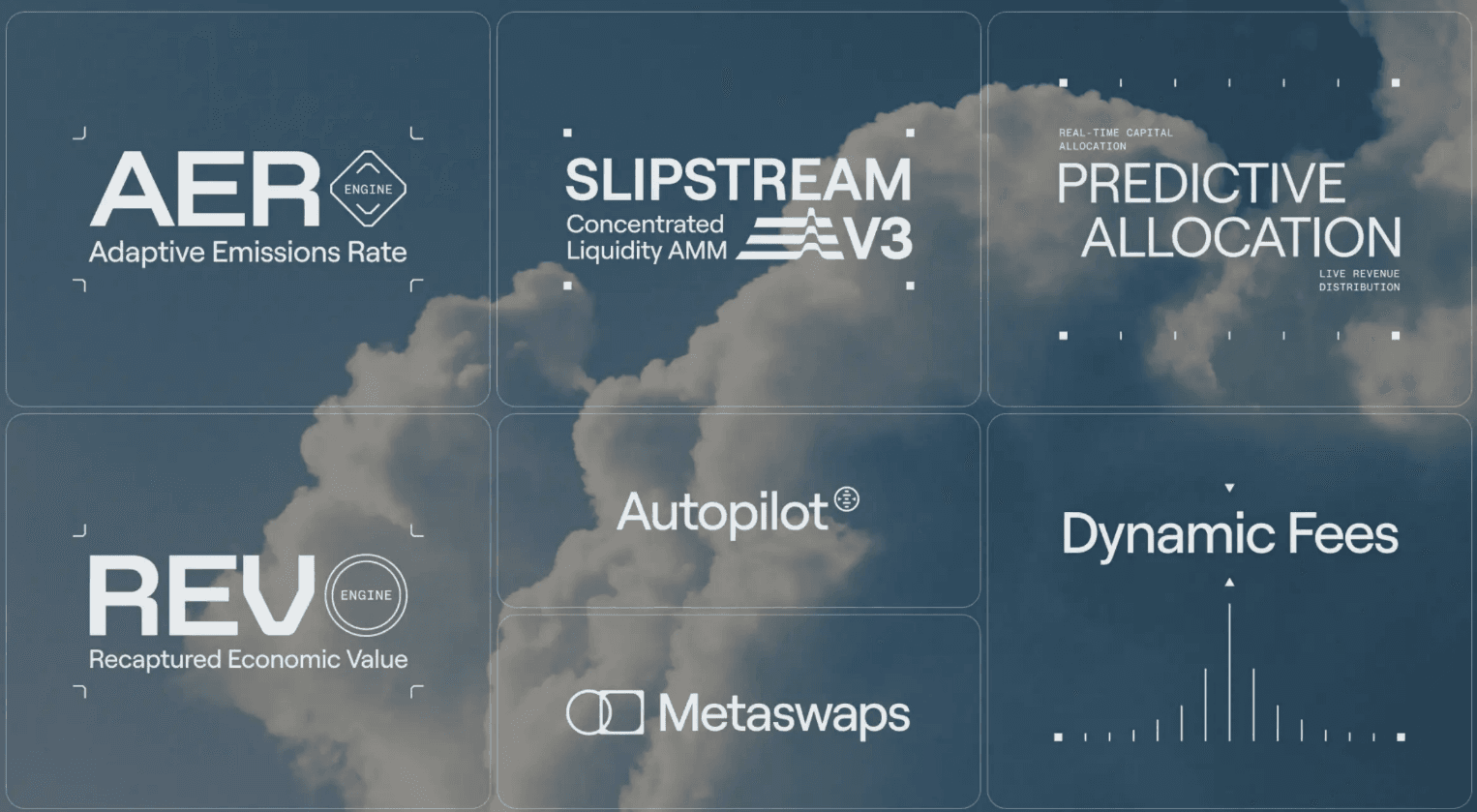
Metaswaps are designed so that users can swap tokens between networks that support the feature.
As cited from Aero documentation, the routing and bridging process takes place within the swap itself, so users do not need to perform a separate bridge first. Execution utilizes onchain liquidity, rather than relying on offchain counterparties.
Metaswaps support should be distinguished from the existence of Aero deployments. The announcement states that cross-network swaps apply to networks that support Metaswaps, so it is not accurate to assume all routes are automatically available from the start.
Slipstream for Liquidity Providers
LPs deposit assets into Slipstream concentrated liquidity pools. This model allows capital to be placed within specific price ranges, so its efficiency is affected by liquidity position and market movement.
Dynamic Fees adjust costs to market conditions. Fees rise when the pool price moves away from the latest time-weighted average price, up to a maximum per pool.
MEV Capture is planned to be available on supported L2s. Both are part of the design for managing transaction value within Aero DeFi.
Predictive Allocation and the AER Engine
sAERO holders will direct AERO Rewards to various pools using Predictive Allocation and earn a share of exchange revenue. This mechanism places liquidity coordination as the main role of staking participants.
Allocation is no longer bound to weekly epoch windows, so sAERO holders can choose pools at any time.
The AER Engine calculates rewards in dollar value and caps their rate per pool based on revenue projections. The goal is to balance incentive appeal with inflation control; this design is not a guarantee of investment returns.
Autopilot for Automatic Allocation
Autopilot helps sAERO holders automate allocation and reward claiming. Users set up this feature themselves and can turn it off again at any time, according to Aero.
Read Also: How AMMs Work on Solana DEX: Why Small Liquidity Can Be Dangerous
When Does Aero Launch and Which Networks Are Supported?
Source: aero.xyz
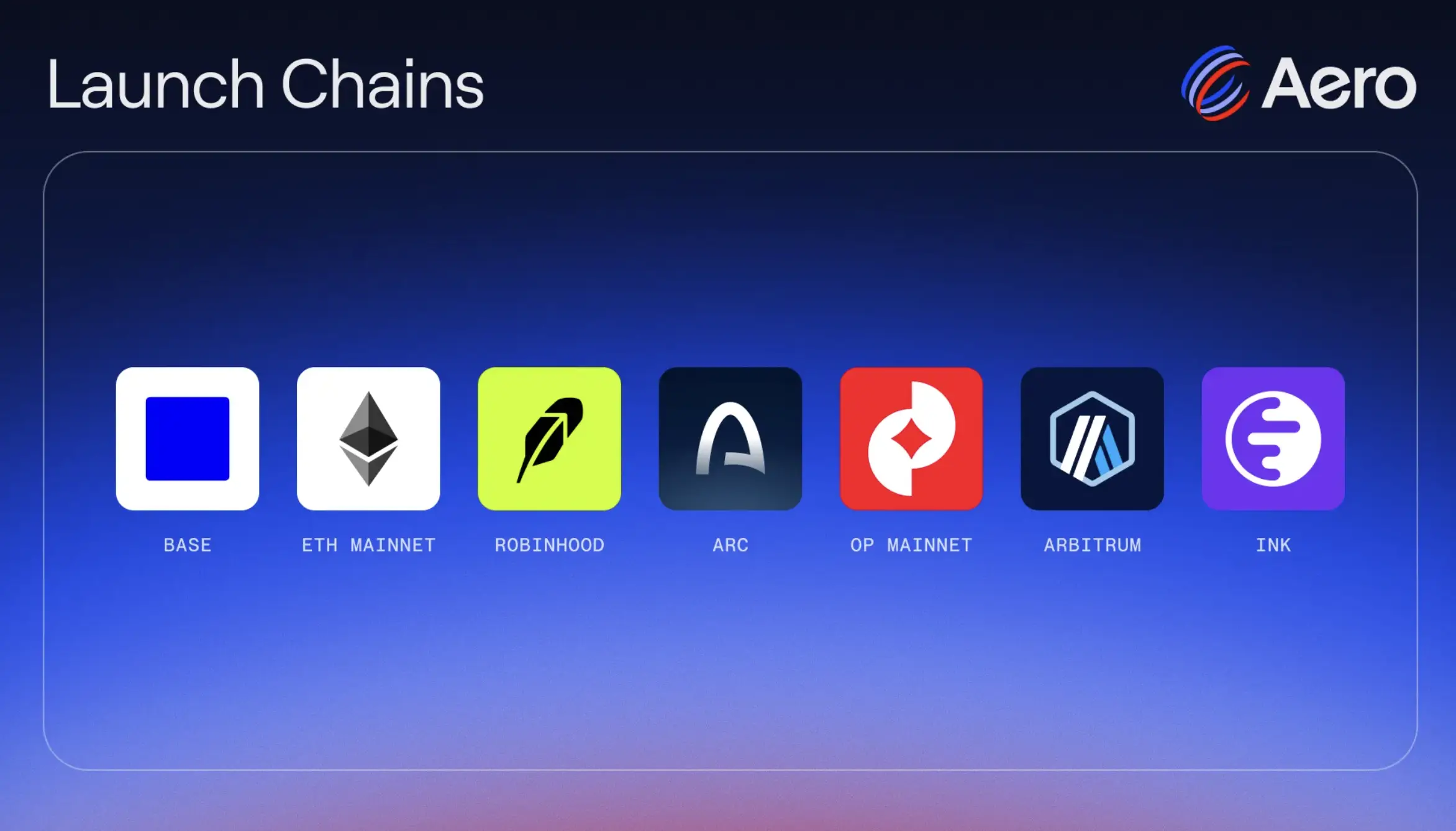
The Aero launch announcement sets October 21, 2026 at 20.00 EDT. That time is equivalent to October 22, 2026 at 00.00 UTC or Thursday, October 22, 2026 at 07.00 WIB. The launch is only hours away.
Ahead of the launch, as cited from Aero's official X account, new documentation has been opened as an advance preview. It covers new features such as Predictive Allocation, Autopilot, and Metaswaps, along with an explanation of how they all work together.
The Aero Ethereum launch plan covers Base, Ethereum Mainnet, OP Mainnet, Arc, Ink, Arbitrum, and Robinhood Chain. All seven are scheduled to receive full deployments, with AERO Rewards directed by sAERO holders.
The term Aero mainnet in this context refers to the deployment of the protocol on the operational networks mentioned, not an announcement of a separate Layer 1 blockchain. The source also states that the public audit has been completed, while final fixes and application testing preparations are still ongoing.
Read Also: What Is Robinhood Chain? A Comprehensive Explanation
How to Get Started on Aero
Aero documentation provides an initial guide for four core functions: token swaps, liquidity deposits, AERO staking, and reward allocation.
Because the documentation is still in preview status, the application interface and feature details may change after launch. Users are advised to recheck the official guide at app.aero.xyz.
Preparation Before Transacting
As cited from Aero documentation, there are three things to prepare before your first transaction.
- Connect a wallet. The Connect button is in the top right corner of the Aero application, and the wallet used is a browser wallet.
- Select a network. Pools and rewards are local to each network, so the selected network determines the data displayed. Base is the primary network where the core token and Aero contracts reside.
- Prepare gas fees. Transactions are paid with the gas token of the network used, for example ETH.
Token Swap Steps
- Open the Trade menu, select the token to sell, then enter the amount.
- Select the token to buy. The price quote will display an estimated output and fees.
- Adjust the slippage settings if necessary.
- Execute the swap by signing the allowance transaction and the swap transaction in the wallet.
Slippage is the difference between the quoted price and the execution price, which can appear if the market moves before the transaction completes.
Liquidity Deposit Steps
- Open the Liquidity menu and start New deposit.
- Select two tokens. The application displays the pools already available for that pair.
- Choose the pool type. Basic Pools place liquidity across the entire price curve, while Slipstream uses a price range selected by the user.
- Set the price range when prompted, or choose the automated liquidity management (ALM) option if available.
- Choose between Fee rewards and AERO rewards.
- Enter the token amounts, then complete the deposit.
The fifth step distinguishes Aero from a typical AMM. Deposits can switch between fee rewards and AERO rewards at any time. Fee-earning liquidity receives a share of pool fees.
AERO-earning liquidity enters the pool gauge and receives AERO Rewards, while the swap fees it would otherwise receive are redirected to Exchange Revenue.
A pool must have an active gauge to pay AERO Rewards. Deposits in pools without a gauge only receive swap fees.
AERO Staking and Reward Allocation Steps
- Open the Stake menu, then enter the amount of AERO.
- Set the staking period. A fixed period immediately starts the withdrawal countdown, while Perpetual Stake holds the stake for a maximum duration of 4 years and can be turned off at any time to start the countdown.
- Create the stake to receive sAERO.
- Open the Markets menu, select the sAERO stake to use, then divide Allocation Power among the pools you want to support.
- Confirm the allocation. AERO Rewards flow directly to those pools and sAERO holders begin receiving Exchange Revenue.
Allocation Power is calculated from the amount of AERO staked multiplied by the remaining duration divided by the maximum duration of 4 years. Each sAERO stake has a 47-hour Allocation Cooldown before it can direct rewards to a different set of pools.
An sAERO position must allocate power to pools in order to earn Exchange Revenue. For automation, users can enable Autopilot.
Read Also: BIS Reveals New Potential for XRP Ledger in Digital Financial Systems
Claiming Rewards and Understanding the AERO Flywheel
Rewards are claimed through the Portfolio menu, with separate tabs for liquidity and sAERO. Fee-earning liquidity generates trading fees, AERO-earning deposits generate AERO Rewards, and sAERO generates Exchange Revenue.
All these steps form the AERO Flywheel. Traders pay fees in pools, those fees attract sAERO allocation and AERO Rewards, then the rewards attract LPs who deepen the pools.
Deeper liquidity improves execution, better execution attracts more trading, and busier trading generates more fees.
Every onchain transaction incurs a gas fee, and crypto asset values can fluctuate. Understand the mechanics of each feature and its risks before depositing funds.
Why Is Aero Ethereum Relevant to Users?
According to the project announcement, the networks already served by Aerodrome and Velodrome account for approximately 17% of EVM spot trading volume. Aero's expansion is projected to broaden that coverage by about three times, not to guarantee that the protocol's transaction volume will directly triple.
For users, the main value lies in liquidity access and market coordination. Its success should be assessed by feature execution and real usage after launch.
Want to learn more about crypto assets? Register for a Bittime account, then check identity verification and asset availability before transacting.
Want more flexible gold investing? Check the latest movements in PAXG price and XAUT price directly on the Bittime market.
Bittime is a licensed Digital Financial Asset Trader (PAKD) platform supervised by the Financial Services Authority — where you can buy Bitcoin in Indonesia and hundreds of other crypto assets starting from Rp10,000. The registration process is fast, secure, and can be started today.
Monitor USDT to IDR conversion and your favorite crypto asset price movements in real time. All are available in one crypto investment app that can be downloaded for free on the Play Store.
Ready to start? Register now on Bittime and execute your investment strategy with a platform already trusted by millions of users in Indonesia.
Conclusion
Aero seeks to unite trading, liquidity, and cross-network incentives into a single ecosystem resulting from the merger of Aerodrome and Velodrome. The launch is scheduled for October 22, 2026 at 07.00 WIB across seven networks, with official documentation already opened as a preview.
Prospective users can learn the swap, liquidity deposit, staking, and reward allocation flows in advance, while waiting for feature implementation after launch.
FAQ
What is Aero?
Aero is a cross-network exchange protocol designed to become a unified liquidity layer for Ethereum and the EVM ecosystem.
Is Aero a merger of Aerodrome and Velodrome?
Yes. The project announcement explains that the two will merge to form Aero.
When does Aero launch in Indonesian time?
The announced schedule is Thursday, October 22, 2026 at 07.00 WIB, equivalent to October 21 at 20.00 EDT.
How do you get started on Aero?
Connect a browser wallet at app.aero.xyz, select a network, and prepare a gas token such as ETH. After that, users can choose swaps, liquidity deposits, or AERO staking according to the official guide.
Is Aero documentation already available?
Yes. The new documentation has been opened as an advance preview ahead of the launch, so details may change.
Is Aero only available on Ethereum Mainnet?
No. The launch plan covers seven networks, including Ethereum Mainnet, Base, Arbitrum, and OP Mainnet.
What is the function of sAERO in Aero?
sAERO holders direct liquidity rewards through Predictive Allocation and earn a share of exchange revenue according to the protocol mechanism.
What is the function of Autopilot in Aero?
Autopilot allocates sAERO and claims rewards on the user's behalf. This feature is set up by the user and can be turned off again.
Disclaimer: The views expressed belong exclusively to the author and do not reflect the views of this platform. This platform and its affiliates disclaim any responsibility for the accuracy or suitability of the information provided. It is for informational purposes only and not intended as financial or investment advice.

.png)