AI Adoption for Banks: A New Strategy for the Banking World
2025-09-23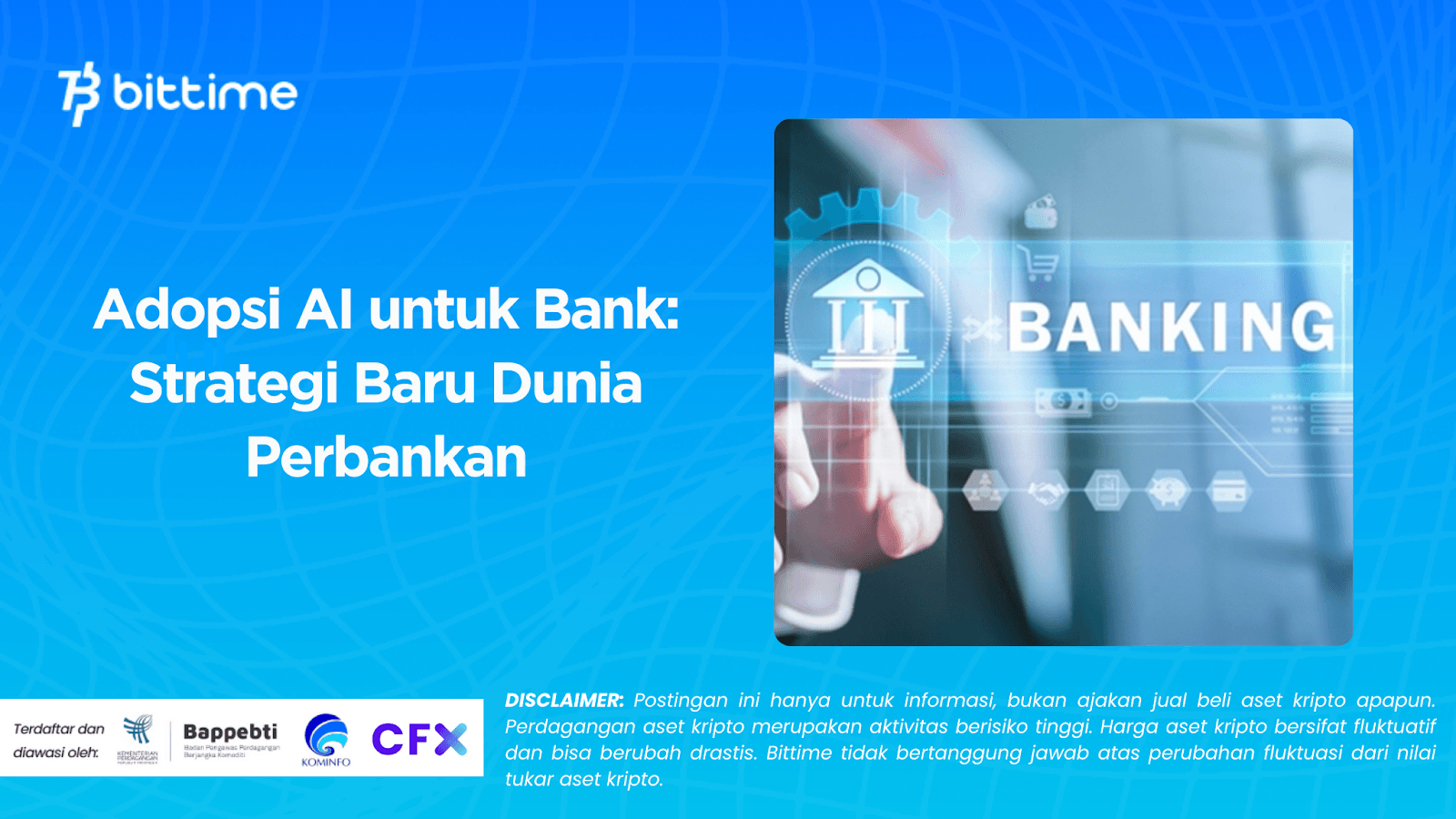
Artificial intelligence (AI) technology is increasingly gaining traction in the financial industry. Not only banks and fintech companies, but also regulators are now being encouraged to utilize AI to more effectively oversee the financial system.
One of them came from the Governor of the Bank of England (BoE), Andrew Bailey, who emphasized the importance of AI adoption for banks and supervisory institutions in the financial sector.
This article will discuss why AI is important for financial oversight, the opportunities and challenges it presents, and a future outlook for the application of this technology.
Bank of England: The Importance of AI Adoption for Banks
In his speech at the London School of Economics, Bailey said that regulatory bodies must invest heavily in data processing and data science.
Regulators have been collecting millions of data points from banks, insurers and other financial companies, but often this data has not been optimally utilized, risking missing important warning signs.
According to Bailey, the challenge is not just the volume of data, but also how that data is processed into actionable insights.
The adoption of AI is considered to open new avenues for utilizing surveillance data to more effectively detect problems early, such as potential fraud or systemic risks.
Read Also: What is Tokenbot (CLANKER)? Analysis and Price Prediction
AI Adoption in UK Financial Institutions
The Bank of England, through its survey, found that75% of financial services companies in the UK are already using AI, while another 10% plan to adopt it in the next three years.
The most common applications include fraud detection, anti-money laundering (AML) checks, and cybersecurity monitoring.
However, the same report also warns of new risks. Data quality and potential bias could influence AI analysis results. This means that while AI promises efficiency, this technology is not a perfect solution.
Read Also: Aptos (APT) Price Prediction: Levels to Watch
Benefits of AI Adoption for Banks and Regulators
Here are the benefits of a AI adoption for banks and regulators:
1. Faster Risk Detection: AI can process vast amounts of data and identify patterns that might otherwise be missed by manual monitoring. This helps regulators and banks take early preventative action.
2. Operational Efficiency: With automation, data analysis can take place more quickly so that strategic decisions are more timely.
3. Cyber Security Enhancements: AI helps detect suspicious activity in real-time, from hacking attempts to money laundering.
4. Driving Innovation in the Financial Industry: The implementation of AI not only strengthens oversight, but also encourages the development of new products and services by banks.
Read Also: What is Zero Gravity (0G)? Tokenomics and Price Predictions
Challenges and Risks of AI Adoption for Banks
Despite the significant potential, AI adoption faces several challenges. First, there's the risk of relying on algorithms that lack transparency. Regulators must be able to explain the basis for AI-generated decisions to avoid controversy.
Second, there's a skills gap. A recent report found that no UK banks are in the top 10 globally for AI talent, indicating a human resources gap that needs to be addressed.
Additionally, a Tony Blair Institute survey showed that more Britons see AI as an economic risk than an opportunity, with concerns over privacy, fairness and job losses.
This presents challenges and risks to AI adoption. Public education and appropriate policies are needed to achieve wider acceptance.

Conclusion
AI adoption for banks and financial regulators is not just a trend, but an urgent necessity to maintain financial system stability. With AI, oversight becomes faster, more accurate, and more efficient.
However, risks such as data bias, lack of algorithm transparency, and talent gaps must be addressed to ensure AI implementation delivers maximum benefits without compromising public trust.
Collaboration between regulators, industry, and policymakers is crucial to ensure AI is used wisely.
Read Also: What is Bless (BLESS)? Technology, Tokenomics, and Airdrops
How to Buy Crypto on Bittime
Want to trade sell and buy Bitcoins and easy crypto investing? Bittime is here to help! As an Indonesian crypto exchange officially registered with Bappebti, Bittime ensures every transaction is secure and fast.
Start by registering and verifying your identity, then make a minimum deposit of IDR 10,000. After that, you can immediately purchase your favorite digital assets!
Check the course BTC to IDR, ETH to IDR, SOL to IDR and other crypto assets to find out today's crypto market trends in real-time on Bittime.
Additionally, visit Bittime Blog to get various interesting updates and educational information about the world of crypto. Find trusted articles on Web3, blockchain technology, and digital asset investment tips designed to enrich your crypto knowledge.
FAQ
Why do regulators need to adopt AI?
Because AI can help process large amounts of data, danger signs in the financial system can be detected more quickly.
What are the benefits of AI for banks?
AI accelerates fraud detection, improves cybersecurity, and makes operational processes more efficient.
What are the biggest risks of using AI in the financial sector?
Data quality and potential biases that can result in erroneous analysis, as well as a lack of transparency of algorithms.
Are banks in the UK already using AI extensively?
Yes, around 75% of financial services firms in the UK are already using AI in some form, and another 10% are planning to follow suit.
How to address the AI skills gap in the financial sector?
Through training, recruitment of quality AI talent, and collaboration between the public and private sectors to strengthen competencies in this technology field.
Disclaimer: The views expressed belong exclusively to the author and do not reflect the views of this platform. This platform and its affiliates disclaim any responsibility for the accuracy or suitability of the information provided. It is for informational purposes only and not intended as financial or investment advice.

.png)