Toyota, Yamaha, and BYD Accept USDT Crypto Payments in Bolivia
2025-09-22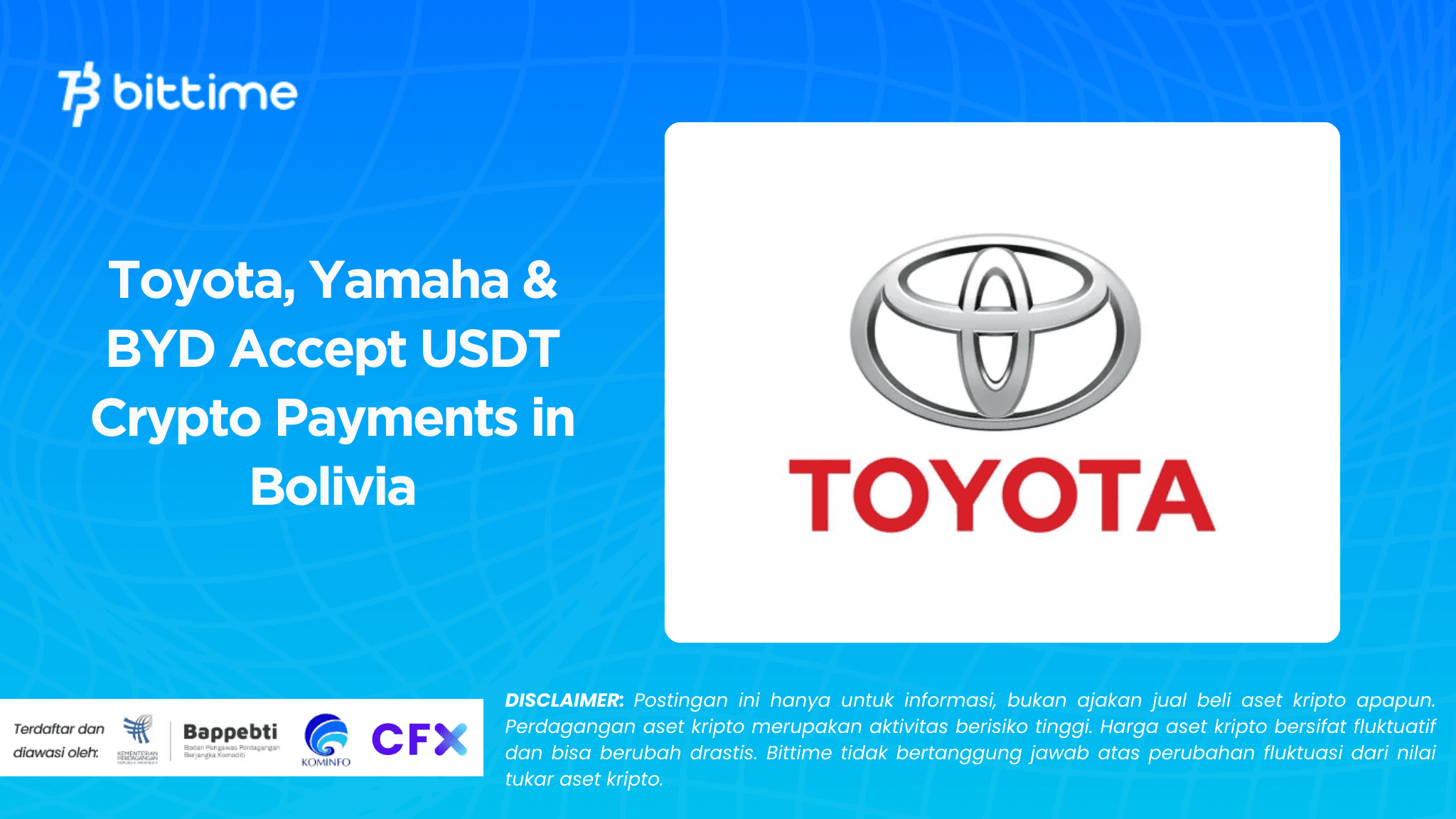
Bittime - Amidst an economic crisis and limited US dollar reserves, Bolivia faces significant challenges related to inflation and access to foreign currency.
This situation has driven innovation in payment methods, one of which is the use of stablecoins.
Recently, three of the world's major automotive brands,Toyota, Yamaha, and BYD, officially announced that their dealers in Bolivia have begun acceptingUSDT (Tether)as a means of payment.
This move is considered a significant moment in the history of crypto adoption, particularly in the automotive sector.
This article will discuss the background, reasons for choosing USDT, the socio-economic impact, and the prospects for future crypto adoption.
Why Do Toyota, Yamaha, and BYD Accept USDT?
PThis announcement comes after Bolivia experienced a drastic decline in its US dollar reserves.
Authorized Toyota, Yamaha, and BYD dealers now accept USDT as a payment method, marked by promotional posters that read“Your vehicle in digital dollars”(your vehicle with digital dollars).
This adoption isn't just a trend, but a real solution for consumers struggling to access US dollars. With USDT, transactions can be fast, stable, and secure, without relying on local currency fluctuations.
Read Also: Buy USDT on Bittime: A Complete Tutorial for Beginners
Advantages of Using USDT in Vehicle Transactions

There are several reasons why USDT is the top choice in Bolivia's economic climate:
- Value Stability
USDT is pegged to the US dollar, so it is not directly affected by boliviano inflation. - Global Accessibility
USDT can be used across borders quickly, without relying on physical dollar reserves. - Transaction Security
The dealer partners with trusted crypto service providers such as BitGo to ensure transaction security. - Consumer Convenience
The payment process with stablecoins is more practical than conventional methods amidst the currency crisis.
Economic and Social Impact in Bolivia
- Protection from Inflation
With high inflation, consumers can maintain the value of their purchasing power through stablecoins.
- Push for Wider Crypto Adoption
If car purchases can be made with USDT, it's not impossible that other transactions, such as property or daily necessities, will follow.
- Regulatory Risk
The Bolivian government needs to regulate the use of stablecoins to avoid legal issues or potential money laundering.
- Signs of Crypto Globalization
Decisions by major brands like Toyota, Yamaha, and BYD further strengthen the position of stablecoins as a global transaction tool.
Read Also: It's Official! Thailand Approves Tether's USDT for Trading and Payments
How does the USDT payment mechanism work at the dealer?
- Consumers choose vehicles at authorized Toyota, Yamaha, or BYD dealers.
- The vehicle price is converted to USDT value according to the dollar exchange rate at the time of the transaction.
- Consumers make payments through crypto digital wallets.
- The dealer receives USDT which is then secured through a custodian or third-party crypto service.
- Transactions are completed without the need to rely on banks or physical dollars.
The Future of Crypto Payments in the Automotive Industry
This move could serve as a model for other countries facing similar challenges. If successful, it's possible that stablecoins will become an official option at more global automotive dealerships.
In fact, other sectors such as real estate, education, and even healthcare could follow Bolivia's lead.
The decision by Toyota, Yamaha, and BYD to accept USDT shows thatcrypto is no longer just an investment asset, but rather a real payment instrument that is capable of solving economic problems in the real world.
Read Also: USDT vs USDC Differences: A Comprehensive Guide
Conclusion
The acceptance of USDT by Toyota, Yamaha, and BYD in Bolivia is clear evidence that stablecoins are gaining recognition in global commerce.
On the one hand, this step opens up a significant opportunity for Bolivians to protect their purchasing power.
On the other hand, the government and regulators must develop policies to ensure safe, orderly, and sustainable crypto adoption.
Going forward, this trend could be a significant turning point for the automotive world and accelerate the transformation of the global digital economy.
How to Buy Crypto on Bittime
Want to trade sell buy Bitcoins and crypto investment easily? Bittime is here to help! As an Indonesian crypto exchange officially registered with Bappebti, Bittime ensures every transaction is safe and fast.
Start with registration and identity verification, then make a minimum deposit of IDR 10,000. After that, you can immediately buy your favorite digital assets!
Check the exchange rate BTC to IDR, ETH to IDR, SOL to IDR and other crypto assets to find out today's crypto market trends in real-time on Bittime.
Also, visit the Bittime Blog for interesting updates and educational information about the crypto world. Find reliable articles about Web3, blockchain technology, and digital asset investment tips designed to enrich your crypto knowledge.
FAQ
What is USDT?
USDT (Tether) is a stablecoin whose value is pegged to the US dollar, making it relatively stable compared to other cryptocurrencies.
Why do Toyota, Yamaha, and BYD accept USDT in Bolivia?
As Bolivia's dollar reserves dwindle and inflation rises, stablecoins like USDT are becoming a more stable and accessible payment alternative.
Is it safe to buy a car with USDT?
Yes, transactions are conducted through trusted crypto partners and custodians so consumers remain protected.
What are the long-term impacts of accepting USDT in Bolivia?
This adoption could expand the use of stablecoins across other sectors, strengthening financial inclusion, and encouraging clearer regulation of crypto.
Disclaimer: The views expressed belong exclusively to the author and do not reflect the views of this platform. This platform and its affiliates disclaim any responsibility for the accuracy or suitability of the information provided. It is for informational purposes only and not intended as financial or investment advice.
.png)