XRP Adds New Cross-Chain Paths, What Impact Will This Have?
2026-08-06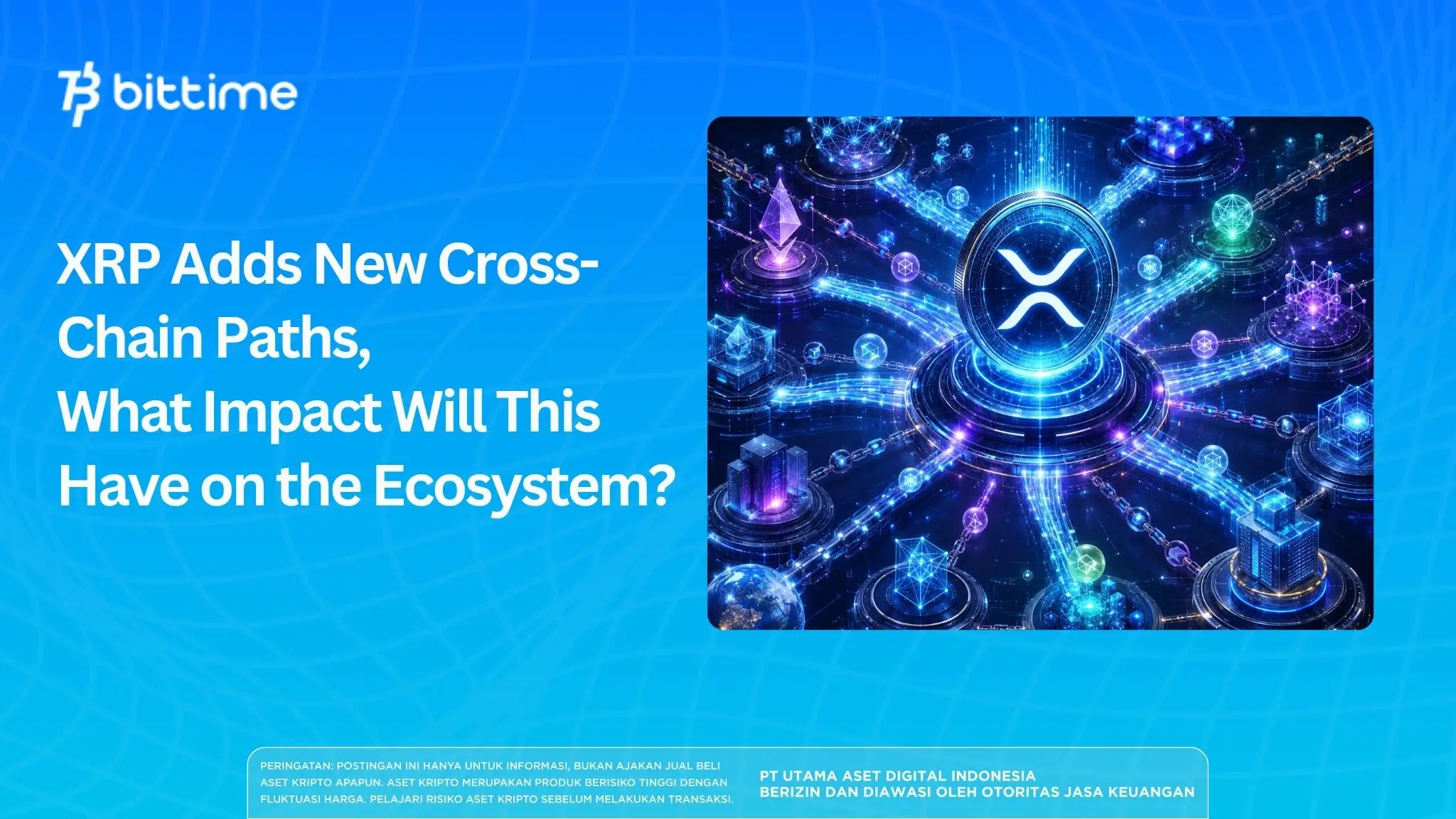
Ecosystem XRP Ledger is entering a new phase in blockchain interoperability development.
The XRP Ledger and XRPL EVM Sidechain are now available through the Axelar App, giving users an additional way to move multiple assets across networks through a single interface.
The update extends beyond XRP transfers. The integration also allows assets like WETH, WBTC, mBTC, mTBILL, mXRP, SHx, USDf, and SOIL to move through Axelar's infrastructure.
The presence of this new pathway has the potential to expand the connectivity of the XRP blockchain, but its economic benefits still depend on the volume, liquidity, and applications that actually use it.
Key Takeaways
XRP Ledger and XRPL EVM Sidechain are now accessible through the Axelar App interface for cross-chain transfer activities.
XRP cross-chain integration could expand access to liquidity, real-world assets, wrapped Bitcoin, and DeFi applications.
Bridges still carry technical, liquidity, smart contract, and user error risks that need to be understood before making a transfer.
What Are the Latest XRP Cross-Chain Developments?
The latest XRP developments center on the inclusion of the XRP Ledger mainnet and XRPL EVM Sidechain into the Axelar App.
The app is an official interface developed to allow users to access Axelar's cross-chain infrastructure without having to switch routing services.
The Axelar App was first launched in May 2026 with support for a number of networks, such as Ethereum, Base, BNB Chain, Arbitrum, Polygon, Optimism, Avalanche, Immutable, and Filecoin.
XRP Ledger was previously on the list of networks to be added, and its integration has now been opened up to users.
Prior to this update, Axelar was already the connecting infrastructure for the XRPL EVM Sidechain.
The expansion to the Axelar App interface makes the path more accessible to ordinary users, not just developers or third-party apps.
How Does the XRP Cross-Chain Track Work?
In general, cross-chain XRP transfers require a mechanism to ensure assets are not duplicated.
In the bridge model, the original asset can be locked on the origin network, then its representation is published on the destination network.
When the asset is returned, the wrapped version can be burned and the original asset released.
The XRP Ledger documentation explains that the bridge uses dedicated accounts on the locking chain and issuing chain.
Observer server or witness servers monitor transactions, provide signed proof, then the assets are released once the number of approvals reaches the required quorum.
In the latest integration, Axelar acts as an interoperability layer connecting disparate networks.
Users select the source network, asset, transfer amount, and destination network through the app. Fees, routing, and recipient addresses must be verified before the transaction is confirmed.
Read Also:XRP Ledger v3.3.0 Update: Five New Features Specifically for Banking and Tokenized Assets
What Assets Get New Paths?
The initial asset list includes XRP, SHx, USDf, SOIL, WETH, WBTC, mBTC, mTBILL, and mXRP.
The composition shows that the integration will not only focus on native crypto assets, but also stablecoins, wrapped Bitcoin, wrapped Ethereum, as well as products related to real-world assets and yield strategies.
mTBILL, for example, shows the direction of integration towards tokenization instruments.
Meanwhile, WBTC and WETH support could help connect XRPL users with liquidity that was previously concentrated in the Ethereum-based ecosystem.
The list of available assets and routes may change according to technical support, liquidity, and provider policies.
Users should check the destination asset and network displayed in the app before sending funds.
Want to keep an eye on XRP and other crypto assets? Register at Bittime and always understand the risks before making a transaction.
What Impact Will It Have on the XRP Ecosystem?
The first impact is increased access to liquidity. Assets from other networks can enter the XRP Ledger or XRPL EVM Sidechain environment without always having to go through a centralized exchange.
On the other hand, XRP gains more routes to be used in cross-chain applications.
The second impact relates to DeFi development. The XRPL EVM Sidechain supports Ethereum smart contracts and ERC-20 tokens, with XRP used as the gas asset.
The combination of EVM compatibility and Axelar connectivity enables developers to bring lending, derivatives trading, asset exchange, and liquidity management applications to the XRP ecosystem.
The third impact is the expansion of the distribution of tokenized assets. Axelar previously cited interoperability as a key component in bringing stablecoins and real-world assets to more networks.
New pathways could make it easier for assets issued on one blockchain to reach users and applications on other networks.
Read Also:XRP Unlock Token 1 Billion Coins: What Impact Will It Have on the Price?
Does This Integration Improve the Utility of the XRP Ledger?
XRP cross-chain integration increases the potential use of the XRP Ledger, but does not automatically guarantee increased activity.
Infrastructure only provides the pathway; demand remains determined by applications, active users, depth of liquidity, and available economic value.
The utility of the XRP Ledger can increase if users move assets for trading, providing liquidity, accessing tokenization, or using XRPL EVM applications.
XRP can also gain additional functionality by being used as gas on the XRPL EVM Sidechain.
However, broad connectivity also means more open competition. Capital flowing into the XRP ecosystem can be more easily transferred back to other networks.
Therefore, the quality of the product and the yields available will determine whether liquidity is persistent or merely transient.
Read Also:How To Buy XRP (XRP) | XRP to IDR | XRP to USDT
Risks of Cross-Network XRP Transfers
Bridges add a layer of risk beyond the originating blockchain. Potential issues can arise from smart contracts, validators, gateways, wrapped assets, application interfaces, or network selection errors.
Axelar uses Proof of Stake consensus, dynamic validators, key rotation, transfer limits, audits, and a bug bounty program as part of its security system.
However, Axelar also acknowledges that no cross-chain system is completely risk-free.
Users should make a test transfer in a small amount, check the destination address, ensure the asset is supported, and understand the form of token that will be received.
Wrapped XRP or wrapped Bitcoin does not always have the same characteristics as the original asset on its original network.
Read Also:Not Bitcoin and XRP, These Altcoins Are Actually Breaking Out
What to Monitor Next?
The key benchmark isn't just the number of connected networks. Ecosystems need to demonstrate growth in cross-chain volume, liquidity on DEXs, the number of active applications, the distribution of tokenized assets, and repeat users.
Developers also need to prove that the transfer experience can be simple without compromising transparency.
If the new path is only used occasionally, its impact on the utility of the XRP Ledger will be limited.
Convert 1 XRP to IDR - XRP to Indonesian Rupiah Exchange Rate
Conclusion
A new pathway through the Axelar App strengthens blockchain interoperability for the XRP Ledger and XRPL EVM Sidechain. This integration provides direct access to XRP and a number of assets from other ecosystems, including WETH, WBTC, mTBILL, and mXRP.
The biggest impacts are likely to be on liquidity, DeFi, asset tokenization, and the cross-chain transfer experience.
However, the success of XRP blockchain connectivity remains to be proven through real-world use.
For users, additional routes provide flexibility. For developers, integration creates the opportunity to build multichain applications. Both still need to consider bridge security and the risks of wrapped assets.
Interested in trading XRP? As well as the XRP/IDR pair, Bittime also offers XRP/USDT to support your trading and investment strategies.
Bittime is a licensed and regulated Digital Financial Asset Trader (PAKD) supervised by Indonesia’s Financial Services Authority (OJK) — where you can buy Bitcoin in Indonesia and hundreds of other crypto assets starting from just Rp10,000. The registration process is fast, secure, and you can get started today.
Track USDT to IDR conversions and monitor your favorite crypto assets in real time. Everything is available in one crypto investment app that you can download for free on the Play Store
Ready to start? Register now on Bittime and execute your investment strategy with a platform trusted by millions of users in Indonesia.
FAQ
What is XRP cross-chain?
XRP cross-chain is a mechanism that allows XRP or its representations to move and be used on other blockchain networks via bridges or interoperability protocols.
What apps provide new XRP paths?
The latest path is available through the Axelar App, the official interface for accessing cross-chain transfers secured by Axelar's infrastructure.
Does real XRP move directly to other networks?
It depends on the route. In certain bridge models, the original XRP is locked and a wrapped representation is published on the destination network.
Will this integration increase the price of XRP?
There are no guarantees. Integration can expand utility, but the price of XRP is also influenced by market conditions, demand, regulation, liquidity, and investor sentiment.
Are cross-chain XRP transfers safe?
Transfers can be made through secure protocols, but they aren't risk-free. Users still need to check the network, addresses, fees, token contracts, and bridge reputation.
What is the difference between XRP Ledger and XRPL EVM Sidechain?
The XRP Ledger is the main XRP network. The XRPL EVM Sidechain is a separate blockchain compatible with Ethereum, supports smart contracts and ERC-20, and uses XRP as gas.
Disclaimer: The views expressed belong exclusively to the author and do not reflect the views of this platform. This platform and its affiliates disclaim any responsibility for the accuracy or suitability of the information provided. It is for informational purposes only and not intended as financial or investment advice.

.png)