Is USOI Legit or a Scam? Check the Solana Token Contract and Risks
2026-11-16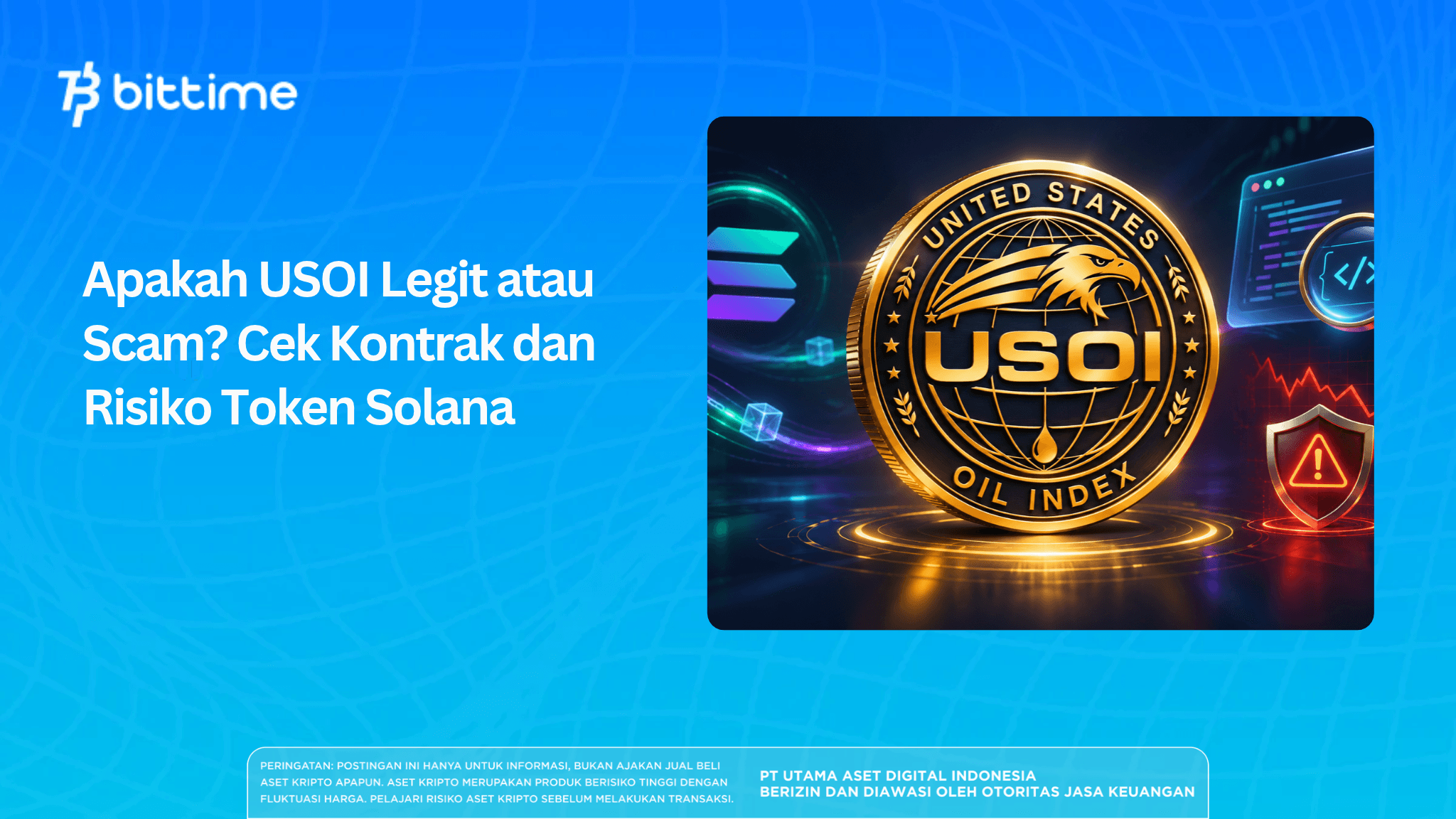
Is USOI legit or a scam? This is an important question to consider before buying the United States Oil Index (USOI) token on the Solana network. The project's name may sound like a U.S. oil-based investment instrument. However, one finding stands out: the USOI contract address listed on trading platforms differs from the address published on the usoi.fund website.
This discrepancy does not necessarily prove fraud, but it raises questions about the token's actual identity. The project website also claims that USOI is backed by physical oil reserves. To assess whether that claim is credible, we need to examine the available information, from the token contracts to trading activity.
Key Takeaways
- The USOI contract address on DEX trading platforms differs from the address listed on usoi.fund.
- The claim that USOI is backed by physical oil reserves still requires independent evidence to confirm its accuracy.
- Liquidity conditions and price volatility are significant risks for prospective USOI buyers.
What Is United States Oil Index (USOI)?
United States Oil Index, or USOI, is a name used by a token on the Solana blockchain. A token bearing this name can be found in USOI/SOL trading pairs on decentralized exchanges, or DEXs.
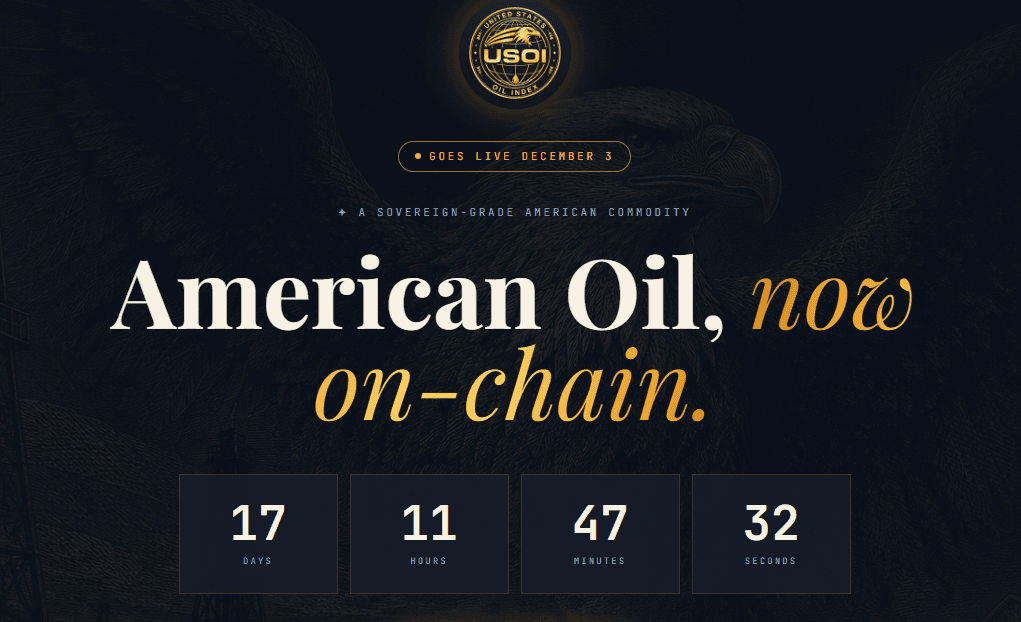
Meanwhile, usoi.fund presents USOI as a project connecting U.S. oil commodities with blockchain technology. Its proposed concept involves the tokenization of real-world assets, or Real World Assets (RWA).
In general, tokenization allows physical assets to be represented digitally. However, the existence of a token does not automatically grant ownership rights to the assets purportedly backing it.
The usoi.fund website also states that the project is not affiliated with any government, investment fund, or ETF. In other words, the name United States Oil Index should not be taken as evidence that USOI is an official U.S. government investment product.
Read also: Is UCI (United Crypto Intelligence) Legit?
Is USOI Legit or a Scam?
As of November 16, 2026, the available information is insufficient to determine whether USOI is a genuinely credible project or a scam.
A token called USOI is indeed being traded on the Solana network. However, trading activity alone cannot establish who is behind the token, how the project is managed, or whether its claims have a solid basis.
Several questions remain unanswered:
- Why is the token address on DEXs different from the address on the project website?
- Is there evidence linking the two addresses?
- Who is responsible for the claimed oil reserves?
- Are there independent reports available for public review?
Furthermore, the USOI token shown on CoinMarketCap DEX is still marked as unverified. This status is not proof that the project is fraudulent, but it also provides no guarantee of authenticity.
For that reason, assessing USOI should involve more than simply asking whether the token can be bought and sold.
Why Are the USOI Contract Addresses Different?
When verifying a token's identity, its contract address is among the most important details. The USOI token shown in DEX trading data uses the following Solana address:
BAwRfEttbxreNHMkNB4ZBKghPgPAA7utEhJh7vCxpump
Meanwhile, the address published on usoi.fund is:
usoi4eW13p1pwo9B8u2kNbmhPGH482xta1BG2BxZPBg
These are two different addresses. At the time of this review, there was insufficient evidence to confirm any official connection between the two tokens.
Another address, 3efgotrqkuwtqmfo8mmabpfdvwumfhm7n9ajurzxkg3w, appears in a DEX Screener link. This address identifies the USOI/SOL trading pair, not the token mint address used to identify the asset itself.
What Are the Risks of Buying Tokens with the Same Name?
On the Solana blockchain, multiple tokens can share the same name and ticker symbol. Therefore, the name USOI or a similar-looking logo is not enough to establish an asset's authenticity.
Choosing the wrong address could result in buying a different token from the project you intended to invest in. This is why checking the mint address before purchasing is essential, especially when a token's project identity is unclear.
Read also: Is Public American Dividend (PAD) Legit or a Scam? Check the Risks
Is USOI Really Backed by Oil Reserves?
The usoi.fund website describes USOI as a token backed by physical oil under a 1:1 barrel-backedmodel. It also claims to hold 2.5 million barrels of reserves in the Permian Basin, Texas, which it says have received attestation.
On the same page, the project lists a total supply of 1 billion tokens and refers to a monthly attestation process.
However, these claims still need to be supported by independently verifiable documents. Information about the custodian, reserve verification reports, and token holders' rights to the underlying oil is essential to any assessment.
Another question remains unresolved. If the token supply is 1 billion while the claimed reserves amount to 2.5 million barrels, how exactly is the asset-backing mechanism calculated?
The project website also outlines a planned December 3 launch, including the development of a token-holder dashboard. These plans should be checked for actual implementation before being treated as evidence of project progress.
Read also: Is United States Power Reserve (USPR) Legit?
What Are USOI's Price and Liquidity Conditions?
Besides verifying the project's identity, it is important to examine market conditions to understand trading risks. During a review on November 16, 2026, one USOI/SOL trading page showed liquidity of approximately US$1,200 and a 24-hour price decline of around 95.5%.
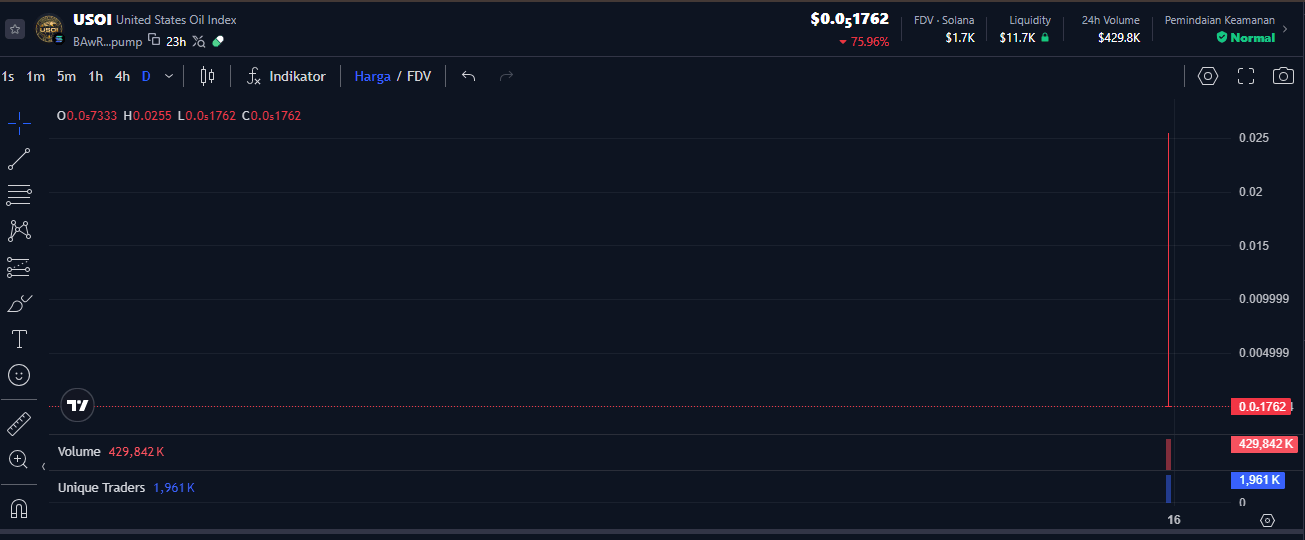
Meanwhile, another token-tracking page displayed liquidity of approximately US$11,700. This discrepancy warrants further investigation because it may stem from different update times or data measurement methods.
Low liquidity can make it difficult to sell, especially when many token holders attempt to exit the market at the same time.
This situation can also lead to slippage, the difference between the expected price and the price ultimately received when a trade is executed.
Although the price drop appears steep, it does not automatically prove a rug pull. Determining the cause requires examining transaction flows, liquidity changes, and the activity of wallets associated with the token.
Read also: Is WWAR Legit or a Scam? Risks of World War Asset Reserve
What Are the Risks of Buying USOI Tokens?
Based on the available information, several risks deserve attention before considering a USOI purchase.
- Token identity remains unclear. The differing contract addresses make it impossible to confirm the relationship between the token on DEXs and the project website.
- Oil reserve claims remain unverified. Claims about physical assets require independently verifiable evidence.
- Limited liquidity. Markets with low liquidity can make large trades difficult to execute.
- Extremely volatile prices. Sharp price movements can lead to substantial losses in a short period.
- Token controls need to be examined. Holder distribution, mint authority, freeze authority, and liquidity management can affect the level of risk.
These risks do not mean that all of these issues have been proven to affect USOI. Some still require further investigation to ensure the assessment is based on evidence rather than speculation.
Read also: Is Project Cortex (XTX) Legit? Check Token Risks and Security
How to Check USOI Token Security Before Buying
If you come across a USOI token and want to assess its credibility, do not rely solely on the project's name or price data.
Start with the following steps:
- Verify the mint address. Use a Solana blockchain explorer to confirm the identity of the token you are reviewing.
- Review the developer information. Look for evidence connecting the token, the project website, and its operators.
- Check liquidity conditions. Examine the size of the liquidity pool and whether certain parties can withdraw its liquidity.
- Investigate holder distribution. Concentrated ownership among a small number of wallets can be a risk factor.
- Check token authorities. Determine whether mint authority and freeze authority are still active.
- Look for supporting documentation. For projects claiming to be backed by physical assets, independent reports carry far more weight than marketing promises.
These checks can reduce the risk of choosing the wrong token, although they cannot guarantee that an investment is entirely safe.
If you want to deepen your understanding of digital assets and their risks, you can also sign up for Bittime to access cryptocurrency market information and educational resources.
Conclusion
So, is USOI legit or a scam? Based on the information reviewed, there is still insufficient evidence to provide a definitive answer. The discrepancies between contract addresses, oil reserve claims that lack independent verification, and risky trading conditions remain the main concerns.
Before buying USOI, make sure the token's identity actually matches the project you intend to choose. Do not treat a convincing name or the mere availability of a token on a DEX as a guarantee that the investment is safe.
Bittime is a licensed Digital Financial Asset Trader (PAKD) platform regulated and supervised by Indonesia's Financial Services Authority (OJK) — where you can buy Bitcoin in Indonesia and hundreds of other cryptocurrencies starting from Rp10,000. Registration is fast and secure, and you can get started today.
Track the USDT to IDR conversion rate and real-time price movements of your favorite cryptocurrencies. Everything is available in one crypto investment app that you can download for free from the Play Store.
Ready to get started? Sign up for Bittime now and put your investment strategy into action on a platform trusted by millions of users in Indonesia.
FAQ
Is USOI Legit or a Scam?
There is not yet enough evidence to determine whether USOI is a legitimate project or a scam. Several important details, especially the relationship between the contract addresses and the oil reserve claims, still require verification.
Is the USOI Token Safe to Buy?
The safety of the USOI token cannot be established from the available trading data alone. Before buying, verify the contract identity, liquidity, and credibility of the project.
What Is the USOI Contract Address on Solana?
The USOI token tracked on DEXs uses the address BAwRfEttbxreNHMkNB4ZBKghPgPAA7utEhJh7vCxpump. However, the usoi.fund website lists a different address, and a connection between the two has not been confirmed.
Why Are the USOI Contract Addresses Different?
The Solana blockchain allows multiple tokens to use the same name and ticker symbol. That is why the mint address must be checked to distinguish one token from another.
Is USOI Really Backed by Oil Reserves?
The usoi.fund website claims its token is backed by physical oil and refers to reserve attestation. However, independent evidence confirming those claims, as well as token holders' rights to the underlying assets, could not be verified from the available information.
Disclaimer: The views expressed belong exclusively to the author and do not reflect the views of this platform. This platform and its affiliates disclaim any responsibility for the accuracy or suitability of the information provided. It is for informational purposes only and not intended as financial or investment advice.
.png)