USDT as a Hedge: Strategies to Protect Your Crypto Portfolio During Market Downturns
2026-08-07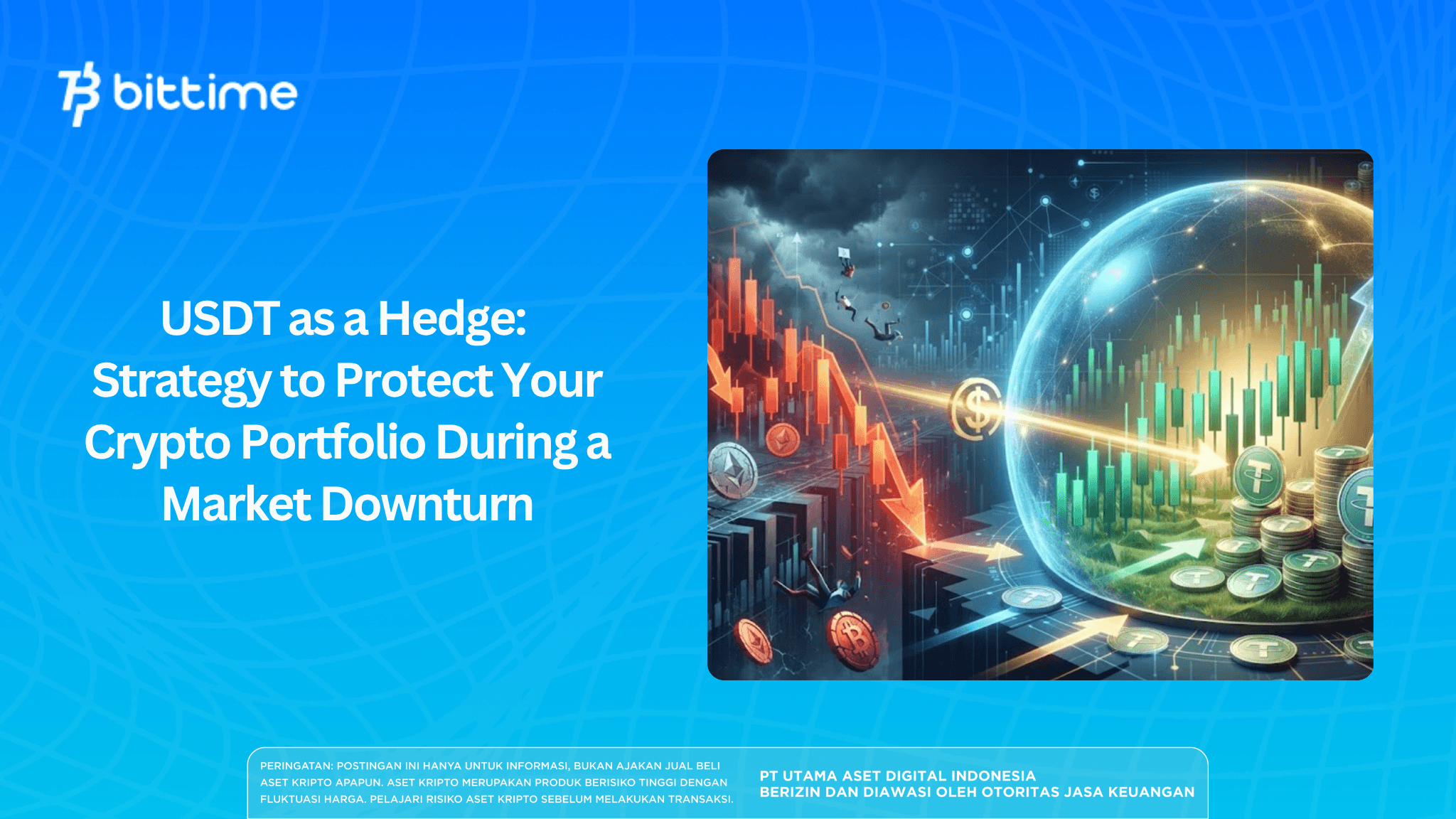
The crypto market is known for its high volatility, with price movements that can change drastically in a short period of time. Bitcoin, Ethereum, and various altcoins can experience corrections of dozens of percent in a matter of days when market sentiment deteriorates.
Under these conditions, investors do not always have to sell all their crypto assets and exit the market. One widely used risk management strategy is using USDT as a hedge, which involves moving a portion of volatile assets into the USDT stablecoin to preserve portfolio value.
Unlike crypto assets such as BTC or ETH, which move according to market demand, the USDT stablecoin is designed to peg to the US dollar, providing an alternative store of value when the market faces pressure.
However, is USDT truly a safe asset during a market downturn? How can you hedge crypto with USDT effectively? This article covers the concepts, strategies, historical examples, and risks you need to keep in mind.
Key Takeaways
- Using USDT for hedging helps reduce volatility risk by converting high-risk crypto assets into a stablecoin pegged to the US dollar.
- The most common strategy is converting assets like BTC or altcoins into USDT before a major decline, then buying back at lower prices.
- USDT can act as a portfolio protection tool, but it still carries risks such as depegging, issuer risk, and opportunity cost.
Why is USDT Used for Hedging in Crypto?
Hedging is an investment strategy designed to reduce potential losses caused by adverse price movements. In traditional markets, investors use instruments like options, futures, or defensive assets to protect their portfolios.
In the crypto world, hedging crypto with USDT has become one of the most popular methods because stablecoins are relatively stable compared to other digital assets.
USDT, or Tether, is a stablecoin designed to maintain a value of around $1 USD. When the market is under pressure, traders can shift funds from volatile assets into USDT without needing to withdraw funds to a bank account.
For example:
An investor holds 1 BTC valued at $60,000. If the investor expects the market to drop, they can convert the BTC into 60,000 USDT.
If Bitcoin later drops to $45,000, the investor can buy back BTC using USDT and obtain more Bitcoin than if they had simply held their original position.
This strategy does not aim to maximize profits, but rather to preserve capital purchasing power during unstable market conditions.
Read Also: How to Buy and Transfer USDT
When is the Right Time to Use USDT for Hedging?
Determining when to hedge is the most crucial part of this strategy. Moving your entire portfolio into USDT too early can cause investors to miss out on gains when the market recovers.
Several conditions that investors often consider include:
When Market Volatility Increases
Spikes in volatility typically occur when negative sentiment arises, such as:
- Tight global monetary policies.
- Regulatory pressure on the crypto industry.
- Liquidity crises at major companies or exchanges.
- A drop in Bitcoin's price triggering massive sell-offs.
In these situations, many investors choose to increase their USDT allocation to reduce risk exposure.
When Crypto Prices Reach Extreme Highs
Bull markets are often followed by correction phases. Investors who have secured significant gains can take profits by converting a portion of their assets into USDT.
For instance, an investor buys Ethereum at $1,500 and the price rises to $4,000. A portion of the profits can be moved into USDT to preserve capital.
Before High-Risk Events
Events such as central bank interest rate decisions, new regulatory policies, or major economic reports can heighten market uncertainty.
Short-term traders frequently use USDT as a temporary position until the market's direction becomes clearer.
Start your financial journey now. Register at Bittime and build your investment portfolio with ease.
Historical Case Studies: USDT as a Safe Haven During Market Crises
The use of USDT as a safe haven has been demonstrated during several periods of severe stress in the crypto market.
Crypto Winter 2018
When Bitcoin fell more than 80% from its 2017 peak, many investors reduced their exposure to volatile crypto assets and moved into USDT.
During that period, USDT began to establish itself as a primary tool for maintaining asset value without having to return to the traditional banking system.
Read Also: History of Bitcoin Price from 2009–2026: From Zero to Hundreds of Thousands of Dollars
Black Thursday March 2020
When the COVID-19 pandemic caused global panic, Bitcoin's price dropped by more than 40% in a single day.
Investors rushed to find liquidity, causing demand for USDT to surge. On several exchanges, USDT traded slightly above $1 due to high demand for digital dollar assets.
Terra-LUNA and FTX Crises of 2022
The collapse of TerraUSD (UST) and the downfall of FTX caused widespread panic across the crypto market.
Although USDT faced selling pressure and briefly experienced small price variances in certain markets, Tether's redemption mechanism remained operational, allowing investors to redeem USDT near its $1 value.
These events reinforced USDT's role as a liquidity tool when the market faces crises.
Read Also: USDT/IDR vs BTC/IDR: Which One Fits Your Trading Strategy?
How to Use USDT for Hedging on Crypto Platforms
There are several ways to use USDT as a portfolio protection strategy.
1. Convert Crypto Assets to USDT
The simplest method is swapping volatile assets like BTC, ETH, or altcoins into USDT.
Example:
- Initial portfolio: 1 BTC worth $70,000.
- The investor anticipates a market correction.
Investors anticipate a market correction.
- BTC is swapped for 70,000 USDT.
- Bitcoin drops to $55,000.
- Investors buy back BTC with the same amount of USDT.
Through the swap feature on exchanges like Bittime, investors can convert assets quickly without having to go through fiat withdrawal processes.
Convert 1 USDT to IDR - Tether Exchange Rate to Indonesia
2. Using USDT as a Reserve Fund
Some investors do not sell all of their crypto assets, but keep a portion of their portfolio in USDT.
Example:
- 60% crypto assets.
- 40% USDT.
With this strategy, investors maintain exposure to market upside while retaining liquidity to buy when prices drop.
Start trading USDT/IDR with Bittime here!
3. Hedging Using USDT Derivatives
In addition to holding USDT, professional traders can use USDT-based futures contracts such as BTC/USDT perpetual.
The strategy is to open a short position while still holding spot assets.
Example:
- Holding BTC for long-term investment.
- Opening a BTC/USDT short position to mitigate the impact if prices drop.
However, this strategy carries leverage, funding rate, and potential liquidation risks.
Read Also: Strategies to Take Profit During a Bear Market with Crypto Futures
How to Swap USDT on Bittime for Crypto Hedging
After deciding to use USDT as hedging, the next step is to convert assets according to the strategy you have created.
On crypto platforms like Bittime, users can swap USDT practically to turn crypto assets into stablecoins or exchange USDT back to Rupiah when they want to enter the market.
Here are the steps to swap USDT on Bittime:
1. Open the Bittime App or Website
First, log in to your Bittime account via the mobile app or official Bittime website. Make sure your account is verified and has a balance of the assets you want to exchange.
2. Go to the Market or Trade Menu
On the main page, select the Market or Trade menu to view various available trading pairs.
This menu is used to carry out crypto asset buying and selling transactions, including USDT.
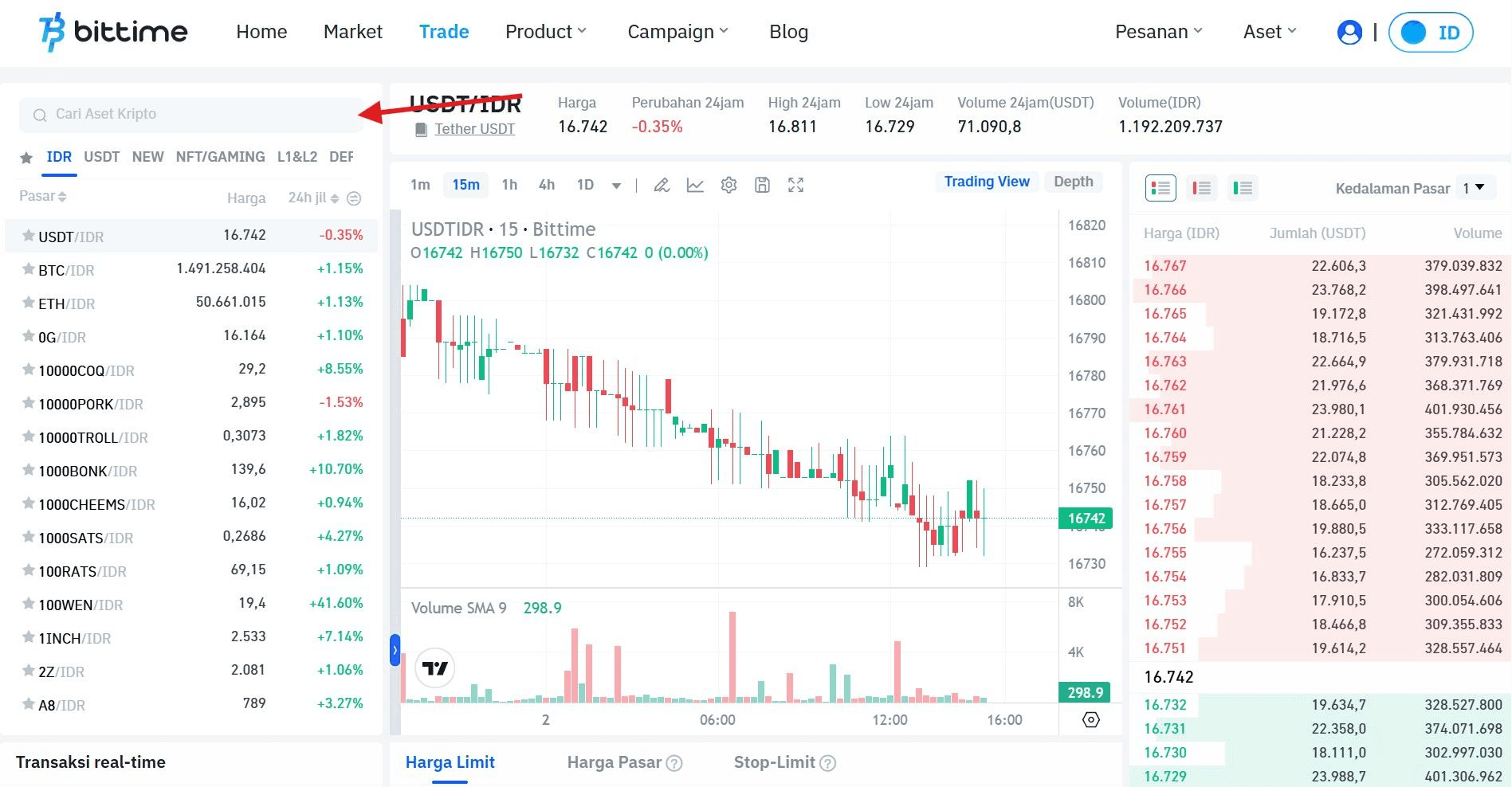
3. Select a USDT Trading Pair
Find the asset pair that fits your needs.
Examples:
- USDT/IDR → to exchange USDT into Rupiah.
- BTC/USDT → to buy or sell Bitcoin using USDT.
- ETH/USDT → to transact Ethereum with USDT.
The selection of the trading pair depends on the hedging goal being performed.
4. Select the Order Type
Bittime provides several order options that can be adjusted to the user's strategy:
- Market Order/Instant: transactions are executed instantly based on the current market price. Suitable for users who want to hedge quickly when market conditions are volatile.
- Limit Order: users can set their own transaction price and the order will execute when the price reaches the specified level.
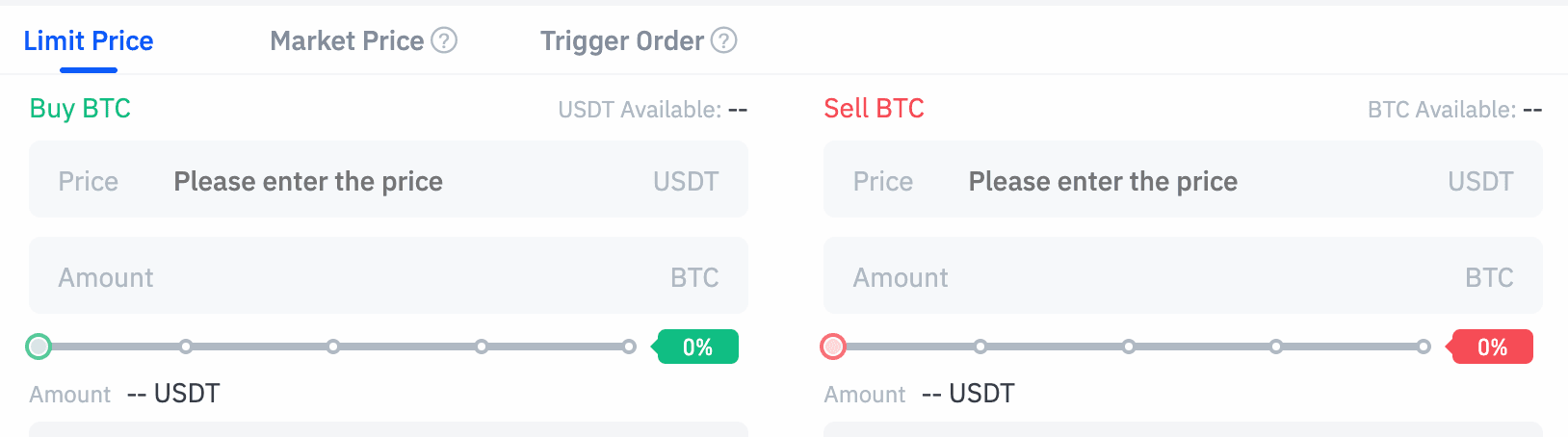
5. Enter the Amount of USDT to Exchange
Enter the amount of assets you want to swap. Make sure to double-check the transaction amount, current price, and the estimated amount of assets to be received.
6. Confirm Transaction
Once all transaction details are correct, press the Sell, Buy, or Swap button to complete the transaction.
Check again:
- asset amount,
- transaction price,
- trading fee,
- estimated asset to be received.
After the transaction is successful, the USDT balance will enter your Bittime wallet and can be used again to buy crypto assets when market conditions start to improve.
Read also: Complete Guide on How to Convert IDR to USDT on Bittime 2026
Risks of Using USDT as Hedging
Although popular, using USDT for investment and hedging is not a risk-free strategy.
Depeg Risk
USDT is designed to be worth 1 dollar, but under extreme conditions, the price may temporarily move below or above that value.
Stablecoin Issuer Risk
USDT relies on Tether and the reserve assets backing its issuance. Reserve transparency is a factor that investors always monitor.
Risk of Missing Market Momentum
When investors move to USDT, there is a risk of missing out on gains if the market rebounds quickly.
Hedging reduces risk, but it also limits potential profits.
Read Also: Is USDT Safe? Understand Tether Reserves and Depeg Risks
Is USDT Truly Safe When the Crypto Market Drops?
USDT can be an effective portfolio protection tool during high volatility because it provides fast liquidity and a relatively stable value.
However, investors still need to understand that USDT is not a risk-free asset. The best strategy is usually not converting the entire portfolio into USDT, but rather adjusting its proportion based on market conditions, risk tolerance, and investment goals.
By understanding how to use USDT, investors can be more flexible in navigating crypto market cycles without having to make emotional decisions when prices drop sharply.
No need to wonder where to go, buy USDT on Bittime with an easy process and a beginner-friendly interface.
Bittime is a Digital Financial Asset Trader (PAKD) platform licensed and supervised by the Financial Services Authority (OJK) — where you can buy Bitcoin in Indonesia and hundreds of other crypto assets starting from IDR 10,000. The registration process is fast, secure, and can be started right away today.
Monitor USDT to IDR conversions and your favorite crypto asset price movements in real-time. Everything is available in one crypto investment app that can be downloaded for free on the Play Store.
Ready to start? Register now on Bittime and execute your investment strategy with a platform trusted by millions of users in Indonesia.
FAQ
What is USDT as hedging?
USDT as hedging is a strategy using the USDT stablecoin to reduce the risk of losses caused by falling prices of crypto assets such as Bitcoin and altcoins.
How to hedge crypto with USDT?
The most common way is selling a portion of crypto assets into USDT when downside risks increase, then using that USDT to buy back assets when prices drop.
Is USDT considered a safe haven in crypto?
USDT is often regarded as a safe haven because its value follows the US dollar and it can be used to store liquidity when the crypto market is volatile.
When is the best time to convert crypto to USDT?
The time often chosen is when volatility rises, major market risks emerge, or after assets have experienced significant gains and investors want to secure profits.
Is USDT risk-free?
No. USDT carries risks such as potential depegging, stablecoin issuer risks, regulations, and the risk of missing out on profit opportunities when the market rebounds.
Disclaimer: The views expressed belong exclusively to the author and do not reflect the views of this platform. This platform and its affiliates disclaim any responsibility for the accuracy or suitability of the information provided. It is for informational purposes only and not intended as financial or investment advice.

.png)