USDT Trades 8.5% Higher in India, What's the Reason?
2026-06-30
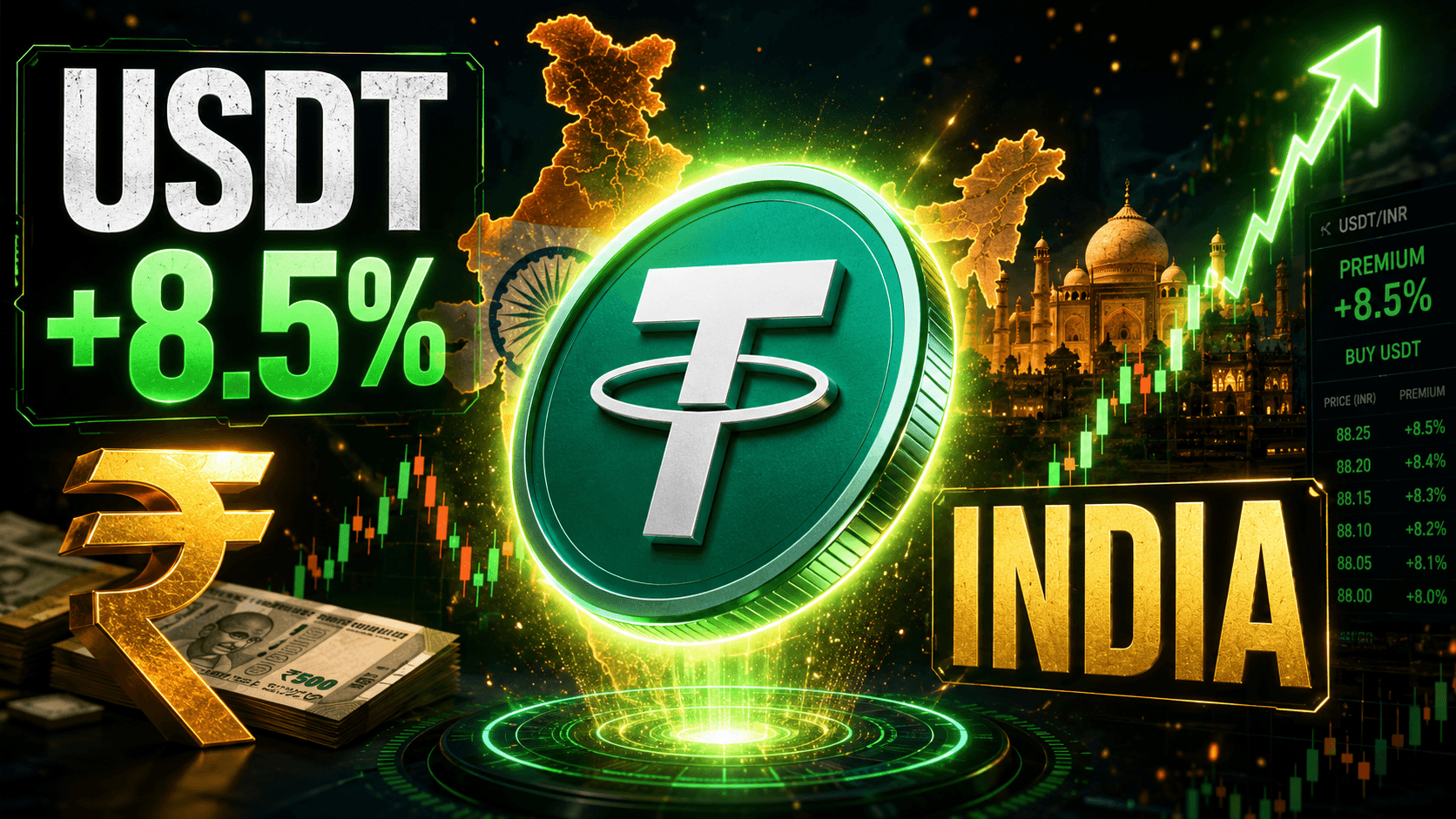
On June 29, 2026, USDT (Tether) traded at a premium reached8,5% in India. USDT Price the price reached around 102.88 INR per coin, while the official USD/INR exchange rate was around 94.65 INR. This difference is significantly larger than the normal premium of only 3–4%.
This phenomenon immediately caught the attention of crypto traders in India and the global community. Many wondered why USDT was so much more expensive in India compared to the global price which remains stable at $1?
Key Takeaways
- USDT is trading at an 8.5% premium in India due to tighter regulations.
- Lower supply and strong demand have pushed USDT prices higher.
- The premium reflects regulatory pressure and strong demand for stablecoins.
Register at Bittime now and start trading crypto with a fast, safe, and easy process in the app.
What is USDT Premium in India?
The USDT premium in India occurs when the price of USDT on local or P2P platforms is significantly higher than the global USDT price, which is typically pegged at $1. This premium is calculated based on the difference between the price of USDT in Indian rupees and the official USD/INR exchange rate.
Under normal conditions, Indian traders typically pay a 3–4% premium to acquire USDT due to transaction costs, risk, and liquidity. However, by the end of June 2026, this premium had more than doubled to 8.5%.
(Image source: AI Image Generated)
This situation indicates an imbalance between USDT supply and demand in the Indian market. When supply is limited while demand remains strong, prices automatically rise.
Read also:Is it Safe to Exchange Rupiah to USDT Now? Learn About the Benefits and Risks
Main Reasons for USDT Premium Increase in India
This premium surge didn't happen suddenly. Several key factors are interrelated:
- Enforcement Directorate (ED) Action On June 17–19, 2026, the ED conducted raids on several crypto and fintech platforms in Bengaluru. Companies such as Transak, Carret, Xpat/Remit2any, Onramp.money, and Onmeta were accused of conducting illegal overseas remittances using USDT worth over $265 million (approximately INR 2,500 crore). The ED deemed this activity a violation of the Foreign Exchange Management Act (FEMA).
- Shrinking USDT Supply Following the crackdown, many market makers and liquidity providers became more cautious about supplying USDT to India. Some even temporarily withdrew their supply due to concerns about sanctions or further scrutiny. Consequently, USDT availability on local platforms and P2P platforms decreased significantly.
- Demand Remains High Despite the reduced supply, demand for USDT from Indian retail traders remains strong. USDT is often used as a "bridge" to enter and exit other cryptocurrencies, as well as for faster and cheaper value transfers than traditional banking channels. Many users also utilize stablecoins to hedge against rupee fluctuations or for informal remittances.
- Regulatory and Compliance Factors India has implemented a 30% tax on crypto profits (VDA) since 2022. Furthermore, platforms must be registered with the FIU-IND. Regulatory uncertainty has discouraged many market participants from facilitating large USDT flows.
Read also: What Are Tether Laundromats? South Korea Is Taking Action
USDT Price Comparison in India vs Official Exchange Rate
Here is a comparative overview price on June 29, 2026:
- USDT price in Indian market: ±102,88 INR
- Exchange rate USD/INR: ±94,65 INR
- Difference (Premium):8,5%
In comparison, normal premiums are usually in the range 3–4%. This spike reflects the additional costs that traders have to pay Inhim to get USDT amidst tight supply conditions.
Impact on Traders and the Indian Crypto Market
The widening premium has several immediate consequences:
- Traders who want to buy USDT will have to pay higher fees.
- The cost of exiting a crypto position (off-ramp) has also increased.
- Some traders turn to other platforms or avenues that may be riskier.
- Liquidity on some local exchanges has declined as market makers have held back.
On the other hand, this situation also demonstrates the crucial role stablecoins play in the Indian crypto ecosystem. When access to dollars through official channels is difficult or expensive, USDT becomes a desirable alternative, despite the high premium.
Read also:3 Benefits of Saving USDT - Potential and Long-Term
The Context of Crypto Regulation in India
India is known for having quite strict crypto regulations. Some key points:
- A 30% tax on profits from Virtual Digital Assets (VDA) has been in effect since April 2022.
- All crypto platforms are required to be registered with the Financial Intelligence Unit of India (FIU-IND).
- RBI (Regional Bank of India) is concerned about the risks of dollarization and weakening of capital flow controls.
- As of March 2026, there were 54 registered VDA service providers, while dozens of crypto apps and URLs had been ordered shut down.
The ED's recent crackdown is part of the government's efforts to curb unrecorded cross-border financial flows.
Read also:The Impact of Rupiah Weakening on USDT: Profitable or Not?
What Will Happen Next?
On July 2, 2026, the Indian Parliamentary Standing Committee on Finance is scheduled to meet with RBI representatives to discuss Virtual Digital Assets. This meeting is expected to provide further clarity on regulated on-ramps and off-ramps, including the future role of stablecoins.
If clearer and more compliant regulations emerge, the USDT premium could potentially narrow again. However, as long as uncertainty remains high, the premium will likely remain at higher levels than usual.
Conclusion
The surge in the USDT premium in India to 8.5% at the end of June 2026 was a direct result of the Enforcement Directorate’s crackdown on crypto platforms suspected of conducting unauthorized remittances. A shrinking supply of USDT met with continued strong demand, causing prices in the local market to spike.
For Indian traders, this situation means higher transaction costs. For the market as a whole, it serves as a reminder that strict regulations without clear, compliant pathways can create price distortions and drive activity into gray areas.
If you’re a crypto trader or investor in India—or someone who frequently monitors global markets—it’s important to stay on top of regulatory developments. Premium situations like this can change rapidly once new clarity emerges from the government.
Want to own assets whose value tracks the U.S. dollar? Check the price movements of USDT, USDC, USD1, and USDS, then start trading your favorite stablecoins on Bittime.

Bittime is a licensed and regulated Digital Financial Asset Trader (PAKD) supervised by Indonesia’s Financial Services Authority (OJK) — where you can buy Bitcoin in Indonesia and hundreds of other crypto assets starting from just Rp10,000. The registration process is fast, secure, and you can get started today.
Track USDT to IDR conversions and monitor your favorite crypto assets in real time. Everything is available in one crypto investment app that you can download for free on the Play Store
Ready to start? Register now on Bittime and execute your investment strategy with a platform trusted by millions of users in Indonesia.
FAQ
What is the reason for USDT being more expensive in India?
USDT premiums in India have risen due to the Enforcement Directorate cracking down on several crypto platforms accused of conducting unauthorized remittances using USDT. This has led to a drastic decline in USDT supply to the Indian market.
What is the current USDT premium percentage in India?
As of June 29, 2026, USDT is trading at a premium of approximately8,5%in India, well above the normal premium which is usually around 3–4%.
Is this dangerous for crypto traders in India?
This situation makes it more expensive to enter and exit crypto positions. Traders must be more careful in selecting a platform and consider liquidity risks and regulatory compliance.
Can USDT still be purchased in India?
Yes, but at a higher price. Some platforms and P2P channels are still available, but their liquidity and supply are more limited than normal.
What will happen to the USDT premium going forward?
This depends on the outcome of the Parliamentary Committee meeting with the RBI on July 2, 2026. If there is regulatory clarity and a compliant pathway, premiums could potentially decrease. As long as uncertainty remains high, premiums are likely to remain wide.
Disclaimer: The views expressed belong exclusively to the author and do not reflect the views of this platform. This platform and its affiliates disclaim any responsibility for the accuracy or suitability of the information provided. It is for informational purposes only and not intended as financial or investment advice.

.png)